Whakatau the Avenger Myth Meaning & Symbolism
A myth of a hero who masters fire and strategy to avenge his family, embodying the alchemy of grief into focused, world-restoring action.
The Tale of Whakatau the Avenger
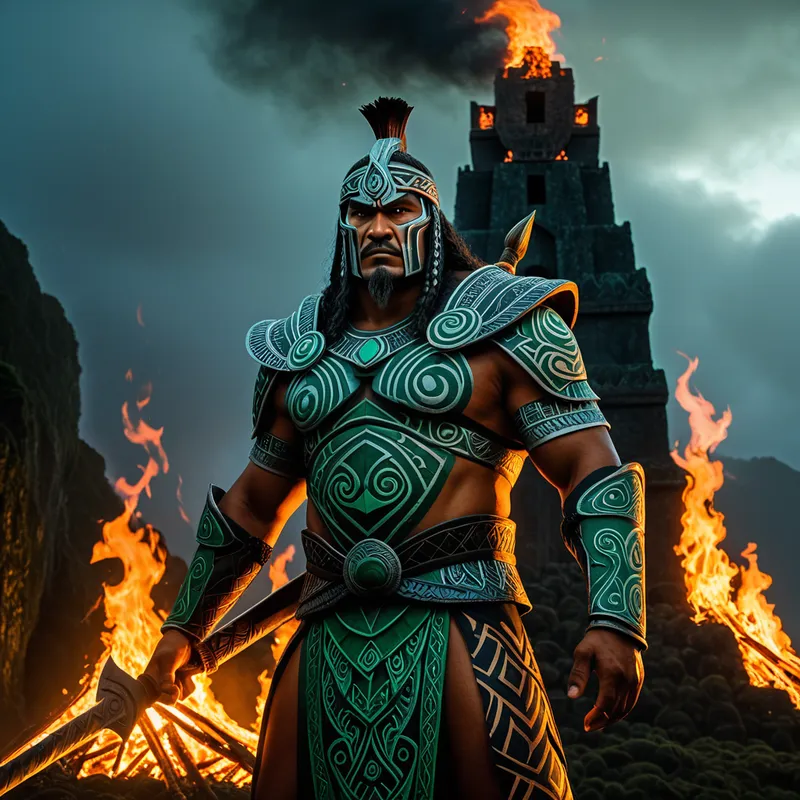
Listen. The wind remembers a name, carried on salt spray and the scent of burnt heartwood. It speaks of a time when a great house, Te Uru-o-Manono, stood not as a shelter, but as a tomb. Within its carved walls, a people slept, their slumber woven by the dark magic of tohunga makutu. They were the slayers of Whakatau’s brothers, the despoilers of his line. Their chief, Poporokewa, thought his vengeance complete, his fortress impregnable.
But from the ashes of his family, a quiet fire was kindled. Whakatau. He was not a thunderous god of the Ranginui, but a man shaped by profound loss, raised in the hidden places by his aunt, Apakura. Her tears for her slain sons were the waters that nourished his resolve. She gave him not just a weapon, but a purpose. She showed him the path of the taua, but Whakatau saw a different path. Not a frontal assault of rage, but the precise application of fire.
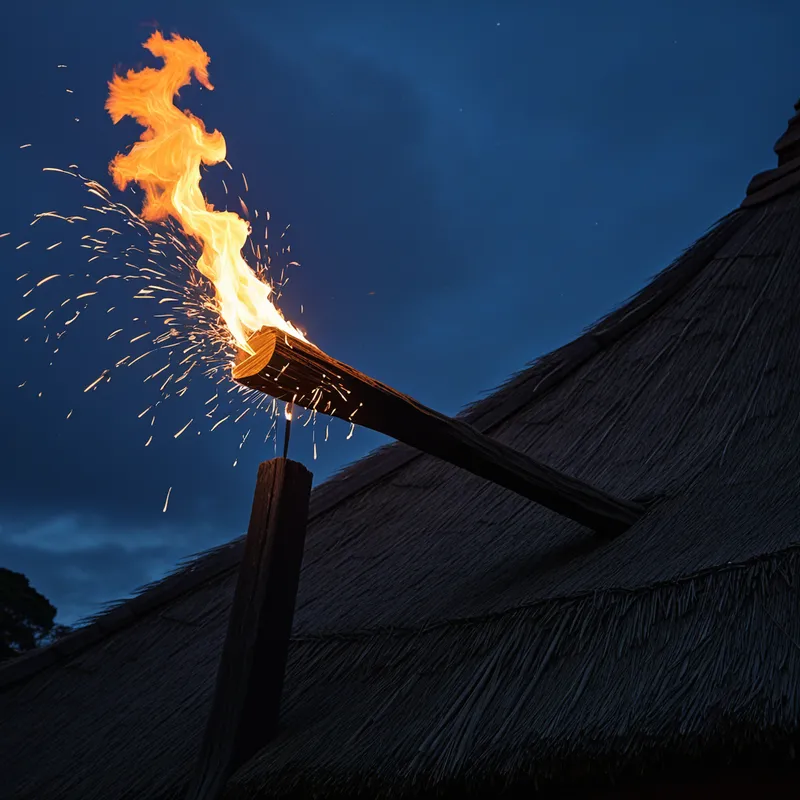
He gathered his small band, a handful of shadows against the mighty palisades. He took the sacred firebrand, its heat a promise. The sea was their road, the night their cloak. They arrived as the fortress dreamed its arrogant dreams. Whakatau did not roar a challenge. He moved with the silence of a closing trap. He scaled the great house itself, this wooden leviathan that housed his enemies. The thatch was dry. The wind was still. His heart was a drum counting a single, final beat.
Then, the offering. The firebrand left his hand, a falling star of retribution. It kissed the roof, and Te Uru-o-Manono awoke—not to war cries, but to a consuming whisper. Flame bloomed in the high rafters, then raced down the carved pillars, licking the faces of ancestors depicted in wood. The sleepers awoke to an oven of their own making. The great doors, barred against armies, became seals for a pyre. Whakatau and his men stood guard, not to fight, but to witness. To ensure the balance. The crackle of flame, the desperate cries from within, the groan of sacred timber—this was the song of his vengeance, complete and terrible. When the dawn came, it shone on smoke and charcoal, and on a man who had transformed grief into an act of absolute, final reckoning.
Cultural Origins & Context
This myth, part of the broader cycle of Te Waka stories, was not mere entertainment. It was a foundational narrative, recited by tohunga and skilled orators around the marae. Its function was multifaceted. On one level, it reinforced the sacred duty of utu. A wrong, especially the killing of kin, created a spiritual imbalance that had to be addressed to restore tika. Whakatau’s actions were not portrayed as savage, but as necessary, even righteous, the restoration of cosmic order.
Furthermore, it served as a strategic treatise. In a culture of inter-iwi conflict, the myth celebrated cunning (rākau) and innovation over brute force. Whakatau’s use of fire and siege tactics was a lesson in asymmetrical warfare. The story also underscored the power of focused action. Whakatau is not a chief of a vast army; he is an instrument of precise, devastating justice, showing that a single determined actor, guided by right purpose, could topple a mighty power.
Symbolic Architecture
At its heart, this is a myth of psychic alchemy. The murder of Whakatau’s brothers represents a catastrophic trauma, a rending of the familial and psychic fabric. The great house, Te Uru-o-Manono, is not just a building; it is the solidified, arrogant structure of the oppressive complex—the institutionalized shadow, the seemingly permanent edifice built upon one’s own loss.
The avenger is not born from rage, but from the silent, cold forge of crystallized grief.
Whakatau’s fire is the central symbol. It is not wild, destructive anger, but contained and directed fury. It is the light of consciousness and the heat of transformative will applied with surgical precision to the very structure of the trauma. He does not battle the inhabitants directly; he destroys the container that allows their malignancy to exist. The fortress must burn for the psychic landscape to be cleared.
His journey, guided by the mourning Apakura (the Papatūānuku aspect of deep, fertile sorrow), shows that true power arises from integrating, not denying, profound loss. The grief becomes the fuel, and the memory becomes the map.
The Dreamer's Resonance
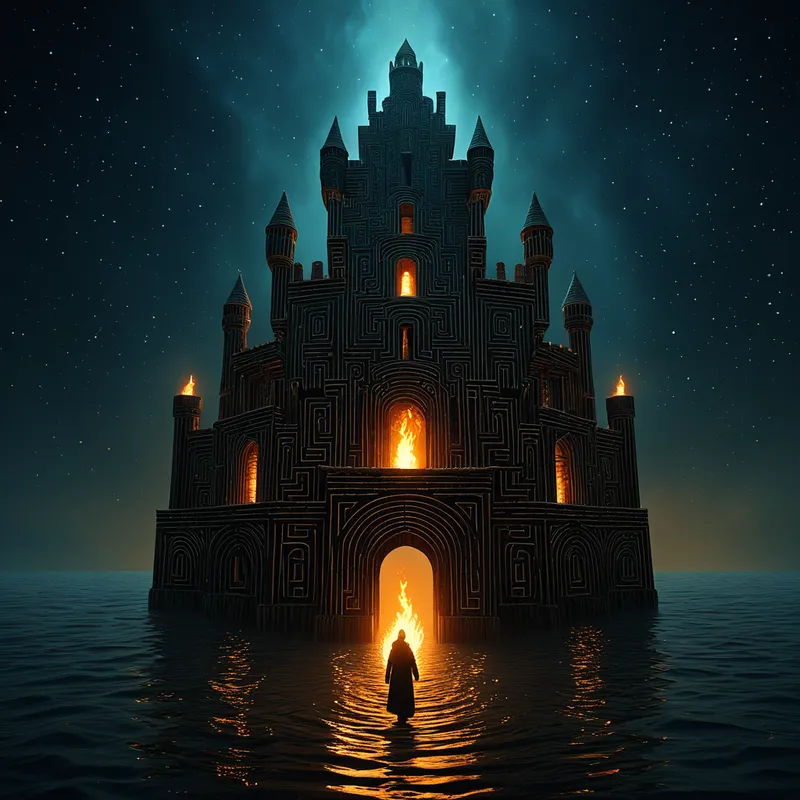
When this myth stirs in the modern moemoeā, it announces a profound interior process. To dream of a vast, labyrinthine structure (an office, a school, a familial home) that feels both imprisoning and hostile is to dream of one’s personal Te Uru-o-Manono. It is the internalized system—be it a pattern of shame, a legacy of abuse, or a cage of outdated beliefs—that holds the dreamer captive.
The somatic experience is often one of simmering heat, clenched resolve, and a focused quietude. The dream-ego may find itself holding a small, potent object—a key, a stone, a match. This is the nascent Whakatau-firebrand, the emerging awareness that the structure can and must be challenged not through chaotic outburst, but through a single, decisive act of psychological truth-telling or boundary-setting. The dream may culminate not in violence, but in the act of setting the transformative truth alight and watching the old, rotten supports burn away, creating space for new ground.
Alchemical Translation
The individuation process mirrored here is the transmutation of victimhood into agency. The initial state is one of being “burned” by trauma—the brothers consumed by the enemy. The unconscious identification is with the lost ones, the orphaned self.
The hero’s task is to cease identifying with what was destroyed, and to become the agent of the destroying fire—the fire that clears, purifies, and makes way.
Whakatau’s path is the conscious undertaking of this alchemy. First, one must retreat to the “hidden places” with the grieving, nurturing aspect of the psyche (Apakura) to tend the wound and forge a new identity not defined by the loss. Then, one must study the “fortress”—understand the architecture of one’s oppression, its points of vulnerability. Finally, one must enact the opus: the courageous, focused application of one’s will (the firebrand) to the precise point that will collapse the entire dysfunctional structure.
The triumph is not in slaughter, but in the restoration of tika. The modern individual completes this cycle not by vengeance upon others, but by courageously dismantling the internalized oppressor, the psychic fortress built from others’ crimes or one’s own complicity. One becomes the avenger of one’s own soul, using the focused fire of consciousness to burn away the imprisoning past and stand, like Whakatau at dawn, on cleared ground, ready to build anew.
Associated Symbols
Explore related symbols from the CaleaDream lexicon:
- Fire — The central alchemical agent, representing not chaos but focused, transformative will; the sacred flame of justice that purges the oppressive structure.
- House — The fortress of Te Uru-o-Manono, symbolizing the complex, internalized structure of trauma, oppression, or rigid belief that must be dismantled.
- Journey — Whakatau's voyage by sea to the fortress, representing the necessary passage from the place of grief to the site of confrontation and transformation.
- Strategy — Embodied in Whakatau's cunning plan, this symbolizes the intellect and conscious planning required to effectively engage with deep psychic complexes, not just raw emotion.
- Grief — The waters of Apakura's tears, the essential, fertile ground from which the resolve for transformative action grows and is nourished.
- Hero — Whakatau as the archetype of the individual who undertakes a necessary, terrible task to restore balance, moving from passive suffering to active, responsible agency.
- Shadow — The inhabitants of the great house represent the consolidated, projected shadow—the hostile, oppressive forces that have been internalized and must be confronted.
- Rebirth — The cleared, ashen ground after the fire, symbolizing the psychic space made available for new growth once the old, imprisoning structure is gone.
- Sacrifice — The necessary consumption of the old structure (and all it contained) to achieve liberation; the offering of the familiar to the flames of change.
- Water — The medium of Apakura's sorrow and the sea of Whakatau's journey, representing the deep, emotional, and unconscious realm that must be navigated.