Water into Wine Myth Meaning & Symbolism
A wedding runs dry until a hidden divinity transforms common water into sacred wine, revealing a world where lack becomes impossible abundance.
The Tale of Water into Wine
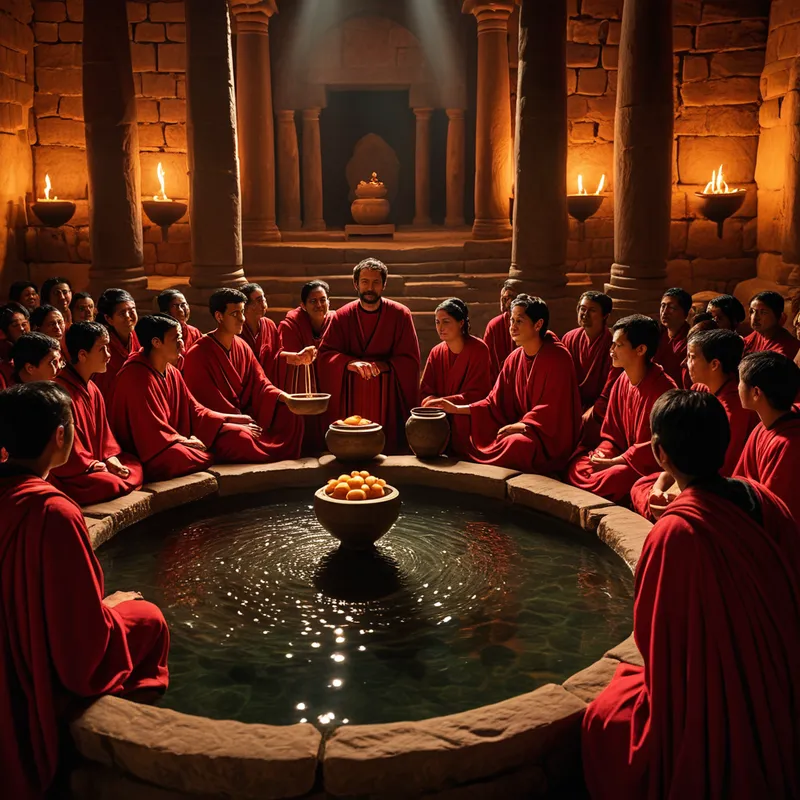
The air in Cana was thick with the scent of roasted lamb, crushed herbs, and the joyful sweat of celebration. A wedding feast was in its third day, the pinnacle of village life, where the entire community gathered to seal a covenant of love with seven days of music, dance, and shared wine. Wine was not mere drink; it was the blood of the vine, the symbol of joy, the very currency of covenant. To run out was not an embarrassment; it was a social catastrophe, a tear in the fabric of community, a public admission of poverty and poor planning that would haunt the new family for generations.
The mother noticed it first. A subtle tension in the servants’ movements, a whispered conference with the steward, a hollow echo from the great amphorae. The wine was gone. The feast, this engine of joy, was grinding to a mortifying halt. In her distress, she went to her son, a man who moved with a quiet gravity that seemed to gather the light around him. “They have no wine,” she said, her statement a plea wrapped in a fact.
His response was enigmatic, a distance in his eyes. “Woman, what does this have to do with me? My hour has not yet come.” But she, knowing a deeper truth in his bones than he had yet spoken aloud, turned to the servants and issued a command that would bridge two worlds: “Do whatever he tells you.”
Six stone water jars stood against the wall, vessels for the Jewish rites of purification—each holding twenty or thirty gallons. They were for washing, for making the outside clean, a solemn and necessary function. He pointed to them. “Fill the jars with water.” The servants, bewildered, obeyed, hauling bucket after bucket until the heavy stone vessels brimmed with the common, clear well-water.
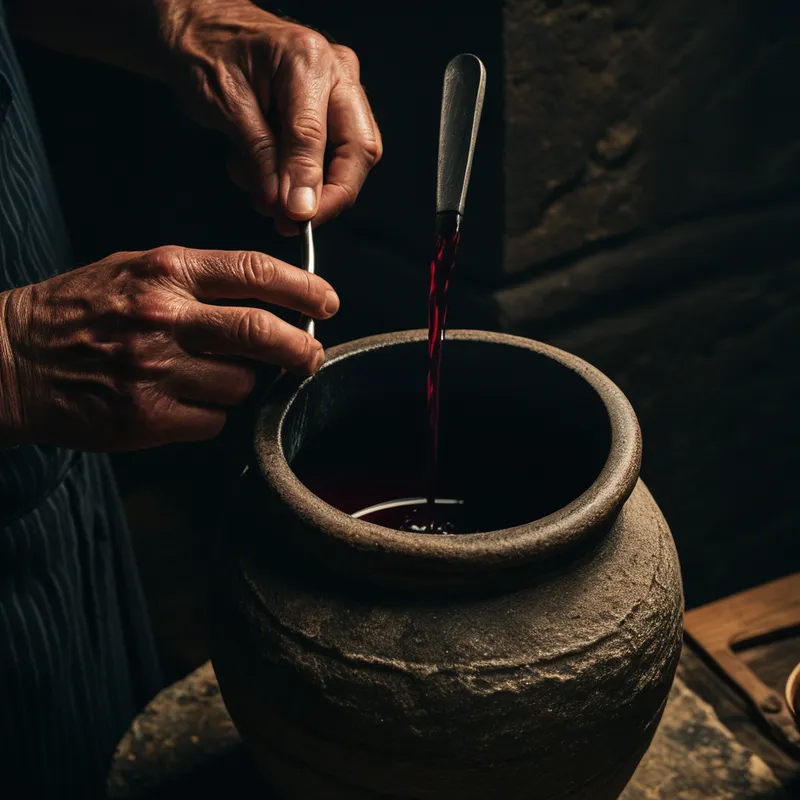
Then came the impossible instruction. “Now draw some out and take it to the master of the feast.” The servant’s hand must have trembled as he dipped his ladle into what he knew to be water. But what emerged was not clear. It was deep, dark, rich red. He smelled it—the complex aroma of a fine, aged wine. In stunned silence, he carried it to the steward.
The steward, unaware of the miracle behind the curtain of the ordinary, tasted it. His eyes widened. He called the bridegroom, not with alarm, but with astonished praise. “Everyone serves the good wine first, and when people have drunk freely, then the poor wine. But you have kept the good wine until now.” The celebration, moments from collapse, surged forward with a vigor unknown before. The best wine, saved for last, flowed from vessels of purification. And only the servants, who had drawn the water, knew the source of the mystery.
Cultural Origins & Context
This story is recorded in the Gospel of John, positioned as the first of seven “signs” performed by Jesus of Nazareth. Its cultural setting is profoundly Jewish. A wedding was the ultimate symbol of eschatological joy; the Messianic banquet was often depicted as a feast with abundant wine. The stone jars are a critical detail—they are specifically for mikvah, representing the Law’s requirements for external cleanliness.
The story functions on multiple levels. For the early Christian community, it was a testament to the identity of Jesus as the bringer of the new covenant, superseding the old rituals. Societally, it subverts expectation: the divine intervention happens not in the temple, but at a village wedding; not through a priest, but through servants; not by rejecting the old vessels, but by transforming their contents. It was a story of hope for a people often feeling spiritually and politically depleted—a promise that their ordinary, ritual-bound lives could be the very site of an impossible, joyful abundance.
Symbolic Architecture
At its heart, this is a myth of radical transmutation. The symbols are stark and powerful:
- Water: The fundamental, life-giving, yet common element. Psychologically, it represents the unconscious, the emotional substrate, the raw and untransformed material of our lives. It is necessary but plain.
- Wine: The product of culture, time, and transformation (crushing, fermentation, aging). It symbolizes spirit, joy, communion, intoxication with the divine, and the blood of life. It is the conscious, cultivated, and celebratory aspect.
- The Stone Jars (Vessels of Purification): The structures of tradition, law, and ritual. They are the containers of our identity, the forms we use to try to cleanse and define ourselves. The miracle does not break the jars; it re-purposes them.
- The Wedding Feast: The archetypal symbol of union—the hieros gamos, the sacred marriage. It is the context of relationship, covenant, and communal joy where individual transformation finds its meaning.
The miracle is not in the creation of something from nothing, but in the revelation of what is already latent within the common stuff of existence.
The psychological movement is from a consciousness of lack (“They have no wine”) to a revelation of hidden abundance. The “hour” that has not yet come is the full revelation of the transformative principle, yet it acts anyway, initiated by the intuitive faith of the Mother (the archetypal anima or wisdom). The servants—the parts of the psyche that simply obey the deeper directive—become the witnesses to the mystery.
The Dreamer’s Resonance
When this myth pattern surfaces in modern dreams, it speaks to a process of psychic transmutation underway. To dream of water turning into wine, or of discovering a hidden, exquisite vintage in a mundane container, signals that a profound inner shift is occurring.
Somatically, one might feel a release of tension, a warmth in the chest, or a sense of unexpected fullness where there was anxiety or emptiness. Psychologically, the dreamer is likely in a situation that feels barren, ritualistic, or drained of joy (the “water” phase). The dream announces that the raw material of their current struggle—their emotions, their daily routines, their inherited “vessels” of behavior—is being secretly alchemized. The “master of the feast” (often the critical, judging aspect of the ego or superego) tastes the result and is pleased, indicating an emerging self-acceptance and recognition of one’s own unexpected value. The dream is a promise: the best is being saved for now. Your current moment of need is the precise catalyst for a revelation of inner richness you did not know you possessed.

Alchemical Translation
The journey from water to wine is the quintessential model of individuation. It maps the process of psychic transmutation for the modern individual.
First, one must acknowledge the lack. The ego-consciousness realizes its old sources of meaning, joy, or spirit have run dry. This crisis is essential. Then, the intuitive, guiding function (the Mother) directs attention to the vessels of purification—our ingrained habits, psychological defenses, and personal rituals. The instruction is not to destroy them, but to fill them with the unconscious (“fill the jars with water”). This is the act of honest self-confrontation, of allowing the raw, emotional, and often messy contents of the psyche into the very structures that usually try to control them.
The transformation itself is opaque and obedient. The ego (the servant) does not perform the miracle; it follows the directive of the deeper Self. It carries the as-yet-untransformed material (“water”) in faith. The transmutation happens in the dark, in the stone jar of the soul. The final, critical step is to draw it out and serve it. The new spirit, the authentic joy, the creative product born of this inner process must be brought into the world, tasted, and shared. The “good wine” is the integrated personality—richer, more complex, and more resonant than what was presented at life’s beginning.
The alchemy occurs not by escaping our human vessel, but by allowing the divine within to ferment the whole of our experience.
Thus, the myth teaches that our most ordinary, utilitarian, even ritualistic aspects are the chosen containers for the extraordinary. Our duty is not to conjure the wine from elsewhere, but to fill our stone jars with the water of our truth, and then, in faithful obedience to a deeper voice, to draw out the vintage that was always waiting to be revealed.
Associated Symbols
Explore related symbols from the CaleaDream lexicon: