Wakinyan Myth Meaning & Symbolism
The story of the Wakinyan, sacred thunder beings who bring the terrifying, purifying storm that clears the old world to make way for the new.
The Tale of Wakinyan
Listen. The world was not always as it is. In the time before memory, the people walked upon a land grown heavy. The air was thick with stagnation, the rivers ran slow with silt, and the thoughts of the people turned inward, circling like vultures on old grief. A great forgetting had settled upon the plains. The sacred hoop was cracked.
Then, from the far western edge of the world, where the sky touches the earth, a low rumble began. It was not a sound of this world, but the grinding of stone in the belly of the sky. The rumble grew, a deep-throated promise of violence, and the west darkened. Not with cloud, but with a presence. The Wakinyan were coming.
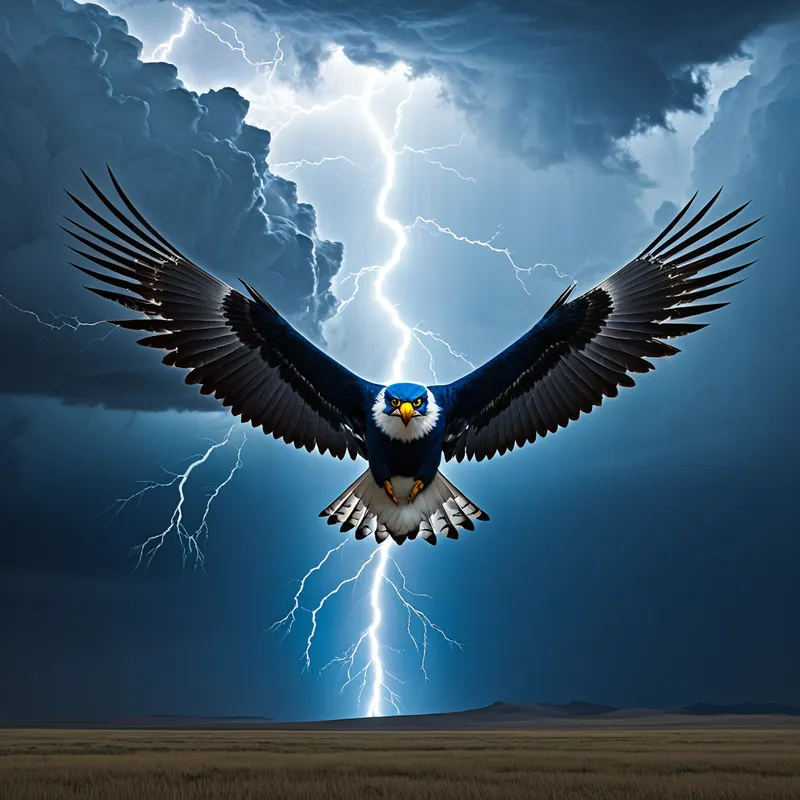
They were not birds as we know birds. They were the storm given form, the fury of creation itself. Their wings, vast as mountain ranges, beat not air but the fabric of reality, and with each beat came the deafening crack of thunder that shakes the bones of the earth. Their eyes were not eyes, but forks of living lightning, seeing not surfaces but the hidden rot in the heart of things. Some say they had four faces, looking to all directions, seeing all that was stagnant, all that was false.
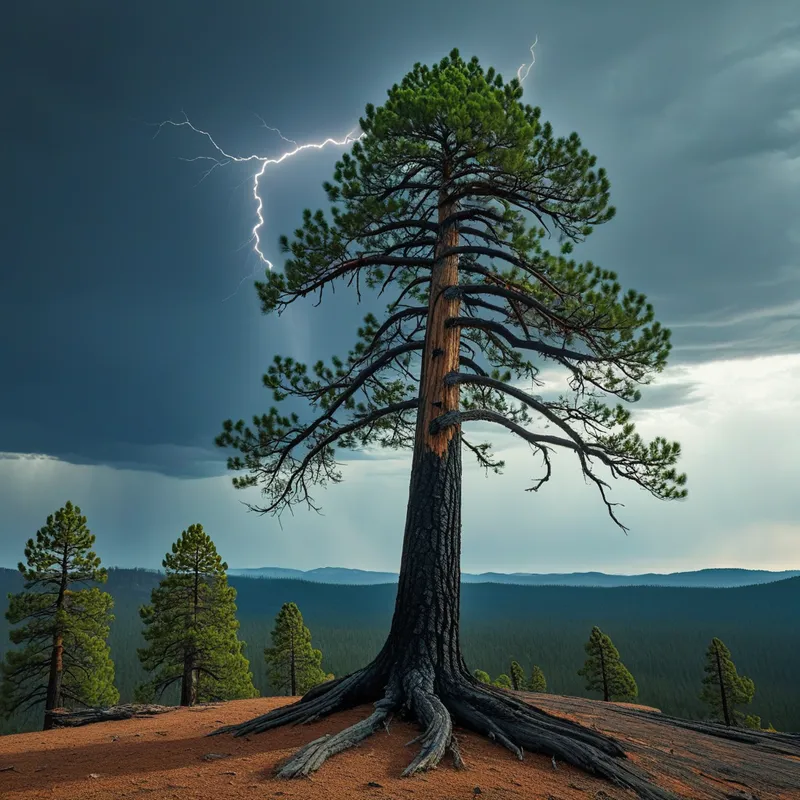
They did not hunt buffalo. They hunted silence. They hunted complacency. With a scream that tore the sky, they descended upon the heavy world. Lightning, their sacred arrows, struck the tallest pines, splitting them asunder with a smell of ozone and burning sap. Torrents of rain, not gentle, but furious and cold, scoured the hillsides, carving new paths where old streams had clogged. The wind was their breath, a howling force that flattened the tall grass and tore the dead branches from the ancient oaks.
The people hid in fear, and rightly so. This was not punishment, but a terrible, necessary surgery. The Wakinyan were the surgeons of the world. Where their lightning touched, fire bloomed—a cleansing, terrifying fire that burned away the thick undergrowth of old seasons, leaving blackened, smoking earth. It seemed an end. It seemed like the world was being unmade by these furious, divine rebels of the sky.
And then, as suddenly as they came, they passed. The roar faded eastward. The rain ceased. The wind fell to a whisper. The people emerged, trembling, into a world washed clean. The air was sharp and new, tasting of wet stone and possibility. From the blackened soil where the lightning fires had raged, the first green shoots of new grass were already reaching for the sun. The rivers ran clear and fast. The sacred hoop, seared by lightning, had been welded whole again by a power too terrible to behold, yet too necessary to live without. The Wakinyan had done their work. They had restored the world by nearly destroying it.
Cultural Origins & Context
The stories of the Wakinyan are central to the spiritual life of the Lakota, one of the great nations of the Oceti Sakowin (the Seven Council Fires, often called the Sioux). These are not casual tales but wicozani woyake—stories of sacred life. They were traditionally conveyed by Wicasa Wakan, often in specific ceremonial contexts or as profound teachings about the nature of the world.
The myth functions as a cosmological anchor. It explains the terrifying yet essential nature of thunderstorms on the Great Plains, framing them not as random acts of weather, but as the deliberate, sacred activity of powerful, non-human persons. The Wakinyan are among the Wakan Tanka, the great mysterious powers of the universe. They are respected, feared, and honored through ceremony, such as the Wiwanyag Wachipi, where participants seek visions and strength. To hear the story is to be reminded of a fundamental law: creation is inseparable from destruction; renewal requires the terrifying grace of the storm.
Symbolic Architecture
The Wakinyan embody the archetypal principle of Sacred Chaos. They are not evil, but they are profoundly dangerous. They represent the cosmic force that dismantles stagnant structures, shatters illusions, and purifies through an awe-inspiring, often frightening, release of energy.
The lightning strike does not ask permission. It simply reveals, in a flash of terrible clarity, what is truly there—both the rotten core and the conductive path to ground.
Psychologically, they symbolize the necessary crises that precede growth. The “old growth” they burn is not just physical brush, but psychological undergrowth: calcified beliefs, emotional blockages, and comfortable lies we tell ourselves. Their thunder is the internal shock of realization, the moment a long-denied truth crashes into consciousness. Their rain is the flood of emotion—grief, rage, release—that follows, which feels like it might drown us but ultimately washes us clean. They are the ultimate rebel archetype, not rebelling against a social order, but against the ego’s desperate, stagnant order.
The Dreamer’s Resonance
When the Wakinyan pattern storms into modern dreams, it signals a profound somatic and psychological process is underway. This is not a dream of gentle rain, but of cataclysm.
You may dream of being in a familiar house—your psyche—as a tremendous storm batters it. Windows threaten to shatter, the roof groans. This is the ego-structure under immense pressure from unconscious contents. You may dream of being chased by, or witnessing, a colossal bird of lightning. This is the approach of a transformative insight so powerful it feels annihilating. The somatic experience upon waking is key: a racing heart, a feeling of awe and dread, a sense of electrical energy in the body. This is the residue of the psyche’s own lightning—a nervous system processing a deep, structural update.
The dream is an announcement: a period of intense destabilization is here, or is necessary. The old “you,” the adapted personality, is being called to the altar of the storm. The process feels chaotic and frightening because it is. The dream asks: What in your life has become stagnant, heavy, or inauthentic? What needs the terrifying, purifying strike of truth to be cleared away?

Alchemical Translation
The myth of the Wakinyan is a perfect map for the alchemical stage of Nigredo and the psychological process of confronting the Shadow. Individuation—becoming who one truly is—requires not just building, but unbuilding. The ego, like the stagnant landscape, accumulates defenses, personas, and complexes that eventually wall off the Self.
The Wakinyan are the agents of the Self, sent to dismantle the ego’s fortifications. Their lightning is the shocking, luminous confrontation with the repressed shadow material. Their thunder is the psychic quake that follows. Their rain and wind are the cathartic release. This is not a gentle therapy; it is a psychic revolution.
The goal is not to survive the storm unscathed, but to be transformed by it—to allow the old, dead wood of the personality to be burned away so the essential core can finally breathe and grow.
The modern individual undergoing this “Wakinyan process” may experience sudden life upheavals, intense emotional purges, or breakthroughs that feel destabilizing. The alchemical translation is to learn to stand in the storm, not as a victim, but as a witness to one’s own purification. It is to understand that the chaos is not meaningless, but a sacred, if brutal, act of creation. To honor the Wakinyan within is to find the courage to let the old self be shattered, trusting—as the people emerging from their shelters trusted—that the world revealed after the storm will be clearer, truer, and more vibrantly alive. The green shoot always follows the fire. New life is born in the space cleared by sacred terror.
Associated Symbols
Explore related symbols from the CaleaDream lexicon: