Völuspá Myth Meaning & Symbolism
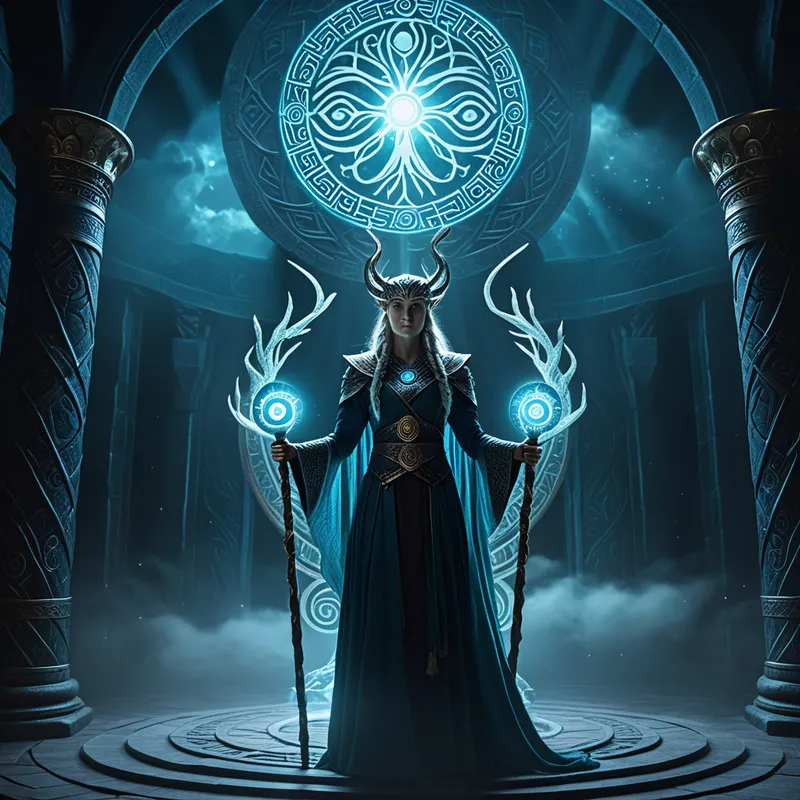
A seeress reveals the cosmos's creation, the gods' folly, and the world's fiery end and rebirth to Oðinn.
The Tale of Völuspá
Hear me, you hallowed ones, high and low, of [Heimdallr](/myths/heimdallr “Myth from Norse culture.”/)‘s kin. I call forth a memory older than memory, a vision from before the first dawn. I remember the giants born in time’s mists, who reared me in ages long gone. Nine worlds I know, nine roots of the glorious [Yggdrasil](/myths/yggdrasil “Myth from Global/Universal culture.”/), the ash that endures all suffering.
It was in a time of deep unease that the All-Father himself, the one-eyed wanderer, came to my seat at the well of fate. His single eye, traded for wisdom, burned with a desperate need. He sought the seeress, the [Völva](/myths/vlva “Myth from Norse culture.”/), who sees what was, what is, and what shall be. He offered rings, he offered [runes](/myths/runes “Myth from Norse culture.”/), he offered the very breath of his being to hear the truth of beginnings and ends.
And so I spoke. I sang of the yawning void, [Ginnungagap](/myths/ginnungagap “Myth from Norse culture.”/), where fire and ice met and from their dripping venom, life first stirred. I told of the first giant, Ymir, and how from his flesh [the world](/myths/the-world “Myth from Tarot culture.”/) was shaped by the first gods. I sang of [the golden age](/myths/the-golden-age “Myth from Greek culture.”/), when the Æsir built their halls at Idavollr, crafted treasures, and established order with laughter.
But my song turned dark. I saw the first murder, the slaying of a wise being for his knowledge, and the breaking of oaths. I foretold the death of Baldr, the brightest of all, felled by a mistletoe dart—a betrayal born of blind trust and hidden malice. I saw the chains of fate tightening: [Fenrir](/myths/fenrir “Myth from Norse culture.”/) growing, [Jörmungandr](/myths/jrmungandr “Myth from Norse culture.”/) stirring in the deep, and Hel gathering her hosts.
Then came the climax, the great winter, Fimbulvetr. The sun and moon are swallowed. Stars vanish. The bonds break. The horn of Heimdallr sounds, a note of pure doom. The tree of the world groans and shakes. All journeys to the final plain, Vígríðr. There, father fights son, brother slays brother. Odin falls to the wolf’s maw. Þórr and the serpent slay each other. Fire engulfs all, and [the earth](/myths/the-earth “Myth from Hindu culture.”/) sinks beneath the boiling sea.
Silence. A pause as deep as the first void.
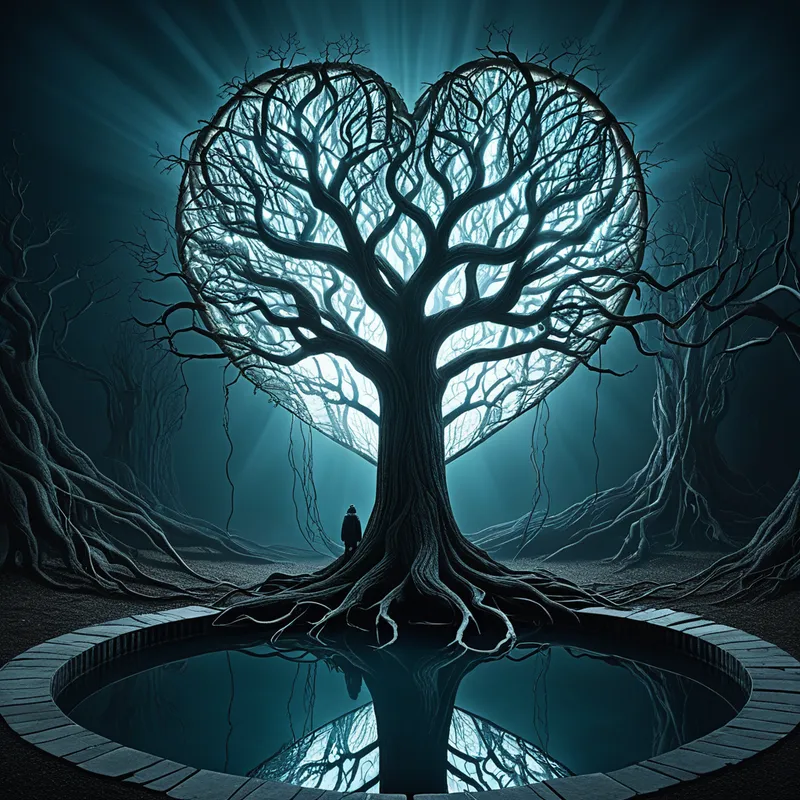
Then… a greenness. The earth rises again, fresh and fertile from the waves. A new sun, daughter of the old, rides [the sky](/myths/the-sky “Myth from Persian culture.”/). I see the surviving gods return. I see two human survivors, hidden in the world-tree’s wood, repopulating the green earth. And there, gleaming in the grass, are the golden tablets of fate, recovered from the ashes. The cycle is complete. My vision fades. Do you hear, Odin? Do you understand?
Cultural Origins & Context
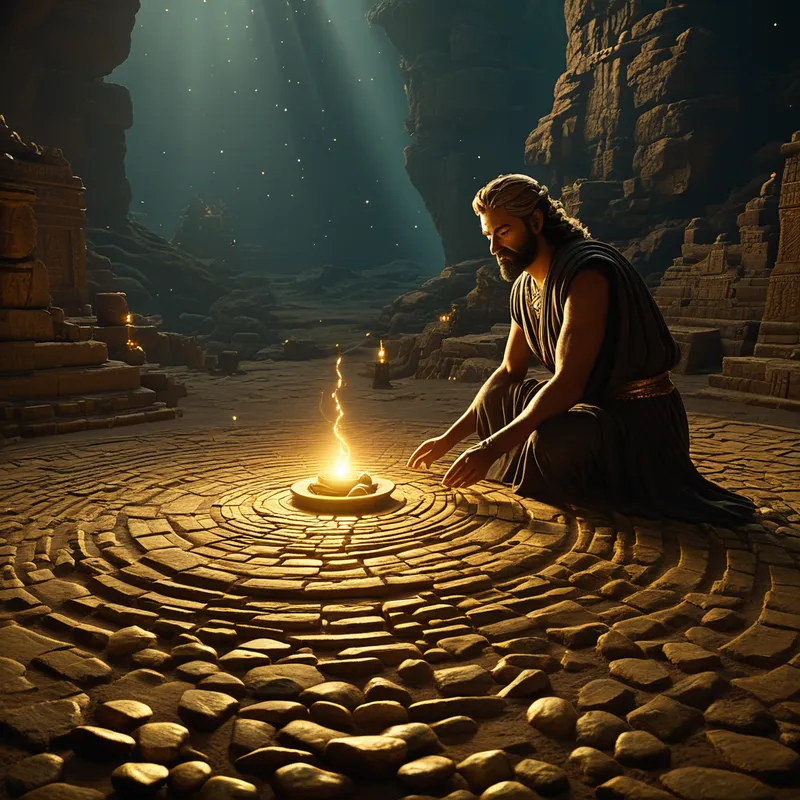
The Völuspá is [the cornerstone](/myths/the-cornerstone “Myth from Biblical culture.”/) of the Poetic Edda, our most vital source for Norse mythology. It was preserved in 13th-century Icelandic manuscripts, but its roots are undoubtedly far older, reaching back into the oral traditions of the Viking Age and beyond. This was not mere entertainment; it was sacred cosmology, recited likely by ritual specialists—seeresses or skalds—during significant gatherings, perhaps at religious feasts or rites of passage.
Its societal function was profound. It provided a complete narrative framework for existence: a meaningful origin, a definition of the current cosmic order (however fragile), and a definitive, cathartic end. It answered the deepest existential anxieties of a culture familiar with harsh winters, sudden death, and societal strife. The myth did not offer salvation from fate but a kind of grim dignity within it. By knowing the entire story—the [golden age](/myths/golden-age “Myth from Universal culture.”/), the corruption, the inevitable battle, and the rebirth—a listener could locate themselves within a grand, tragic, and ultimately regenerative cycle. It fostered a worldview of courage in the face of certain doom, and resilience rooted in the knowledge that life, in some form, always returns.
Symbolic Architecture
The Völuspá is not a [linear](/symbols/linear “Symbol: Represents order, predictability, and a direct, step-by-step progression. It symbolizes a clear path from cause to effect.”/) [history](/symbols/history “Symbol: History in dreams often represents the dreamer’s past experiences, lessons learned, or unresolved issues that continue to influence their present.”/) but a symbolic map of psychic [reality](/symbols/reality “Symbol: Reality signifies the state of existence and perception, often reflecting one’s understanding of truth and life experiences.”/). The seeress herself represents the voice of the deep, objective [psyche](/myths/psyche “Myth from Greek culture.”/)—[the Self](/myths/the-self “Myth from Jungian culture.”/) in Jungian terms—that holds the totality of the conscious and unconscious mind. Odin’s [quest](/symbols/quest “Symbol: A quest symbolizes a journey or search for purpose, fulfillment, or knowledge, often representing life’s challenges and adventures.”/) is [the ego](/myths/the-ego “Myth from Jungian culture.”/)’s desperate, often fearful, drive for this totality of [knowledge](/symbols/knowledge “Symbol: Knowledge symbolizes learning, understanding, and wisdom, embodying the acquisition of information and enlightenment.”/).
The entire prophecy is the psyche narrating its own birth, development, crisis, death, and regeneration to a part of itself that is only half-aware.
The golden age at Idavollr symbolizes the initial, naive state of [psychic wholeness](/symbols/psychic-wholeness “Symbol: A state of complete integration between conscious and unconscious aspects of the psyche, representing spiritual unity and self-realization.”/), where complexes (the gods) are in [harmony](/symbols/harmony “Symbol: A state of balance, agreement, and pleasing combination of elements, often associated with musical consonance and visual or social unity.”/). The murder of the wise being and the [death](/symbols/death “Symbol: Symbolizes transformation, endings, and new beginnings; often associated with fear of the unknown.”/) of Baldr represent the inevitable “fall” into [consciousness](/symbols/consciousness “Symbol: Consciousness represents the state of awareness and perception, encompassing thoughts, feelings, and experiences.”/)—the recognition of [shadow](/symbols/shadow “Symbol: The ‘shadow’ embodies the unconscious, repressed aspects of the self and often represents fears or hidden emotions.”/), [betrayal](/symbols/betrayal “Symbol: A profound violation of trust in artistic or musical contexts, often representing broken creative partnerships or artistic integrity compromised.”/), and [mortality](/symbols/mortality “Symbol: The awareness of life’s finitude, often representing transitions, impermanence, or existential reflection in dreams.”/). This shatters the naive unity. Loki, bound yet writhing, is the repressed [shadow](/symbols/shadow “Symbol: The ‘shadow’ embodies the unconscious, repressed aspects of the self and often represents fears or hidden emotions.”/), the chaotic and destructive potential that cannot be integrated and thus prepares its vengeance.
[Ragnarök](/myths/ragnark “Myth from Norse culture.”/) is the ultimate symbolic [event](/symbols/event “Symbol: An event within dreams often signifies significant life changes, transitions, or emotional milestones.”/): the apocalyptic confrontation between the established, but now rigid, psychic order (the gods) and the repressed, chaotic contents of the unconscious (the giants, monsters, and Loki’s kin). It is not merely destruction, but a necessary psychic [dissolution](/symbols/dissolution “Symbol: The process of breaking down, dispersing, or losing form, often representing transformation, release, or the end of a state of being.”/). The ego (Odin) must be devoured by the ravenous, instinctual shadow (Fenrir). The heroic will to control (Þórr) must perish confronting the overwhelming [depths](/symbols/depths “Symbol: Represents the subconscious, hidden emotions, or foundational aspects of the self, often linked to primal fears or profound truths.”/) of the unconscious (Jörmungandr). Only through this total annihilation can the field be cleared for renewal.
The Dreamer’s Resonance
When the pattern of the Völuspá stirs in modern dreams, it signals a profound process of psychic death and rebirth. The dreamer may not see Norse gods, but the archetypal drama remains.
Dreams of a looming, inescapable catastrophe—a great wave, a world-ending storm, or a societal collapse—often mirror the approach of Ragnarök. This is not a prophecy of literal doom, but a somatic expression that a long-held identity, a life structure, or a foundational belief system has become untenable and must collapse. The dreamer is experiencing the “[Fimbulwinter](/myths/fimbulwinter “Myth from Norse culture.”/)” of the soul—a period of emotional coldness, stagnation, and despair that precedes a major transformation.
Conversely, dreams of finding a pristine, green land after a disaster, or discovering a precious, ancient object in the ashes, resonate with the myth’s final stanzas. They indicate the nascent beginning of a new psychic attitude emerging from the dissolution. The somatic feeling is one of profound relief, quiet awe, and a fragile, green-shoot hope growing in the cleared space of a burned-out forest of the old self.
Alchemical Translation
The alchemical process mirrored in the Völuspá is the [nigredo](/myths/nigredo “Myth from Alchemical culture.”/) leading to a new albedo—the blackening putrefaction that gives way to whitening rebirth. For the modern individual undergoing individuation, the myth provides a brutal but reassuring map.
The first step is the “Odin moment”: a conscious crisis that drives one to seek wisdom from the depths, often at great cost (the sacrifice of a previous, simpler worldview). This begins the revelation of one’s own personal “cosmology”—the hidden traumas (the murdered giant), the lost innocence (Baldr), and the bound but active shadow (Loki).
The work is not to prevent Ragnarök, but to have the courage to consciously participate in it. The ego must consent to its own necessary deconstruction for the Self to be reborn.
The alchemical fire of Ragnarök is the heat of intense psychological conflict, depression, or life crisis that burns away the outmoded [persona](/myths/persona “Myth from Greek culture.”/) and rigid complexes. It feels like annihilation. Yet, the myth insists this is not the end. The green earth rising is the emergence of a more authentic, resilient personality structure, grounded in the reality of both creation and destruction. The recovered “golden tablets” are the core, eternal values and truths of the individual’s Self that survive all personal transformations. One does not return to the naive golden age, but moves forward, carrying the hard-won knowledge of the cycle itself, becoming, in a sense, both the fallen god and the silent seeress who contains the whole story.
Associated Symbols
Explore related symbols from the CaleaDream lexicon: