Villa of the Papyri Myth Meaning & Symbolism
A myth of a library-villa consumed by volcanic fire, preserving its wisdom in ash, speaking to the soul's buried knowledge and the alchemy of destruction.
The Tale of Villa of the Papyri
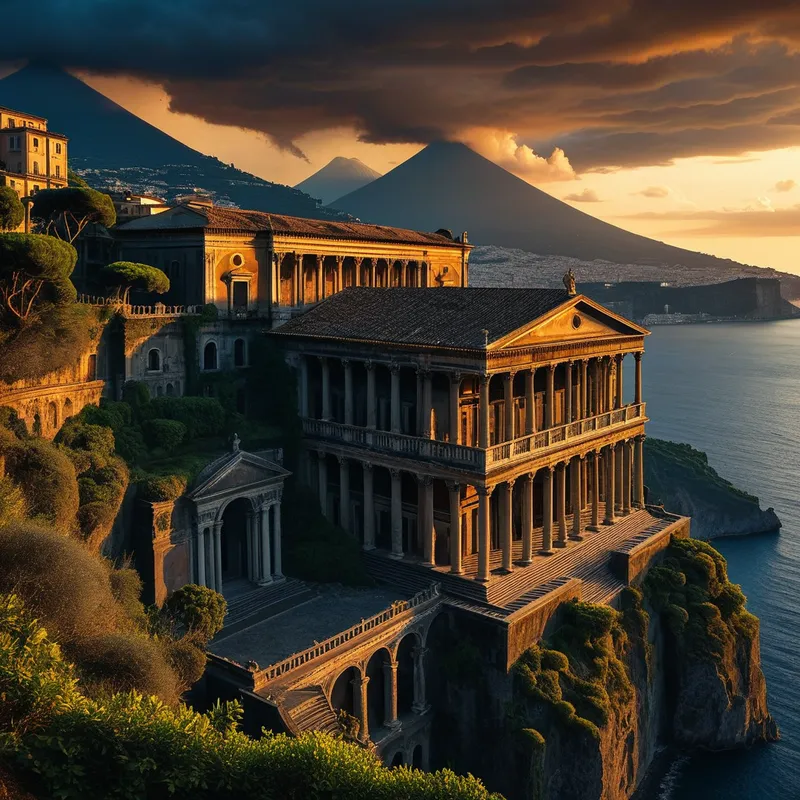
Hear now, not of gods and heroes, but of a sanctuary of thought. On the sun-drenched shoulder of the mountain that was a god, Vulcanus, there stood a palace not of politics, but of the mind. The Villa of the Papyri. Its colonnades drank the Tyrrhenian light, its gardens whispered with the debates of Epicureans. Here, the true treasure was not gold, but ink. Hall after hall, chamber upon chamber, held the fragile, precious skins of knowledge—the dialogues of philosophers, the verses of poets, the speculations of scientists. It was a world captured in cursive script, a second cosmos housed in cedar boxes.
The master of the house was a man whose soul was a library. His breath was the scent of papyrus, his heartbeat the turning of a page. He walked among the scrolls as a gardener among rare blooms, tending to the fragile growth of human understanding. For generations, the villa was a beacon, a lighthouse of reason whose flame was lit by inquiry.
But the mountain remembered its nature. The earth, which had given the clay for the tablets and the reeds for the paper, began to stir in its sleep. First came the tremors, subtle as a scholar’s doubt. Then the air grew thick and carried the scent of stone burning deep below. The sky, once the color of a clear Mediterranean mind, yellowed and dimmed.
On the day the world changed, the sun was blotted out not by clouds, but by the mountain’s exhalation. A great black plume, the very shadow of chaos, rose to heaven. Then came the rain—not of water, but of fire and pumice and a fine, relentless ash. It fell like a shroud, like time itself made solid. The gardeners fled, the statues wept stone tears under the scorching hail, and the sea roared a warning that could not be heeded.
The master stood in the heart of his world, the great library. The air grew hot and choked. He did not flee to save his life, but to enact a final, desperate act of preservation. As the darkness poured through the high windows, he and his most loyal scribes moved not toward the door, but deeper into the stacks. They did not try to carry the knowledge out; they sought to seal it in. With a reverence bordering on ritual, they closed the cabinets, they rolled the final scrolls, they laid the precious cases in the niches of the walls, as if putting children to bed before a long night. It was not a rescue, but a consecrated burial. They were interring the mind of their age, trusting it to the very force that sought to destroy it.
The pyroclastic surge came then—a wave of unimaginable heat and force that flowed through the halls like a river of doom. It carbonized wood in an instant, fused marble, and embraced every scroll in a final, fiery grasp. In that catastrophic kiss, something miraculous was forged. The fire did not merely destroy; it fixed. The scrolls were not reduced to nothingness. They were transformed. Their ink was baked into their very fibers, their words sealed inside cylinders of charcoal. The villa, the library, the entire city around it, was entombed in a deep, silent grave of ash and stone. The world forgot. The sea of grass grew over the memory. The wisdom slept, a seed in the darkest earth, waiting for a hand to brush away the centuries.
Cultural Origins & Context
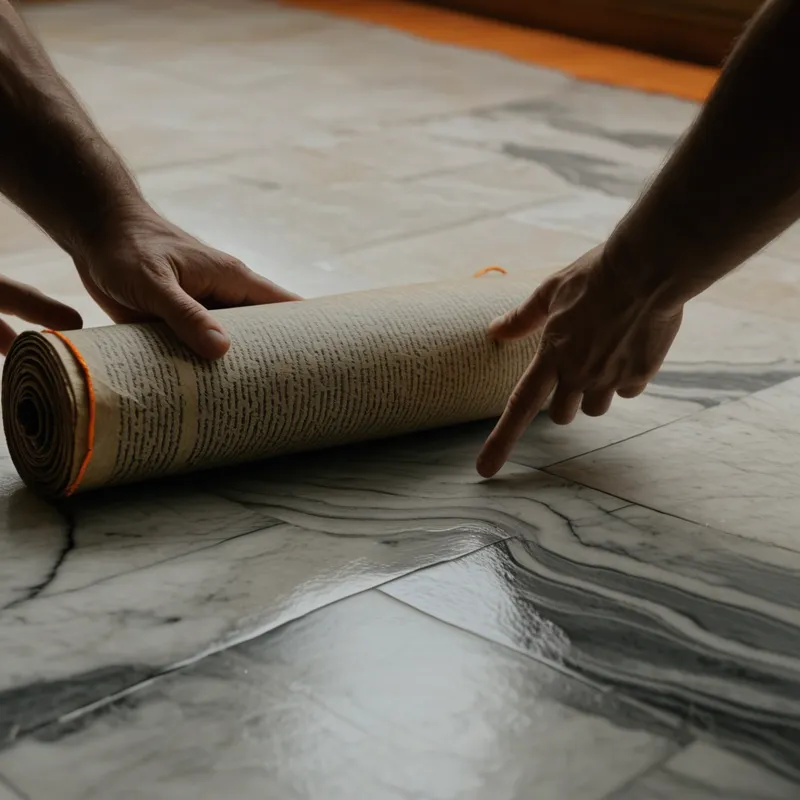
This is a modern myth, born not from the ancient Roman imagination, but from the stunning archaeological reality of Herculaneum. The actual Villa dei Papiri, buried by the eruption of Mount Vesuvius in 79 CE, was a historical site of immense philosophical importance, belonging likely to Lucius Calpurnius Piso Caesoninus. Its library contained the only surviving library from the classical world, primarily works of the Epicurean philosopher Philodemus.
The “myth” we tell today is a psychological and cultural narrative woven around this event. It functions as a profound metaphor crafted by the modern mind to make sense of the find. In antiquity, the eruption was seen through a lens of divine wrath or cosmic misfortune. Our contemporary mythologizing of the villa serves a different societal function: it addresses our own anxieties about the fragility of knowledge, the loss of cultural memory, and the haunting possibility of recovery. It is a story told by archaeologists, historians, and poets of the present, a legend born from the silent dialogue between the excavator’s trowel and the carbonized scroll.
Symbolic Architecture
The Villa of the Papyri is not merely a building; it is a profound symbol of the psyche itself. The villa, with its many rooms, hidden passages, and central library, represents the architecture of the soul. The curated scrolls are the accumulated contents of a lifetime—our memories, learned knowledge, secret philosophies, and unexpressed thoughts, carefully stored but vulnerable.
The volcanic eruption symbolizes the inevitable, catastrophic psychic upheavals that life brings: trauma, sudden loss, depression, or any force that feels annihilating. It is the fire that seems to destroy the very structure of the self.
The most devastating fire does not always annihilate; sometimes it performs a terrible alchemy, transforming fragile memory into indelible fossil.
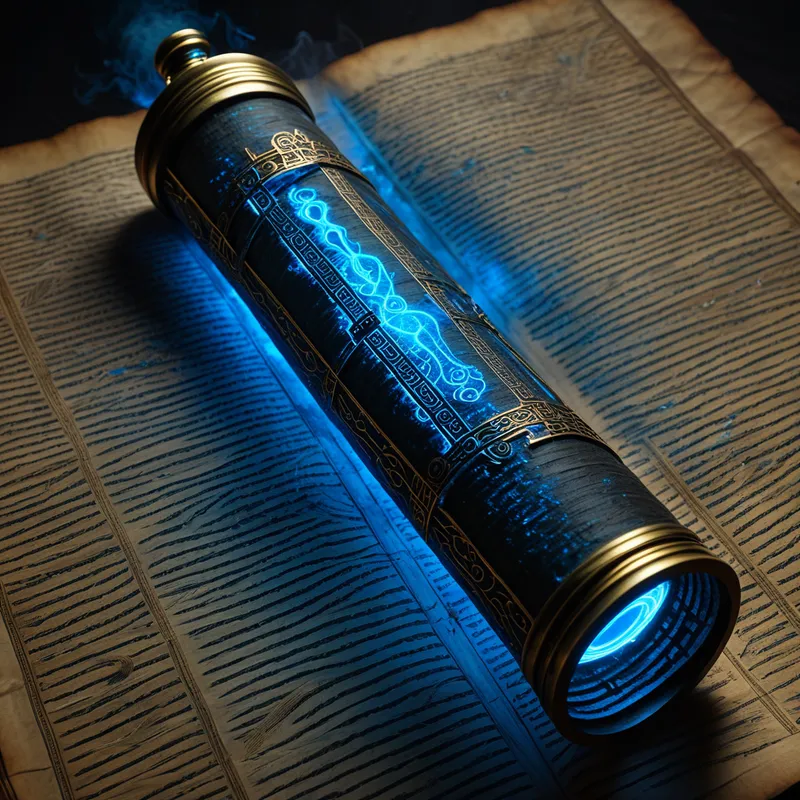
The crucial symbolic turn is the act of preservation-within-destruction. The master’s choice to “bury” the library rather than abandon it represents the psyche’s instinct for self-preservation at the deepest level. In the face of trauma, parts of the self are not lost but are encapsulated—carbonized, sealed away in the unconscious, waiting. The resulting “carbonized scroll” is thus the ultimate symbol of complex preservation. The content is seemingly inaccessible, hardened, locked away, yet its structure—its essential truth—remains intact, awaiting the sophisticated, patient technology (therapy, introspection, time) needed to “unscroll” it without causing it to crumble to dust.
The Dreamer’s Resonance
To dream of the Villa of the Papyri is to dream of one’s own buried interior. Such dreams often carry a somatic quality of pressure, of being buried under earth or ash, coupled with a paradoxical sense of quiet awe. You may dream of wandering endless, ruined hallways lined with sealed doors or locked cabinets. You might find a single, blackened object—a book, a box, a scroll—that feels overwhelmingly significant but impossible to open.
This dream pattern signals a process of confronting the psychic shadow and the buried treasures of the personal past. The psyche is indicating that a major cataclysm—a past hurt, a repressed emotion, a forgotten passion—has sealed away vital parts of your story. The dream is not a nightmare of pure terror, but one of melancholic discovery. The feeling is of being near a great wealth you cannot yet access. It marks the beginning of an archaeological process within the self, where the dreamer is being made aware of the depth and preservation of their own history, however damaged it may seem. The volcanic ash in the dream is the protective, if stifling, medium of repression itself.
Alchemical Translation
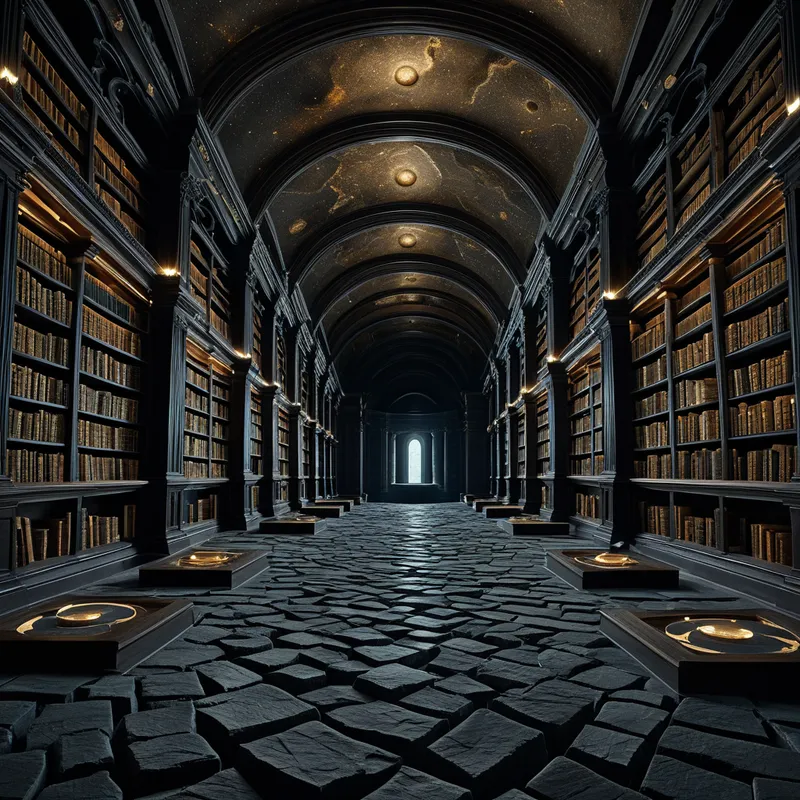
The myth models the individuation process as one of catastrophic preservation and meticulous, non-invasive recovery. The first alchemical stage, nigredo (blackening), is represented in full by the volcanic burial—the descent into utter darkness, the apparent ruin of the conscious personality and its treasured structures.
The villa’s centuries of silence are the mortificatio—the extended period of putrefaction and waiting, where the old form decomposes into its essential, stable components. The carbonized scroll is the product of this stage: the prima materia of the soul, a blackened, seemingly worthless lump that contains the entire philosophical gold.
The work is not to revive the dead, but to learn the language of the fossil.
The modern process of using multi-spectral imaging and virtual unwrapping to read the scrolls is the perfect metaphor for the later alchemical stages of albedo (whitening) and rubedo (reddening). This is the work of therapy, deep reflection, and active imagination. It is not a violent excavation that shatters the find, but a patient application of new “light”—compassionate insight, symbolic interpretation, and respectful curiosity—to illuminate what is already there. One does not force the scroll open; one learns to see through its layers. The final “reading” of the text is the integration of lost wisdom—the recovery of a personal philosophy, a forgotten strength, or a traumatic truth—back into the fabric of the living self. The villa is not rebuilt as it was; its treasures are translated, becoming part of a new, more conscious psychic structure, resilient because it knows and incorporates its own fiery history.
Associated Symbols
Explore related symbols from the CaleaDream lexicon: