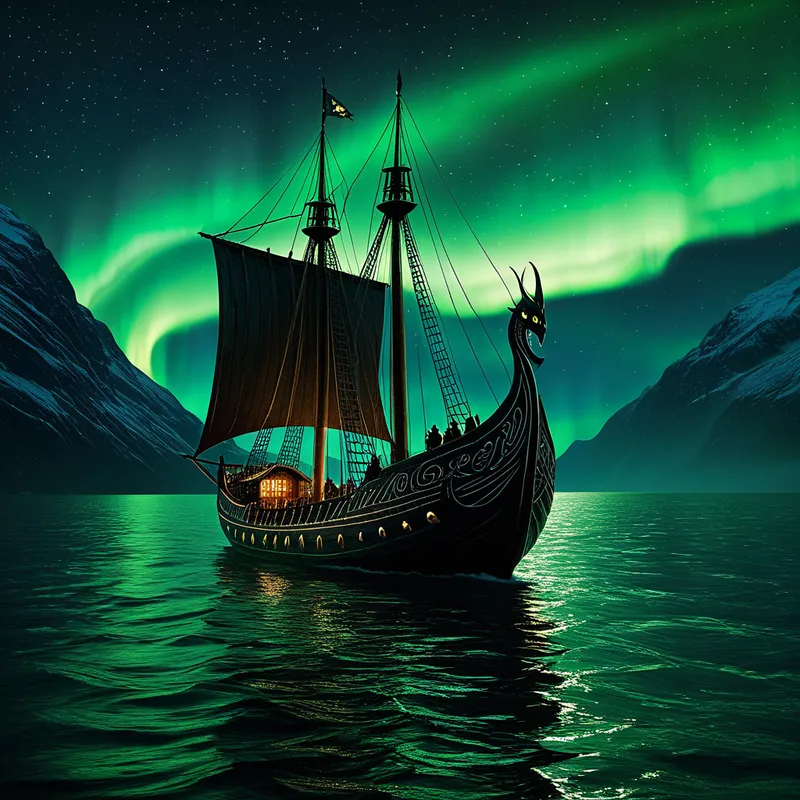
Viking Longship Myth Meaning & Symbolism
The longship is the soul's vessel, carved from the world tree, sailing the whale-road between worlds, steered by fate and the courage to face the unknown.
The Tale of the Viking Longship
Listen. Hear the wind that does not blow through trees, but through the ribs of a beast not born of flesh. It begins not with a king’s decree, but with a whisper in the heart of an oak, a tree that has drunk deep from the roots of Yggdrasil itself. The master builder, his hands mapped with the rivers of his life, stands before it. He does not see timber; he sees a sleeping dragon, a coiled serpent of potential. His axe is not a tool of death, but of midwifery.
With each stroke, he sings. He sings to the spirits of the wood, to the landvættir, begging their permission to shape this world-tree flesh into a vessel for world-spanning dreams. The keel is laid—the backbone of the beast. Ribs are curved and fastened with iron that sings of the forge’s heart. This is no mere construction; it is a summoning. The prow takes shape, a snarling dragon or a coiled serpent, its eyes inlaid with stolen moonlight. It is not for terror, but for sight. Those eyes must pierce the veils between worlds, must stare down the hafgufa that dwells in the abyss.
On the day of launching, the silence is heavier than the ship. Men gather, not as warriors yet, but as bearers. They place their hands on the smooth, tarred hull. It is cold, like the skin of a great fish. They heave, and the groaning is not of wood on log, but of a creature being born into a new element. It slides, a sigh becoming a roar, and meets the sea. The water accepts it, not with a splash, but with a deep, resonant thrum, as if the ocean recognized a part of itself returning, now shaped by will.
Now, the crew. They are not just men; they are the breath in the ship’s lungs. Thor’s strength is in their arms at the oars. Odin’s hunger for knowledge is in the helmsman’s scanning gaze, reading stars and bird-flight. The spirit of Njörðr fills the single, square sail as it snaps taut, a thunderclap of intent. They push off from the known shore—the smell of hearth-smoke and earth—and enter the whale-road.
Here, the myth truly lives. The longship is a sliver of order in a realm of chaos. Beneath, Jörmungandr stirs in his sleep. Around, mists thicken into shapes of forgotten gods and the whispers of drowned men. The ship climbs mountains of black water and plunges into valleys that block out the sky. The men row until their breath is fire and their sweat is salt, becoming one creature with the vessel. They are not sailing on the sea; they are in a dialogue with it, a desperate, respectful negotiation with a power that can grant glory or a grey, anonymous grave.
And when the new land rises from the haze—a smudge of green, a cliff of stone—the dragon-prow’s eyes see it first. The journey’s end is not a destination, but a transformation. The men who step onto that foreign beach are not the men who left. The ship, resting on the shore, is now a skeleton of a journey, a story carved in wood and salt. It has done its duty: it has carried a fragment of fate across the gap between what is and what could be.
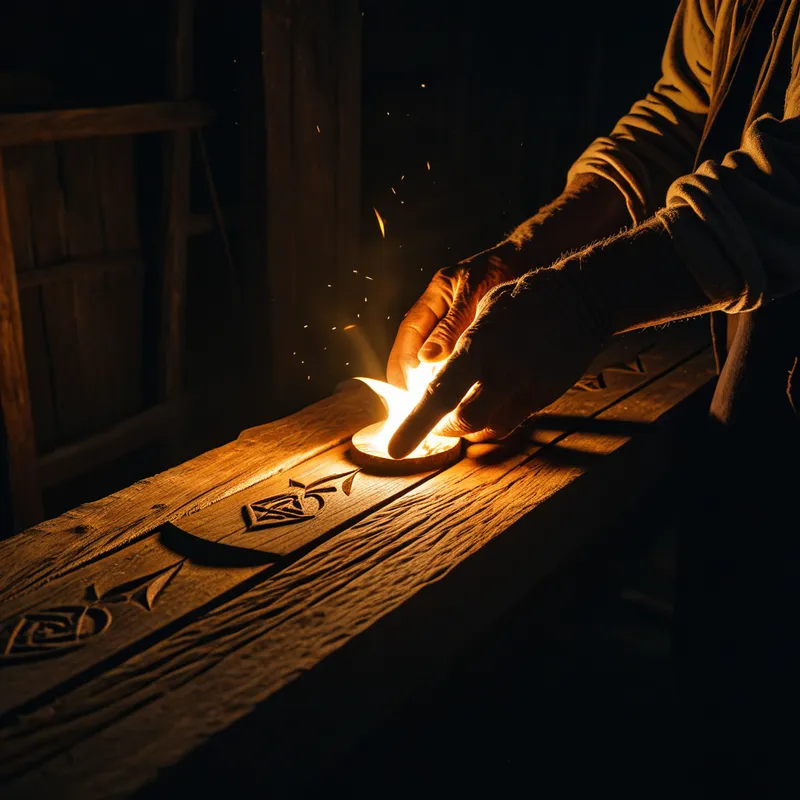
Cultural Origins & Context
The longship was not merely a vehicle of the Viking Age (c. 793–1066 CE); it was the central nervous system of Norse culture, and its mythic resonance grew directly from brutal, beautiful reality. Its stories were not written in sagas initially, but enacted on the open ocean and recounted in smoky halls. The skald, the poet-historian, was its primary mythmaker. He would weave tales not of gods building ships, but of legendary kings and heroes whose destinies were inseparable from their vessels—ships with names like Long Serpent or Sea-Stallion.
These stories served multiple societal functions. They were technical lore, encoding knowledge of navigation, weather, and ship-handling in poetic form. They were ideological engines, glorifying the values of exploration, resilience, and communal effort. Most profoundly, they mediated the Norse relationship with a cosmos that was inherently perilous and fluid. The longship myth provided a psychic container for the terror and awe of ocean travel. It transformed a risky economic or military venture into a cosmic drama, where the sailor was not a victim of the sea, but an active participant in an archetypal journey shared by gods and ancestors. The ship was a mobile piece of Midgard, a bubble of human order daring to traverse the chaotic realms of Jötunheimr (in the form of storms and monsters) and even skirt the edges of the unknown.
Symbolic Architecture
Psychologically, the Viking longship is a supreme symbol of the vessel of consciousness—the constructed self that navigates the depths of the unconscious. Every element is symbolic.
The keel, carved from the sacred oak, represents the central, axial truth of the individual, their connection to the foundational World Tree. It is the core principle around which the identity is built. The overlapping planks of the hull are the layered experiences, memories, and cultural conditioning that shape the persona, made watertight by effort and tar (the will to maintain integrity).
The prow is the directed attention, the conscious intention that cuts through the ambiguous waters of life. Its dragon-head is the sublimated aggression and primal energy necessary for forward motion, transformed from a destructive force into a guiding, protective figurehead.
The single mast and sail represent the individual’s connection to transpersonal forces—the wind of spirit, inspiration, or fate (ørlög). One can prepare the vessel, but one cannot control the wind; one can only learn to harness it. The oars are the disciplined efforts of the ego, the daily, rhythmic labor required when the winds of fortune fail. The crew symbolizes the complex, often conflicting, aspects of the psyche working in (hopefully) unison toward a common goal. The helmsman is the guiding function of the Self, the inner compass oriented by stars of deep purpose.
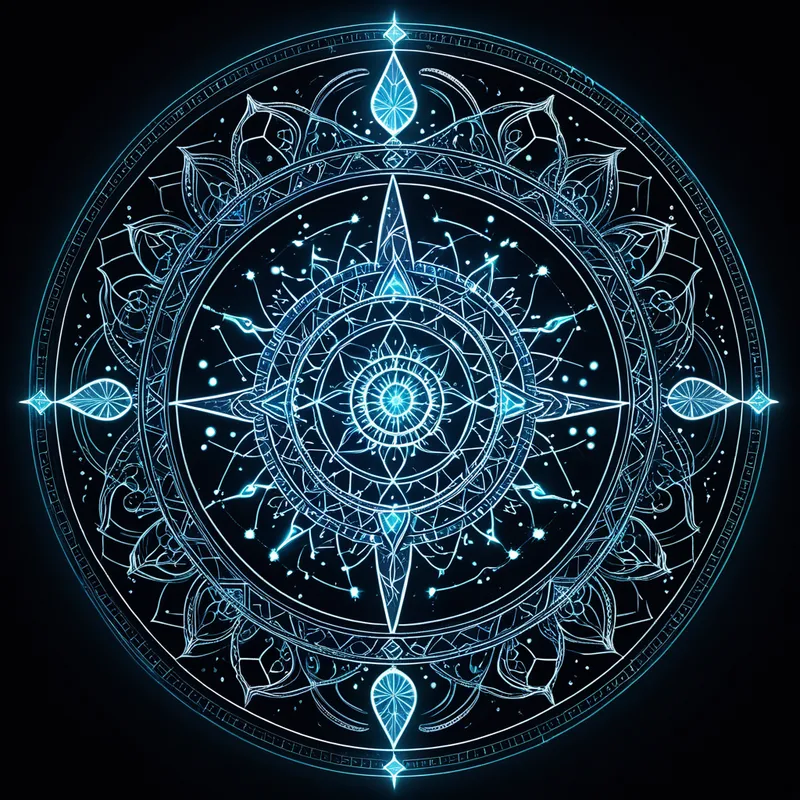
The Dreamer’s Resonance
To dream of a Viking longship is to dream of the psyche in a state of profound transition or calling. The somatic feeling is often one of being carried or in motion, yet with underlying tension—the creak of timbers, the strain of the oar.
If the dream-ship is under full sail on open sea, it suggests the dreamer is in a phase where they are being propelled by larger, unconscious forces—a period of inspiration, destiny, or life carrying them forward with a sense of inevitability. If the ship is being rowed through a calm, foggy expanse, it speaks to a phase of diligent, conscious effort through a period of low visibility or direction, relying on inner discipline.
A ship under construction indicates the ego is being rebuilt; new structures of identity are being formed from raw, perhaps ancient, psychic material (Yggdrasil’s oak). A ship stranded on land or stuck in harbor signals a feeling of potential unrealized, a journey postponed, or a self that feels disconnected from its elemental medium—the deep waters of emotion, soul, or life’s flow. A sinking or shattered ship is a stark image of a psychic vessel that can no longer contain the pressures of the unconscious or the storms of life, suggesting a potential breakdown preceding a breakthrough.
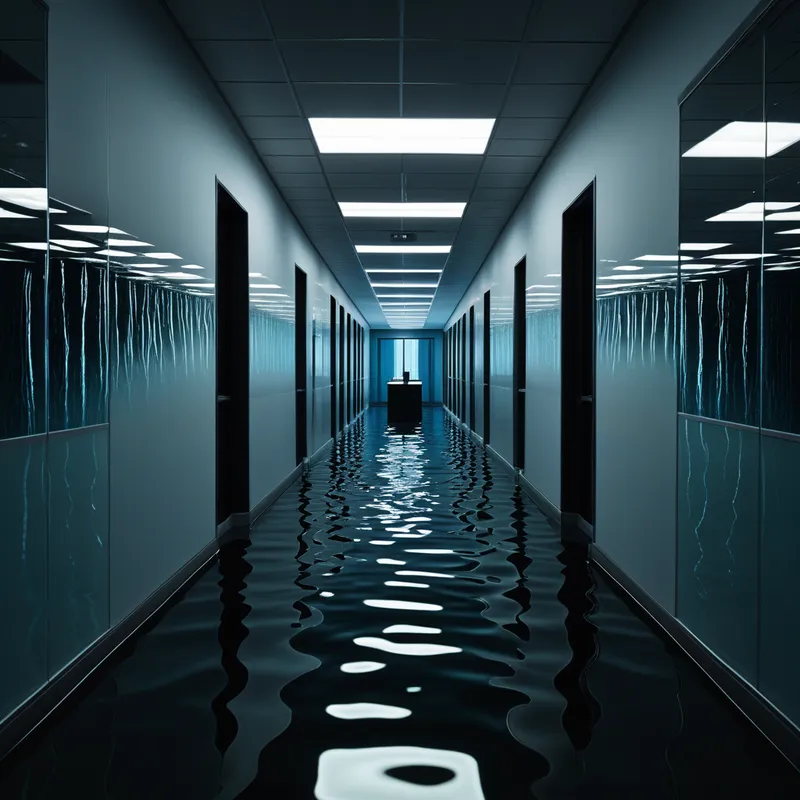
Alchemical Translation
The myth of the longship models the alchemical process of psychic individuation—the journey toward becoming an integrated, whole self. The prima materia, the base matter, is the raw, living oak, symbolic of the undifferentiated, natural state of the psyche, full of potential but unshaped.
The shipwright’s work is the opus, the great work. The cutting, shaping, and joining are the painful but necessary processes of self-examination, differentiation, and conscious decision-making that shape a coherent identity from chaotic inner experience. The application of tar (making the vessel watertight) is the development of boundaries and a resilient persona that can interface with the world without being flooded by it.
The launching is the critical leap into the solutio—the watery dissolution. One must commit the constructed self to the depths of the unconscious, to relationship, to life’s journey, knowing it may be tested to destruction.
The voyage itself is the stage of coagulatio and separatio within the medium of the unconscious. The ego (the crew) must separate from the safe shore of known identity and coagulate into a new, more adaptable form through struggle and dialogue with the deep (storms, monsters, vastness). The navigation by stars is the reliance on transpersonal symbols, inner wisdom, and the guiding archetype of the Self.
Finally, reaching a new shore symbolizes the albedo or rubedo—the whitening or reddening. It is the achievement of a new level of consciousness, the discovery of unknown territory within oneself. The ship, now still, represents the temporary completion of one cycle of the opus. The transformed individual disembarks, carrying the wisdom of the journey, while the vessel rests, ready to be refitted for the next voyage into the unknown. The goal is not a final port, but the capacity for endless becoming, forever sailing the whale-road between the realms of who one is and who one might be.
Associated Symbols
Explore related symbols from the CaleaDream lexicon: