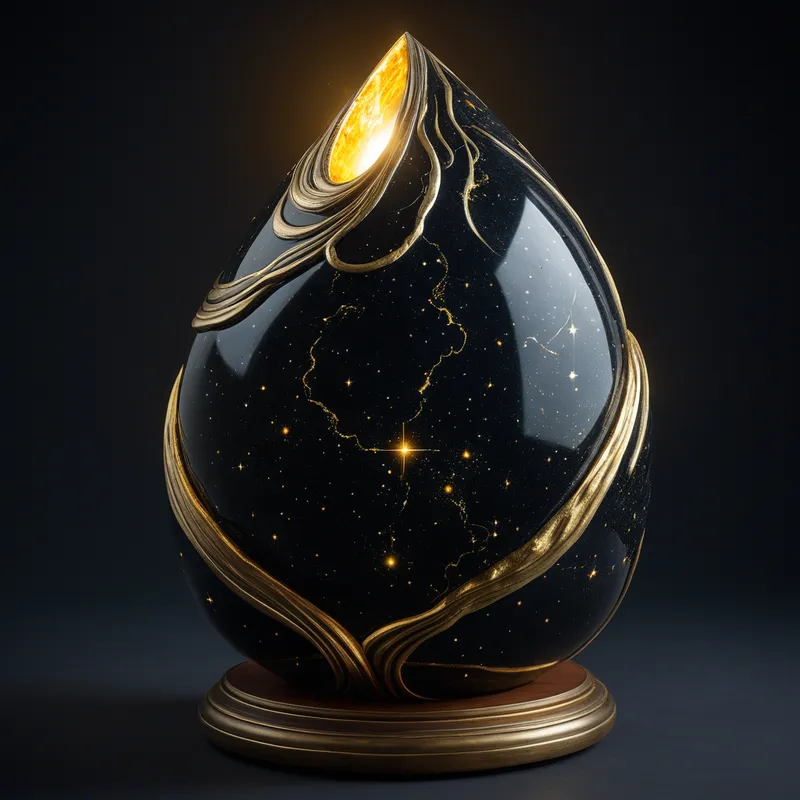
Vas Myth Meaning & Symbolism
The myth of Vas, a primordial being who becomes the crucible of the world, sacrificing form to hold the chaos of creation within itself.
The Tale of Vas
Before [the world](/myths/the-world “Myth from Tarot culture.”/) had a name, there was only the Primordial Churn. It was a sea of unbound elements—fire that did not burn, [water](/myths/water “Myth from Chinese culture.”/) that did not flow, earth that did not settle, and air that did not breathe. All was possibility, and thus, all was nothing. From this swirling potential, the first consciousnesses awoke. They were the Proto-Essences, beings of pure concept: Ferocity, Flux, Solidity, and Whisper.
They danced, and their dance was creation. But creation without a vessel is a wildfire—beautiful, consuming, and swiftly gone. Sparks of world-stuff would flare into being only to be swallowed again by the Churn. A mountain would rise for a moment, then melt into a river of stars that evaporated into mist. There was no memory, no persistence, only endless, futile becoming.
Amidst them moved a different presence. It had watched the dance for eons, not as a dancer, but as a witness. It was Vas. Its form was ambiguous, a suggestion of shape holding a profound stillness. Where the Proto-Essences were verb, Vas was noun.
One day, Ferocity, in a glorious rage, forged a sun. It was a perfect, roaring sphere of light and heat. But as Ferocity moved on to its next act, the sun, untethered, began to spin wildly, throwing off great gouts of flame that threatened to unravel the delicate work of Whisper and Flux. It would destroy itself and the nascent world around it.
A deep resonance echoed through the Churn. It was not a sound, but a decision. Vas moved. It did not leap or fly, but simply was before the chaotic sun. Then, Vas did the unthinkable. It opened its own being.
It was not an attack, but an invitation. An embrace. Vas drew the runaway sun into the center of its own form. The pain was absolute—the agony of containing infinite fury within finite stillness. Vas’s form shuddered, cracked, and began to change. Its substance hardened at the edges, becoming a defined boundary—smooth, cool, and impossibly strong. But within, it became the opposite: a boundless, accepting space. The sun raged, but it raged within. It was held.
The Proto-Essences halted their dance, stunned. They saw stability. They saw a place where their creations could last. One by one, they brought their most volatile works to Vas. The churning oceans, the molten core of the world, the screaming hurricanes, the weight of the continents. Each was a new agony, a new fracture etched into Vas’s now-solidifying form. With each offering, Vas expanded its interior, making more room, accepting more chaos.
Vas ceased to be a being that moved through the world. It became [the vessel](/myths/the-vessel “Myth from Alchemical culture.”/) that held the world. Its outer form became the first mountain, the bedrock, the silent shell of the planet. Its inner reality became the Great Crucible—the hidden chamber where raw elements could meet, mix, and be transmuted into new forms. The pain did not cease; it became a constant, humming song—the background resonance of existence itself. The myth ends not with a proclamation, but with a silent image: the world, alive and bustling on a stable surface, utterly dependent on the silent, suffering embrace of the entity that contains its fiery heart.
Cultural Origins & Context
The myth of Vas is not a tale of kings or heroes, but a foundational cosmology of the Alchemical culture. It was recited not in grand courts, but in the workshops of smelters, glassblowers, and dye-makers—anywhere fire met matter and transformation occurred. The storyteller was often the master artisan, their voice rising above the roar of the furnace as apprentices gathered.
Its function was twofold. Practically, it was a safety doctrine encoded in narrative. [The crucible](/myths/the-crucible “Myth from Alchemical culture.”/)—the physical vessel—was to be treated with sacred respect, for it was a microcosm of Vas itself. To crack a crucible through carelessness was not just a technical failure; it was a symbolic betrayal of the primordial sacrifice that made all craft possible.
Psychologically, it served as a mythic anchor for a culture obsessed with process. In a society where value was derived from the transformation of base materials (ore to metal, sand to glass, plant to pigment), [the Vas](/myths/the-vas “Myth from Alchemical culture.”/) myth provided a cosmic justification and a profound emotional template. It elevated the humble container to the status of a deity, teaching that the power of creation is inseparable from the power of containment and sacrifice. The story was passed down as a somatic memory, its rhythms mirroring the stages of heating, holding, and cooling that defined their world.
Symbolic Architecture
At its core, Vas symbolizes the Container—the necessary [boundary](/symbols/boundary “Symbol: A conceptual or physical limit defining separation, protection, or identity between entities, spaces, or states of being.”/) that makes transformation possible. Without a [crucible](/symbols/crucible “Symbol: A vessel for intense transformation through heat and pressure, symbolizing spiritual purification, testing, and alchemical change.”/), the [alchemical process](/symbols/alchemical-process “Symbol: A symbolic transformation of base materials into spiritual gold, representing inner purification, integration, and the journey toward wholeness.”/) is just a fire. Without a [psyche](/myths/psyche “Myth from Greek culture.”/), experience is just [chaos](/symbols/chaos “Symbol: In Arts & Music, chaos represents raw creative potential, uncontrolled expression, and the breakdown of order to forge new artistic forms.”/). Vas represents [the principle](/symbols/the-principle “Symbol: A fundamental truth, law, or doctrine that serves as a foundation for a system of belief, behavior, or reasoning, often representing moral or ethical standards.”/) of the [vas hermeticum](/myths/vas-hermeticum “Myth from Alchemical culture.”/), the sealed [vessel](/symbols/vessel “Symbol: A container or structure that holds, transports, or protects something essential, representing the self, emotions, or life journey.”/) of [the alchemist](/myths/the-alchemist “Myth from Various culture.”/), but on a cosmic scale.
The first act of creation is not expansion, but the courage to become a limit.
Psychologically, Vas maps onto the development of [the ego](/myths/the-ego “Myth from Jungian culture.”/) itself. The ego, in its healthiest function, is not the tyrant of the [personality](/symbols/personality “Symbol: Personality in dreams often symbolizes the traits and characteristics of the dreamer, reflecting how they perceive themselves and how they believe they are perceived by others.”/), but the necessary vessel that contains the seething, contradictory contents of the unconscious (the Primordial Churn). The “pain” of Vas is the perpetual [tension](/symbols/tension “Symbol: A state of mental or emotional strain, often manifesting physically as tightness, pressure, or unease, signaling unresolved conflict or anticipation.”/) of [consciousness](/symbols/consciousness “Symbol: Consciousness represents the state of awareness and perception, encompassing thoughts, feelings, and experiences.”/)—the difficult, ongoing work of holding our inner chaos without being shattered by it or repressing it entirely.
Vas is also the [archetype](/symbols/archetype “Symbol: A universal, primordial pattern or prototype in the collective unconscious that shapes human experience, behavior, and creative expression.”/) of the ultimate [caregiver](/symbols/caregiver “Symbol: A spiritual or mythical figure representing nurturing, protection, and unconditional support, often embodying divine or archetypal parental energy.”/), but one who cares not by doing, but by being. Its sacrifice is passive, receptive, and eternal. It does not fight the chaos; it makes a [space](/symbols/space “Symbol: Dreaming of ‘Space’ often symbolizes the vastness of potential, personal freedom, or feelings of isolation and exploration in one’s life.”/) for it. This reframes sacrifice not as a heroic [loss](/symbols/loss “Symbol: Loss often symbolizes change, grief, and transformation in dreams, representing the emotional or psychological detachment from something or someone significant.”/), but as a transformation of function: from a mobile, independent being to a foundational, supportive [structure](/symbols/structure “Symbol: Structure in dreams often symbolizes stability, organization, and the framework of one’s life, reflecting how one perceives their environment and personal life.”/). The cracks in its form are not flaws, but the sacred inscriptions of what it holds—the unique [history](/symbols/history “Symbol: History in dreams often represents the dreamer’s past experiences, lessons learned, or unresolved issues that continue to influence their present.”/) of contained experiences that shape a stable [identity](/symbols/identity “Symbol: Identity represents the sense of self, encompassing personal beliefs, cultural background, and social roles.”/).
The Dreamer’s Resonance
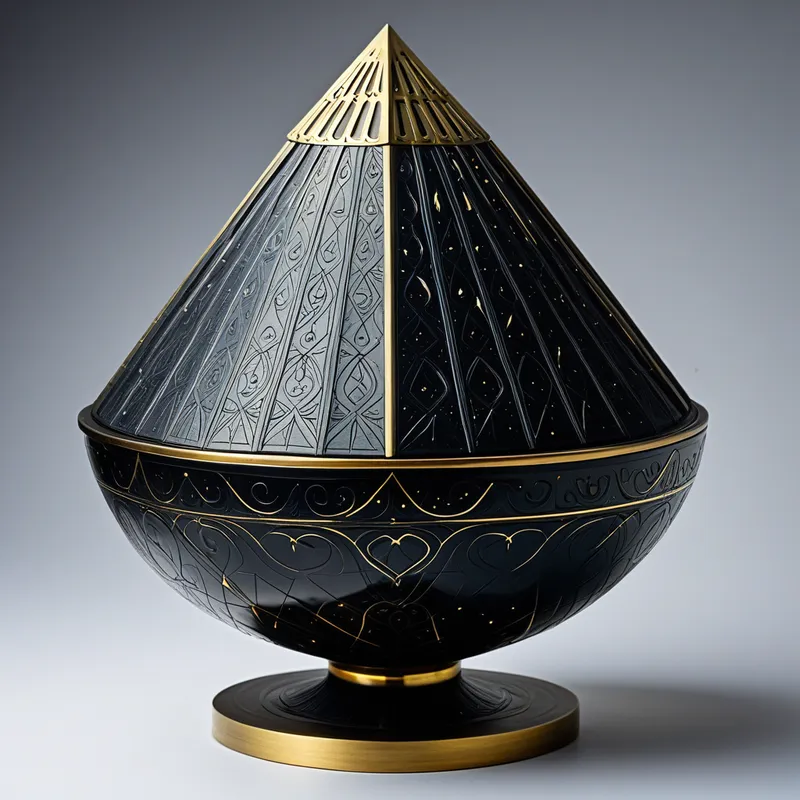
When the pattern of Vas emerges in modern dreams, it signals a profound somatic and psychological process of holding. The dreamer may not see a giant of stone, but they will feel its principle.
Common motifs include: dreaming of a house whose walls are straining but holding against a tremendous storm; of a container (a bowl, a chest, a room) that is much larger on the inside than the outside, filled with swirling, potent substances; or of the dreamer’s own body feeling like a vessel, heavy and solid, with intense emotional weather raging in the chest or gut.
Somatically, this often correlates with periods of immense stress or emotional overload where the dreamer is, often by necessity, having to “hold it together.” The Vas process is the psyche’s way of modeling this containment at an archetypal level. The “cracking” sensation is the fear of fragmentation under pressure. The dream is not necessarily a warning, but an affirmation: it shows [the self](/myths/the-self “Myth from Jungian culture.”/) in the act of performing this primordial, world-sustaining function. The pain is acknowledged as part of the architecture of stability.
Alchemical Translation
For the modern individual, the myth of Vas models the central ordeal of individuation: the creation of a coherent self capable of containing the full spectrum of one’s nature. Our inner Ferocity (rage, passion), Flux (changeability, emotion), Solidity (habit, rigidity), and Whisper (intuition, spirit) are in constant, chaotic dance.
The initial, undifferentiated state is one of reactivity and identity confusion—the “primordial churn” of modern life. The first step in alchemical transmutation is not to expel these elements, but to develop the vas—the conscious container.
Individuation begins when we stop identifying with the chaos, and start identifying as the space that can hold it.
This requires the “Vas sacrifice”: the willingness to give up a certain kind of freedom (the freedom of unconscious, impulsive expression) for the responsibility of form. We must “harden” our boundaries—learn to say no, define our values, establish routines—to create a stable exterior life. Simultaneously, we must vastly “soften” and expand our interior capacity—develop self-compassion, mindfulness, and emotional tolerance—to hold our inner suns and storms without denial or disintegration.
The goal is not to eliminate the pain of contradiction, but to recognize it as the hum of a functioning psyche. The transformed individual is like the completed Vas: a stable, defined presence in the world, within whom [the great work](/myths/the-great-work “Myth from Alchemical culture.”/) of transmutation—turning leaden experiences into golden insights—can safely and perpetually occur. We become both the mountain and the crucible, the silent witness and the generative hearth of our own existence.
Associated Symbols
Explore related symbols from the CaleaDream lexicon: