Utu the Sun God Myth Meaning & Symbolism
The daily journey of Utu, who emerges from the underworld to bring light, law, and truth, illuminating the hidden and judging the deeds of gods and mortals.
The Tale of Utu the Sun God
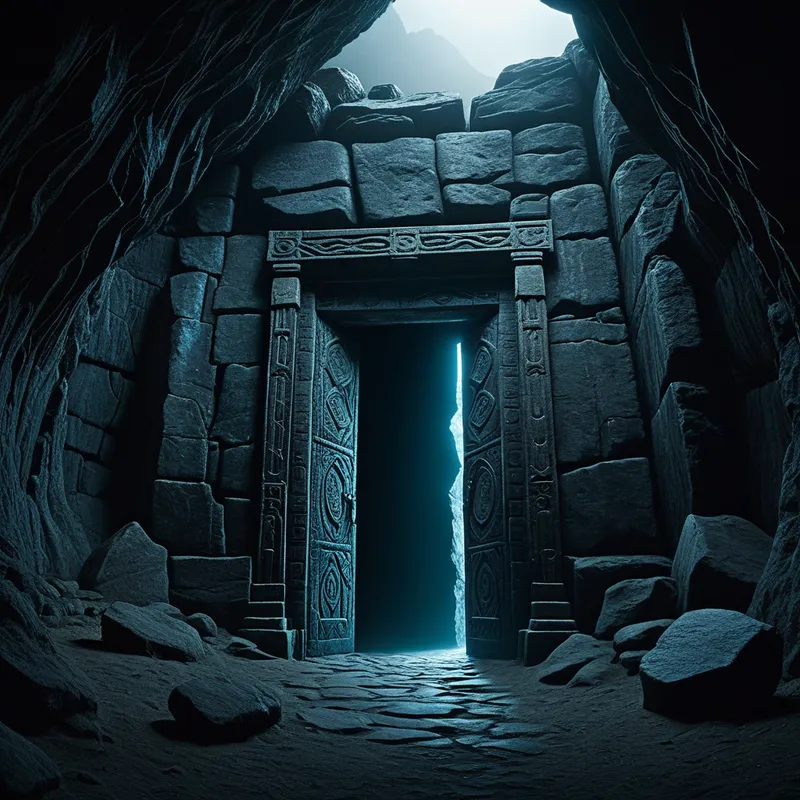
Before the first word was written on clay, before the first brick of ziggurat was laid, the world was a place of deep shadow and profound silence. In the east, beyond the seven mountains where the sky is born, a great door of lapis lazuli and obsidian was sealed shut. Behind it, in the fathomless belly of the Kur, the Sun slept.
His name was Utu. He was not born of the bright sky, but of the dark earth, son of the moon god Nanna and the grain goddess Ningal. Each night, he completed his journey across the heavens and descended into the underworld, not as a prisoner, but as a sovereign. There, in that silent, dusty realm where shades drank from puddles of mud, he would rest, gathering his essence, his light compacted into a single, potent seed.
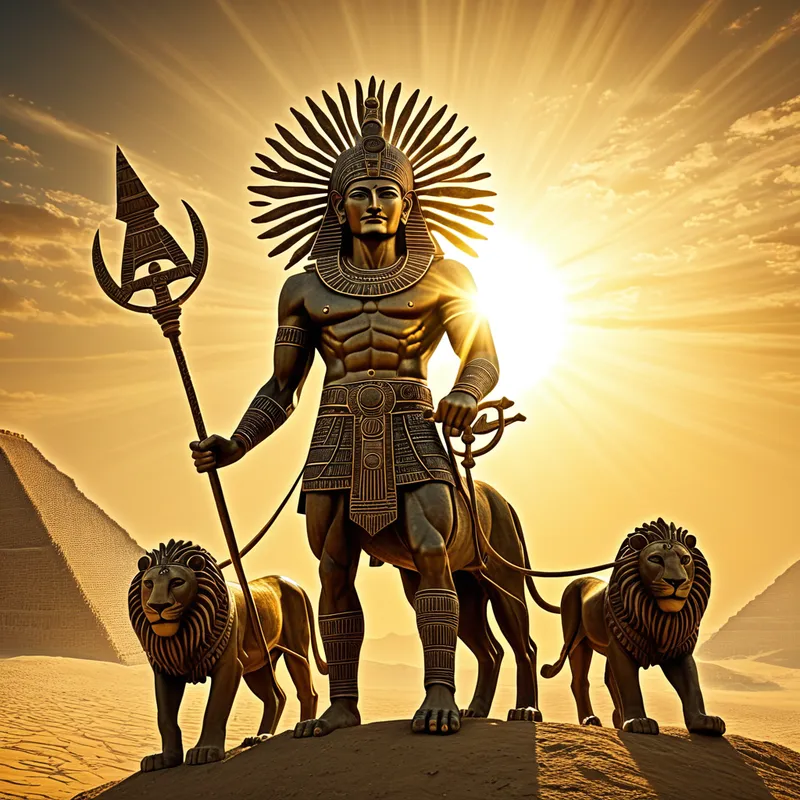
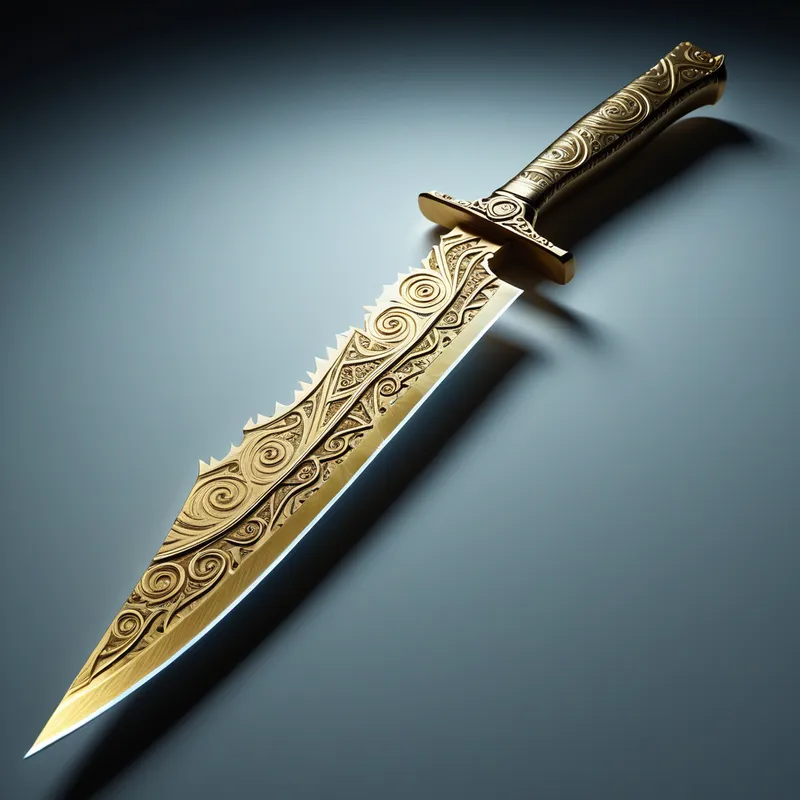
Then, in the deepest hour, a stirring. The great door in the east would groan on its hinges, pushed from within. Not by servants, but by Utu himself. He would emerge, not as a ball of fire, but first as a being of terrible and beautiful majesty—a bearded god with rays streaming from his shoulders, gripping the shasharu, his saw-toothed knife that could part shadow from substance. He would mount his chariot, a vehicle not of wood and bronze, but of light itself, harnessed to the mighty Urmaḫ, the lion.
His ascent was a battle against the clinging vestiges of night. The sky would bleed from black to indigo, to violet, as he climbed. With each league he gained, the world awoke. Dew glittered on the reeds of the Idiglat and Buranun. Birds took flight from the marshes. In the cities below, the smoke of morning offerings began to rise. His light was not merely illumination; it was revelation. It exposed the hidden path, revealed the lurking predator, and showed the true face of every thing. It fell upon the just and the unjust alike, for Utu was the Mes, the great judge. He saw the contract broken in the marketplace, the kindness done in secret, the lie whispered in the temple courtyard. All was laid bare under his unwavering gaze.
His journey was not solitary. He was the ferryman of souls, the opener of ways. When the hero Gilgamesh wept in terror before the gates of the scorpion-men, it was to Utu he prayed, and the sun god carved a path through the mountain of Mashu. When Inanna, his sister, lay naked and dead on a hook in the underworld, it was Utu who heard the lament and, with the cunning god Enki, fashioned the galatur and kurgarra to retrieve her. He was the constant witness, the arbiter whose chariot wheels marked the inexorable passage of fate, until, in the west, he would once again approach the great door and descend, taking the light of the world with him, to begin the cycle anew in the depths.
Cultural Origins & Context
This daily drama was not mere fantasy to the people of Sumer; it was the fundamental rhythm of cosmic and social order. The myth of Utu was woven into the very fabric of their civilization, which emerged in the fertile but unpredictable land between the Tigris and Euphrates. Life was sustained by the sun’s heat for crops and the sun’s regularity for the irrigation cycles that were their lifeblood. Utu’s myth provided a divine template for this essential order.
The stories were passed down orally for generations by temple ensi and court bards before being inscribed in crisp cuneiform on clay tablets. His primary cult center was the city of Sippar, home of his great temple, the Ebabbara. Here, the king was not just a political ruler but Utu’s earthly steward, responsible for enacting the god’s justice—the kittum and mīšarum. Legal disputes were settled “in the presence of Utu.” Oaths were sworn by his name, for to lie under his gaze was to invite cosmic disfavor. The myth thus functioned as the ultimate sanction for social law, the divine guarantee that truth, though it might hide in shadow for a night, would always be brought to light.
Symbolic Architecture
Utu is far more than a celestial [body](/symbols/body “Symbol: The body in dreams often symbolizes the dreamer’s self-identity, personal health, and the relationship they have with their physical existence.”/) personified. He is the archetypal principle of [consciousness](/symbols/consciousness “Symbol: Consciousness represents the state of awareness and perception, encompassing thoughts, feelings, and experiences.”/) itself. His daily [journey](/symbols/journey “Symbol: A journey in dreams typically signifies adventure, growth, or a significant life transition.”/) from the [underworld](/symbols/underworld “Symbol: A symbolic journey into the unconscious, representing exploration of hidden aspects of self, transformation, or confronting repressed material.”/) (Kur) to the heavens (the conscious mind) and back models the very [structure](/symbols/structure “Symbol: Structure in dreams often symbolizes stability, organization, and the framework of one’s life, reflecting how one perceives their environment and personal life.”/) of the psyche.
The sun does not create the world it reveals; consciousness does not create the psyche it illuminates. It simply makes it knowable.
His shasharu is the [symbol](/symbols/symbol “Symbol: A symbol can represent an idea, concept, or belief, serving as a powerful tool for communication and understanding.”/) of discriminative intellect—the [ability](/symbols/ability “Symbol: In dreams, ‘ability’ often denotes a recognition of skills or potential that one possesses, whether acknowledged or suppressed.”/) to cut through [confusion](/symbols/confusion “Symbol: A state of mental uncertainty or disorientation, often reflecting internal conflict, lack of clarity, or overwhelming choices in waking life.”/), to separate [truth](/symbols/truth “Symbol: Truth represents authenticity, honesty, and the quest for knowledge beyond mere appearances.”/) from falsehood, right from wrong. This is not a gentle process; it can be as sharp and painful as a saw’s [teeth](/symbols/teeth “Symbol: Teeth in dreams often symbolize personal power, self-image, and the fear of losing control or aging.”/). His [role](/symbols/role “Symbol: The concept of ‘role’ in dreams often reflects one’s identity or how individuals perceive their place within various social structures.”/) as judge represents the psyche’s innate, often uncomfortable, drive toward [truth](/symbols/truth “Symbol: Truth represents authenticity, honesty, and the quest for knowledge beyond mere appearances.”/) and integrity. We all have an inner Utu who sees our secret shames and hidden virtues, who holds us accountable to our own deepest laws.
His [emergence](/symbols/emergence “Symbol: A process of coming into being, rising from obscurity, or breaking through a barrier, often representing birth, transformation, or revelation.”/) from the underworld is the [birth](/symbols/birth “Symbol: Birth symbolizes new beginnings, transformation, and the potential for growth and development.”/) of [awareness](/symbols/awareness “Symbol: Conscious perception of self, surroundings, or internal states. Often signifies awakening, insight, or heightened sensitivity.”/) from the unconscious. Every [insight](/symbols/insight “Symbol: A sudden, deep understanding of a complex situation or truth, often arriving unexpectedly and illuminating hidden connections.”/), every [moment](/symbols/moment “Symbol: The symbol of a ‘moment’ embodies the significance of transient experiences that encapsulate emotional depth or pivotal transformations in life.”/) of [clarity](/symbols/clarity “Symbol: A state of mental transparency and sharp focus, often representing resolution of confusion or attainment of insight.”/), every “aha!” is a miniature [sunrise](/symbols/sunrise “Symbol: A sunrise symbolizes new beginnings, optimism, and the promise of new opportunities.”/) of Utu. And just as he must return to the [depths](/symbols/depths “Symbol: Represents the subconscious, hidden emotions, or foundational aspects of the self, often linked to primal fears or profound truths.”/) each [night](/symbols/night “Symbol: Night often symbolizes the unconscious, mystery, and the unknown, representing the realm of dreams and intuition.”/), our consciousness must regularly dip back into the unconscious to be renewed, to gather the raw, dark [material](/symbols/material “Symbol: Material signifies the tangible aspects of life, often representing physical resources, desires, and the physical world’s influence on our existence.”/) of dreams and [intuition](/symbols/intuition “Symbol: The immediate, non-rational understanding of truth or insight, often described as a ‘gut feeling’ or inner knowing that bypasses conscious reasoning.”/) that fuels the next day’s understanding.
The Dreamer’s Resonance
When the pattern of Utu’s journey appears in modern dreams, it signals a critical phase of psychological emergence. The dreamer may be struggling with a truth they are avoiding, a lie they are living, or a part of themselves kept locked in the “underworld” of repression.
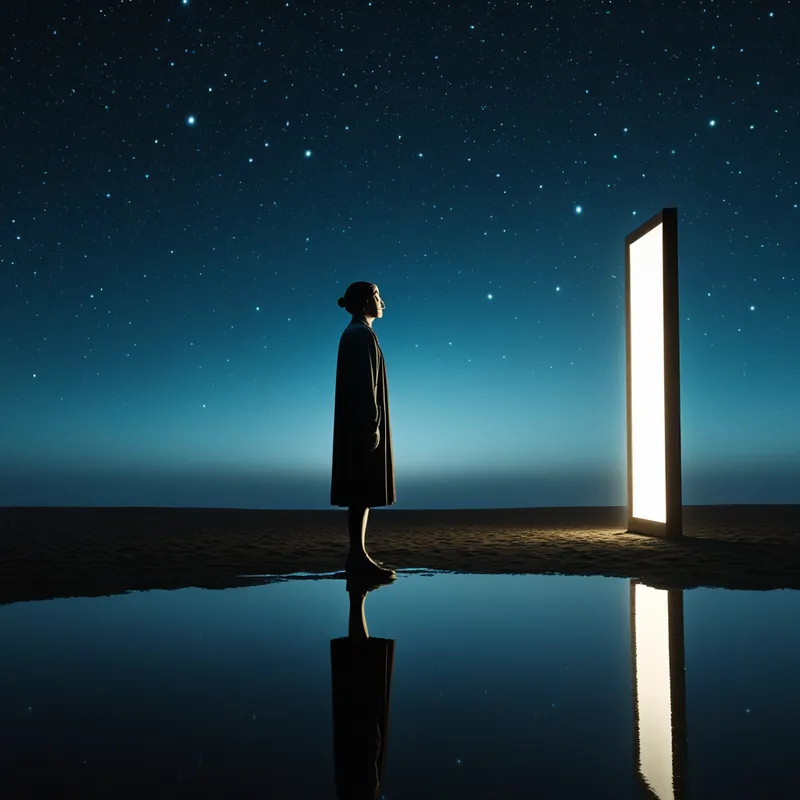
Somatic sensations often accompany these dreams: a feeling of immense pressure, of being trapped in a dark, enclosed space (the Kur), followed by a sudden release, lightness, and expansive warmth (the ascent). One might dream of pushing open a heavy Door, of finding a key to a long-locked room, or of a light source growing from within their own chest to illuminate a cavern. The dream is the psyche’s enactment of its own necessary journey toward illumination. It is the self pushing for integration, demanding that what has been hidden in shadow be brought to the light of awareness for examination and, ultimately, for judgment and acceptance.
Alchemical Translation
The individuation process—the alchemical work of becoming a whole, integrated Self—is perfectly modeled by Utu’s myth. It is the cycle of descent and ascent, of facing the shadow and returning with consciousness.
The first, terrifying stage is the voluntary descent: the ego’s agreement to confront the contents of the personal Kur—the repressed memories, the complexes, the shame and grief. This is the “night sea journey.” Here, in the dark, the solar principle seems extinguished. But as Utu rests in the underworld, the psyche gathers strength. The old, outworn aspects of the personality are allowed to die their symbolic death.
The gold of the Self is not found in the bright sky of persona, but forged in the dark furnace of the underworld.
The emergence is the breakthrough. It is the moment of insight where a complex is understood, a pattern is seen, a truth is accepted. This is Utu pushing open the door with his shasharu of discernment. The light brought back is not the innocent light of the child, but the earned light of wisdom. The individual who completes this cycle does not simply return to who they were; they return as a sovereign of their own inner realm, capable of judging their own actions with clarity (the ruler archetype) and illuminating their path forward. They become, in a psychological sense, a vessel for the conscious sun, capable of bearing the light of truth through the cycles of their own life.
Associated Symbols
Explore related symbols from the CaleaDream lexicon:
- Sun — The central symbol of Utu himself, representing consciousness, truth, law, and the cyclical nature of life, death, and rebirth.
- Door — The great eastern gate of dawn, representing the threshold between the unconscious and consciousness, the moment of breakthrough and revelation.
- Justice — The core function of Utu as divine judge, symbolizing the psyche’s innate drive for moral order, truth, and karmic balance.
- Light — The illuminating power of Utu’s gaze, representing awareness, clarity, and the revelation of all that is hidden in shadow.
- Journey — Utu’s daily path across the sky and through the underworld, modeling the essential psychic process of cyclical descent and ascent.
- Lion — The Urmaḫ that pulls Utu’s chariot, symbolizing solar power, untamed strength, and royal authority harnessed to a divine purpose.
- Shadow — The underworld of Kur, representing the personal and collective unconscious, all that is repressed, unknown, and awaiting illumination.
- Truth — The unwavering principle Utu embodies and enforces, cut clear from falsehood by his saw-toothed knife of discernment.
- Underworld — The realm of Kur, not merely a land of the dead but the psychological domain of the unconscious, where the light of consciousness is regenerated.
- Sumerian Tablet — The medium of the myth’s preservation, symbolizing the eternal record of divine law (Mes) and the human attempt to codify cosmic truth.