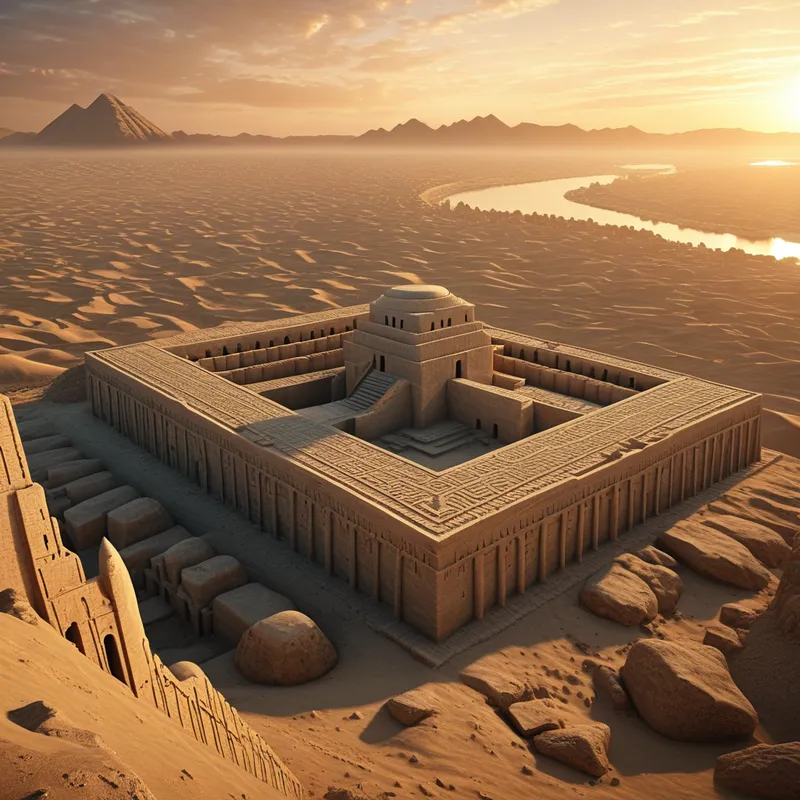
Uruk Myth Meaning & Symbolism
The myth of Uruk's founding by the gods and its defense by Gilgamesh embodies humanity's eternal struggle to build order against the forces of chaos.
The Tale of Uruk
Listen, and hear the tale of the first city, born not from the hands of men, but from the will of the gods. In the beginning, when the world was young and the Apsu mingled with the Tiamat, there was only the marsh and the wild. Humanity lived in scattered reed huts, knowing no king, no law, no name that echoed beyond the river’s bend.
Then, from the council of the Anunnaki, a decree was issued. The sky-god An looked down, and the air-god Enlil declared it: “Let there be a center. Let there be a place where order is made manifest, a beacon against the endless, whispering chaos of the steppe.” And so, with a divine breath that stirred the silt of the Euphrates, the foundations were laid.
The goddess of love and war, Inanna, claimed this place as her own, planting her sacred huluppu-tree in its heart. The wise god of wisdom and waters, Enki, gifted it the me, the blueprints of civilization: the art of the brick mold, the measuring rope, the scribe’s stylus. Walls of burnt brick, gleaming like the sun’s own flesh, rose from the mud. They called it Uruk, “the great city,” a weighty, permanent word in a world of wind and water.
But a city of order casts a long shadow. Its very existence, its straight walls and measured fields, was an affront to the wild. From the depths of the silent steppe, a counter-force was fashioned. The gods shaped Enkidu from clay and the spit of the wilderness. He was hair and horn, a creature of rain and thunder, who ran with the gazelle and drank from the same pool as the lions. He was the embodied protest of the untamed world against Uruk’s geometric pride.
And within the walls, a king ruled. Gilgamesh, two-thirds god, one-third man, son of the goddess Ninsun. His strength was a storm, but his rule was a yoke. He claimed the rights of a king over every bridegroom, leaving the city groaning under his boundless, restless energy. The people cried to the gods, and the gods heard. They sent Enkidu to humble him.
The clash was not of swords at first, but of essences. In the city’s gateway, before the eyes of the gathered people, the civilized storm met the wild tempest. They grappled, shaking the very foundations of the gatehouse, a tumult of dust and muscle. The walls themselves seemed to hold their breath. And from that titanic struggle, not death, but a miracle: recognition. Each saw in the other his own missing half. The wild was tempered by loyalty; the king’s chaos was given a direction. Together, Gilgamesh and Enkidu became the guardians of Uruk’s order, venturing out to slay monsters like Humbaba, to secure the city’s glory.
Yet, the myth whispers the final, sober truth. Even this sacred bond, this bulwark of order, could not hold back the decree of the Kur. Enkidu died, struck down by the gods for the pair’s hubris. Gilgamesh, the mighty king of Uruk, was left weeping on the dusty ground, clutching his friend’s lifeless body, staring for the first time at the one wall his city could not defend against: the wall of death. He wandered the earth in search of an answer, only to return, empty-handed, to the walls he had built. The tale ends where it began: with Gilgamesh walking the ramparts of Uruk, showing a traveler the immensity of its foundations, its burnt brick and copper work. The city remained. The king, like all men, would pass into dust. The order endured, but the price of its creation was etched into every brick.
Cultural Origins & Context
This is not a single myth, but the foundational narrative tapestry woven into the world’s first epic literature, most famously in the Epic of Gilgamesh. It emerged from the alluvial plains of southern Mesopotamia around 2100 BCE, a product of the very civilization it describes. The story was recited by court bards and temple scribes, its cuneiform wedges pressed into damp clay tablets that served as both literature and sacred text.
Its societal function was profound. For the citizens of Uruk and later Sumerian city-states, this was their origin story, their divine charter. It explained why their city, with its temple complex the Eanna, was the axis mundi, the center of the world. It legitimized kingship by linking Gilgamesh to the gods and framing the king’s role as the defender of sacred order (me). The myth also served as a cautionary tale about the limits of power, the inevitability of death, and the delicate, costly balance between the cultivated world and the terrifying, necessary wild from which it was carved.
Symbolic Architecture
At its core, the myth of Uruk is the psyche’s project of building a conscious Self. Uruk itself is the nascent ego-complex, the “I” that emerges from the primal, undifferentiated waters of the unconscious (the Apsu/Tiamat).
The city wall is the boundary of consciousness, the necessary separation that allows for identity, culture, and memory to form.
Gilgamesh represents the raw, divine energy of the emerging ego—powerful, creative, but also tyrannical and unrefined. His unchecked energy (his droit du seigneur) is the ego’s tendency to arrogate all psychic energy to itself, impoverishing the rest of the personality. Enkidu is the embodied shadow, the instinctual, natural self that exists outside the walls of consciousness. He is not evil, but whole, containing vitality, connection to nature, and unmediated emotion that the civilized ego has lost.
Their battle and subsequent friendship symbolize the critical, often violent encounter with the shadow. This is not eradication, but integration. The wild man is washed, clothed, and brought within the walls; the king learns humility and gains a purpose beyond himself. Together, they form a more complete psychic entity, capable of facing externalized monsters (the repressed contents of the personal and collective unconscious, like Humbaba). The death of Enkidu is the inevitable tragedy of this process: the integrated instinct cannot live forever in the realm of conscious order. Its death forces the ego (Gilgamesh) to confront the ultimate boundary—mortality—and to seek a deeper, spiritual meaning beyond its own walls.
The Dreamer’s Resonance
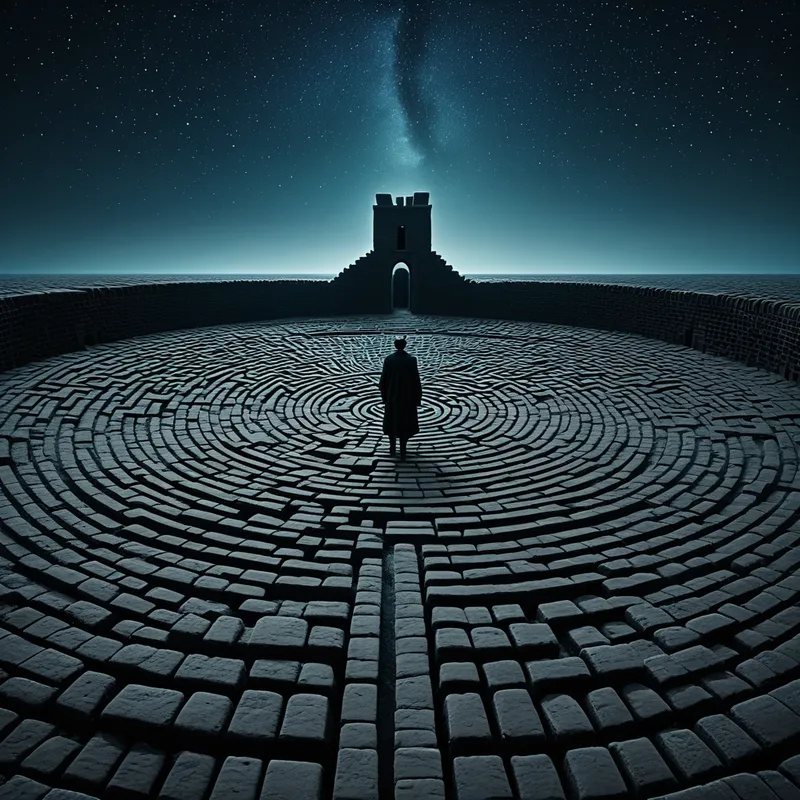
When this myth stirs in the modern dreamer, it signals a profound restructuring of the psyche. To dream of building immense, intricate walls or labyrinths speaks to a period of intense ego-consolidation, perhaps after a trauma or a major life transition. The dream-ego is fortifying its position.
Dreaming of a wild, powerful figure (an animal-man, a storm, a chaotic force) attacking or approaching a well-ordered place like a home or office is the direct emergence of the Enkidu-shadow. This is often accompanied by somatic feelings of both terror and thrilling vitality—a racing heart, a sense of expansion. The psyche is demanding that the too-rigid, perhaps arrogant, conscious attitude (the Gilgamesh-ego) be challenged and humbled.
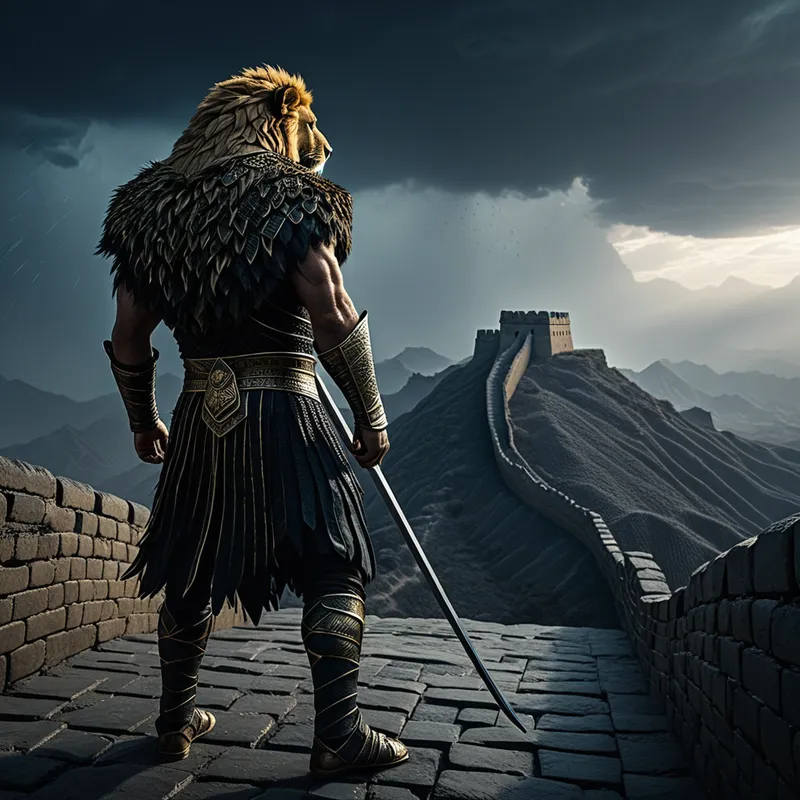
Conversely, dreaming of a mighty but lonely figure walking the ramparts of a vast, empty city points to the aftermath of this integration. It is the melancholy of the ego that has achieved order but has lost touch with the soul’s wild, instinctual life, or has been forced to confront a mortal limitation. The dream is an invitation to embark on the quest, to leave the known walls in search of the wisdom that lies in the encounter with mortality itself.
Alchemical Translation
The alchemical process mirrored in Uruk’s myth is the opus contra naturam—the work against nature, which is also a work through nature. The prima materia is the formless silt of the riverbank, the unconscious psyche.
1. Calcinatio (Burning): The firing of the sun-dried bricks in the kiln. This is the initial, often painful, application of conscious focus and discipline (the king’s will, the divine decree) to raw psychic material. It burns away moisture and transience, creating a durable, defined structure—the initial ego.
2. Coniunctio (Sacred Marriage): The fierce, wrestling union of Gilgamesh and Enkidu. This is the central, transformative phase where opposites collide and unite. The conscious and unconscious, spirit and instinct, culture and nature, engage in a struggle that gives birth to a new, more resilient psychic entity—the chymical marriage. This creates the “philosophical warrior” capable of the great work.
3. Mortificatio (Death): The wasting illness and death of Enkidu. This is the necessary dissolution of the integrated shadow. The ego must witness the death of what it has just come to love and rely upon. This stage forces the nigredo, the blackening, a descent into despair and the utter devaluation of all worldly achievements. Gilgamesh’s mourning is the psychic putrefaction.
4. Circulatio (The Quest): Gilgamesh’s wandering. The ego, shattered, is now in motion, cycling through trials (the Scorpion-beings, Siduri, Urshanabi) in search of the elixir of immortality. This represents the soul’s journey through the layers of the unconscious, seeking healing and meaning.
5. Projectio (The Return): The final stage is not the finding of the physical plant of immortality (which is stolen by the serpent), but the return to the starting point with new eyes. Gilgamesh comes back to Uruk’s walls. The city is the same, but he is not. The alchemical gold is not eternal life, but the realization: the enduring work is the city itself, the legacy of a conscious life well-lived, etched into the fabric of reality.
The ultimate transmutation is the recognition that the Self, like Uruk, is both a magnificent, ordered creation and a transient vessel. Its immortality lies not in defying the river of time, but in the majesty and integrity of its foundations, which continue to guide travelers long after the builder is gone.
Associated Symbols
Explore related symbols from the CaleaDream lexicon: