
Uod the Earthworm Deity Myth Meaning & Symbolism
A myth of a humble earthworm, scorned by the gods, whose quiet, ceaseless work becomes the foundation for all life and creation.
The Tale of Uod the Earthworm Deity
In the time before memory, when the world was a soft, formless clay, the great deities of the sky and sea roared with ambition. [Bathala](/myths/bathala “Myth from Filipino culture.”/) shaped mountains with his fists. The sea goddess Magwayen carved the deeps with her tides. They were loud and proud, their creations casting long shadows and throwing up great sprays of water.
But beneath their feet, in the silent, pressing dark, lived Uod. It had no thunderous voice, no gleaming form. It was simple, moist, and pink, a humble coil in the endless mud. The sky gods laughed when they sensed its presence. “A thing of dirt!” they boomed. “A blind grub that knows only consumption and waste. What can it create but more dirt?”
Uod did not answer. It had no mouth for arguing, only a purpose for being. While the gods above sculpted grand, brittle forms that cracked under the sun, Uod moved. It swallowed the dense, lifeless clay. It passed it through its humble body. And from its other end, it left behind not waste, but the first true soil—soft, aerated, rich with the alchemy of its passage.
Then came the conflict. A great quarrel erupted between the sky and the sea. In his rage, Bathala withheld the rain. In her fury, Magwayen withdrew the waters to the deepest abyss. The world baked and split. The grand mountains crumbled to dust; the deep ocean beds became barren, salt-crusted scars. All life, every green and growing thing the gods had attempted to place, withered and died. Their creations were magnificent tombs.
In the terrible silence of the desolation, a faint, persistent sound remained. It was the sound of gentle movement, of patient friction. Uod was still working. It had burrowed deep, finding the last vestiges of moisture, the final memories of clay. And it continued its only task: to turn, to mix, to prepare.
Seeing the ruin, a profound shame settled upon the great deities. Their power had brought only death. In a whisper that cost them their pride, they called not to each other, but downward, into the earth. They asked the humble coil for help.
Uod did not ascend to meet them. It simply continued its work, but now with a new intention. It began to move in vast, deliberate patterns beneath the wasteland. It carved tiny channels, microscopic caverns. It created a labyrinth of readiness in the heart of the dead world.
Then, Uod offered the ultimate sacrifice of its form. It allowed its own body to fragment, each segment a willing seed. These fragments dissolved into the prepared soil it had made, becoming one with its creation.
From this union of deity and earth, the first true miracle emerged. Not from a shout, but from a silence. Not from a hand, but from a surrender. From the soil blessed by Uod’s body, the first tender roots found purchase. The first green shoots pushed toward the sun, nourished by the labyrinth of channels that held the returning rain. The world was not rebuilt from above, but reborn from below. The foundation of all that lives was not rock or water, but the sacred, transformed body of the one they had scorned.

Cultural Origins & Context
The fragments of Uod’s story are woven into the broader tapestry of Philippine creation myths, particularly those from various ethnolinguistic groups that emphasize a profound connection to the land. Unlike the centralized pantheons of classical mythology, these stories often emerged from an animistic worldview, where spirit resides in all things—rocks, trees, rivers, and indeed, the creatures of the soil. Uod’s tale is not one of epic conquests recorded in temples, but a narrative whispered during planting seasons, shared by elders to children sitting on the bangkito (small stool) as the sun sets.
It functioned as a foundational ethic, a mythic reinforcement of a core cultural value: pakikiramdam (shared inner perception) and kapwa (shared identity). The story taught that true strength and creativity are not always loud and visible. It honored the unseen laborers, the quiet processes of decay and regeneration that sustain life. It was a narrative check against arrogance (kapalaluan), reminding the community that the mightiest tree depends on the humblest worm. The myth served to sacralize agriculture itself, framing the farmer’s work of tilling the soil as a participation in Uod’s divine, world-sustaining act.
Symbolic Architecture
At its core, the myth of Uod is a profound [allegory](/symbols/allegory “Symbol: A narrative device where characters, events, or settings represent abstract ideas or moral qualities, conveying deeper meanings through symbolic storytelling.”/) for the creative power of humility and the transformative [nature](/symbols/nature “Symbol: Nature symbolizes growth, connectivity, and the primal forces of existence.”/) of the lowly. Uod is the ultimate [shadow](/symbols/shadow “Symbol: The ‘shadow’ embodies the unconscious, repressed aspects of the self and often represents fears or hidden emotions.”/) [archetype](/symbols/archetype “Symbol: A universal, primordial pattern or prototype in the collective unconscious that shapes human experience, behavior, and creative expression.”/), representing everything the conscious ego—figured here as the proud sky gods—disdains: the mundane, the bodily, the process of decay, the “dirty work.”
The first act of creation is not shaping, but digesting. The divine is not only in the forms we raise to the sky, but in the unseen processes that make raising anything possible.
Psychologically, Uod symbolizes the function of the unconscious. It works silently, in the dark, processing the raw, undifferentiated [material](/symbols/material “Symbol: Material signifies the tangible aspects of life, often representing physical resources, desires, and the physical world’s influence on our existence.”/) of experience (the formless [clay](/symbols/clay “Symbol: Clay symbolizes malleability, creativity, and the potential for transformation, representing the foundational aspect of life and the ability to shape one’s destiny.”/)) into something fertile and usable (the [soul](/symbols/soul “Symbol: The soul represents the essence of a person, encompassing their spirit, identity, and connection to the universe.”/)-[soil](/symbols/soil “Symbol: Soil symbolizes fertility, nourishment, and the foundation of life, serving as a metaphor for growth and stability.”/)). The gods’ creations fail because they are merely imposed forms without a nourishing [foundation](/symbols/foundation “Symbol: A foundation symbolizes the underlying support systems, values, and beliefs that shape one’s life, serving as the bedrock for growth and development.”/). True growth, the myth insists, must be rooted in the substance prepared by this deep, instinctual, often-ignored psychic labor.
Uod’s [fragmentation](/symbols/fragmentation “Symbol: The experience of breaking apart, losing cohesion, or being separated into pieces. Often represents disintegration of self, relationships, or reality.”/) and [dissolution](/symbols/dissolution “Symbol: The process of breaking down, dispersing, or losing form, often representing transformation, release, or the end of a state of being.”/) is not a [death](/symbols/death “Symbol: Symbolizes transformation, endings, and new beginnings; often associated with fear of the unknown.”/), but a sacred [diffusion](/symbols/diffusion “Symbol: The spreading or blending of substances, energies, or emotions, often representing a loss of boundaries or integration.”/). It represents the ego’s necessary surrender to a larger process. The deity does not rule the new world; it becomes its fundamental [condition](/symbols/condition “Symbol: Condition reflects the state of being, often focusing on physical, emotional, or situational aspects of life.”/). This is the [symbolism](/symbols/symbolism “Symbol: The use of symbols to represent ideas or qualities, often conveying deeper meanings beyond literal interpretation. In dreams, it’s the language of the unconscious.”/) of ultimate service: the greatest power is found in becoming the foundation that supports all else, anonymously and completely.
The Dreamer’s Resonance
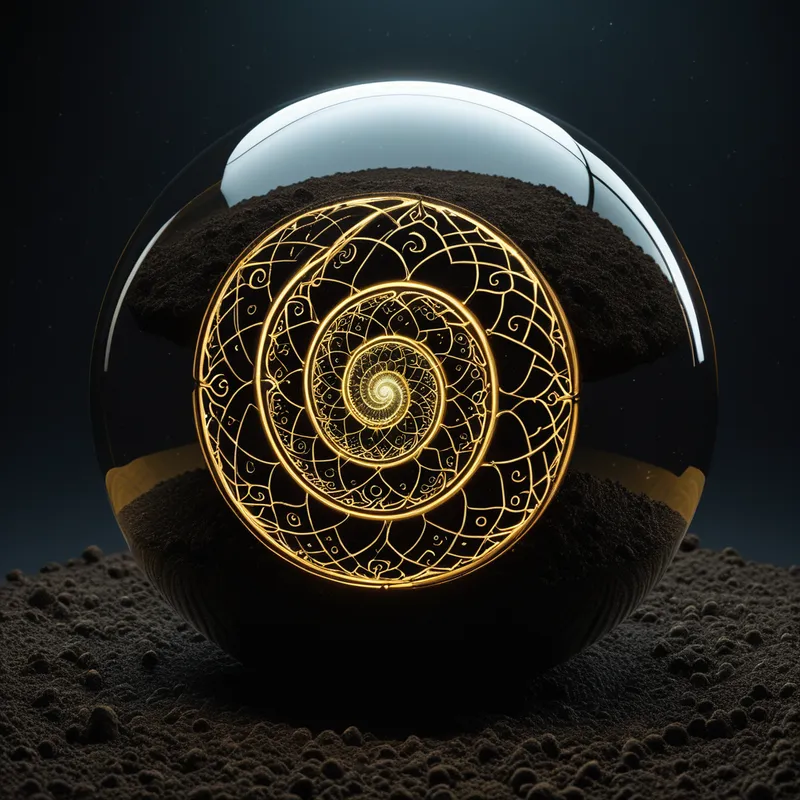
When the pattern of Uod surfaces in modern dreams, it often signals a profound somatic and psychological process of grounding and foundational repair. The dreamer may be experiencing a period of arrogance, burnout from lofty ambitions, or a feeling that their life-structures are brittle and cracking—mirroring the failed creations of the sky gods.
Dreams of earthworms, of digging in rich soil, of being underground, or of engaging in humble, repetitive tasks can be the psyche’s invocation of Uod. This is not a call to grand action, but to patient, internal processing. Somatically, it may correlate with digestive health, a need to “process” emotional or experiential “clay,” or a deep craving for tactile connection with nature.
The dream is guiding the dreamer to attend to what they have scorned or neglected: the basic routines of self-care, the “uncreative” maintenance work of life, the humble feelings deemed unimportant. It is the unconscious working to aerate the compacted soil of the psyche, creating space for new, authentic growth to take root. The feeling upon waking is often not excitement, but a deep, quiet calm—a sense of being fundamentally held and prepared.
Alchemical Translation
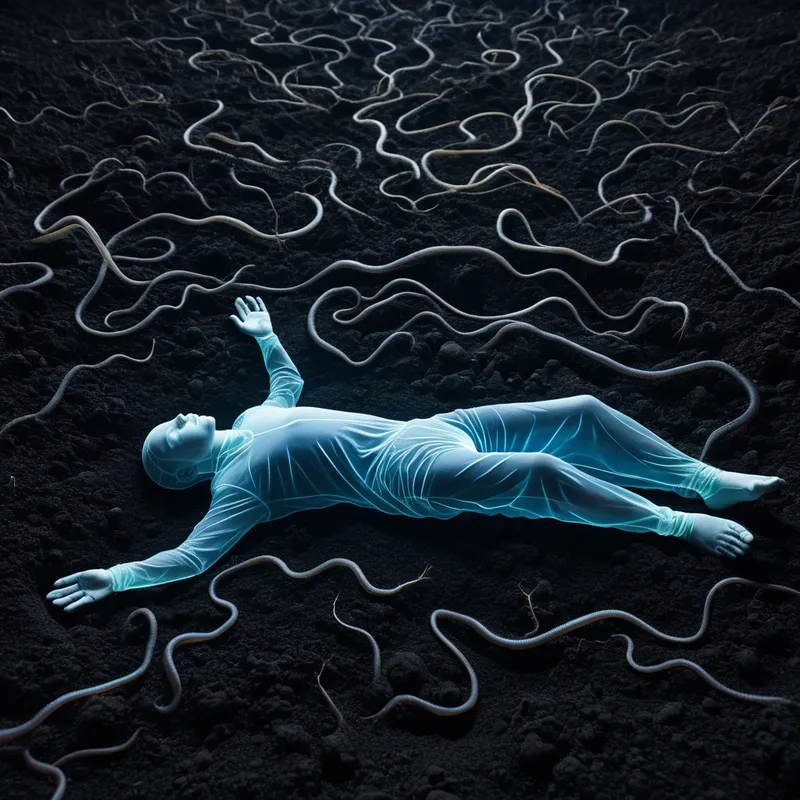
The myth of Uod provides a stunning model for the alchemical stage of nigredo and the process of psychic transmutation toward wholeness, or individuation. The proud, conscious attitudes (the sky gods) must first fail. Their brilliant, isolated creations must desiccate and crumble. This is the necessary crisis that humbles the ego.
The alchemical work then descends, literally, into the prima materia—the despised, dark, moist earth of our own neglected depths. Here, the Uod-within, our instinctual, caring, and persistent inner reality, goes to work. Its labor is the opus contra naturam: it willingly engages with the “mud” of our shadow, our shame, our raw and unprocessed experiences.
Individuation is not the sculpting of a perfect statue, but the becoming of fertile ground. The Self is not built; it is cultivated from the digested fragments of all we have been.
The fragmentation of Uod is the crucial stage of solutio and mortificatio. The ego-structure must dissolve and sacrifice its isolated form to become part of a richer, more complex whole. The triumph is not in emerging shiny and new from the earth, but in having become the earth itself—the rich, complex, and nurturing foundation from which an authentic life, in alignment with the deepest Self, can organically grow. The modern individual learns from Uod that their true power lies not in towering over the world, but in being the humble, vital ground of their own being.
Associated Symbols
Explore related symbols from the CaleaDream lexicon:
- Earth — The primary element and domain of Uod, representing the foundational, nourishing, and often-despised substance from which all life ultimately grows and to which it returns.
- Worm — The literal and symbolic form of the deity, embodying humility, silent labor, transformation through digestion, and the sacredness of the lowly and unseen.
- Deity Figurine — Represents the paradox of Uod: a divine force that refuses monumental form, instead choosing to be a small, often-overlooked presence with world-shaping power.
- Soil — The sacred creation of Uod, symbolizing the fertile product of inner work, the processed and aerated ground of the soul ready to support new growth.
- Sacrifice — Uod’s ultimate act of fragmenting its own body to become one with the soil, representing the ego’s necessary surrender for the sake of a greater, foundational wholeness.
- Transformation — The core process of the myth: the alchemical change of inert clay into living soil through the humble, persistent work of the earthworm deity.
- Root — The first life to emerge from Uod’s sacrifice, symbolizing deep, anchored growth that is only possible because of the foundational work done in darkness.
- Humility — The defining virtue of Uod, representing the power and creativity that flows from acknowledging one’s small but essential place in a vast, interconnected system.
- Shadow — Uod as the archetypal shadow content—the despised, “dirty,” instinctual aspect that holds the key to renewal and the only solution to the ego’s grand failures.
- Circle — The shape of Uod’s body and its endless, cyclical work of consumption and creation, symbolizing the eternal process of decay and regeneration that sustains the world.