Underworld Myth Meaning & Symbolism
The myth of the Underworld is a map of the soul's descent into darkness, a story of abduction, sovereignty, and the cyclical nature of life, death, and rebirth.
The Tale of the Underworld
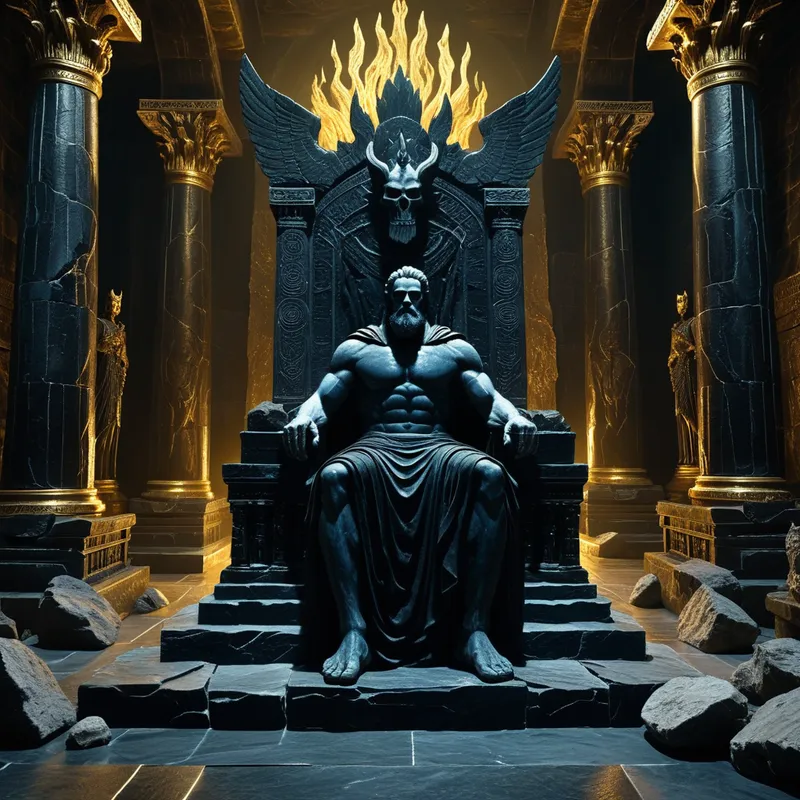
Listen. Beneath the sun-warmed soil of the living world, beneath the roots of the olive tree and the foundation stones of the city, lies another kingdom. It is not a kingdom of endings, but of unseen currents. Here, the rivers have names: Acheron, Cocytus, Phlegethon. Their waters are memory, regret, and purification. And here rules a king who is also a brother, a god who drew the shortest straw and received the deepest realm: Hades, the Unseen One.
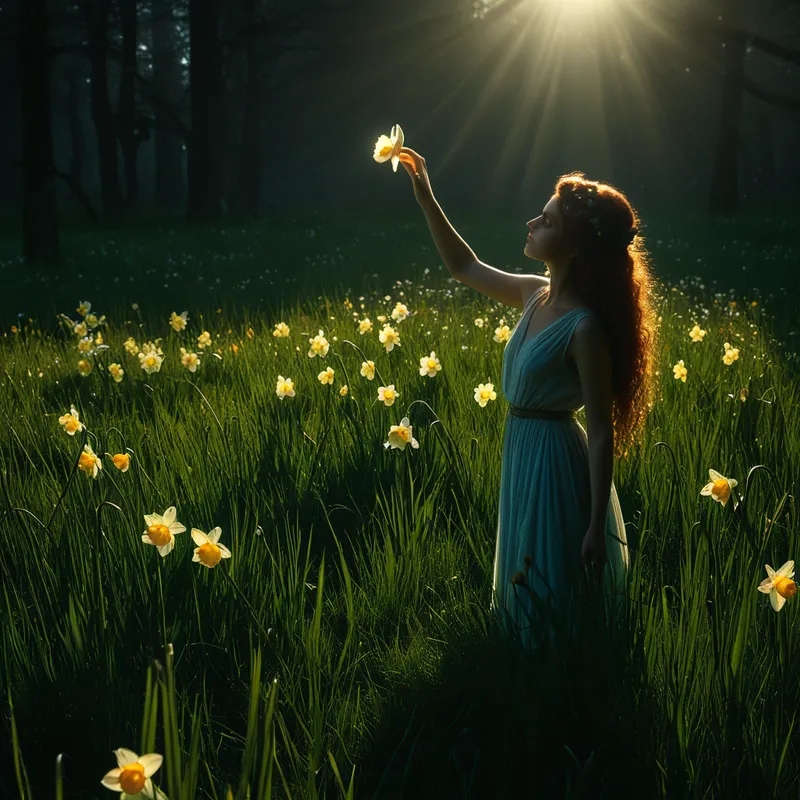
His story is woven with another. In the world above, where Demeter makes the grain swell, her daughter Persephone danced. She was Kore, the Maiden, a spirit of untamed spring. On a day thick with the scent of narcissus, she reached for a flower of impossible beauty. As her fingers closed around the stem, the earth itself cracked open. From the abyss came a thunder of hooves, a chariot of jet, and the iron grasp of the King. He had seen her light from his darkness and could not live without it. He carried her, the Maiden of Life, into the Kingdom of the Unseen.
Above, the world shattered. Demeter’s grief was a frost that killed the seed in the furrow. She roamed the earth, a torch in each hand, her form no longer that of a nurturing goddess but of a ravaged mother. The green world withered to straw, then to dust. Humanity faced extinction, and the gods of Olympus found their altars cold.
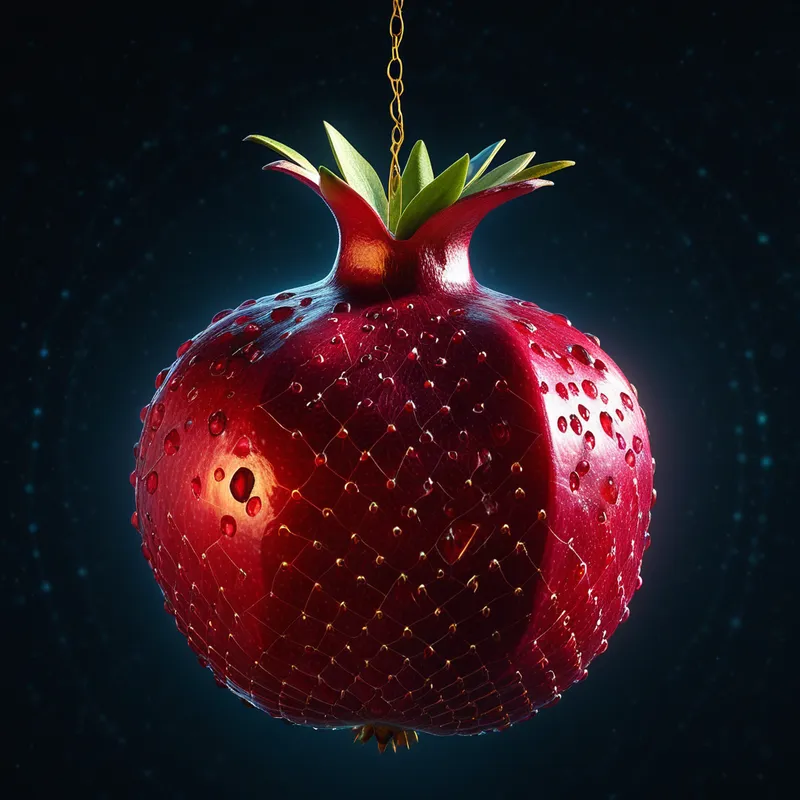
Meanwhile, in the sunless halls, a transformation began. Persephone sat, a silent icon of loss, refusing all sustenance. The dead whispered past. Yet, in that absolute darkness, something shifted. The Maiden was being unmade. Hades offered not violence, but a throne. He offered not captivity, but a domain. He offered her a seed—not of a flower, but of a pomegranate. In a moment of profound ambiguity, of hunger or perhaps dawning power, she ate six of its bloody, jewel-like seeds.
This act became the pivot of all worlds. The great compromise was struck. For the seeds she had consumed, she would spend a third of the year below as Queen Persephone, and two-thirds above with her mother. And so, the wheel was set in motion. Her ascent brings the spring, her return to the throne beside Hades brings the fallow winter. She is the hinge between life and death, the one who knows both worlds intimately. The Underworld is no longer just a tomb; it is a necessary chamber in the heart of existence, ruled by a Queen who chose, and chooses still, to wear its crown.
Cultural Origins & Context
This was not a priestly doctrine but a story breathed into the very landscape. The myth of the Underworld and the Rape of Persephone was central to the Eleusinian Mysteries, the most sacred and guarded religious rites of the ancient Greek world. For over a millennium, initiates—from slaves to emperors—journeyed to Eleusis. They participated in a ritual drama, a mysterion (secret thing), that re-enacted Demeter’s search and Persephone’s return.
The function was societal and profoundly personal. It addressed the primal terror of death and the mystery of the grain that must be buried to be reborn. By witnessing or enacting the myth, the initiate was promised eudaimonia (a good-spirited life) and a favorable lot in the afterlife. The myth was a cultural container for the inexpressible, transforming a biological reality—the seasonal cycle—into a sacred psychology of loss, search, and triumphant return. It was told not to explain, but to initiate; not to define the afterlife, but to make the soul familiar with its terrain.
Symbolic Architecture
The Underworld is not a place of punishment, but of truth. It is the psychic basement, the realm of the shadow, of all we have repressed, forgotten, or feared. Hades himself is that compelling, often terrifying, pull toward introspection. He is the archetype of the deep Self that demands we confront what is unseen within us.
The pomegranate seeds are the most potent symbol of all: they represent the irrevocable taste of a profound experience. Once you have known deep grief, integration, or trauma, you are forever changed; a part of you remains connected to that underworld.
Persephone’s journey is the soul’s necessary descent. Her abduction is the sudden, often violent, eruption of the unconscious into a conscious life that has been too one-sidedly “in the light.” Her initial role as Kore is the innocent, unindividuated psyche. Her transformation into Queen is the hard-won sovereignty gained only by facing the darkness and claiming authority within it. She becomes the mediator, the one who can translate the language of the depths to the world of the surface.
The Dreamer’s Resonance
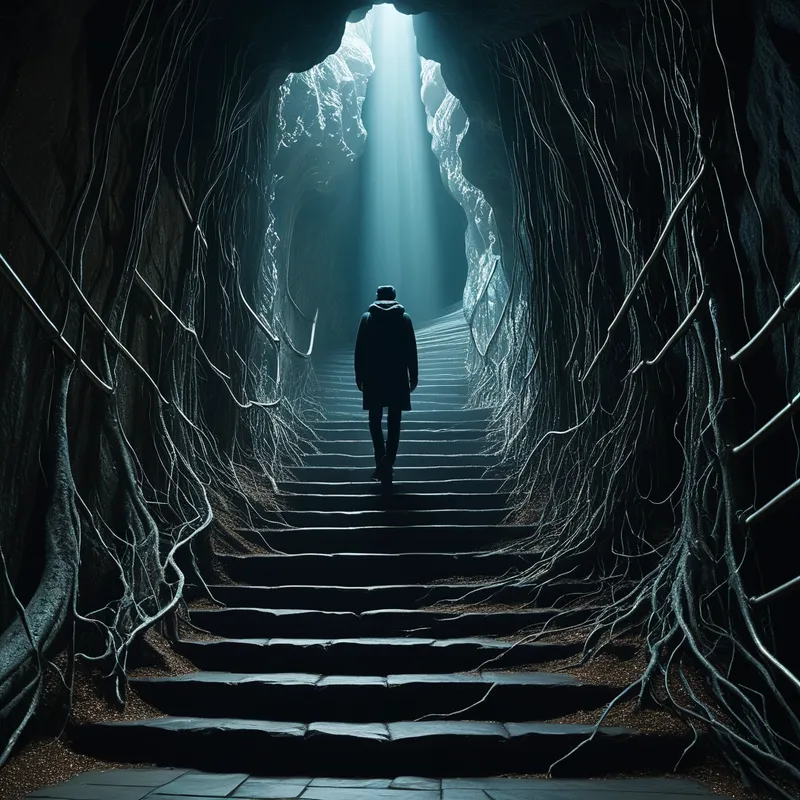
When this myth stirs in modern dreams, it announces a season of psychic descent. You may dream of descending into basements, caves, or subways that go too deep. You may encounter a formidable, magnetic, or silent figure (the Hades archetype) or feel yourself being pulled away from a sunny life into something dark and unknown (the Persephone experience).
Somatically, this can feel like depression, lethargy, or a “winter of the soul.” Psychologically, it is the process of the ego being dismantled by the demands of the Self. The dream is not a warning, but a map. It says: you are being called to a land beneath your everyday awareness. Something must be retrieved, a truth must be faced, a part of you that has been abducted by the unconscious must be acknowledged and, ultimately, integrated. The feeling of being trapped is the initial resistance; the emergence of a throne room in the dark is the promise of latent power.
Alchemical Translation
The alchemical process mirrored in this myth is the nigredo, the blackening, followed by the albedo. The conscious, solar life (Kore in the meadow) is plunged into the prima materia of the unconscious (the Underworld). This is a disintegration, a death of the old identity.
The triumph is not in escaping the dark, but in being crowned by it. Individuation is the process of becoming your own Hades and your own Persephone—the ruler of your inner depths and the sovereign who moves freely between all states of being.
The pomegranate seeds are the catalyst. They represent the conscious choice, however ambivalent, to internalize the experience. “I have eaten of this; it is now part of me.” This is the moment of commitment to the transformative process. The resulting cyclical rhythm—descent and return—becomes the very pattern of a mature psyche. We are not meant to live in perpetual spring. We grow through our winters in the underworld, through periods of introspection, depression, and fertile darkness, returning to the world with the hard-won wisdom of the Queen who has seen the roots of existence. The myth models the ultimate alchemy: turning the lead of unconscious suffering into the gold of embodied wisdom.
Associated Symbols
Explore related symbols from the CaleaDream lexicon: