Two of Swords Myth Meaning & Symbolism
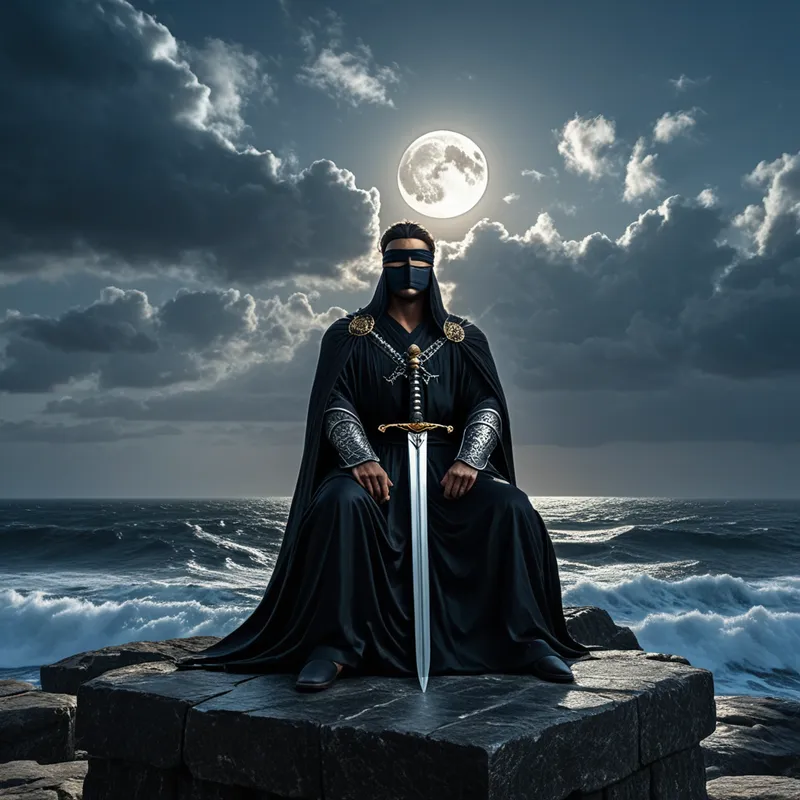
A figure sits at the crossroads of the soul, blindfolded, holding two balanced swords, guarding the threshold between worlds until true sight is born from within.
The Tale of Two of Swords
Listen. There is a place where the world holds its breath. It is not on any map, but at the crossroads of every heart that has ever known a choice that could not be made. Here, where the land meets the whispering, restless sea, sits the Keeper of the Threshold.
The air is thick with salt and the promise of storm. The sky is a canvas of contradiction: to the west, the sun bleeds its last gold into the waves; to the east, the cold eye of the moon begins its watch. Between them, on a seat carved from the living rock of the cliff, the Keeper is enthroned. A blindfold of deepest night is bound fast, not as a punishment, but as a vow. For the sights of the world—the crashing waves that speak of chaos, the receding sun that whispers of loss, the rising moon that promises cold logic—are but sirens. To look upon them is to be pulled into their story, to choose a side before understanding the whole.
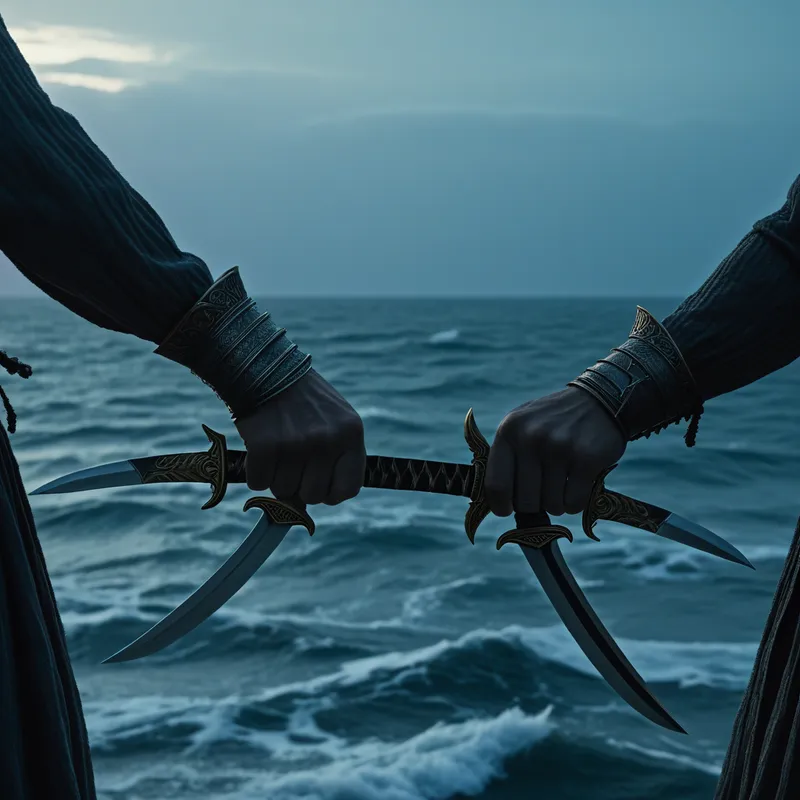
In their hands, they hold the instruments of division: two long swords, forged from the same star-metal, edges sharp enough to split a hair, or a soul. They do not wield them. They hold them. The blades are crossed over the heart, a fragile, perfect equilibrium. The muscles of the arms are corded with the strain of this active stillness. This is not peace; it is a supreme effort of containment.
The sea below does not sleep. From its depths, voices rise. One wave crashes with the voice of a lover, pleading, full of sweet memory. The next hisses with the voice of reason, clear, cold, and unassailable. A third roars with the voice of fear, of all that could be lost. They call to the Keeper. “Choose!” they demand. “Lower the left blade and embrace the heart! Lower the right and follow the mind! To wait is to drown!”
But the Keeper is a bulwark against the tide of premature action. They are the guardian of the sacred pause. The swords do not waver. The blindfold does not slip. The night deepens, and the opposing lights of sun-gone and moon-come balance in the sky, casting no shadow. The conflict is not resolved. It is held. And in that holding, in that refusal to be swayed by the outer clamor, a third thing begins to stir. Not in the sea, nor in the sky, but in the dark, quiet space behind the blindfold. A sight that needs no eyes. A knowing that rises from the stilled waters of the self. The myth does not end with a choice. It resides in the eternal moment before it, where all possibilities are alive, and true sovereignty is born not from action, but from profound, willed stillness.
Cultural Origins & Context
The image of the Two of Swords is not a myth with a linear narrative passed down through oral tradition, but a visual mythos embedded within the symbolic ecosystem of the Tarot. Emerging in the 15th century as part of the Suit of Swords, its primary “storytellers” were the anonymous artisans and card painters of Renaissance Italy and France. It was a myth told in silence, through iconography.
Its societal function was multifaceted. Within the parlour game of Tarocchi, it was simply a card of low value. But for those who looked deeper—the mystics, philosophers, and early psychologists—it served as a meditative glyph. It was a mirror held up to the human condition of indecision, a visual anchor for contemplating dilemmas of ethics, love, and duty. Unlike myths of heroic action, this one validated the nobility of non-action, a concept deeply resonant in both Stoic philosophy and contemplative mystical traditions. It was a cultural acknowledgment that some crossroads are so profound that the only wise action is to become a conscious, living question.
Symbolic Architecture
The myth is a masterclass in symbolic tension. Each element is a psychic component in a state of dynamic arrest.
The Blindfold is the central mystery. It is not ignorance, but the deliberate setting aside of external data and bias. It represents the withdrawal of projection—ceasing to see our inner conflict solely in the outer players (this person, that opportunity). It is the condition necessary for introspection.
The blindfold does not hide the world from you; it hides you from the world’s demands, so you may finally meet yourself in the dark.
The Two Swords symbolize the dualistic nature of the intellect (Air) itself: thesis and antithesis, pro and con, mind and heart (when heart is felt as a compelling argument). They are perfectly balanced, indicating the intellectual stalemate where both sides have equal merit or power. Their crossing over the heart shows that this mental conflict is not academic; it is visceral, cutting to the core of one’s being.
The Sea & Sky represent the emotional (Water) and mental (Air) realms in turmoil. The cliffside throne is the precarious point of conscious awareness, the ego, attempting to maintain stability between the chaotic unconscious (sea) and the vast, impersonal cosmos (sky). The figure is the psyche itself, in its role as the mediator, refusing to be dissolved into either pole.
The Dreamer’s Resonance
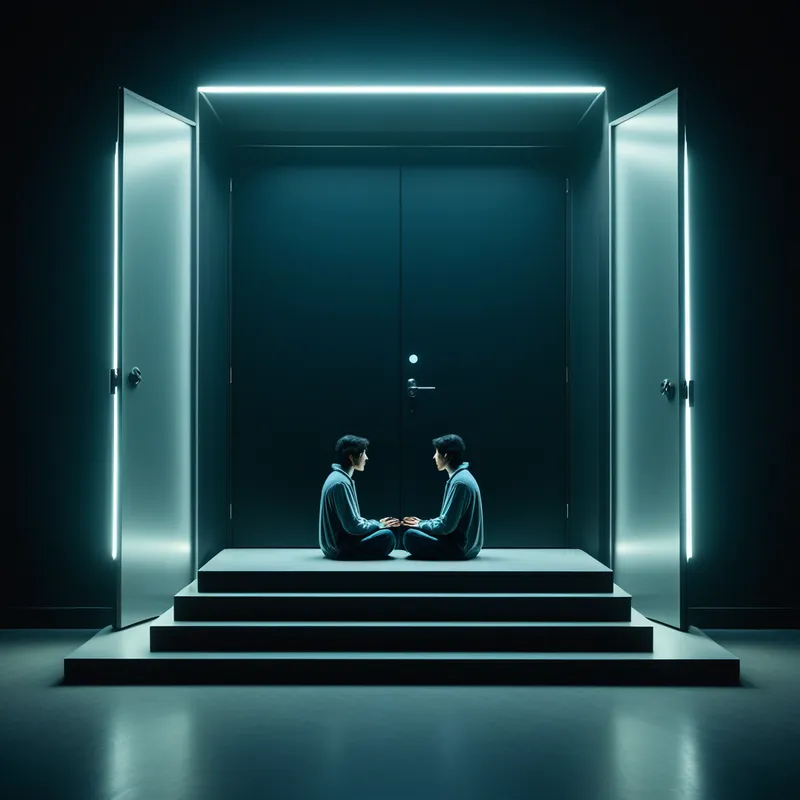
When this myth erupts into modern dreams, it rarely appears as a literal card. Instead, it manifests as the somatic experience of impasse. The dreamer may find themselves paralyzed at a doorway, unable to speak in a crucial conversation, or trying to run through water or sand. They may be presented with two identical, compelling objects or paths and feel a deep, chilling anxiety at the prospect of choosing.
Psychologically, this is the Self enforcing a necessary pause. The ego is being presented with a dilemma for which it is not yet prepared. The dream paralysis is not a failure, but a protective rite. The psyche is saying, “You do not have the necessary insight to proceed without harm. You must stop.” This is often felt during life transitions—career shifts, relationship crossroads, ethical quandaries—where old models of decision-making (pro/con lists, external advice) fail. The body may respond with tension, insomnia, or a feeling of being “frozen,” which is the literal, somatic echo of the Keeper’s strained equilibrium. The dream invites the dreamer to stop seeking the answer out there, and to begin the uncomfortable, blindfolded work of listening in here.
Alchemical Translation
In the alchemy of individuation, the Two of Swords represents the crucial stage of separatio followed by the pregnant pause of solutio. The swords have already cleaved the issue into its component parts (separatio). Now, those parts are held in suspension, dissolved not in water, but in the medium of conscious attention (solutio).
The process models a profound psychic transmutation: the movement from decision-by-force to knowing-by-being. The ego’s job is not to choose between the swords, but to hold the tension of their opposition until a third, transcendent position emerges from the unconscious. This is the tertium non datur, the “third that is not given” but created.
The alchemical gold is not found in choosing the right sword, but in the forging of a new faculty of perception in the fire of sustained uncertainty.
For the modern individual, this myth teaches that not all conflicts are meant to be solved by action. Some are meant to be sat with until they solve you—until they break open your existing paradigm of thought. The triumph is not in the lowering of one sword, but in the discovery that you are neither sword. You are the one who can hold them. You are the space in which the conflict occurs. By embodying the myth, you transmute a problem of choice into an initiation of consciousness, moving from a state of being torn apart to becoming the container that can hold the whole. The true resolution is the birth of inner authority, a sight that sees in the dark.
Associated Symbols
Explore related symbols from the CaleaDream lexicon: