Trumpets of Revelation Myth Meaning & Symbolism
Seven angels sound celestial trumpets, unleashing cataclysms that shatter the old world, heralding a final reckoning and the painful birth of a new creation.
The Tale of the Trumpets of Revelation
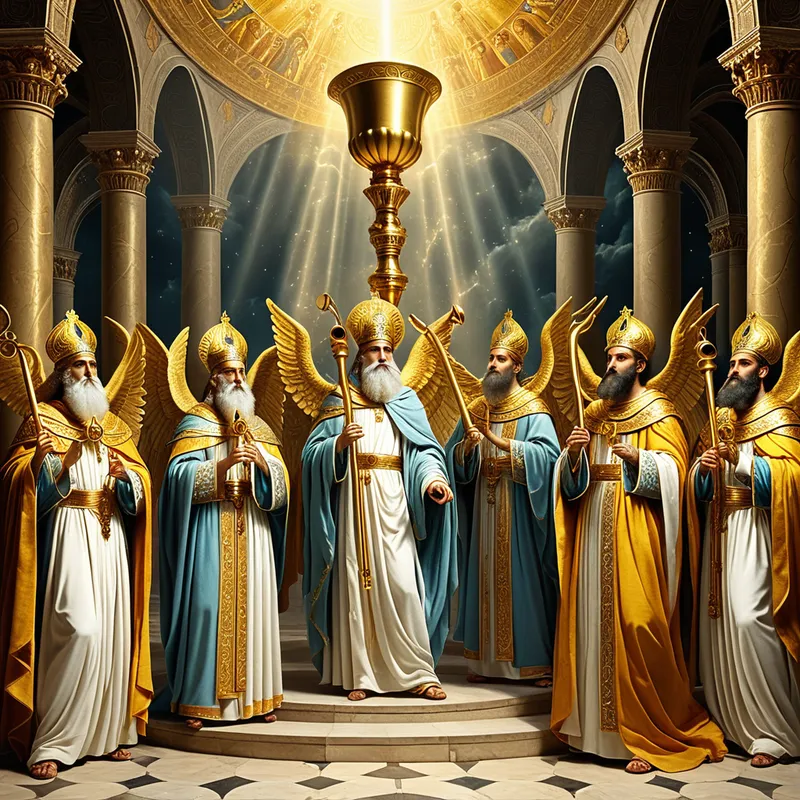
Silence in heaven. A silence so profound, so dense, it was a presence itself—for the space of half an hour. The celestial chorus was stilled, the wheels of the Ophanim halted. All eyes were upon the scroll, sealed with seven seals, now open in the hand of the One upon the throne. And then, a movement.
Seven figures stepped forward, the seven who stand in the immediate presence. Archangels, each was given a trumpet of hammered gold, long and straight, its mouth flared like a lily. The air itself tightened with anticipation.
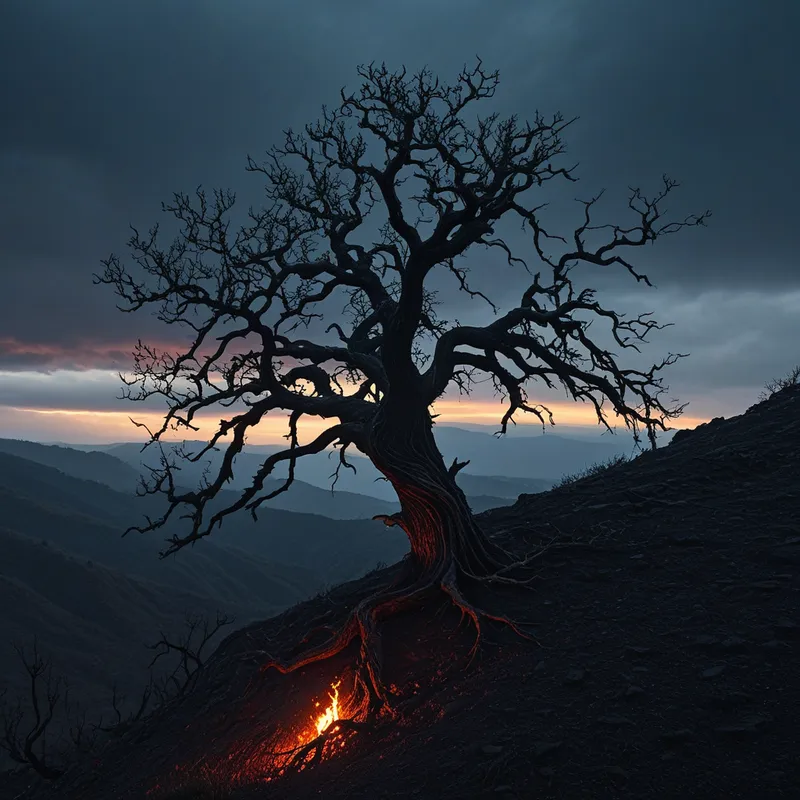
The first raised his trumpet to his lips. The sound was not of this earth—a note that was both a command and a lament. It tore across the fabric of the sky. And down it came: hail and fire, mingled with blood. It fell upon the earth, and a third of the land was scorched, a third of the trees consumed. The green world screamed in the heat, and the smell of burning sap and ozone filled the nostrils of humanity.
The second angel sounded. Something vast and mountainous, burning like a torch, was cast into the sea. The waters did not hiss and steam; they became blood. A third of the sea became a coagulating, dying mass. A third of the creatures within it perished, their bodies rising to the surface of the crimson tide. A third of the ships were shattered, their timbers kindling for a pyre upon the blood-waves.
At the third trumpet’s blast, a great star fell from heaven, blazing like a lamp. Its name was Wormwood. It struck the rivers, the fountains. The sweet, life-giving waters turned bitter. Men drank and clutched their bellies, dying from the poisoned springs. The very source of sustenance had become an agent of death.
The fourth trumpet sounded. A blow was struck against the lights of heaven. The sun was dimmed by a third, the moon stained dark, the stars withdrew their light. A perpetual, eerie twilight fell over the earth, a gloom that was neither day nor night, but the shadow of a dying age. In that half-light, an eagle flew, crying with a loud voice, “Woe, woe, woe to those who dwell on the earth, because of the remaining blasts of the trumpet of the three angels who are about to sound!”
And the threefold woe began. The fifth trumpet unleashed a horror from the bottomless pit. Smoke darkened the already-dim sky, and from the smoke came locusts with the power of scorpions, their forms like horses prepared for war, with crowns of gold and human faces. They were commanded not to harm the grass, but to torment those without the seal of God for five months, with a sting that brought agony short of death. Men sought death but could not find it.
The sixth angel blew his trumpet. A voice from the golden altar commanded, “Release the four angels bound at the great river Euphrates.” They were released, these angels prepared for this very hour, to lead a vast, supernatural cavalry—two hundred million strong—to slay a third of humanity. The riders wore breastplates of fiery red, hyacinth blue, and sulfurous yellow. The heads of their horses were like lions’, and from their mouths issued fire, smoke, and brimstone. By these three plagues, the third of humanity fell.
Yet, the rest, who survived these cataclysms, did not repent. They clung to their idols of gold and silver, to their murders and sorceries, their thefts and fornications. The world was broken, but the human heart remained hardened.
Then came the seventh trumpet. There was no immediate cataclysm. Instead, loud voices in heaven proclaimed, “The kingdom of the world has become the kingdom of our Lord and of his Christ, and he shall reign forever and ever.” The twenty-four elders fell on their faces and worshiped. The temple of God in heaven was opened, and within it was seen the ark of his covenant. There followed flashes of lightning, rumblings, peals of thunder, an earthquake, and heavy hail.
The trumpets had sounded. The old order was judged, shattered, and brought to an end. The stage, cleared by fire and blood and darkness, was now set for the final act of creation.
Cultural Origins & Context
This myth originates from the Book of Revelation, also known as the Apocalypse of John, a text composed in the late 1st century CE. It is a work of apocalyptic literature, a genre deeply rooted in Jewish prophetic tradition, particularly during times of intense persecution and crisis. Written in a coded, symbolic language, it was meant to be understood by an insider community—early Christians facing oppression under the Roman Empire.
The function of such a myth was not merely to predict future events, but to provide a cosmic framework for present suffering. It answered the agonizing question of theodicy: if God is just and all-powerful, why do the righteous suffer? The trumpets declared that the present world of injustice was temporary and under divine judgment. The societal function was one of endurance and hope. It was a call to remain faithful (keep the seal) amidst the chaos, assuring the community that their persecutors were not ultimate powers, but entities already doomed by the coming divine reckoning. The myth was passed down through liturgical reading and secret study, a radical narrative of resistance and ultimate victory.
Symbolic Architecture
The Trumpets are not instruments of mere destruction, but of revelation—they make audible the true, fractured state of a world in rebellion against its own foundational principles. They represent the unavoidable consequences of systemic spiritual decay.
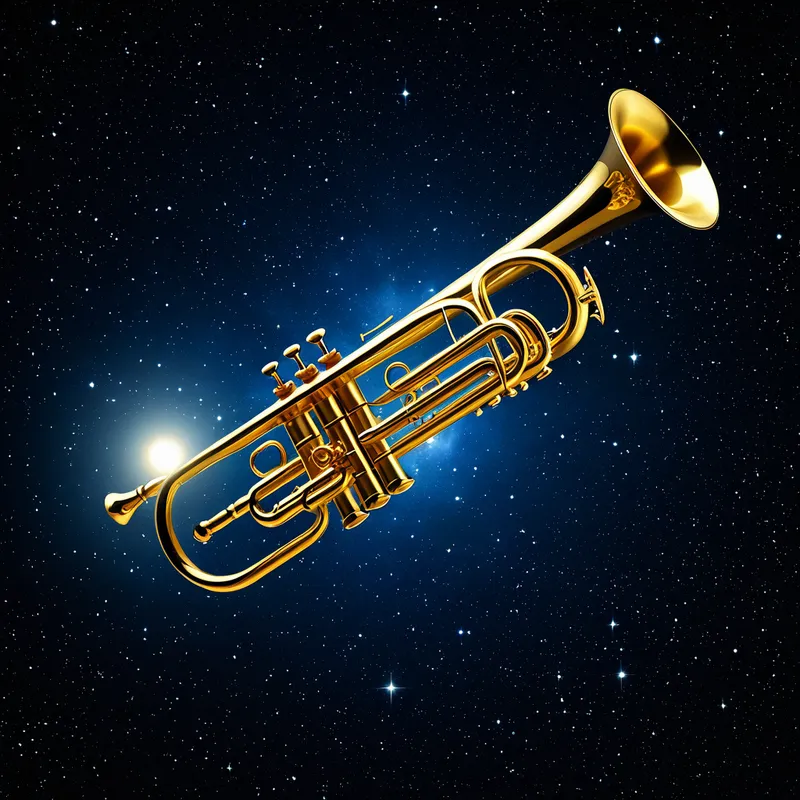
The trumpet is the instrument that shatters silence, forcing what is hidden into the realm of the heard and the seen. Its blast is the antithesis of repression.
Each plague targets a fundamental layer of the created order and human reliance: the earth, the sea, the fresh waters, the celestial lights, and finally, the human psyche itself (through torment) and body (through war). This is a systematic de-creation, a reversal of the Genesis narrative where order is called from chaos. Here, a false, corrupt order is dissolved back into chaos so that a true order may be established. The hardened heart of humanity that refuses to repent, even in the face of absolute catastrophe, is the myth’s most terrifying insight into the depth of the ego’s capacity for self-justification and denial.
The Dreamer’s Resonance
When this myth pattern erupts in the modern dreamscape, it rarely appears as biblical literalism. Instead, the dreamer experiences the sensation of the trumpets. It is the dream of sudden, systemic collapse: the foundation of the house giving way, the trusted institution revealing itself as corrupt, the personal relationship unmasked as a lie. The somatic experience is one of profound vertigo and visceral shock—a literal gut-punch of realization.
Psychologically, this dream signals that the psyche’s tolerance for a lived falsehood has reached its limit. The carefully maintained persona, the compromised life structure, the ignored shadow material—these have built up such pressure that a catastrophic psychic correction is underway. The dreamer is not being punished from the outside; they are experiencing the internal reverberations of their own soul’s demand for truth, however devastating that truth may be. The dream is a crisis of integrity.

Alchemical Translation
The alchemical journey of individuation is not a gentle path of self-improvement. It is a series of terrifying solve et coagula—dissolve and coagulate. The Trumpets of Revelation model this precisely. The old, leaden state of consciousness—characterized by unconscious identification with societal norms, ego-inflation, and shadow projection—must be utterly dissolved before the golden, integrated Self can emerge.
The psyche, in its wisdom, often must orchestrate a cataclysm to break the ego’s tyranny. The trumpet blast is the call to die to what you were, so that what you are meant to be can be born.
The modern individual undergoes their own sequence of trumpets. The first blasts may scorch the “green world” of naive optimism and simple pleasures. Later ones poison the “sweet waters” of former sources of comfort and meaning. The darkening of the “sun and moon” represents the failure of conscious guidance (logic) and unconscious nourishment (intuition). The torment of the “locusts” is the agony of neurosis, anxiety, and depression—the psyche attacking itself to spur movement. This is not divine punishment, but the psyche’s brutal, salvific surgery. The goal is the state heralded by the seventh trumpet: the proclamation of a new, inner sovereignty. The “kingdom of the world” of the isolated ego becomes the “kingdom of the Lord,” where the conscious mind is finally in service to the greater, transcendent Self. The hail and lightning that follow are not further destruction, but the cleansing, energetic storms that accompany a radical new birth of being.
Associated Symbols
Explore related symbols from the CaleaDream lexicon: