Transfiguration Myth Meaning & Symbolism
A teacher ascends a mountain, is revealed in divine light, and converses with ancient prophets, witnessed by his disciples in awe and terror.
The Tale of Transfiguration
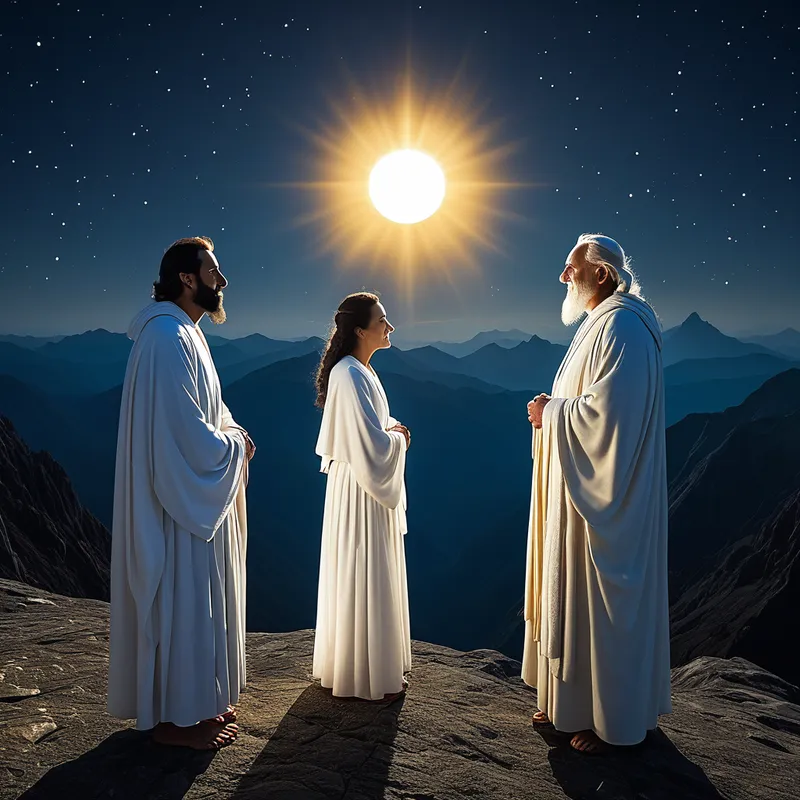
The air on the high mountain was thin and sharp, tasting of stone and distant sky. He led them there, the three who followed closest, their breath pluming in the chill. Yeshua of Nazareth walked ahead, a silence upon him heavier than the climbing dusk. They sensed it, [Peter](/myths/peter “Myth from Biblical culture.”/), James, and John—a gathering solemnity, as if the mountain itself were holding its breath.
They reached [the summit](/myths/the-summit “Myth from Taoist culture.”/) as night draped [the world](/myths/the-world “Myth from Tarot culture.”/) below in velvet shadow. The teacher stood apart, his form a silhouette against a tapestry of emerging stars. He began to pray. And then—the world tore.
It was not a sound, but a rupture in the very fabric of seeing. A light, not of sun or moon, erupted from within him. His face, often lined with dust and road-weariness, shone like the sun at its zenith, fierce and blinding. His simple garments blazed, becoming whiter than any fuller on earth could bleach them, a white that was not a color but the essence of purity itself. The disciples fell to their knees, hands flying to their eyes, not in worship but in primal defense against a glory that scalded the soul.
And then, figures coalesced within the nimbus of light. Two men, ancient yet vibrantly present, were speaking with him. Their identities were known in the marrow of the witnesses: [Moses](/myths/moses “Myth from Biblical culture.”/), who had spoken with God on a mountain and received the covenant, and Elijah, who had defended the faith against false gods. They spoke of his exodos, [the thing](/myths/the-thing “Myth from Norse culture.”/) that awaited him in [Jerusalem](/myths/jerusalem “Myth from Biblical culture.”/).
Peter, ever the one to grasp at the tangible in the face of the incomprehensible, stammered into the radiant silence. “Rabbi, it is good for us to be here. Let us make three shelters: one for you, one for Moses, and one for Elijah.” He did not know what he was saying, for they were utterly terrified.
Then, the final veil fell. A luminous cloud, the very [Shekinah](/myths/shekinah “Myth from Christian culture.”/) glory that had led Israel through [the wilderness](/myths/the-wilderness “Myth from Biblical culture.”/), enveloped the mountain peak. From within the cloud came a voice, not of thunder, but of terrible, loving clarity: “This is my Son, the Beloved; listen to him!”
The disciples fell face down on the cold rock, overcome by a dread that was [the shadow](/myths/the-shadow “Myth from Jungian culture.”/)-side of awe. The light, the voices, the cloud—it all vanished. A gentle touch. They looked up, blinking through tears of fear. There was only Yeshua, alone, looking as he always had. “Get up,” he said, his voice familiar, grounding. “Do not be afraid.” As they descended the next day, he charged them to tell no one of this vision until a certain time, leaving them to carry the luminous, terrifying secret in their trembling hearts.
Cultural Origins & Context
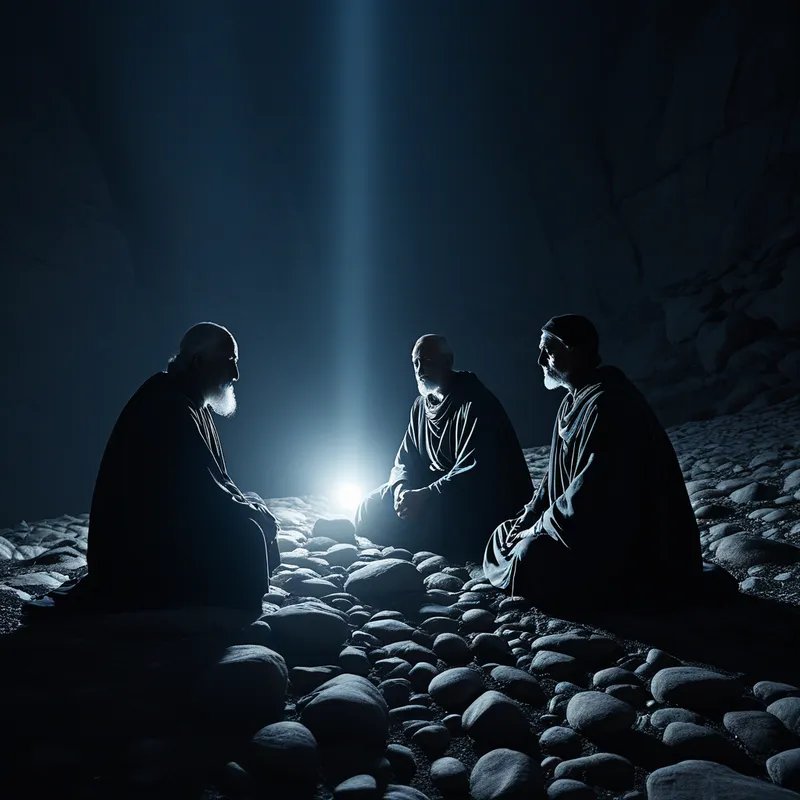
This account is recorded in the three Synoptic Gospels (Matthew 17:1–8, Mark 9:2–8, Luke 9:28–36) and is a pivotal moment in the narrative arc of [Jesus Christ](/myths/jesus-christ “Myth from Christian culture.”/). It sits at a crucial hinge point: after his ministry of teaching and healing has been established, but immediately before he turns his face toward Jerusalem and [the passion](/myths/the-passion “Myth from Christian culture.”/) that awaits him. Historically, it functions as a divine confirmation of his identity and mission to his inner circle, preparing them (however imperfectly) for the scandal of the cross to come.
Culturally, it is a story told within a community defining itself against, and in continuity with, its Jewish roots. The presence of Moses (representing [the Law](/myths/the-law “Myth from Biblical culture.”/)) and Elijah (representing [the Prophets](/myths/the-prophets “Myth from Biblical culture.”/)) signifies that [Jesus](/myths/jesus “Myth from Christian culture.”/) is the fulfillment of the entire Hebrew scriptural tradition. The event is celebrated as the Feast of [the Transfiguration](/myths/the-transfiguration “Myth from Christian culture.”/) in Eastern Orthodox, Catholic, and some Anglican and Lutheran traditions, marking it as a core mystery of faith—not just a miracle, but a revelation of the divine nature hidden within humanity.
Symbolic Architecture
The Transfiguration is not merely a display of power; it is a symbolic map of [revelation](/symbols/revelation “Symbol: A sudden, profound disclosure of truth or insight, often through artistic or musical means, that transforms understanding.”/) and [integration](/symbols/integration “Symbol: The process of unifying disparate parts of the self or experience into a cohesive whole, often representing psychological wholeness or resolution of internal conflict.”/). The [mountain](/symbols/mountain “Symbol: Mountains often symbolize challenges, aspirations, and the journey toward self-discovery and enlightenment.”/) is the ancient [axis](/symbols/axis “Symbol: A central line or principle around which things revolve, representing stability, orientation, and the fundamental structure of reality or consciousness.”/) mundi, the place where [heaven](/symbols/heaven “Symbol: A symbolic journey toward ultimate fulfillment, spiritual transcendence, or connection with the divine, often representing life’s highest aspirations.”/) and [earth](/symbols/earth “Symbol: The symbol of Earth often represents grounding, stability, and the physical realm, embodying a connection to nature and the innate support it provides.”/) meet, where the [veil](/symbols/veil “Symbol: A veil typically symbolizes concealment, protection, and transformation, representing both mystery and femininity across cultures.”/) between realms grows thin. It is the archetypal [site](/symbols/site “Symbol: The concept of a ‘site’ in dreams often represents a specific location associated with personal memories, emotional experiences, or stages in one’s life.”/) of encounter with the ultimate.
The light that shines from within is not applied, but revealed. It is the unbearable truth of one’s own divine core, hidden beneath the garments of ordinary life.
Moses and Elijah represent the entire ancestral tradition, the collective wisdom and [history](/symbols/history “Symbol: History in dreams often represents the dreamer’s past experiences, lessons learned, or unresolved issues that continue to influence their present.”/) of the [soul](/symbols/soul “Symbol: The soul represents the essence of a person, encompassing their spirit, identity, and connection to the universe.”/). Their [conversation](/symbols/conversation “Symbol: A conversation in a dream often symbolizes the need for communication and understanding, both with oneself and others.”/) about the “[departure](/symbols/departure “Symbol: A transition from one state to another, often representing change, growth, or leaving behind the familiar.”/)” signifies that the ultimate revelation of [the self](/myths/the-self “Myth from Jungian culture.”/) is inextricably linked to the process of [death](/symbols/death “Symbol: Symbolizes transformation, endings, and new beginnings; often associated with fear of the unknown.”/) and transformation—the letting go of an old form. Peter’s desire to build shelters is [the ego](/myths/the-ego “Myth from Jungian culture.”/)‘s frantic attempt to capture, institutionalize, and make permanent a transcendent experience, to box the infinite. The voice from the cloud—the numinous itself—cuts through this, redirecting [attention](/symbols/attention “Symbol: Attention in dreams signifies focus, awareness, and the priorities in one’s life, often indicating where the dreamer’s energy is invested.”/) from the glorious spectacle back to the embodied, listening [relationship](/symbols/relationship “Symbol: A representation of connections we have with others in our lives, often reflecting our emotional state.”/) with the Beloved.
The Dreamer’s Resonance
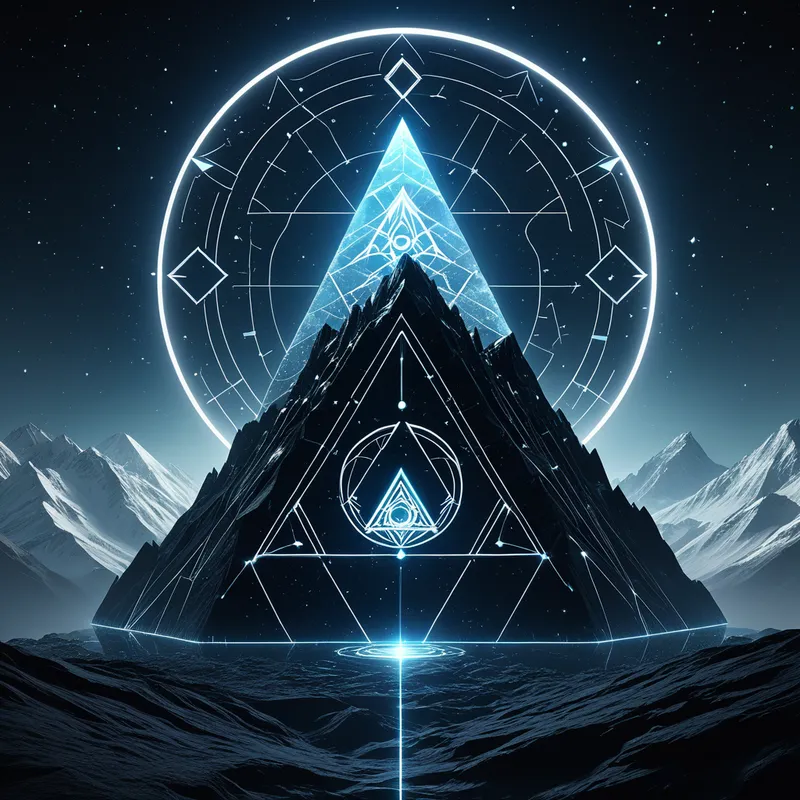
When this mythic pattern stirs in the modern [psyche](/myths/psyche “Myth from Greek culture.”/), it often manifests in dreams of sudden, shocking luminosity. One might dream of a familiar person—a partner, a parent, a therapist, or the dreamer themselves—suddenly glowing with an intense, white, peaceful light. There is awe, but also fear. The dream landscape might be a high place—a rooftop, a hill, a lighthouse. Often, figures from one’s personal or cultural past appear as respectful witnesses or guides.
Somatically, this points to a moment of profound self-recognition, where a core truth of one’s identity or purpose breaks through the psyche’s usual defenses. It is a “peak experience” that feels both glorious and terrifying because it demands a reconfiguration of the self-concept. The dreamer is not just seeing light; they are being confronted with the light of their own essential nature, which can feel as alien as it is familiar. The psychological process is one of revelation shock, where the [persona](/myths/persona “Myth from Greek culture.”/) (the everyday mask) is momentarily burned away by the radiance of the Self.

Alchemical Translation
Psychologically, the Transfiguration is a supreme allegory for the process of individuation. The ascent is the difficult, conscious work of introspection, climbing above the mundane concerns of the ego. The radiant transformation is the sudden, grace-filled emergence of the Self—the total, integrated personality in its divine aspect.
The cloud that overshadows is not the end of the vision, but the necessary vessel that allows the transformative voice to be heard. One must be enveloped by the mystery to understand the instruction.
The conversation with Moses and Elijah is the psyche integrating its own history—the laws (superego, conditioning) and the prophetic fire (instinct, calling) of one’s personal and ancestral past. This council validates that the emerging Self does not arise in a vacuum but is the fulfillment of one’s entire journey. Peter’s misguided impulse to build is the ego’s attempt to claim the experience, to make the numinous personal property. The command to “listen to him” is the alchemical key: the ego must relinquish control and become the servant of the revealed, inner authority. The descent back to the world, carrying the secret, is the crucial final stage—the transformed consciousness must return to ordinary life, now guided by the luminous encounter, to face its own necessary “departures” and transformations in the valleys below. The light is not to be stayed in, but carried down.
Associated Symbols
Explore related symbols from the CaleaDream lexicon: