Tie Flags at Wishing Trees Myth Meaning & Symbolism
A sacred story of offering cloth prayers to the Great Spirit through a living tree, weaving human longing into the fabric of the world.
The Tale of Tie Flags at Wishing Trees
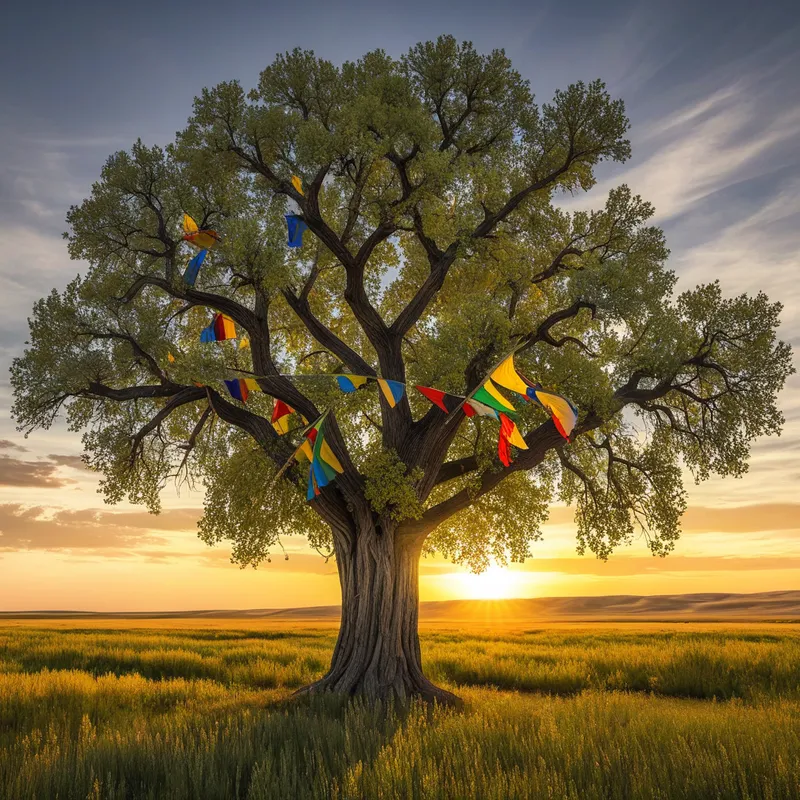
Listen. The wind does not blow here; it speaks. It carries the dust of ancestors and the scent of sage across the endless, whispering grass of the Great Plains. In the heart of this breathing land stands a solitary guardian—an ancient cottonwood, its bark like the cracked skin of time itself. Its branches do not merely reach for the sky; they are the very threads that stitch the earth to the star-road above.
In the time when animals still spoke in human tongues, there lived a people whose hearts were heavy. Drought had come, a great thirst that cracked the earth and hollowed the bellies of the buffalo. Prayers were sent skyward on smoke, but the Great Spirit seemed silent, distant as the winter moon. Despair, a cold stone, settled in the village’s heart.
Then, a vision came to a woman named Weeping Sky. In her dream, she stood before the great tree. Not a leaf stirred, yet a voice rustled through its core, not in words, but in feeling. It showed her that a prayer was not just a thought or a word. A true prayer was a piece of the self, offered. It had to be tangible. It had to be vulnerable. It had to be tied to the world, not just sent fleeing from it.
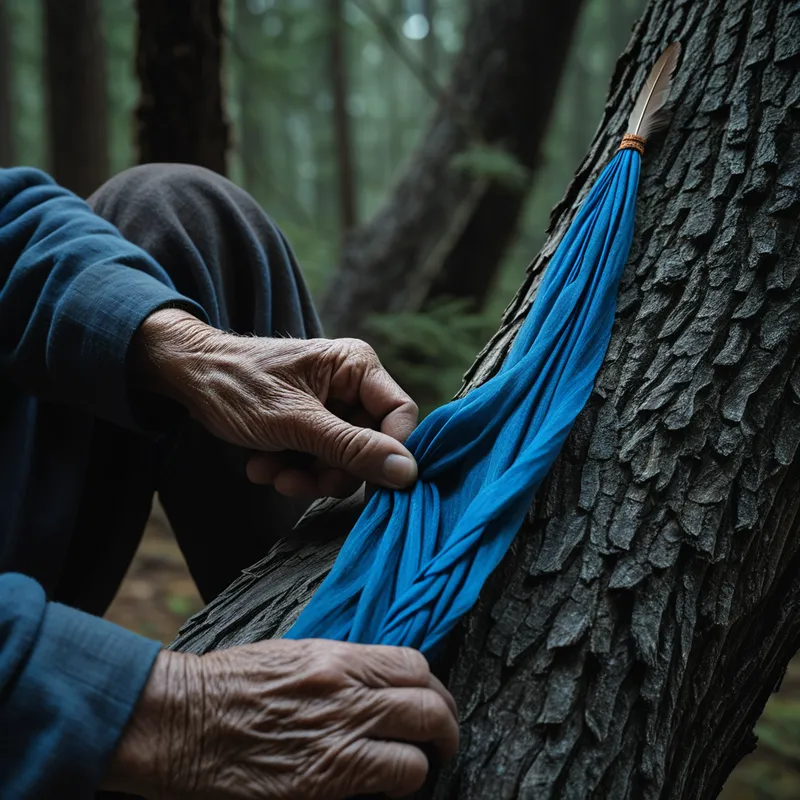
At dawn, with the village watching in silent doubt, Weeping Sky walked to the tree. From her worn dress, she tore a strip of cloth, the color of the vanished river. She did not speak aloud. Instead, she poured her fear for her children, her love for the land, her desperate hope for rain into that scrap of fabric—her breath, her tears, her very spirit. With hands that trembled not from weakness but from the weight of the offering, she tied the cloth to a low-hanging branch.
As the knot tightened, a sigh seemed to move through the roots of the world. One by one, the people followed. The hunter offered a piece of his shirt, praying for the return of the herd. The elder tied a fragment of a blanket, carrying memories of those passed on. The child fastened a bright thread, a simple wish for joy. The tree, once a lonely sentinel, became a tapestry of human longing, each flag a heartbeat exposed to the wind, the sun, and the spirit.
They waited. For days, the colorful flags fluttered, a silent chorus. Then, a change stirred. The wind, which had only whispered, began to sing through the threads. Clouds, shy and grey, gathered where before there was only relentless blue. And the rain, when it came, did not roar; it wept with relief, washing the dust from the flags and the sorrow from the people. The prayer had not been answered by a distant god, but completed in a sacred circuit—the offering given, received by the tree, carried by the wind, and returned by the sky. The dialogue was restored.
Cultural Origins & Context
The practice of tying prayer cloths, often called tie-offs or offerings, is found among various Indigenous nations across North America, including Lakota, Navajo, Cherokee, and others. It is crucial to understand this not as a single, monolithic “Native American myth,” but as a profound spiritual practice embedded in specific cultural and ecological relationships. The “wishing tree” is often a specific, historically significant tree—a cottonwood near a river, a cedar in a mountain pass—recognized as a liminal space.
These were not wishes in a frivolous sense, but prayers: for healing, for guidance, for the well-being of the community or the land. The practice was taught by elders and medicine people, part of an oral tradition that emphasized direct, personal relationship with the animate world. The cloth itself—often cotton, sometimes leather or hide—was significant. It was a piece of one’s own material life, sacrificed. As it weathered in the sun, wind, and rain, the prayer was believed to be slowly released and transformed, its physical dissolution mirroring the surrender of the petitioner’s will to the larger processes of nature and spirit.
Symbolic Architecture
At its core, this myth models the architecture of sacred communication. It moves prayer from a monologue (a plea sent into the void) to a dialogue within a living network.
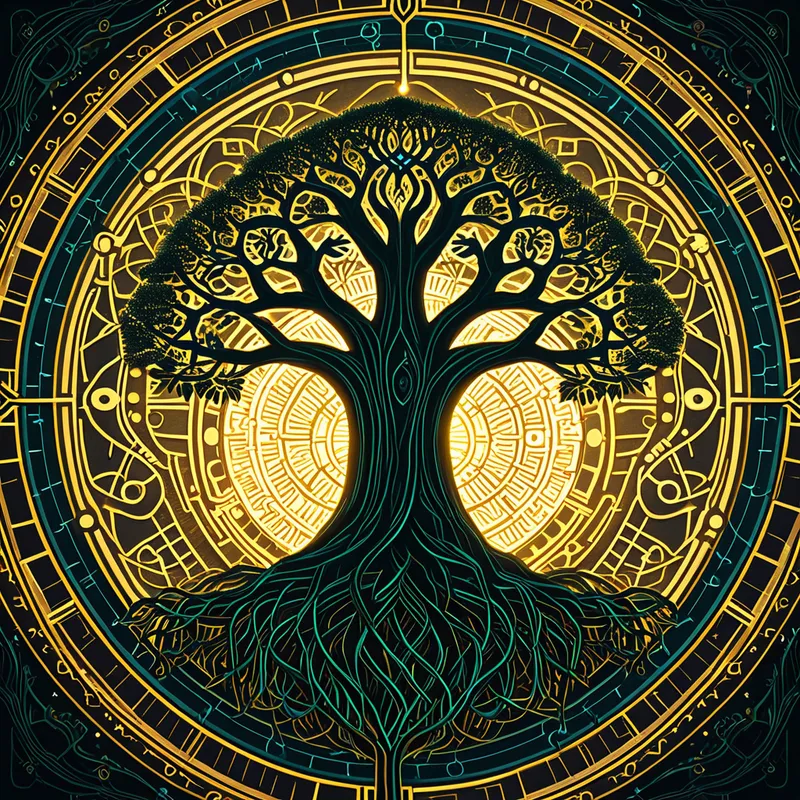
The tree is the axis mundi—the world pillar. Its roots drink from the underworld of memory and ancestors, its trunk is the present reality of the body and community, and its branches reach into the celestial realm of spirit and potential.
The act of tying is the critical ritual. The knot is a covenant, a binding of human intention to the enduring body of the world. It says, “I am here. This is my need. I attach it to something greater than myself.” The cloth is the symbolic vessel of the self—its colors, its wear, its fragility. By offering it, one externalizes an inner state, making the intangible tangible and therefore accessible to transformation by the elements.
The wind is the active agent, the breath of spirit (Wakan Tanka in some traditions). It does not “answer” the prayer so much as engage with it, carrying its essence, wearing it down, integrating it. The eventual dissolution of the cloth is not failure, but completion—the final surrender of the individual ego’s specific desire into the great pattern.
The Dreamer’s Resonance
When this pattern arises in modern dreams, it often signals a profound somatic and psychological process: the need to make an inner process exterior. You may dream of tying a ribbon to a branch in a foggy wood, or of finding a tree already draped with fabrics that hum with forgotten emotions.
Psychologically, this is the dream-ego attempting to perform a ritual of release and connection that the waking self has neglected. The “flag” or cloth often represents a specific burden: a grief that feels stuck, a hope that feels too vulnerable to voice, a memory that needs to be honored and then laid down. The somatic feeling is one of pressure seeking expression. The act of tying in the dream is an unconscious enactment of offering—moving a psychic content from the sealed vault of the personal unconscious to the interactive field of the collective unconscious, symbolized by the living, ancient tree.
The dream may evoke deep sadness or profound relief, mirroring the sacrifice and the surrender inherent in the myth. It is a call from the psyche to stop hoarding your emotional and spiritual material internally, where it can fester, and to instead engage in a symbolic act of offering it up to the larger, transpersonal processes of life and time.
Alchemical Translation
The alchemical journey modeled here is not one of violent conquest, but of humble, transformative dialogue—the core of the Caregiver archetype’s path to wholeness. The process is one of psychic transmutation through sacred exchange.
Individuation is not about becoming a perfectly self-contained unit, but about discovering the right, nourishing connections between the self and the great Self of the world.
The prima materia (base material) is the raw, unspoken burden—the worry, the wish, the pain. The “tearing of the cloth” is the separatio, the conscious decision to differentiate this burden from the seamless fabric of your identity. It hurts; it requires a sacrifice of wholeness.
The tree represents the alembic—the vessel of transformation. It is the stable, enduring structure of the Self (with a capital ‘S’), the psychic framework that can hold and process our smaller, egoic concerns. Tying the cloth is the coniunctio, the sacred marriage of the personal with the transpersonal.
Finally, the weathering by wind, sun, and rain is the solutio and coagulatio—dissolution and reconstitution. The specific, personal longing (“I need rain for my crops”) is dissolved by the elements. What is reconstituted is not the answered wish, but the relationship. The individual is reintegrated not as someone who got what they wanted, but as someone who has participated in a sacred circuit, who has learned to communicate with the animate universe. The triumph is not in the receiving, but in the profound act of vulnerable, tangible offering. The psyche learns to tie its flags to the world-tree, trusting the wind of spirit to carry what it must, transform what it can, and return the self to a state of interconnected, humble dialogue.
Associated Symbols
Explore related symbols from the CaleaDream lexicon: