Thoth's Scales Myth Meaning & Symbolism
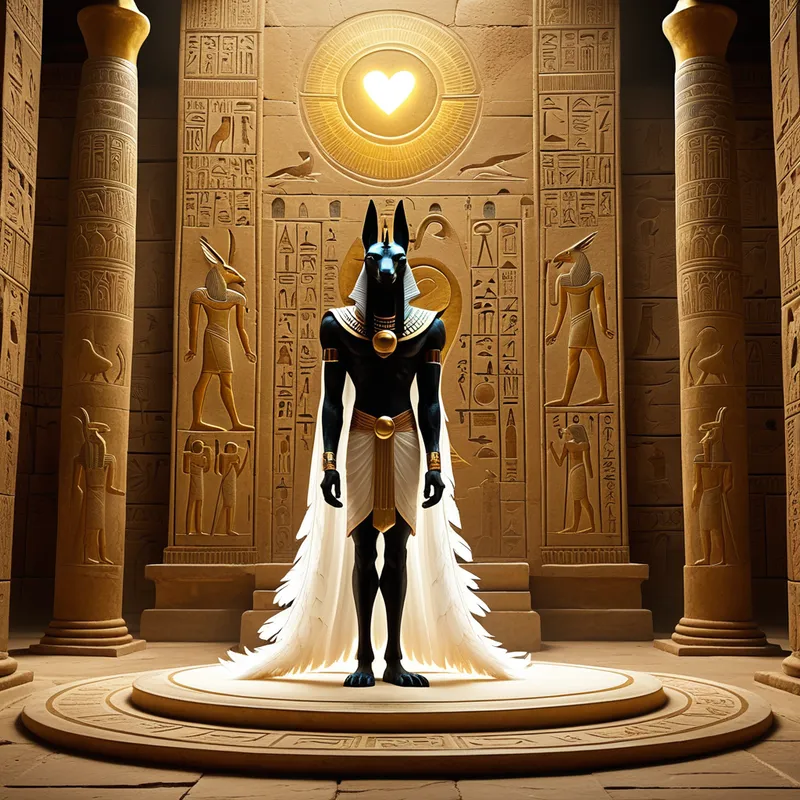
The soul's journey to the afterlife, where the heart is weighed against the feather of Ma'at, overseen by Thoth, god of wisdom and writing.
The Tale of Thoth’s Scales
The sun boat of Ra has sunk beneath the western horizon, and [the world](/myths/the-world “Myth from Tarot culture.”/) is plunged into the ink-black waters of night. But for the soul that has slipped its mortal coil, the true journey is just beginning. It descends through layers of silence, guided by whispers older than stone, toward a chamber that exists outside of time.
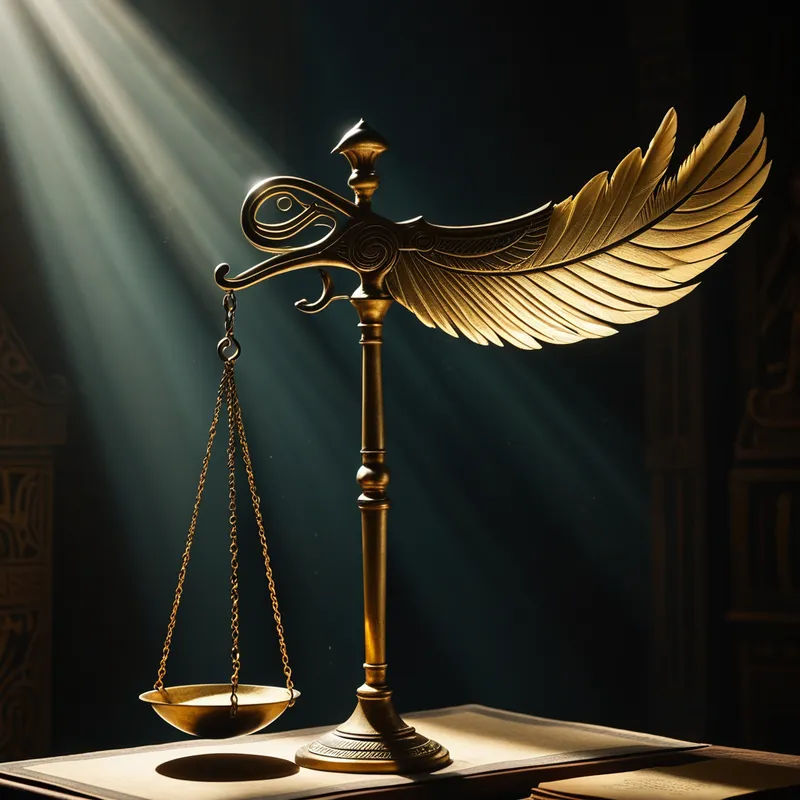
This is the [Hall of Ma’at](/myths/hall-of-maat “Myth from Egyptian culture.”/), a vast, silent space where the air is heavy with the scent of incense and eternity. The soul, now a shimmering ba-bird, stands trembling before a tribunal of gods. At the center, upon a dais of obsidian, sits the great scale. It is not a tool of merchants, but an instrument of cosmic truth, its golden beam polished by the hands of eternity.
The jackal-headed Anubis, his movements precise and solemn, approaches. With infinite care, he places upon the scale’s left plate the soul’s own heart, still warm with the memory of a lifetime—its passions, its rages, its secret kindnesses and hidden shames. It beats a silent, frantic rhythm in the profound quiet.
Upon the right plate, [Ma’at](/myths/maat “Myth from Egyptian culture.”/) herself places her feather. Not a feather from any earthly bird, but the feather of Truth, white and flawless, lighter than a breath, heavier than a mountain. The scale trembles. The soul watches, breathless, as the golden beam begins to tip. This is the moment of reckoning. Does the weight of a life’s deeds balance the perfect, feather-light standard of cosmic order?
In the shadows, a creature waits. Ammit, part lion, part hippopotamus, part crocodile, her jaws slack with eternal hunger. If the heart is heavy with falsehood, if it sinks and drags the scale down, she will lunge forward. The soul will know not the gentle fields of Aaru, but oblivion—consumed, unmade.
But watch. A figure steps forward, his head that of a sacred ibis. It is [Thoth](/myths/thoth “Myth from Global/Universal culture.”/), the scribe of the gods, the measurer of time and speech. His eyes hold the calm of [the moon](/myths/the-moon “Myth from Tarot culture.”/). He does not interfere with the balance; he merely observes its final, trembling rest. Then, with a stylus of reed, he inscribes the verdict upon a scroll of celestial [papyrus](/myths/papyrus “Myth from Egyptian culture.”/). His writing is not judgment, but record. It is the eternal notation of a truth that the heart itself has written. When the feather and the heart hang in perfect equilibrium, a profound peace settles over the hall. [Thoth](/myths/thoth “Myth from Global/Universal culture.”/)’s record is made. The soul may pass on.
Cultural Origins & Context
This was not merely a story to the ancient Egyptians; it was the central operating manual for the soul. The myth is detailed most famously in the Book of the Dead (known to them as “The Book of Coming Forth by Day”), a personalized papyrus scroll placed in the tomb. It was a ritual text, a map, and a spellbook all in one, providing the deceased with the exact words to speak before each god in the hall to justify their life.
The myth functioned on multiple societal levels. For the individual, it was the ultimate motivator for ethical living—ma’at was not an abstract ideal but a practical necessity for eternal survival. For the state, it reinforced social order, as [the pharaoh](/myths/the-pharaoh “Myth from Egyptian culture.”/) was the living embodiment of Ma’at on earth. The ritual was performed by priests and scribes, the earthly counterparts of Thoth, who ensured the proper spells and amulets (like [the heart scarab](/myths/the-heart-scarab “Myth from Egyptian culture.”/), inscribed with a plea to the heart not to testify against its owner) were in place. It was a democratizing force in spirituality; while [the pharaoh](/myths/the-pharaoh “Myth from Egyptian culture.”/)’s journey was assured, every common person could, through right living and proper ritual, hope to stand before the scales and pass.
Symbolic Architecture
The myth presents a profound symbolic [architecture](/symbols/architecture “Symbol: Architecture in dreams often signifies structure, stability, and the framing of personal identity or life’s journey.”/) of the [psyche](/myths/psyche “Myth from Greek culture.”/)‘s final audit. The [heart](/symbols/heart “Symbol: The heart symbolizes love, emotion, and the core of one’s existence, representing deep connections with others and self.”/), ib, is not the emotional [organ](/symbols/organ “Symbol: An organ symbolizes vital aspects of life and health, often representing one’s emotional or physical state.”/) of later traditions, but the seat of [memory](/symbols/memory “Symbol: Memory symbolizes the past, lessons learned, and the narratives we construct about our identities.”/), conscience, and [identity](/symbols/identity “Symbol: Identity represents the sense of self, encompassing personal beliefs, cultural background, and social roles.”/)—the total record of a person’s being.
The weighing is not a punishment, but a revelation. The scale does not measure good versus evil, but congruence versus contradiction. It asks: Does the life lived align with the truth of the cosmos?
The [feather](/symbols/feather “Symbol: A feather represents spiritual elevation, lightness, and the freedom of the spirit. It often symbolizes messages from the divine and connection to ancient wisdom.”/) of Ma’at symbolizes the fundamental principle of harmonious order—[truth](/symbols/truth “Symbol: Truth represents authenticity, honesty, and the quest for knowledge beyond mere appearances.”/), [justice](/myths/justice “Myth from Tarot culture.”/), balance. Its paradoxical [weight](/symbols/weight “Symbol: Weight symbolizes burdens, responsibilities, and emotional loads one carries in life.”/) (impossibly light yet cosmically heavy) represents an ideal that is simple in concept but demanding in execution. The monstrous Ammit represents the [terror](/symbols/terror “Symbol: An overwhelming, primal fear that paralyzes and signals extreme threat, often linked to survival instincts or deep psychological trauma.”/) of psychic [dissolution](/symbols/dissolution “Symbol: The process of breaking down, dispersing, or losing form, often representing transformation, release, or the end of a state of being.”/), the total annihilation of [the self](/myths/the-self “Myth from Jungian culture.”/) that comes from a [life](/symbols/life “Symbol: The symbol of ‘Life’ represents a journey of growth, interconnectedness, and existential meaning, encompassing both the joys and challenges that define human experience.”/) lived in fundamental falsehood. She is the ultimate [shadow](/symbols/shadow “Symbol: The ‘shadow’ embodies the unconscious, repressed aspects of the self and often represents fears or hidden emotions.”/), not of evil deeds, but of inauthenticity.
Thoth’s [role](/symbols/role “Symbol: The concept of ‘role’ in dreams often reflects one’s identity or how individuals perceive their place within various social structures.”/) is crucial. He is the archetypal witness, the objective [consciousness](/symbols/consciousness “Symbol: Consciousness represents the state of awareness and perception, encompassing thoughts, feelings, and experiences.”/) that records without intervening. He represents the faculty of self-[reflection](/symbols/reflection “Symbol: Reflection signifies self-examination, awareness, and the search for truth within oneself.”/) and honest self-assessment. His ibis head, a [creature](/symbols/creature “Symbol: Creatures in dreams often symbolize instincts, primal urges, and the unknown aspects of the psyche.”/) that probes the mud for nourishment, symbolizes the search for truth in the murky waters of experience. His recording is the act of making the unconscious, conscious—of seeing oneself clearly, without denial or [inflation](/symbols/inflation “Symbol: A dream symbol representing feelings of diminishing value, loss of control, or expansion beyond sustainable limits in one’s life or psyche.”/).
The Dreamer’s Resonance
When this myth stirs in the modern dreamer, it rarely appears with Egyptian iconography. Instead, one dreams of being judged before a tribunal of vague, authoritative figures. One dreams of frantic, last-minute tests for which they are unprepared, or of trying to justify their actions to a silent, disappointed parent or partner. The somatic feeling is one of dread, of a pit in the stomach—the weight of the un-confessed, the un-integrated.
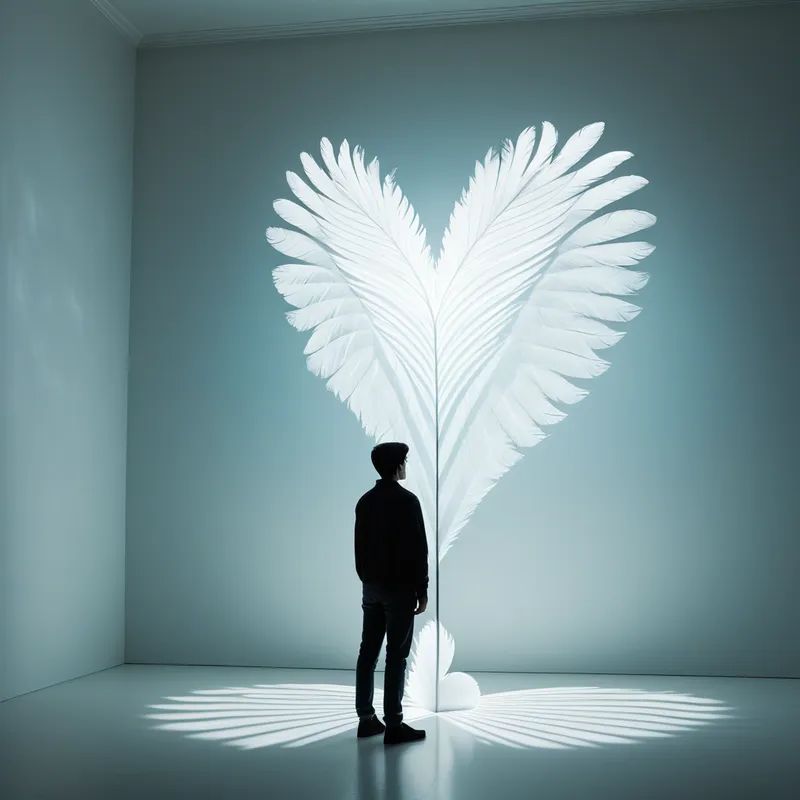
This is the psyche’s natural process of self-evaluation, the “nightly [weighing of the heart](/myths/weighing-of-the-heart “Myth from Egyptian culture.”/).” The dream tribunal is an internal one. The “feather” is the dreamer’s own inner sense of integrity, their personal ma’at. The heavy heart is the accumulated burden of guilt, shame, compromises, and unlived potentials that have not been acknowledged or addressed. To dream of failing the test is to feel the threat of Ammit—not literal oblivion, but the psychological death of meaning, the feeling that one’s life is a fraud about to be exposed. The dream calls for a Thoth-like act: to step back, observe one’s life with clarity, and honestly record what is seen.
Alchemical Translation
The alchemical process mirrored here is one of [solutio](/myths/solutio “Myth from Alchemical culture.”/) and coagulatio—dissolution and reconstitution. The journey to the hall is a descent into the unconscious (solutio), where the fixed identity of [the ego](/myths/the-ego “Myth from Jungian culture.”/) is liquidated. The weighing is the critical separation ([separatio](/myths/separatio “Myth from Alchemical culture.”/)) of the essential from the dross.
The goal is not to create a heart as light as a feather, but to transform the heart’s substance until it is of the same nature as the feather. This is psychic transmutation: turning the lead of hidden guilt into the gold of integrated wisdom.
The modern individual undergoes this process during any profound crisis of integrity—a moral dilemma, the end of a relationship, a career change, or in therapy. We are asked to place our actions, motives, and self-image on the scale of our deepest values. The “devourer” we face is the fear of what we might discover about ourselves, the terror that our self-narrative is false.
Thoth, the sage archetype, provides the method. His tool is not judgment, but mindful observation and truthful recording—the practice of journaling, therapy, or meditation. By consciously “recording” our thoughts and deeds without immediate judgment, we become the scribe of our own soul. We perform the alchemy. We balance the scale not by denying the weight of our mistakes, but by understanding them, taking responsibility, and thereby transforming their psychic mass. The triumphant outcome is a state of inner ma’at: a self that is coherent, authentic, and at peace, ready to be reconstituted (coagulatio) into a new, more integrated way of being. We pass through the hall, not because we were perfect, but because we dared to see ourselves truly, and in that seeing, found our balance.
Associated Symbols
Explore related symbols from the CaleaDream lexicon: