Thirty Pieces of Silver Myth Meaning & Symbolism
A story of divine betrayal for a prophet's price, where silver becomes the weight of a soul and the measure of ultimate regret.
The Tale of Thirty Pieces of Silver
The air in Jerusalem was thick with the scent of crushed olives and impending rain. In the shadows of the colonnades, where whispers clung to the stone like moss, a man moved. His name was Judas Iscariot, and a storm raged behind his eyes—a tempest of disappointment and a gnawing, desperate calculation. He had followed the light, had walked on roads made holy by the footsteps of the Messiah, but now he saw only a road leading to ruin. The kingdom he was promised felt like a fading dream, and the pragmatic world of priests and power pressed in with its cold, hard logic.
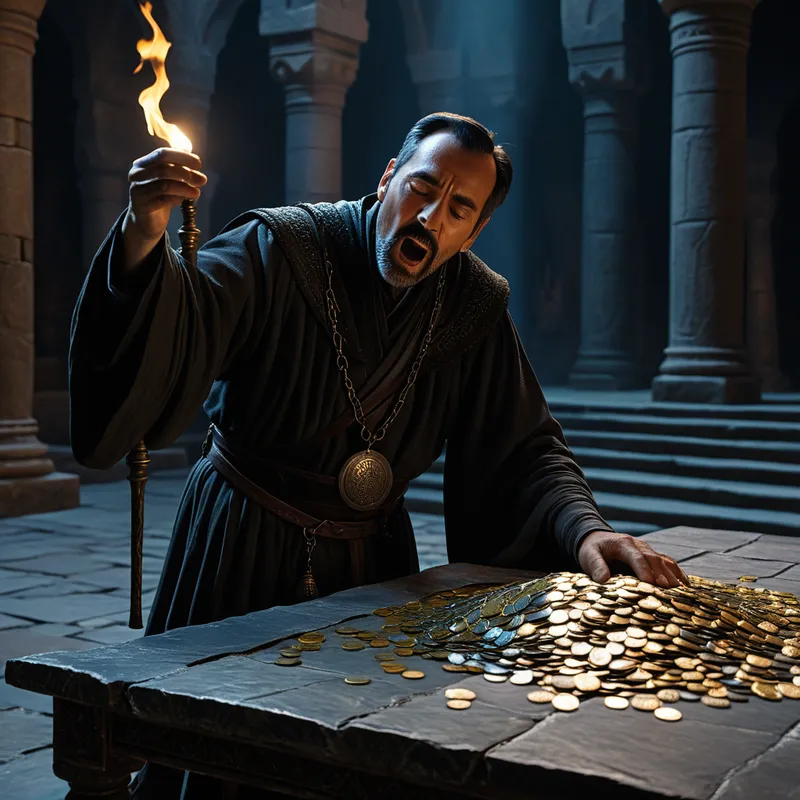
He went to them, to the solemn men in linen and blue, guardians of the sacred order. In a hushed chamber, the deal was struck. Not with grand pronouncements, but with the soft, heavy clink of metal on wood. Thirty pieces of silver. The price was set—the price of a slave gored by an ox, the price of a prophet. The coins were cold in his hand, a tangible weight that promised an end to the unbearable tension. They were an answer, however bitter.
Later, in a garden drenched in moonlight and the scent of cypress, the transaction was completed. A kiss, not of affection, but of designation. A signal. The silver in his purse seemed to burn through the leather, a brand upon his soul as the soldiers seized his teacher. The deed was done. The mechanism of fate, once wound, could not be stopped.
But the storm within Judas did not cease; it transformed. The coins, which had felt so solid, so justifiable, now seemed to writhe in his possession. They were not payment, but an indictment. He stood in the silent, echoing Temple, the heart of the faith he believed he was serving, and hurled the silver back at the feet of the priests. The metallic ring was a scream in the sacred silence. “I have sinned,” he cried, “for I have betrayed innocent blood.” But the machinery of state was indifferent. The blood money could not re-enter the treasury; it was used to buy a potter’s field, a place for strangers to bury their dead. The silver had purchased only a field of blood and a rope for a barren tree.
Cultural Origins & Context
This narrative is embedded within the Gospel accounts, primarily in the Gospel of Matthew. It functions not as a mere historical footnote but as a profound theological and moral fulcrum. The specific sum—thirty pieces of silver—is a direct, chilling allusion to the prophecy in Zechariah 11:12-13, where it is sarcastically offered as a shepherd’s wages, then thrown to the potter. This intertextual echo layers the story with a sense of divine inevitability, framing Judas’s act within a grand, tragic script.
Told and retold within early Christian communities, the story served multiple functions. It explained the horrifying fact of the Messiah’s betrayal by one of his own inner circle. It provided a stark warning against avarice and the corruption of sacred trust. But more deeply, it explored the terrifying human capacity for catastrophic misjudgment, even among those closest to the divine. Judas became the archetypal figure of the failed disciple, his story a dark mirror held up to every believer’s potential for betrayal.
Symbolic Architecture
The thirty pieces of silver are far more than currency; they are the densest symbol of misplaced valuation in the Western psyche. They represent the quantifiable world’s attempt to price the priceless—the spirit, loyalty, love, and the divine itself.
The shadow’s currency is always a counterfeit, promising resolution but delivering only the weight of its own emptiness.
Judas embodies the shadow of the disciple. He is not pure evil, but a complex of thwarted ambition, literalism, and a tragic desire to force God’s hand. He attempts to navigate spiritual mystery with the ledger-book of the ego. The kiss of betrayal is the ultimate perversion of intimacy, turning the symbol of connection into a tool of transaction. His subsequent suicide is not just punishment, but the logical end of a psyche that has traded its connection to the living spirit for dead weight. The Field of Blood (Aceldama) becomes the psychic landscape created by such a trade: a barren, haunted place where what is buried does not rest.
The Dreamer’s Resonance
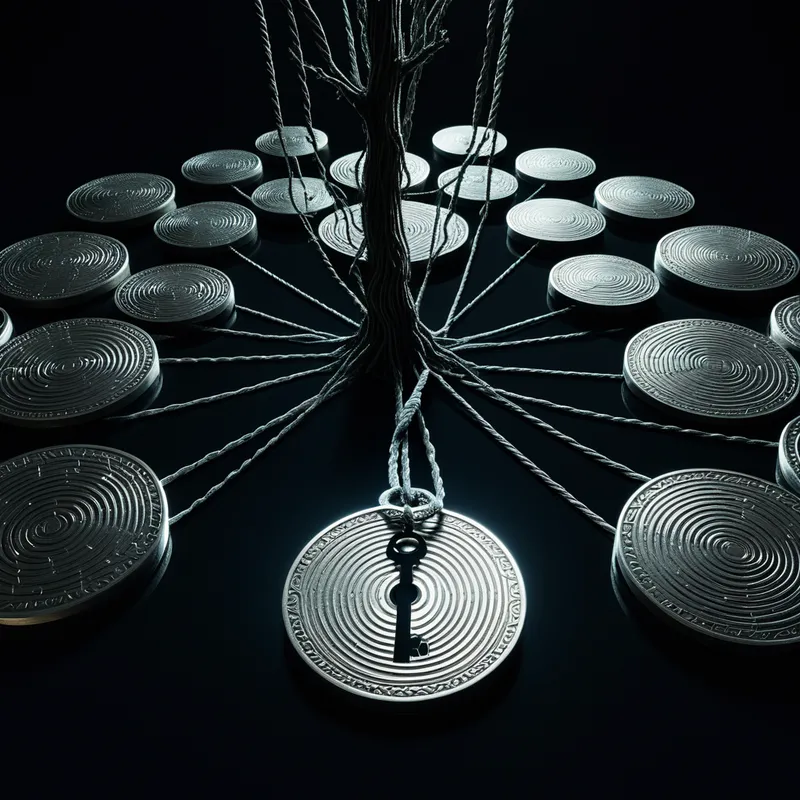
To dream of thirty pieces of silver, or of betraying for a price, is to encounter a profound moment of psychic accounting. The dreamer is at a crossroads where a part of the self—an ideal, a relationship, a creative spark, a core value—is being offered up on the altar of a pragmatic, “sensible” gain. This is the somatic feeling of “selling out.”
The coins in the dream may feel cold, heavy, and wrong. The act of accepting them is often accompanied by a deep sense of shame or dread, a recognition that one is trading soul-substance for security, approval, or a false sense of control. This dream pattern signals a critical confrontation with the personal shadow’s bargaining chip. It asks: What am I betraying within myself to make the outer world more manageable? What priceless inner truth am I pricing for the convenience of the consensus reality?

Alchemical Translation
The myth models the catastrophic failure of one path of individuation, thereby illuminating the correct one. Judas’s path is a false alchemy. He attempts to transmute the leaden confusion of his disappointment into the gold of a realized ambition by using the base metal of literal silver. It is the ego’s attempt to perform the Great Work alone, for its own ends. The process fails because it bypasses the necessary stage of nigredo—the dark night of the soul where one must endure the tension of not knowing, without resorting to a cheap solution.
True transformation requires holding the tension of the opposites until a third, transcendent value emerges. Judas could not hold the tension between his spiritual hope and worldly reality, and so he sold one for the other, annihilating both.
The alchemical lesson is that the soul’s value cannot be transacted. The individuation process demands that we carry our confusions, our betrayals of self, and even our “blood money” back to the inner temple—the seat of conscience and consciousness. We must confront, as Judas did, the horrifying result of our bargains. But where he saw only a final, despairing end, the modern seeker is called to a different resolution: to take that rejected, tainted silver and, instead of purchasing a field of death, offer it to the “potter.” This is the act of handing our deepest failures, our most shameful transactions, back to the shaping, creative fire of the psyche. There, in the kiln of conscious suffering and acceptance, the base metal of our worst mistakes can, at last, begin its true transmutation. The potter’s field is not our final resting place, but the raw clay from which a new vessel might yet be formed.
Associated Symbols
Explore related symbols from the CaleaDream lexicon: