Theban Sphinx Myth Meaning & Symbolism
A monster with a woman's face and lion's body devours those who fail her riddle, until Oedipus solves it, revealing a dark truth about human nature.
The Tale of Theban Sphinx
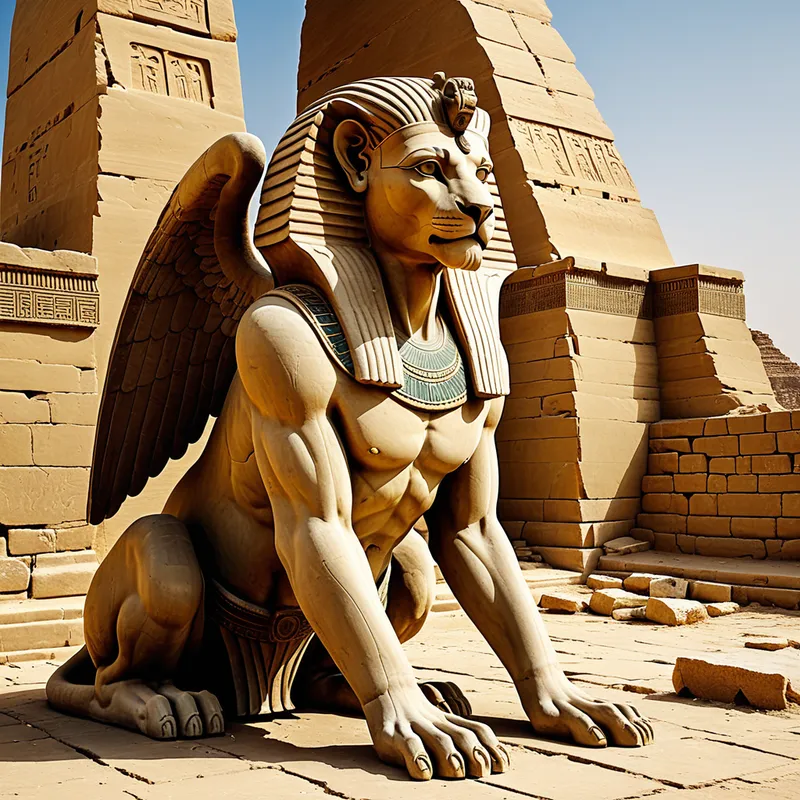
Thebes was a city under a curse, its breath held in a silent scream. A blight had fallen upon the land, but it was not from [the sky](/myths/the-sky “Myth from Persian culture.”/) or the soil. It came from the road, the very path to the city gates. There, upon a towering rock, she waited. The Thebans knew her only as the [Sphinx](/myths/sphinx “Myth from Greek culture.”/), a daughter of Echidna, sent by Hera in her fury. She was not mere beast; she was a perverse oracle, a beautiful horror with the face of a maiden, the body of a powerful lion, and the great wings of an eagle.
Her method was a cruel liturgy. To any traveler seeking to enter or leave Thebes, she posed her riddle, a verse coiled like a serpent: “What goes on four legs in the morning, two legs at noon, and three legs in the evening?” The air would grow still. The hopeful merchant, the brave soldier, the desperate farmer—all would pause, their minds racing against [the shadow](/myths/the-shadow “Myth from Jungian culture.”/) of her patient, predatory gaze. To answer wrong was to be torn apart by her claws, another set of bones to bleach white in the sun beside the road. The city was strangled, cut off from [the world](/myths/the-world “Myth from Tarot culture.”/), feeding its own young to this guardian of [the threshold](/myths/the-threshold “Myth from Folklore culture.”/). King Laius was dead on the road, they said, murdered by bandits. In his place ruled his brother-in-law, Creon, who offered the kingdom and the hand of the widowed queen, Jocasta, to any man who could break the curse.
Then came [the wanderer](/myths/the-wanderer “Myth from Taoist culture.”/), [Oedipus](/myths/oedipus “Myth from Greek culture.”/), fleeing a prophecy from Delphi. He approached [the Sphinx](/myths/the-sphinx “Myth from Greek culture.”/)’s rock, stepping over the relics of failure. The monster surveyed him, this man marked by both determination and a deep, unspoken anxiety. She uttered the riddle once more, the sound like stone grinding on stone.
Oedipus did not hesitate long. The answer came to him not as a flash of genius, but as a fundamental truth of the path he himself was walking. “Man,” he declared, his voice cutting the heavy air. “For as an infant he crawls on all fours, in his prime he walks upright on two, and in old age he uses a staff as a third leg.”
A silence followed, more profound than any that had come before. It was the sound of a cosmic lock turning. The Sphinx did not roar in anger. She let out a terrible cry—a shriek of thwarted purpose, of a divine punishment rendered void. Then, from her high perch, she cast herself down, dashing herself upon the rocks below. The road to Thebes was open. The people hailed Oedipus as a savior, a king, the solver of the unsolvable. They crowned him, and he took Jocasta as his bride. The monster was dead. But the true riddle, the one hidden within the answer, had only just begun to unfold.
Cultural Origins & Context
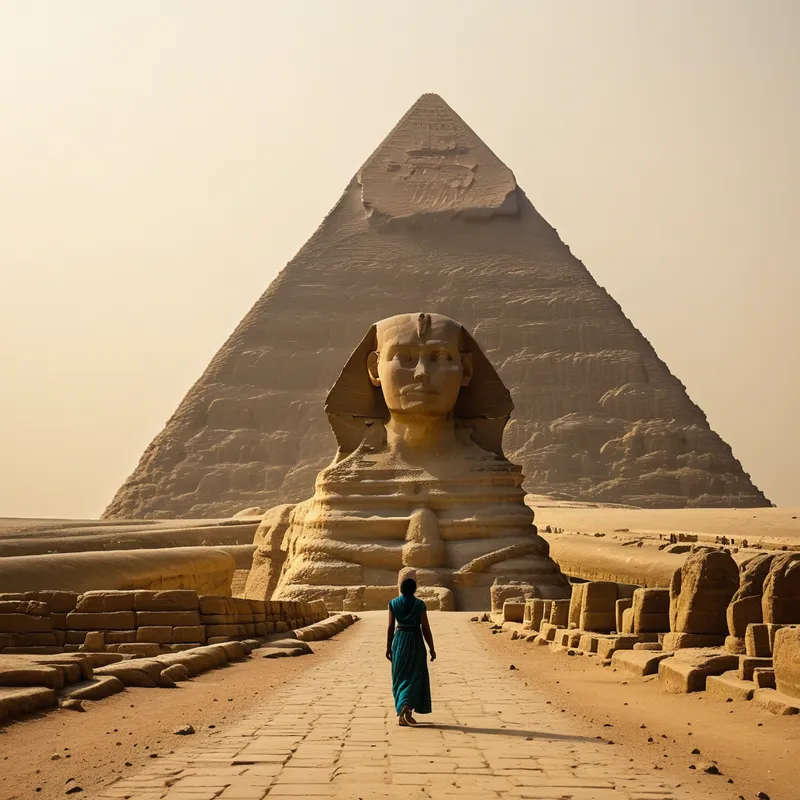
This core narrative of the Sphinx comes to us primarily from the Sophoclean cycle, particularly Oedipus Tyrannus, though the monster appears in earlier fragments and likely has roots in older, Near Eastern traditions of lion-bodied guardians. In the Greek context, the myth was not a standalone fable but the pivotal, ironic hinge in the tragedy of the House of Cadmus. It was performed in the civic-religious space of the theater of Dionysus, a ritualized storytelling that explored the most profound tensions in the Greek [psyche](/myths/psyche “Myth from Greek culture.”/): between human intellect ([metis](/myths/metis “Myth from Greek culture.”/)) and divine fate (moira), between the quest for knowledge and the terror of what that knowledge might reveal.
The Sphinx’s riddle functioned as a societal trauma. It represented an irrational, external threat that the city’s collective wisdom could not solve, demanding a singular, heroic intelligence. Her defeat by Oedipus was the necessary prelude to his kingship and the subsequent, horrific discovery of his true identity. The myth thus served as a cautionary template about the limits of cleverness and the paradoxical nature of self-knowledge—the very answer that saves [the polis](/myths/the-polis “Myth from Greek culture.”/) dooms the individual who speaks it.
Symbolic Architecture
The [Sphinx](/symbols/sphinx “Symbol: The Sphinx is a mythical creature that embodies the convergence of strength and intelligence, often associated with mystery, protection, and the challenge of riddles.”/) is not merely a [monster](/symbols/monster “Symbol: Monsters in dreams often symbolize fears, anxieties, or challenges that feel overwhelming.”/); she is the embodiment of the unsolved complex, the psychic [knot](/symbols/knot “Symbol: A knot symbolizes connections, commitments, complications, and the binding or untying of relationships and situations.”/) that blocks [passage](/symbols/passage “Symbol: A passage symbolizes transition, movement from one phase of life to another, or a journey towards personal growth.”/) to a new stage of [life](/symbols/life “Symbol: The symbol of ‘Life’ represents a journey of growth, interconnectedness, and existential meaning, encompassing both the joys and challenges that define human experience.”/). She sits at the threshold, the liminal [space](/symbols/space “Symbol: Dreaming of ‘Space’ often symbolizes the vastness of potential, personal freedom, or feelings of isolation and exploration in one’s life.”/) between the known world (Thebes) and the unknown (the outer road, the future). Her composite form—[human](/symbols/human “Symbol: The symbol of a human represents individuality, complexity of emotions, and social relationships.”/) head, animal [body](/symbols/body “Symbol: The body in dreams often symbolizes the dreamer’s self-identity, personal health, and the relationship they have with their physical existence.”/), avian wings—symbolizes a fractured wholeness: intellect divorced from instinct, [spirit](/symbols/spirit “Symbol: Spirit symbolizes the essence of life, vitality, and the spiritual journey of the individual.”/) (wings) trapped by a ferocious, earthly [nature](/symbols/nature “Symbol: Nature symbolizes growth, connectivity, and the primal forces of existence.”/).
The riddle she guards is the ultimate question of self-definition. To answer it is to recognize the pattern of one’s own existence, from dependency to agency to dependency again—the full, mortal arc.
Her method is deeply psychological. She does not attack outright; she invites [the ego](/myths/the-ego “Myth from Jungian culture.”/) to engage. Failure is a form of psychic [disintegration](/symbols/disintegration “Symbol: A symbol of breakdown, loss of form, or fragmentation, often reflecting anxiety about personal identity, control, or stability.”/)—being “torn apart” by the unconscious when the conscious mind arrogantly or ignorantly misidentifies the nature of [the Self](/myths/the-self “Myth from Jungian culture.”/). Oedipus succeeds not through force, but through correct recognition. His answer, “Man,” is an act of naming the human [condition](/symbols/condition “Symbol: Condition reflects the state of being, often focusing on physical, emotional, or situational aspects of life.”/) itself. Yet, in a supreme [irony](/symbols/irony “Symbol: A literary or artistic device where the intended meaning is opposite to the literal meaning, often revealing contradictions or unexpected outcomes.”/), he fails to apply this recognition to his own, specific life. He knows anthropos (mankind), but not Oedipus (himself). The Sphinx’s suicide upon hearing the correct answer signifies that once the fundamental [pattern](/symbols/pattern “Symbol: A ‘Pattern’ in dreams often signifies the underlying structure of experiences and thoughts, representing both order and the repetitiveness of life’s situations.”/) is consciously named, the obstructive, monstrous form of the complex loses its power and dissolves, making way for the next, often more personal and painful, [layer](/symbols/layer “Symbol: Layers often symbolize complexity, depth, and protection in dreams, representing the various aspects of the self or situations.”/) of [revelation](/symbols/revelation “Symbol: A sudden, profound disclosure of truth or insight, often through artistic or musical means, that transforms understanding.”/).
The Dreamer’s Resonance
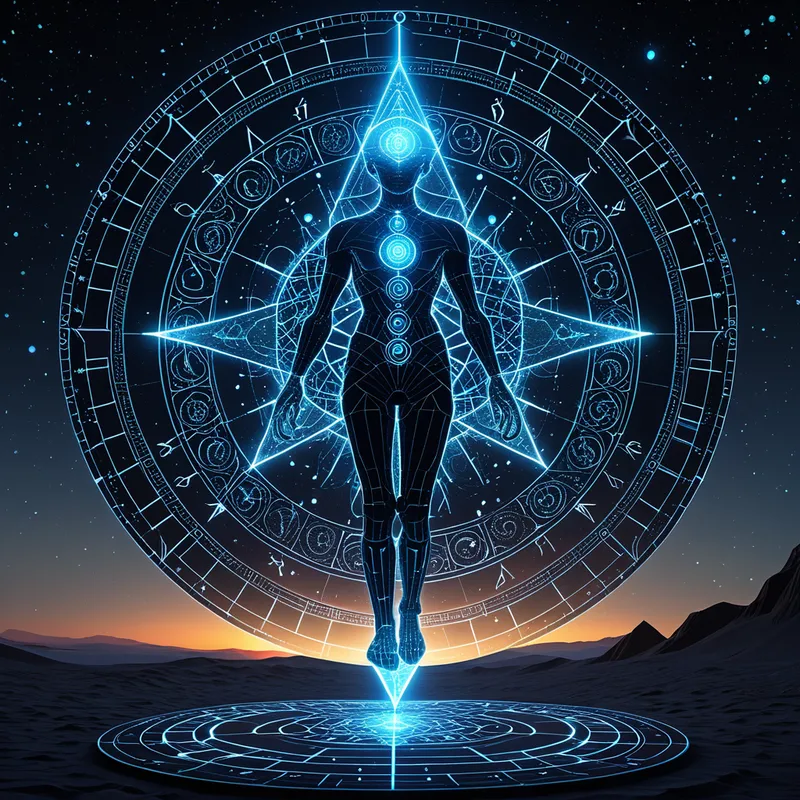
When the pattern of the Theban Sphinx manifests in modern dreams, it rarely appears as a literal winged lion. Instead, one dreams of being stopped by an impassable obstacle—a locked door with a cryptic keypad, a bureaucratic figure demanding an unknown form, a bridge guarded by a silent, imposing presence. The somatic feeling is one of frustrated paralysis, a knot in the stomach, a constriction in the throat. This is the dream-ego encountering a personal “riddle,” an unconscious complex that blocks progress.
The psychological process is one of integration. The “monster” is an aspect of the dreamer’s own psyche—perhaps a repressed talent (the creative force turned destructive), a denied dependency (the “staff” of the third leg), or an unacknowledged life phase—that has taken on an autonomous, threatening form. The dream is presenting the ego with a task: to stop, to engage, and to identify the true nature of the blockage. Failure in the dream (being turned away, attacked) signals a current inability to consciously comprehend this aspect of the self. The dream may recur until the waking mind begins to contemplate the core question: “What is the fundamental, human pattern at work in my current struggle?”
Alchemical Translation
The myth models the alchemical [solve et coagula](/myths/solve-et-coagula “Myth from Alchemical culture.”/)—dissolve and coagulate—applied to the psyche. The Sphinx represents the [prima materia](/myths/prima-materia “Myth from Alchemical culture.”/), the chaotic, fearsome raw material of the unconscious that must be engaged to begin the work of individuation.
First, the Solve (Dissolution): The proud, wandering ego (Oedipus) is dissolved of its certainty. It is forced to stop its headlong flight and confront the irreducible, enigmatic symbol on the road. This is the beginning of shadow work—facing the composite, animalistic, and terrifying aspects of oneself that have been projected outward as a monster or an external curse.
[The Conjunction](/myths/the-conjunction “Myth from Alchemical culture.”/): The engagement with the riddle is the coniunctio, [the sacred marriage](/myths/the-sacred-marriage “Myth from Various culture.”/) of conscious intellect and unconscious symbolism. The ego must humble itself to listen to the riddle posed by the deeper Self.
The answer “Man” is the philosopher’s stone of this inner process—the moment of aha! where the archetypal pattern is seen. It is the realization that the seeker and the riddle, the hero and the monster, are part of the same system, the same human journey.
Then, the Coagula (Coagulation): With the correct insight, the monstrous form (the complex) dissolves (the Sphinx’s suicide). Its energy is freed and made available to the psyche. A new, more conscious structure can form: Oedipus becomes king, assuming a new role and responsibility. However, the alchemical work is never complete with one victory. This new coagulation (his kingship, his marriage) is built on an incomplete self-knowledge, setting the stage for the next, more devastating and necessary dissolution—the confrontation with his own personal history and guilt. Thus, the myth teaches that each solved riddle merely opens the door to a deeper, more personal chamber of the self. The ultimate goal is not to slay the monster on the road, but to integrate its question into the very fabric of one’s being, to walk the three-legged path of one’s own life with conscious, if tragic, awareness.
Associated Symbols
Explore related symbols from the CaleaDream lexicon: