The Zohar Myth Meaning & Symbolism
A myth of primordial light, cosmic catastrophe, and the sacred human task of gathering divine sparks to heal a fractured universe.
The Tale of The Zohar
In the beginning, before beginning, there was only Ein Sof. A presence so absolute, so boundless, it filled all and was all, leaving no room for anything else to be. It was a perfect, silent, undifferentiated sea of potential. And within that sea, a desire stirred—a desire to be known, to be revealed, to create.
So Ein Sof contracted. It withdrew its light from a central point, creating a hollow, a womb of emptiness. This was the Tzimtzum. Into this vacuum, a single ray of infinite light poured forth, a river of divine essence. This light was to be the substance of all worlds. But it was too pure, too potent. To shape creation, the light needed to be channeled, to be given form.
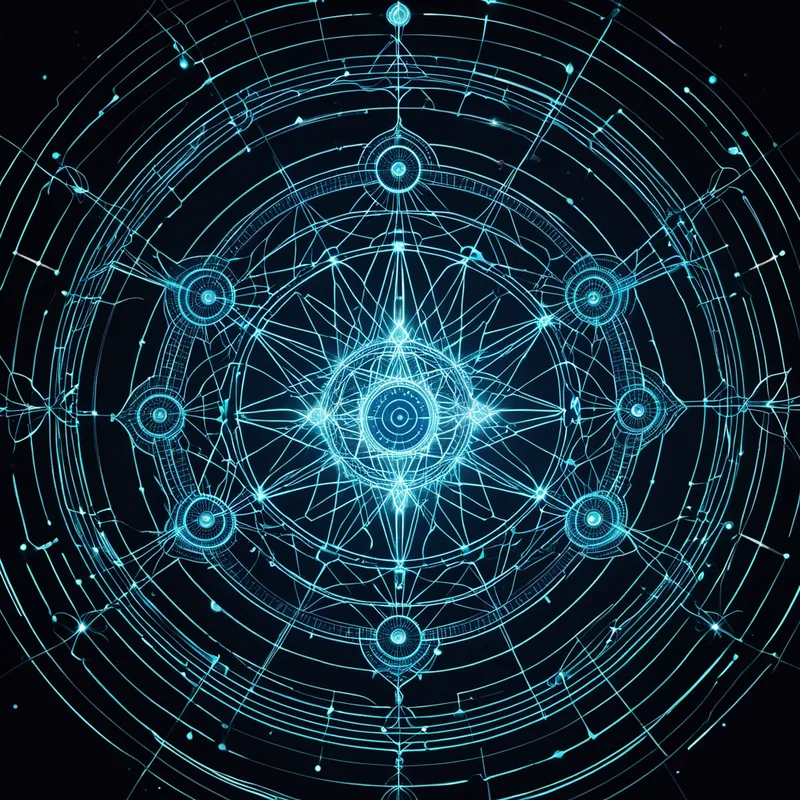
Thus, ten vessels were formed from this light itself—sacred, crystalline containers known as the Sefirot. They were arranged like a great tree, or a divine human form: Keter at the peak, then Chokhmah and Binah, and down through the pillars of mercy and judgment to the foundation, Yesod, and finally the kingdom, Malkhut. The light began to flow from the source, down through this sacred conduit.
But a catastrophe echoed through the void. The lower vessels, those closest to where the world of matter was to be, could not withstand the sheer force of the undiluted light. They shattered. Not with a sound, but with a silent, cosmic rupture. The vessels of Gevurah and Hod and Yesod fractured. Their crystalline forms exploded.
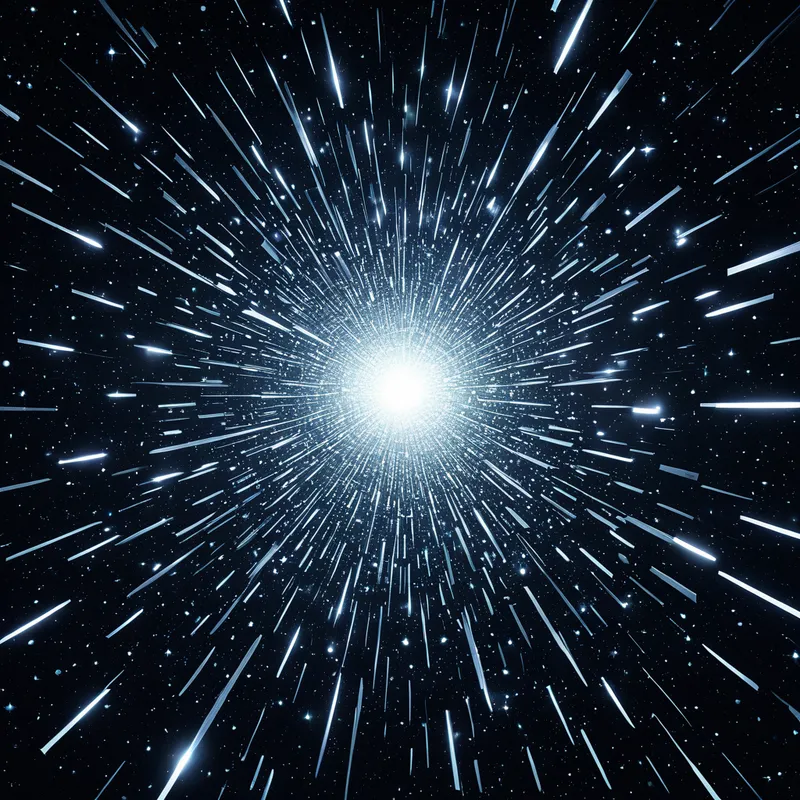
The light within them did not vanish. It shattered into an infinite number of sparks—holy fragments of the original radiance. These sparks, now clothed in shards of the broken vessels, fell. They cascaded down through the emptiness, through the forming layers of reality, and came to rest in the lowest realm, the world of action and matter, Assiyah. Here, the sparks became embedded in everything: in stone and leaf, in beast and human, in thought and deed. The world was born from this cosmic accident—a beautiful, broken world, where divine light is hidden within shells of darkness, Kelipot.
And so the great task was set. The scattered light yearns to return to its source. The human soul, a spark itself, is born into this world of fragments with a sacred purpose: to seek out these hidden lights, to lift them from their captivity in the shells, and to restore them. This is Tikkun Olam, the repair of the world. With every righteous act, every moment of conscious kindness, every prayer uttered with true intention, a spark is freed. It ascends. The vessels are, piece by piece, made whole. The story of The Zohar is not a tale of a past creation, but of an ongoing, sacred drama in which every soul plays the central role.

Cultural Origins & Context
The Zohar, meaning “The Book of Splendor,” is the central text of Kabbalah. It first emerged publicly in 13th-century Spain, presented as the teachings of the 2nd-century sage Shimon bar Yochai and his disciples. While its exact authorship—often attributed to the Spanish Kabbalist Moses de León—remains a subject of scholarly debate, its cultural impact is undeniable. It was not a text for the masses but for initiated scholars who had mastered Torah and Talmud. Its transmission was oral and secretive, passed in hushed tones between master and disciple, its complex Aramaic verses unpacked layer by symbolic layer. Its societal function was revolutionary: it provided a mystical, experiential map of the divine structure and the human soul’s role within it, offering a profound theosophical framework during a time of Jewish diaspora and persecution. It answered not just “what” to do, but “why”—locating every human action within the cosmic drama of divine exile and restoration.
Symbolic Architecture
The myth of the Shattering of the Vessels, or Shevirat HaKelim, is a profound symbolic architecture for the nature of existence, trauma, and purpose.
The primordial catastrophe is not a mistake, but the necessary condition for a world of choice, relationship, and meaning to exist.
The Ein Sof represents the unconscious pleroma, the undifferentiated state of psychic wholeness that precedes ego-consciousness. The Tzimtzum is the first act of consciousness: a withdrawal of energy to create a space where an “other” can be perceived—the birth of the ego from the unconscious. The Sefirot are the archetypal structures of the psyche itself, the patterns through which psychic energy flows and takes form (thought, emotion, intuition, sensation).
The Shattering is the inevitable trauma of incarnation. The pure, archetypal light of the Self cannot be fully contained by the fragile, developing structures of the personal psyche (the lower vessels). This “breaking” scatters the wholeness of the Self into fragments—complexes, talents, wounds, and potentials—that become lodged in the “matter” of our personal history, our body, and our shadow. The Kelipot are not evil, but necessary containers; they are our defenses, our neuroses, our forgotten memories that both protect and imprison the light of our potential.
The Dreamer’s Resonance
When this mythic pattern stirs in the modern dreamer, it often manifests as dreams of searching, gathering, or repairing. One might dream of walking through a post-apocalyptic or cluttered landscape (the world of Assiyah), compelled to collect seemingly worthless broken objects—shards of glass, rusty gears, faded photographs (the scattered sparks). The somatic feeling is one of urgent, melancholic purpose. Another common pattern is the dream of a radiant but fragile internal structure—a crystal heart, a glass sphere, a intricate model—that cracks or is already cracked, with light leaking from its fractures. The dreamer may feel a profound anxiety about containment and a simultaneous awe at the leaking beauty.
Psychologically, this signals a process of re-collection. The psyche is initiating a gathering of lost or dissociated parts of the Self. The dreamer is being called to engage in their own Tikkun Olam, to attend to the broken places within their own soul-scape, not to discard the fragments, but to recognize the divine light hidden within each wound, each forgotten memory, each repressed talent.

Alchemical Translation
The alchemical journey modeled by The Zohar is the opus of individuation framed as sacred restoration. It begins with the Nigredo: the acknowledgment of the primal fracture, the personal and collective shadow, the feeling of being a soul in exile within one’s own life. This is the conscious encounter with the Kelipot—our own hardened defenses and fragmented psyche.
The work is not to become perfect, but to become a conscious vessel, capable of receiving and transmitting a more integrated light.
The Albedo is the careful, devotional work of Tikkun. It is the analysis, the mindful action, the loving attention that “lifts the spark.” This is when we engage with a complex—say, a pattern of shame (Kelipot)—and through understanding and integration, liberate the trapped energy within it (the spark), perhaps discovering a capacity for profound humility or empathy. Each integrated fragment restores a piece of the inner Sefirotic tree, improving the flow of libido (divine light) through one’s being.
The Rubedo is the culmination: not a return to the undifferentiated Ein Sof, but the creation of a repaired vessel. The individual becomes a conscious channel, a Malkhut that can now stably receive and reflect the light of the Self into the world. The personality is not erased but becomes a transparent medium for the archetypal. The repaired world is the integrated psyche, where the divine and the human, the light and the vessel, are in conscious partnership.
Associated Symbols
Explore related symbols from the CaleaDream lexicon:
- Light — The primordial substance of divinity and consciousness, which fractures into sparks that become the essence of all souls and hidden potential in the material world.
- Vessel — The fragile structure of the psyche or reality meant to contain divine light, whose breaking is both a catastrophe and the origin of individuation.
- Spark — The fragmented unit of divine light or Self, hidden within every aspect of creation and within every personal complex, awaiting liberation and return.
- Tree — The symbolic structure of the Sefirot, representing the interconnected, living architecture of the psyche and the cosmos through which energy flows.
- Shadow — The equivalent of the Kelipot, the necessary dark containers that both protect and imprison the light of the unconscious, requiring integration.
- Journey — The lifelong human task of Tikkun Olam, the seeking and gathering of scattered sparks through conscious thought, feeling, and action.
- Circle — The original, undifferentiated state of Ein Sof, and the ultimate goal of restoration, reconstituted as a conscious mandala of the integrated Self.
- Key — The acts of consciousness, prayer, and righteous deed that unlock the Kelipot and release the trapped spark, facilitating its ascent.
- Temple — The repaired vessel of the individual soul and the collective world, the sacred space rebuilt through the work of restoration to once again house the divine presence.
- Seed — The potential for wholeness contained within each scattered spark, carrying the blueprint for its return and the restoration of the entire system.
- Root — The hidden, archetypal connection that remains between each scattered spark and its divine source, the unconscious link that guides the journey of return.
- Dream — The inner realm where the process of searching for and recognizing the scattered sparks of the Self often begins, a liminal space of Tikkun.