The Yellow Emperor Myth Meaning & Symbolism
The myth of Huangdi, the Yellow Emperor, recounts the primordial unification of warring tribes and the birth of Chinese civilization through wisdom, warfare, and cosmic order.
The Tale of The Yellow Emperor
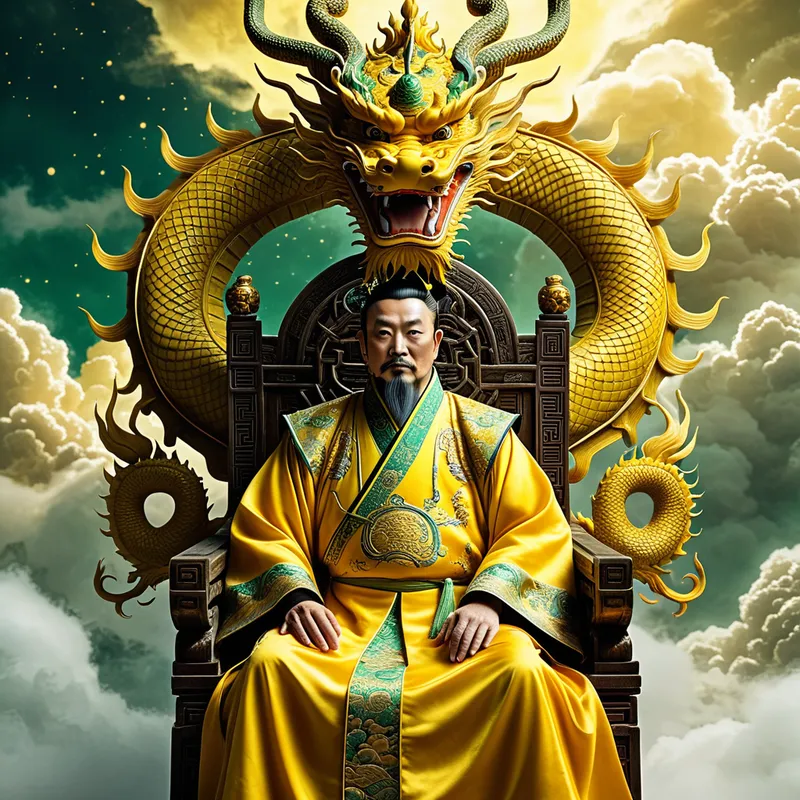
Listen, and hear the tale from the age when the world was still soft clay, and the breath of the gods was the wind. In the hazy dawn of time, the land was a cacophony of warring tribes. The rivers ran red, and the smoke of countless battles stained the sky. From this chaos, a sovereign was born—not of a mortal womb, but from the essence of the great Yellow Earth. They called him Huangdi, the Yellow Emperor.
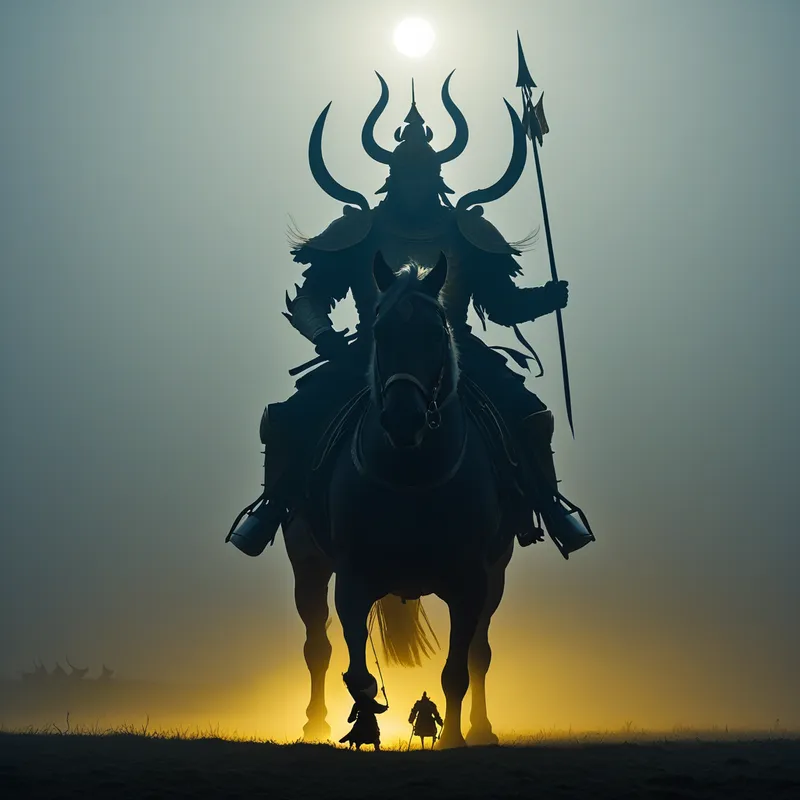
His skin held the hue of loess, rich and fertile; his eyes held the depth of the night sky. He did not seek dominion; it settled upon his shoulders like a mantle woven from necessity. Yet, his rule was challenged. From the south arose a tempest of fury named Chiyou. A giant of a being, with a brow of bronze and horns like a bull, he commanded demons, summoned fog, and forged the first weapons of metal. His rebellion was a force of pure, unbridled nature, a storm that threatened to scour the nascent order from the earth.
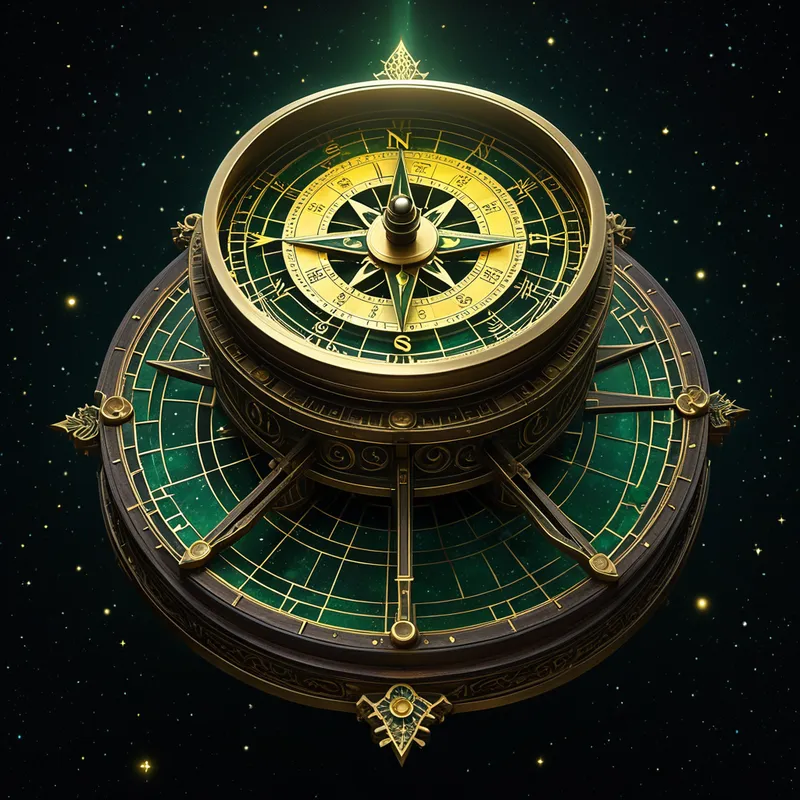
The Yellow Emperor gathered his people. He did not merely raise an army; he cultivated a civilization. He taught them to build chariots, to read the stars in the Northern Dipper, to drum with a single heart. The great battle was joined at Zhuolu. For days, Chiyou’s magical fog blinded Huangdi’s forces, until the Emperor, in his wisdom, fashioned a south-pointing chariot—a compass of spirit and wood—to find true direction in the miasma.
The climax was not of brute force alone. When Chiyou summoned the wind and rain, Huangdi called upon the Daughter of Drought, whose very presence dried the heavens and cracked the earth. And when the final clash came, it was said the Yellow Dragon itself, the embodiment of his sovereign virtue, soared above him. With the help of his allies and the mandate of heaven, Huangdi prevailed. Chiyou was defeated, and his rage was transformed, his essence sometimes said to be absorbed into the very fabric of the land.
And so, from the resolution of this cosmic conflict, civilization flowed. Huangdi, now the undisputed sovereign, became the fountainhead of culture. His reign saw the invention of writing, the calendar, medicine, silk, and the rites of marriage. He did not just rule a territory; he orchestrated a cosmos, aligning human society with the rhythms of heaven and earth. In the end, it is said he did not die, but ascended to the heavens on the back of a dragon, becoming an immortal star in the constellation of sovereignty, forever watching over the Middle Kingdom he brought into being.
Cultural Origins & Context
The myth of the Yellow Emperor is not a single story from a single text, but a foundational stratum of Chinese identity, sedimented over millennia. Its earliest fragments appear in texts like the <abbr title=""Classic of Mountains and Seas”, an ancient Chinese compilation of mythic geography and beasts”>Shanhaijing and are later elaborated by historians such as Sima Qian in the <abbr title=""Records of the Grand Historian”, a monumental history of ancient China”>Shiji. He is positioned at the beginning of the legendary Three Sovereigns and Five Emperors, a golden age of sage-kings.
This myth functioned as the ultimate origin story for imperial legitimacy. For centuries, emperors traced their lineage to Huangdi to cement their Mandate of Heaven. He was the archetype of the ruler who brings wen (civilization, culture) to subdue wu (martial force, chaos). The myth was passed down not just by historians, but through state rituals, ancestral veneration, and the collective memory of a culture defining itself against a primordial past of disorder. He became the symbolic ancestor of the Han Chinese people, a unifying figure whose “victory” represented the triumph of a collective, agrarian, and ordered identity over disparate, “barbaric” forces.
Symbolic Architecture
At its core, the myth of the Yellow Emperor is a profound drama of consciousness imposing order on the unconscious. Huangdi represents the emerging ego, the central organizing principle of the psyche. He is not a violent conqueror, but a civilizing force. His color, yellow, is the color of the center, of the earth, of stability and nourishment in the Wuxing system.
The true ruler does not dominate the wilderness; he cultivates a garden within it, making the chaotic fertile.
His adversary, Chiyou, is a magnificent representation of the untamed Shadow and the raw, instinctual psyche. He is not purely “evil”; he is a force of potent, creative, but undirected energy—the power of metal before it is smithed into a plowshare, the passion of the storm before it is channeled by irrigation. Their battle is the eternal psychic conflict between order and chaos, structure and impulse, the conscious mind and the tumultuous depths of the unconscious. Huangdi’s tools—the south-pointing chariot, the help of the Drought Goddess—symbolize the use of discernment (finding direction) and focused consciousness (drying up overwhelming emotional floods) to navigate inner turmoil.
His subsequent inventions—writing, medicine, calendars—are the fruits of this integration. They symbolize the structures of consciousness: language to articulate experience, healing to address trauma, and time-keeping to create rhythm and meaning. His dragon-ascent represents the ultimate goal: not the eradication of the instinctual (the dragon itself is a primal creature), but its mastery and alignment, allowing the psyche to achieve a transcendent, symbolic wholeness.
The Dreamer’s Resonance
When this myth stirs in the modern dreamer, it often signals a critical phase of inner consolidation. One may dream of being lost in a thick, disorienting fog (Chiyou’s weapon), representing a state of confusion, moral ambiguity, or emotional overwhelm where all direction is lost. The dream ego may be tasked with building something complex, like a intricate mechanism or a foundational structure, under great pressure.
Somatically, this can feel like a tension between rigidity and collapse—a need to “hold the center” amidst internal or external chaos. Dreams of chaotic battles or being pursued by a powerful, bestial figure can mirror the uprising of repressed instincts or unruly complexes (a burst of rage, a consuming desire) that threaten to overthrow one’s established sense of self. The appearance of a guiding light, a tool, or a sudden knowing of the “right direction” in such a dream is the Huangdi energy emerging—the psyche’s innate capacity to generate a unifying perspective to navigate the conflict.

Alchemical Translation
The individuation process modeled here is not one of slaying the dragon, but of engaging it in a transformative dialogue that culminates in a sacred marriage. The first alchemical stage is Recognizing the Civil War: acknowledging the internal conflict between one’s cultivated persona (the civilized self) and the powerful, often rejected, aspects of the shadow (Chiyou). This shadow holds immense energy—creativity, vitality, raw will—but in a form that is destructive to the current psychic structure.
The second stage is Forging the South-Pointing Chariot: developing the conscious faculty of discernment. This is the disciplined work of introspection, therapy, or artistic expression that allows one to find “true north” in the fog of conflicting emotions and impulses. It is the creation of an inner compass rooted in one’s essential values, not in reaction to chaos.
The alchemical gold is not found by rejecting the base metal, but by submitting the entire ore of the self to the transformative fire of conscious engagement.
The final stage is Instituting the Inner Kingdom. Victory is not the end. Huangdi’s real work begins after the battle. This translates to the ongoing, creative work of building a coherent life. It is taking the raw energy once tied up in internal conflict and channeling it into “inventions”—building a career, nurturing relationships, creating art, establishing healthy routines. One becomes the sovereign of one’s own psyche, not a tyrant, but a wise ruler who administers the diverse territories of the self, from the wild forests of instinct to the celestial courts of spirit. The ascent on the dragon is the moment of self-realization where one experiences the totality of the psyche—both order and chaos—as an integrated, living entity, capable of bearing the soul aloft.
Associated Symbols
Explore related symbols from the CaleaDream lexicon: