The Yakut Creation Myth Myth Meaning & Symbolism
A myth of a cosmic tree, a great sacrifice, and the birth of the world from the body of a primordial being.
The Tale of The Yakut Creation Myth
In the beginning, there was no beginning. There was only the endless, silent, dark water. No sky arched above, no earth rested below. Only the deep, cold, primordial sea, stretching into eternity. And in this watery void, there was a stirring. A thought. A will.
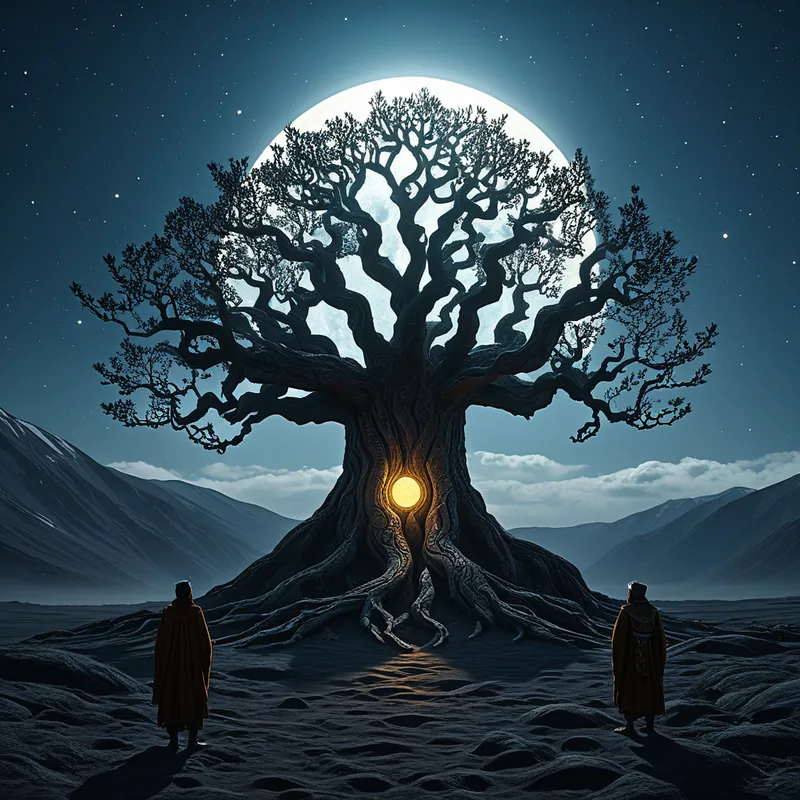
From the formless depths rose a mighty presence, Ürüng Aiyy Toyon, the White Creator Lord. His radiance was not yet light, but the potential for light. With him came his brother, or perhaps his shadow, Arsan Duolai, the spirit of the depths. And between them, growing from the very heart of the abyss, was the First Thing: the Aal Luuk Mas, the mighty, sacred tree. Its roots drank greedily from the dark waters below. Its trunk, thicker than a thousand rivers, pierced the nothingness. And from its highest branches, three luminous orbs began to glow—not yet suns, but the promise of them.
The two great beings beheld the tree, the only form in the formless. A desire took them: to create a world. But a world needs substance, matter, flesh. Ürüng Aiyy Toyon looked to the branches where the light gathered. Arsan Duolai looked to the roots where the waters swirled. They needed a third. From the substance of the tree itself, from the meeting of root-sap and branch-light, they fashioned the first anthropomorphic being, Uluu Toyon. He was vast, potent, containing within him the raw stuff of all that could be.
They set Uluu Toyon upon the great tree, at the point where the three paths of the branches diverged. “You are the bridge,” they told him. “You are the sacrifice.” And with a great and terrible act of will—not of malice, but of necessity—they caused him to fall. Uluu Toyon tumbled from the high branches, down the immense trunk, and plunged into the waiting dark waters.
This was not an end, but the first beginning. Where his body met the water, the world coalesced. His head became the dome of the sky. His bones, scattered, rose as the first mountains and hills. His flesh softened into the plains and valleys. The hair of his head and body spread out, becoming the vast, whispering forests of the taiga. His blood flowed, becoming the great rivers—the Lena, the Aldan, the Vilyuy—that vein the land. His breath became the wind; his voice, the thunder. His eyes, looking upward, became the sun and the moon. From the three luminous orbs on the tree, now fully kindled, came the three suns of the original Yakut cosmos.
And the great tree, the Aal Luuk Mas, remained. Now its roots cradled the newly formed earth, and its branches held aloft the new sky. It became the axis, the pillar, the ladder connecting the three realms: the Upper World of Ürüng Aiyy Toyon and the Aiyy, the Middle World of humans and beasts born from the land that was Uluu Toyon, and the Lower World of Arsan Duolai and the Abasy. The world was alive, born from a fall, structured by a tree, and forever bearing the memory of its primordial body.
Cultural Origins & Context
This myth originates from the Sakha people (Yakuts), a Turkic-speaking group whose homeland is the vast Sakha Republic (Yakutia) in northeastern Siberia. It is a land of extreme contrasts: the deepest cold on earth and brief, intensely hot summers, endless taiga forests, and great, slow-moving rivers. Their mythology, a complex shamanic cosmology, was not written but carried in the oral tradition, preserved and transmitted by oyuun (shamans) and master storytellers.
The myth served as the foundational narrative, answering the most profound questions of a people living in an immense and often harsh landscape. It explained the origin of their specific world—the rivers, the forests, the severe sky. More than an abstract tale, it was a map of the cosmos. The Aal Luuk Mas was not just a symbol; it was understood as a real, spiritual axis, mirrored in the central supporting post of the traditional Yakut dwelling, the balagan, and in the shaman’s tree used in rituals. The myth established the tripartite universe that the shaman’s soul would journey through, providing the psychic and spiritual architecture for healing, divination, and maintaining cosmic balance.
Symbolic Architecture
At its core, this is a myth of creation through dismemberment and [differentiation](/symbols/differentiation “Symbol: The process of distinguishing or separating parts of the self, emotions, or identity from a whole, often marking a developmental or psychological milestone.”/). The primordial unity—represented by the undifferentiated waters and the singular, potent form of Uluu Toyon—must be broken apart to generate the multiplicity of the world.
Creation is not an act of assembly, but of sacred dissection. The One must become Many for life to emerge.
The Aal Luuk Mas is the ultimate [symbol](/symbols/symbol “Symbol: A symbol can represent an idea, concept, or belief, serving as a powerful tool for communication and understanding.”/) of order and [connection](/symbols/connection “Symbol: Connection symbolizes relationships, communication, and bonds among individuals.”/). It represents the [axis](/symbols/axis “Symbol: A central line or principle around which things revolve, representing stability, orientation, and the fundamental structure of reality or consciousness.”/) mundi, the central pillar that structures [chaos](/symbols/chaos “Symbol: In Arts & Music, chaos represents raw creative potential, uncontrolled expression, and the breakdown of order to forge new artistic forms.”/) into a [cosmos](/symbols/cosmos “Symbol: The entire universe as an ordered, harmonious system, often representing the totality of existence, spiritual connection, and the unknown.”/) with distinct realms (above, middle, below). Psychologically, it symbolizes the [spine](/symbols/spine “Symbol: The spine symbolizes strength, support, and the foundational structure of one’s life and identity.”/) of the psyche, the connecting principle that allows communication between the conscious mind (Upper World), the personal unconscious and earthly [life](/symbols/life “Symbol: The symbol of ‘Life’ represents a journey of growth, interconnectedness, and existential meaning, encompassing both the joys and challenges that define human experience.”/) (Middle World), and the deep, instinctual, [collective unconscious](/symbols/collective-unconscious “Symbol: The Collective Unconscious refers to the part of the unconscious mind shared among beings of the same species, embodying universal experiences and archetypes.”/) (Lower World). The three suns or three branches often relate to triadic structures in the psyche: conscious, subconscious, unconscious; or thought, feeling, [sensation](/symbols/sensation “Symbol: Sensation in dreams often represents the emotional and physical feelings experienced in waking life, highlighting one’s intuition or awareness.”/).
Uluu Toyon is the archetypal primordial giant, akin to Purusha or Ymir. His sacrifice represents the inevitable [fragmentation](/symbols/fragmentation “Symbol: The experience of breaking apart, losing cohesion, or being separated into pieces. Often represents disintegration of self, relationships, or reality.”/) of original wholeness that accompanies incarnation and the [birth](/symbols/birth “Symbol: Birth symbolizes new beginnings, transformation, and the potential for growth and development.”/) of individual [consciousness](/symbols/consciousness “Symbol: Consciousness represents the state of awareness and perception, encompassing thoughts, feelings, and experiences.”/). He is the “cosmic [body](/symbols/body “Symbol: The body in dreams often symbolizes the dreamer’s self-identity, personal health, and the relationship they have with their physical existence.”/),” and his transformation teaches that our physical world is not separate from the divine or the psychic; it is the divine, rendered into tangible form. The deities are not distant creators but forces that initiate a necessary, transformative catastrophe.
The Dreamer’s Resonance
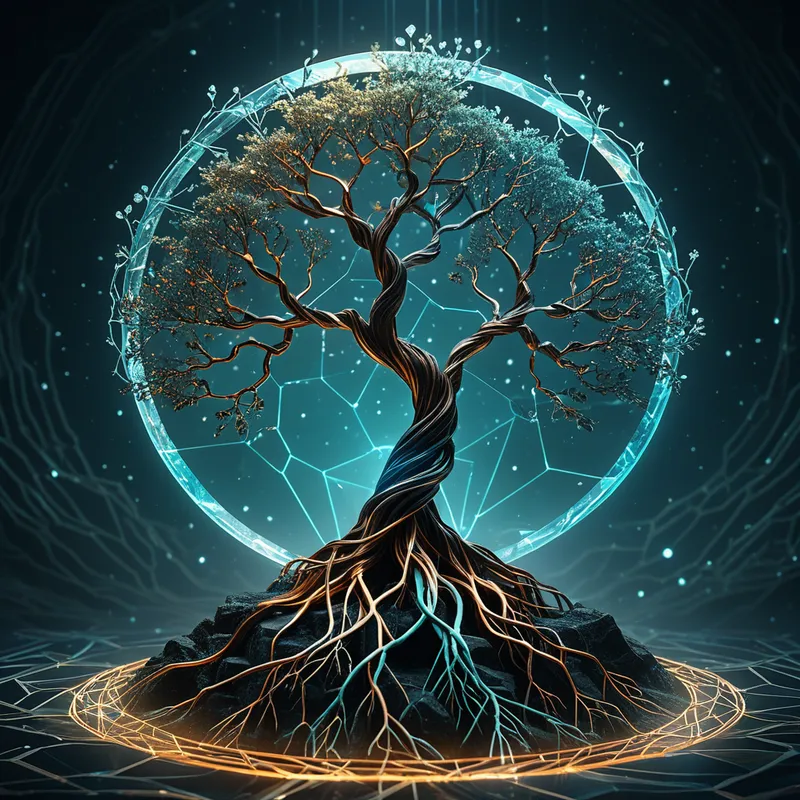
When this mythic pattern stirs in the modern dreamer, it often signals a profound process of psychic reorganization—a personal “creation myth” is underway. Dreaming of a great tree growing from one’s body or from the center of a chaotic scene suggests the unconscious is attempting to establish a new inner axis, a core identity to structure overwhelming emotions or life changes.
Dreams of falling, like Uluu Toyon’s fall, coupled not with terror but with a sense of inevitable transformation, may point to a necessary “fall” from a previous state of psychic unity or a naive identity. The body in the dream may transform into landscape features: a mountain (burden or stability), a river (flow of emotion), a forest (complexity of thoughts). This somatic symbolism indicates the dreamer’s lived experience is being metabolized into the very structure of their being. It is the psyche performing its own alchemy, turning the raw material of suffering, change, or insight into the permanent geography of the self.
Alchemical Translation
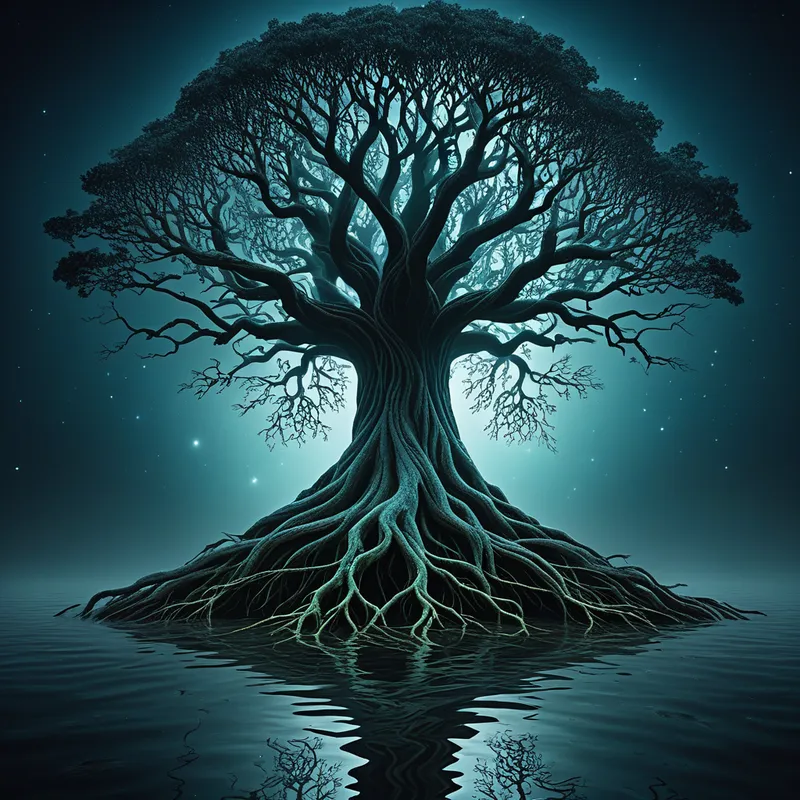
The Yakut creation myth is a perfect map for the Jungian process of individuation—the journey toward becoming an integrated, whole Self. It begins in the prima materia: the dark, watery chaos of the undifferentiated unconscious. The emergence of the Aal Luuk Mas symbolizes the first constellating of the Self, the central archetype of order, which begins to grow spontaneously from the depths.
The ordeal of becoming whole requires a willing descent. The ego, like Uluu Toyon, must fall from its isolated perch to become the ground of being.
The pivotal alchemical stage is mortificatio or sacrifice—the dissolution of the old, monolithic ego-state (Uluu Toyon). This is not annihilation, but the necessary deconstruction that precedes reconstruction. The modern individual faces this when a rigid identity (career, role, self-image) must “fall” and be broken apart by life’s trials. The work of individuation is to then perform the myth in reverse: to consciously recognize the scattered parts of oneself—the mountain of resilience (bones), the river of feeling (blood), the forest of intuition (hair)—and understand them as belonging to a single, sacred origin.
Finally, the enduring Aal Luuk Mas represents the achieved state of individuation: a psyche that is structured, connected, and stable. It is the ability to hold the tension between opposites (Upper and Lower Worlds, spirit and instinct, Ürüng Aiyy Toyon and Arsan Duolai) without collapsing into one or the other. The individual becomes their own world tree, rooted in the depths, oriented toward the heights, and providing a stable center for the lived experience of the Middle World.
Associated Symbols
Explore related symbols from the CaleaDream lexicon:
- Tree — The Aal Luuk Mas is the central axis of the cosmos, symbolizing order, connection between realms, and the structured growth of consciousness from unconscious roots.
- Water — The primordial, dark waters represent the undifferentiated state of chaos, the unconscious, and the formless potential from which all creation emerges.
- Sacrifice — The fall and dismemberment of Uluu Toyon signifies the necessary dissolution of primal unity to create a differentiated world, mirroring the ego’s sacrifice for psychic wholeness.
- Earth — The earth is not inert matter but the sacred, transformed body of the primordial being, representing the incarnated, physical reality born from psychic substance.
- Sky — Formed from the head of Uluu Toyon, it symbolizes the higher consciousness, intellect, and the realm of spirit and light.
- Mountain — Born from the bones of the primordial being, mountains represent stability, enduring structure, and the foundational framework of both the world and the psyche.
- River — Flowing from the blood of Uluu Toyon, rivers symbolize the life force, emotion, memory, and the dynamic, nourishing flow of psychic energy through the landscape of the self.
- Sun — The three suns, kindled on the World Tree, represent illumination, consciousness, and the triadic nature of reality (often seen as past, present, future or the three worlds).
- Spirit — The entire myth is populated by conscious spirits (Ürüng Aiyy Toyon, Arsan Duolai, Aiyy), emphasizing an animistic universe where creation is an act of intentional spiritual will.
- Root — The roots of the World Tree, drinking from the dark waters, symbolize the deep, hidden connections to the unconscious, the ancestral past, and the source of all nourishment and stability.
- Journey — The myth itself maps the soul’s journey from unity through fragmentation to a re-established, connected order, mirroring the shaman’s path and the individuation process.
- Rebirth — The death of Uluu Toyon is not an end but the beginning of the world; it symbolizes transformation where an old form is destroyed to give life to a new, more complex and fertile reality.