The Wounded Healer Myth Meaning & Symbolism
A timeless archetype where a profound injury, often incurable, becomes the very crucible that forges the capacity to heal and guide others.
The Tale of The Wounded Healer
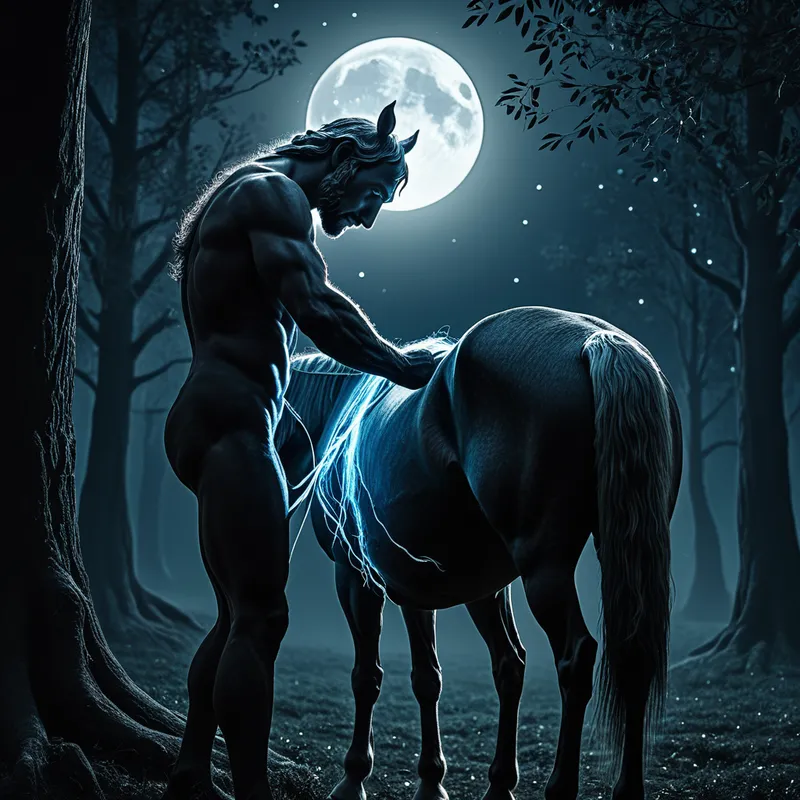
Listen. In the deep time before history, when the gods walked closer and the wounds of [the world](/myths/the-world “Myth from Tarot culture.”/) were fresh, there lived a being of two natures. He was Chiron, born of the starry heavens and the wild earth. His form was a paradox: the powerful, untamed body of a stallion fused with the torso and mind of a king, a scholar, a sage. He dwelt not with the riotous centaurs in the forests, but in a cave upon the holy mountain, a place of quiet shadows and the scent of drying herbs.
His hands, which could wrestle a lion, were gentler than a spring breeze when they touched a broken wing or a fevered brow. To his cave came the great ones in their youth—[Heracles](/myths/heracles “Myth from Greek culture.”/), swift-footed Achilles, the healer Asclepius. He taught them the arts of war and, more importantly, the arts of peace: the music that soothes the soul, the herb that mends the flesh, the stars that map a destiny.
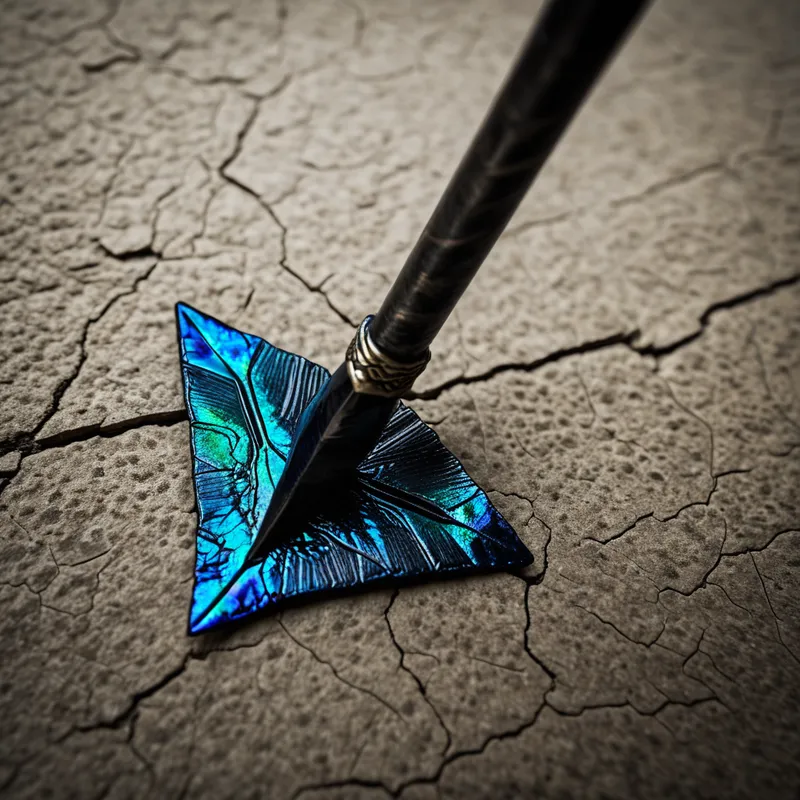
But destiny is a two-edged sword. During a great tumult, a feast turned to chaos, a hero’s arrow, dipped in the venom of the [Hydra](/myths/hydra “Myth from Greek culture.”/), flew not at a foe, but in tragic error. It found its home in the flesh of the wise teacher. The pain was not like any earthly fire; it was a cold, immortal corruption, a poison meant for monsters searing through the veins of an immortal. The great paradox was sealed: the master of healing could not heal himself. The wound would not close; the agony would not cease.
For ages uncounted, Chiron paced his cave, the eternal throb a companion to his thoughts. He studied his own suffering as he had once studied the constellations. He learned the geography of pain, its valleys and sharp peaks. He discovered that in the very center of the unhealable wound, a strange clarity was born. His groans became a new kind of song; his limping gait, a map of endurance. When a wounded animal or a despairing hero now stumbled into his grove, he did not look down from a place of wholeness. He looked across, from one wound to another, and in that shared space, his knowledge found its true power. His touch carried not just technique, but the deep, resonant truth of one who knows.
His release came not through a cure, but through an exchange. A titan, [Prometheus](/myths/prometheus “Myth from Greek culture.”/), suffered eternally for his gift to humanity. Seeing the centaur’s endless, fruitful agony, a bargain was struck in the halls of Olympus. Chiron, the wounded, would descend into the silent halls of [Hades](/myths/hades “Myth from Greek culture.”/), surrendering his immortality to end his pain. [Prometheus](/myths/prometheus “Myth from Greek culture.”/), the bound, would be freed. In this sacrifice, Chiron’s final teaching was given: that to relinquish [the self](/myths/the-self “Myth from Jungian culture.”/), even a suffering self, for the release of another, is the ultimate act of healing. And so, the stars received him, placing his image—the Archer—in the night sky, a permanent testament to the healer who carried his wound into eternity.
Cultural Origins & Context
The figure of the Wounded Healer is not confined to a single culture but is a psychic archetype that has erupted into story across the globe. The Greek myth of Chiron is its most crystallized classical form, preserved in the fragments of Hesiod and later poets. Yet, we hear its echo in the initiation ordeals of shamans worldwide—from Siberia to the Americas. The shamanic candidate often undergoes a severe, symbolic illness or dismemberment in dream or vision, a wounding that, when survived and integrated, becomes the source of their power to diagnose and cure.
In ancient Mesopotamia, the goddess Gula, associated with healing and medicine, was also linked to [the underworld](/myths/the-underworld “Myth from Greek culture.”/) and the judgment of souls, holding the paradox of life-giving and death-dealing. The story was passed down not merely as entertainment but as a sacred technology. It served a crucial societal function: to explain and dignify the healer’s authority. It proposed that true healing wisdom is not purely technical, but experiential and hard-won. It legitimized the figure who had been marked by life, suggesting that their scars were not flaws but credentials from the school of profound suffering.
Symbolic Architecture
At its core, the myth dismantles the fantasy of the perfect, untouchable [savior](/symbols/savior “Symbol: A figure representing rescue, redemption, or deliverance from crisis, often embodying hope and external intervention in times of need.”/). The wound, usually incurable and immortal, represents the part of the self—or the [soul](/symbols/soul “Symbol: The soul represents the essence of a person, encompassing their spirit, identity, and connection to the universe.”/)—that cannot be “fixed” in a conventional sense. It is the enduring [trauma](/symbols/trauma “Symbol: A deeply distressing or disturbing experience that overwhelms the psyche, often manifesting in dreams as unresolved emotional wounds or psychological injury.”/), the flaw in one’s [nature](/symbols/nature “Symbol: Nature symbolizes growth, connectivity, and the primal forces of existence.”/), the “[thorn](/symbols/thorn “Symbol: A symbol of pain, protection, and hidden beauty, representing obstacles that guard growth or cause suffering.”/) in the flesh” that remains a constant companion.
The wound is the seat of the healer’s authority. It is the crack where the light—and the poison—gets in.
Chiron’s dual nature is key. The horse represents the instinctual, animal [body](/symbols/body “Symbol: The body in dreams often symbolizes the dreamer’s self-identity, personal health, and the relationship they have with their physical existence.”/)—the seat of passions, pain, and [mortality](/symbols/mortality “Symbol: The awareness of life’s finitude, often representing transitions, impermanence, or existential reflection in dreams.”/). The [human](/symbols/human “Symbol: The symbol of a human represents individuality, complexity of emotions, and social relationships.”/) torso represents [consciousness](/symbols/consciousness “Symbol: Consciousness represents the state of awareness and perception, encompassing thoughts, feelings, and experiences.”/), culture, and [spirit](/symbols/spirit “Symbol: Spirit symbolizes the essence of life, vitality, and the spiritual journey of the individual.”/). His wound, suffered in his equine half, is a affliction of the instinctual [realm](/symbols/realm “Symbol: The symbol of ‘Realm’ often signifies the boundaries of one’s consciousness, experiences, or emotional states, suggesting aspects of reality that are either explored or ignored.”/) that the conscious mind must learn to bear and understand. He becomes a living bridge between the wild, suffering [body](/symbols/body “Symbol: The body in dreams often symbolizes the dreamer’s self-identity, personal health, and the relationship they have with their physical existence.”/) and the ordering, compassionate mind. His students—the future heroes—learn that to be fully [human](/symbols/human “Symbol: The symbol of a human represents individuality, complexity of emotions, and social relationships.”/) is to integrate these two realms, to carry one’s animal [vulnerability](/symbols/vulnerability “Symbol: A state of emotional or physical exposure, often involving risk of harm, that reveals authentic self beneath protective layers.”/) with conscious grace.
The poisoned [arrow](/symbols/arrow “Symbol: An arrow often symbolizes direction, purpose, and the pursuit of goals, representing both the journey and the destination.”/), a [weapon](/symbols/weapon “Symbol: A weapon in dreams often symbolizes power, aggression, and the need for protection or defense.”/) of heroic conquest turned [inward](/symbols/inward “Symbol: A journey toward self-awareness, introspection, and the exploration of one’s inner world, thoughts, and unconscious mind.”/), symbolizes how our greatest wounds often come from the [chaos](/symbols/chaos “Symbol: In Arts & Music, chaos represents raw creative potential, uncontrolled expression, and the breakdown of order to forge new artistic forms.”/) of [life](/symbols/life “Symbol: The symbol of ‘Life’ represents a journey of growth, interconnectedness, and existential meaning, encompassing both the joys and challenges that define human experience.”/) itself, from accidents, betrayals, or the collateral damage of others’ battles. The healing herbs he uses afterward are not just [medicine](/symbols/medicine “Symbol: Medicine symbolizes healing, transformation, and the pursuit of knowledge, addressing both physical and spiritual health.”/); they are the symbolic fruits of a wisdom cultivated in the [soil](/symbols/soil “Symbol: Soil symbolizes fertility, nourishment, and the foundation of life, serving as a metaphor for growth and stability.”/) of personal [agony](/symbols/agony “Symbol: Intense physical or emotional suffering, often representing unresolved pain, internal conflict, or profound transformation.”/).
The Dreamer’s Resonance
When this myth stirs in the modern [psyche](/myths/psyche “Myth from Greek culture.”/), it often announces a critical phase in one’s relationship to their own suffering and their role in the world. To dream of being a doctor or nurse who is secretly ill, of trying to bandage others while one’s own blood soaks through, is to encounter the Wounded Healer archetype.
This is not a dream of failure, but of initiation. The somatic feeling is often one of profound fatigue coupled with a strange, detached clarity. Psychologically, the dreamer is being confronted with the reality that their own unhealed parts—their grief, anxiety, past trauma—are not obstacles to helping others, but are becoming the very channels through which empathy flows. The dream signals a pressure from the collective unconscious to stop hiding one’s wounds in shame and to begin the alchemical work of seeing them as a source of connection. It is the psyche’s way of demanding authenticity over perfection, urging the dreamer to heal from their wound, not in spite of it.

Alchemical Translation
The journey of the Wounded Healer is the ultimate model for individuation. It maps the process of psychic transmutation where leaden suffering is turned into golden wisdom. [The first stage](/myths/the-first-stage “Myth from Alchemical culture.”/) is the wounding—the inevitable, often brutal encounter with a pain that changes everything. This is the [nigredo](/myths/nigredo “Myth from Alchemical culture.”/), the blackening, the descent.
The second, crucial stage is the containment. Chiron does not die from his wound; he bears it. This is the long, painful albedo, the whitening, where one must simply stay with the suffering, observing it, learning its patterns without being annihilated by it. It is the development of a witnessing consciousness.
The healer is not one who has eliminated their shadow, but one who has learned to dine with it at the same table, using its insights to nourish others.
The final transmutation is the sacrificial exchange. For the modern individual, this is not a literal death, but the death of [the ego](/myths/the-ego “Myth from Jungian culture.”/)’s demand for a perfect, pain-free existence. It is the conscious decision to offer one’s hard-won understanding—forged in the fires of personal experience—to the world. One gives up the identity of “the wounded one” for the identity of “the one who understands wounding.” In doing so, the personal, festering injury becomes a transpersonal wellspring of compassion. The wound, once a site of isolation, becomes a sacred meeting ground. The individual psyche completes its alchemy, realizing that its deepest flaw is, in fact, its connection to the universal human condition, and thus, its greatest gift.
Associated Symbols
Explore related symbols from the CaleaDream lexicon: