The Wound of Philoctetes Myth Meaning & Symbolism
A hero, cursed with a stinking, incurable wound, is abandoned on a desolate island, only to be reclaimed when his suffering holds the key to a nation's destiny.
The Tale of The Wound of Philoctetes
Hear now the tale of the man who carried the gods’ own fire in his hands, and the gods’ own poison in his flesh.
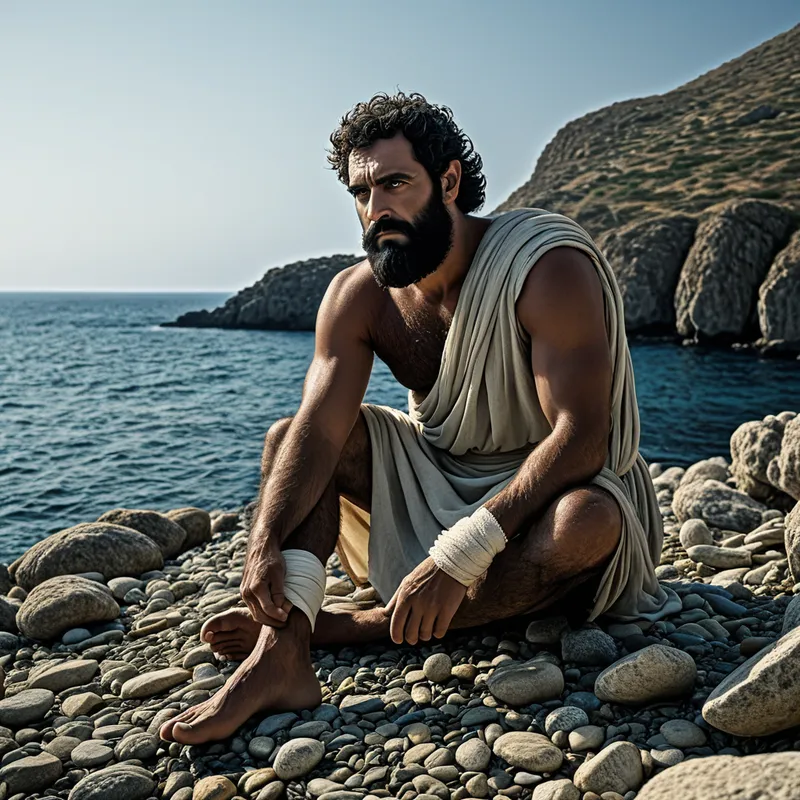
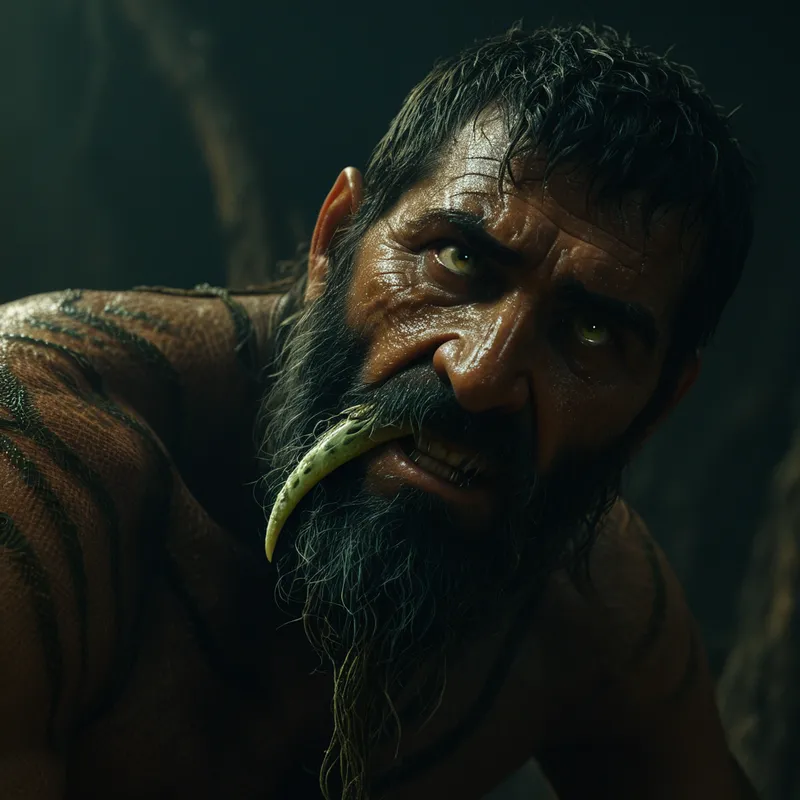
The sea wind howled across the black rocks of Lemnos, a lonely sound for a lonely shore. Here, they left him. Not with a warrior’s farewell, but with averted eyes and hands clamped over noses. Philoctetes—once a prince, a companion to the great Heracles himself—now writhed on the stony beach, his cries lost in the gale. The wound on his foot was not a clean cut of battle; it was a living thing. A festering, weeping curse from the bite of the serpent of Chryse. The stench of it was unholy, a miasma of decay that drove men mad. His comrades, the proud Greeks bound for Troy under Agamemnon, could bear it no longer. On the orders of Odysseus, master of expediency, they sailed away at dawn, leaving only echoes and a cache of meager supplies.
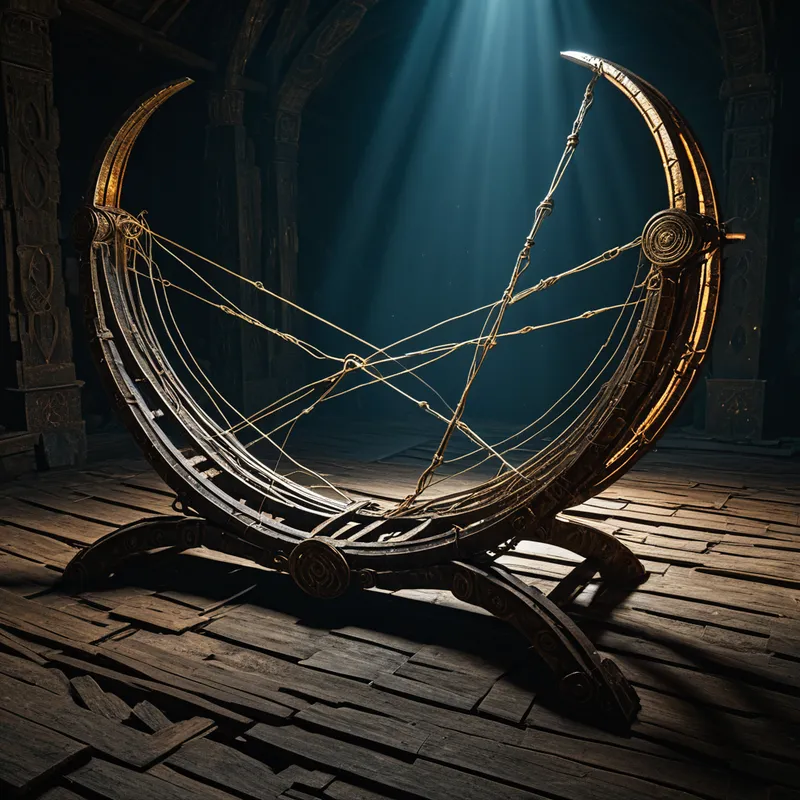
For ten years, the wound was his only companion. It spoke to him in throbs of fire; it sang to him in the flies that gathered. He survived by the grace of the bow—the immortal, unerring bow of Heracles, given to him as a sacred trust for lighting the hero’s funeral pyre. With it, he brought down seabirds. With it, he defended his wretched cave. The bow was his last tether to glory, to a world that had cast him out. He became a creature of the margin, half-man, half-pain, howling his betrayal at the uncaring waves.
But the Fates had not finished their weave. In the tenth year, a prophecy echoed through the Greek camp at Troy: the city’s towers would never fall without the Bow of Heracles and the man who wielded it. The very source of their disgust was now the key to their victory. Odysseus, the architect of abandonment, returned with the young, noble Neoptolemus. Their mission: deception. Steal the bow, or coax the broken man.
Neoptolemus, looking upon the ragged, suffering king in his cave, felt his father’s heroic blood turn to shame. He could not complete the deceit. In a moment of raw humanity, he confessed the plot. Philoctetes’s rage was a storm unto itself—a decade of isolation given voice. He would sooner starve than help those who had left him to rot.
Then, in the charged air, a presence manifested. The deified Heracles appeared, radiant against the Lemnian sky. His voice was not of this earth. He commanded Philoctetes: let go of the wound, of the rage. His suffering had meaning. His destiny, and the destiny of Greece, awaited at Troy. There, he would be healed, and there, his sacred bow would win the war. The command of a god, speaking of a purpose woven from pain, broke the spell of the island. With a final, agonized look at his rocky prison, Philoctetes turned his face toward the ships, toward his fate.
Cultural Origins & Context
The story of Philoctetes is a thread in the vast tapestry of the Epic Cycle. It was told and retold, most famously in the tragic plays of Sophocles, whose Philoctetes (409 BCE) gives us the most psychologically nuanced version. In the oral tradition and later Athenian drama, this myth served a crucial societal function. It was a narrative crucible for examining profound civic and personal dilemmas: the conflict between collective necessity and individual suffering, the morality of expediency versus honor, and the nature of a hero who does not fit the mold of pristine, Achillean strength.
Performed for Athenian citizens, the play forced the audience to sit with the stench of the outcast, to hear the cries of the man society had discarded for the sake of comfort and cohesion. It asked a piercing question of a culture that prized glory above all: what do you do with the wounded, the cursed, the inconvenient hero? The myth asserts that the health of the polis (the city-state) depends not on discarding its wounded elements, but on reintegrating them, albeit through divine mandate and immense personal cost.
Symbolic Architecture
At its heart, the myth of Philoctetes is an archetypal map of the wounded healer. The wound is not an accident; it is a sacred, if terrible, initiation. It occurs at a shrine, a liminal space between the human and divine, marking it as a numinous injury—one that carries a spiritual charge. The wound isolates, forcing a descent into a personal underworld of pain and abandonment.
The wound that exiles is also the wound that individuates. It creates a boundary of suffering that the collective cannot cross, forcing the soul into a solitude where it must meet itself, stripped of all social roles.
The Bow of Heracles is the symbolic counterweight to the wound. It represents the unique skill, the latent power, or the soul’s purpose that is inextricably linked to the injury. One cannot have the bow without acknowledging the wound; the power is held in trust by the suffering self. The abandonment by the Greeks (the collective ego, the “ship of state”) represents the psyche’s initial, desperate attempt to disown what is painful, shameful, and malodorous—its own shadow.
The final act, the return commanded by the deified Heracles, symbolizes the intervention of the Self. It is the inner imperative that the wound, and the power it guards, must be brought back into the service of the whole personality. The healing at Troy signifies that wholeness (and victory) is only achieved when the exiled part is reclaimed and its power directed consciously.
The Dreamer’s Resonance
When this myth stirs in the modern dreamer, it often manifests as patterns of profound isolation linked to a perceived flaw or “stink.” One may dream of being ostracized at work for a unique but “unpleasant” talent, of hiding a chronic illness or mental health struggle that feels shameful, or of nurturing a creative project in a lonely space, feeling it is both precious and repulsive to others.
Somatically, the dream may center on a recurring injury—a bad ankle, a sore hand—that never heals. Psychologically, the process is one of legitimizing the exile. The ego, like the Greek army, wants a smooth journey and will maroon any part of the self that threatens social harmony or self-image. The dream asks the dreamer to stop trying to sail away from their Lemnos. It demands they sit in the cave of their pain, acknowledge the fury of betrayal (both external and self-inflicted), and recognize the potent “bow”—the unique strength or insight—that has been developing in that very isolation. The dreamer is going through the slow, agonizing process of moving from identifying as the wound to being the holder of the wound and its attendant power.

Alchemical Translation
The alchemical journey of Philoctetes is a masterclass in the individuation process. It begins with the nigredo: the blackening, the festering wound and the abandonment on the dark island. This is the necessary dissolution, where the persona (the heroic Greek warrior) is utterly destroyed by a bite from the unconscious (the serpent).
The long exile is the mortificatio—a death-in-life where the old identity rots away, leaving only the raw, howling core of the psyche. Here, in the putrefaction, the lapis (the philosopher’s stone, the true Self) is secretly forming. It is embodied in the bow, the focused, divine potential that survives all decay.
The transmutation occurs not when the wound is cured, but when its meaning is revealed. The base metal of suffering is turned to gold only when it is understood as the necessary vessel for one’s destiny.
The return, guided by the divine Heracles (the Self archetype), represents the coniunctio oppositorum—the conjunction of opposites. The outcast and the collective, the wound and the weapon, the victim and the hero, are brought together. The final healing at Troy is the rubedo, the reddening, the achievement of wholeness and vitality that can only come after the ordeal of isolation and the acceptance of one’s cursed-gifted nature. For the modern individual, the myth does not promise a rescue from suffering. It promises that within the most isolating, malodorous, and seemingly pointless pain, the bow of your unique destiny is waiting, and the Self will eventually call you back to use it.
Associated Symbols
Explore related symbols from the CaleaDream lexicon: