
The Wind Spirit Myth Meaning & Symbolism
A myth of the primordial Wind Spirit, whose restless breath carves the world, teaches balance, and whispers the soul's hidden truths.
The Tale of The Wind Spirit
Listen. Before the first fire was kindled, before the first river found its path, there was the Breath. It moved in the great darkness, restless and alone. It was not a thing with form, but a presence—a sigh that became a song, a song that became a storm. This was The Wind Spirit.
In the time when the world was soft clay, the other spirits slept. Grandmother Earth lay silent. Father Sun was a distant ember. Only the Wind Spirit roamed, whispering to the void. Its loneliness grew into a tempest of desire. It longed for conversation, for something to shape, for another to hear its endless song.
So, it began to blow. Not with malice, but with a creator’s desperate passion. It swept across the sleeping form of Grandmother Earth, and where its fingers touched, valleys were gouged. Where it roared, mountains were piled high. It scattered the seeds that slept in her soil to the four corners. It churned the waters, teaching them rhythm. The world was no longer formless; it was wild, chaotic, and alive with the Spirit’s fervor.
But the Wind Spirit did not know rest. It blew without cease. The newborn trees could not take root. The animals, just emerging, were battered and confused. The rivers were whipped into frenzy. The other spirits awoke to a world of beautiful, terrifying motion. They cried out, “Cease! You are creation and destruction in one breath! We need stillness to live!”
The Wind Spirit, hearing their fear but not understanding it, only blew harder, its song now a wail of misunderstanding. A great council was called beneath the World Tree. It was decided: the Wind Spirit must be taught balance, or all would be worn to dust.
The task fell to the wisest, the one who understood both song and silence: Spider Grandmother. She did not confront the gale. Instead, she began to weave. From the filaments of dawn light and the dewdrops of twilight, she spun a web of incredible fineness. She placed it in the path of the mighty Wind Spirit.
The Spirit, rushing forward, encountered the web. It could have shattered it with a breath. But the web did not resist; it sang. Each strand hummed a different note, a harmonic of the Wind’s own mighty roar translated into a thousand tiny, perfect melodies. The Wind Spirit paused, astonished. It had never heard its own voice reflected back with such intricate beauty. It leaned closer, and its breath became a gentle breeze to hear the song better.
In that moment of listening, it learned restraint. It learned that its power was not only in the push, but in the caress. Not only in the roar, but in the whisper that carries a seed to fertile ground. Spider Grandmother spoke then, her voice like leaves rustling. “You are the Breath of the World. You must be the messenger, the carver, the breath of life, and the space between breaths. You must learn when to speak, and when to listen.”
The Wind Spirit, humbled, agreed. It divided its essence into the Four Winds, each with a purpose and a season. The East Wind brings the gentle rains of renewal. The South Wind, the warm, growing breath. The West Wind, the transformative storms that cleanse. The North Wind, the cold, clarifying breath of wisdom and rest. And in the center, the Spirit remained as the ever-present, gentle breath that gives life to all living things, the unseen mover and the carrier of prayers.
Cultural Origins & Context
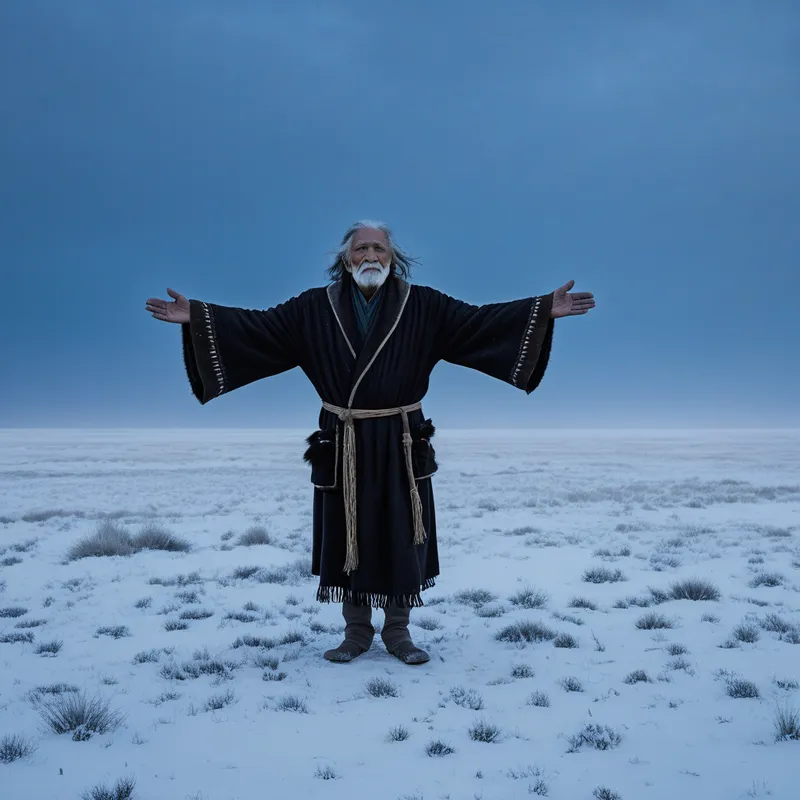
The Wind Spirit is not a singular myth from one nation, but a profound archetypal presence woven through the oral traditions of many Indigenous peoples across North America. From the Plains tribes who felt its power sweep across endless grasslands, to the Pueblo peoples who heard it whistle through canyon walls, the Wind was a daily, palpable force of mystery. Stories were not mere entertainment; they were ontological maps, teaching the people how to relate to a sentient, powerful world.
These narratives were passed down by elders and storytellers, often during the long winter nights or in ceremonial contexts. The telling was a ritual act, invoking the Spirit’s presence. Its societal function was multifaceted: to explain the terrifying and vital force of weather, to encode ecological knowledge about seasonal patterns, and to instill a core philosophical principle—that of dynamic balance. The Wind Spirit’s journey from chaos to ordered purpose models the necessity of integrating powerful, restless energies (both in nature and in the human community) into a harmonious whole through wisdom and respect.
Symbolic Architecture
At its core, the Wind Spirit represents the primordial, unstructured Life Force itself—the raw pneuma or prana that precedes and animates all form. It is psyche in its undifferentiated, potentially destructive, and immensely creative state.
The Wind is the unseen architect of the visible world, the breath that gives a soul to the landscape.
Its initial loneliness symbolizes the psyche’s drive for consciousness; a force seeking to know itself through relationship and impact. The chaos it creates is not evil, but the necessary turmoil that precedes order—the massa confusa of the alchemists. The conflict with the other spirits represents the classic tension between the individual’s raw, impulsive energy (the Wind) and the needs of the internal and external collective (the community of spirits, the forming world).
Spider Grandmother’s web is the master symbol. It represents the network of consciousness, culture, and relationship—the delicate, intricate structures (laws, traditions, ego, language) that must be woven to contain and translate raw instinct into meaningful communication. The web does not block the Wind; it transduces it. This is the act of sublimation: transforming chaotic energy into the music of culture and the subtle touch of conscious action.
The Dreamer’s Resonance
When this myth stirs in the modern dreamer, it often manifests as dreams of relentless storms, of being buffeted by invisible forces, or of a powerful, urgent voice that cannot find words. One may dream of trying to speak in a gale where no sound emerges, or of a house whose windows and doors will not stay shut against a howling wind.
Somatically, this can correlate to feelings of anxiety, restlessness, or a racing mind that cannot find peace—the psychic equivalent of the Wind Spirit’s ceaseless blowing. The psychological process underway is one of confronting an unintegrated, autonomous complex. This is a powerful bundle of energy—perhaps a creative impulse, a repressed passion, or a turbulent emotion—that is acting out unconsciously, causing internal and external chaos. The dream is signaling that this force has become a “spirit” unto itself, demanding recognition and a role in the psyche’s ecology. The task is not to silence the wind, but to find its song and give it a conscious direction.

Alchemical Translation
The myth of the Wind Spirit is a perfect allegory for the individuation process, specifically the integration of the shadow and the harnessing of libido (psychic energy). The individual begins identified with, or possessed by, a single powerful force—a talent, an ambition, a trauma—that blows through their life without balance, creating both creation and wreckage.
Individuation is not the stilling of the storm, but the learning of its seasons and the weaving of a self that can dance within it.
The “council of spirits” represents the other aspects of the psyche (the persona, the anima/animus, the Self) protesting the tyranny of this one complex. The crucial, alchemical work is symbolized by Spider Grandmother’s act: the crafting of a conscious attitude (the web). This is the work of therapy, reflection, art, or ritual—creating a structure fine enough to not repress the energy, but sophisticated enough to translate it. The moment the Wind listens to its own transformed song is the moment of Aha! or insight, where the ego ceases fighting the unconscious force and begins a dialogue with it.
The final resolution—the division into the Four Winds—is the achievement of psychological equilibrium. The once-monolithic, chaotic energy is differentiated into purposeful faculties: the gentle breath of empathy (East), the warm drive for growth and relationship (South), the courageous force for necessary change and cleansing (West), and the discerning, analytical mind that brings rest and wisdom (North). The individual no longer is the storm; they have the winds at their command, able to call upon the appropriate force for the season of their life, with their essential breath (the Self) remaining a constant, animating presence at the calm center.
Associated Symbols
Explore related symbols from the CaleaDream lexicon: