The Wild Hunt Myth Meaning & Symbolism
A spectral host led by a dark god rides the winter winds, a terrifying omen that also heralds a profound, necessary psychic cleansing of the land.
The Tale of The Wild Hunt
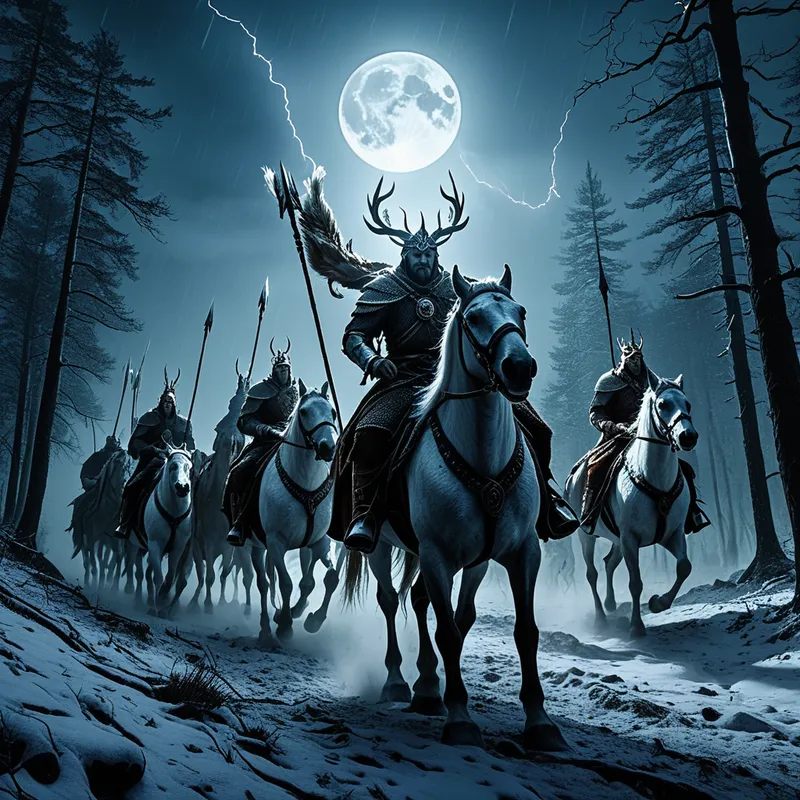
Hear now, and listen well by the fire’s dying light. When the year grows old and the sun flees south, when the bones of the trees are bare against the iron sky, that is when the barriers thin. That is when you must bring in your kin, bolt your door of stout oak, and bring the black-haired cow into the byre. For the wind that howls then is not just wind. It carries a sound beneath its roar—the distant, echoing blast of a horn not of this earth, the baying of hounds whose voices chill the blood, and the thunder of hooves that beat not upon the ground, but upon the very fabric of the night.
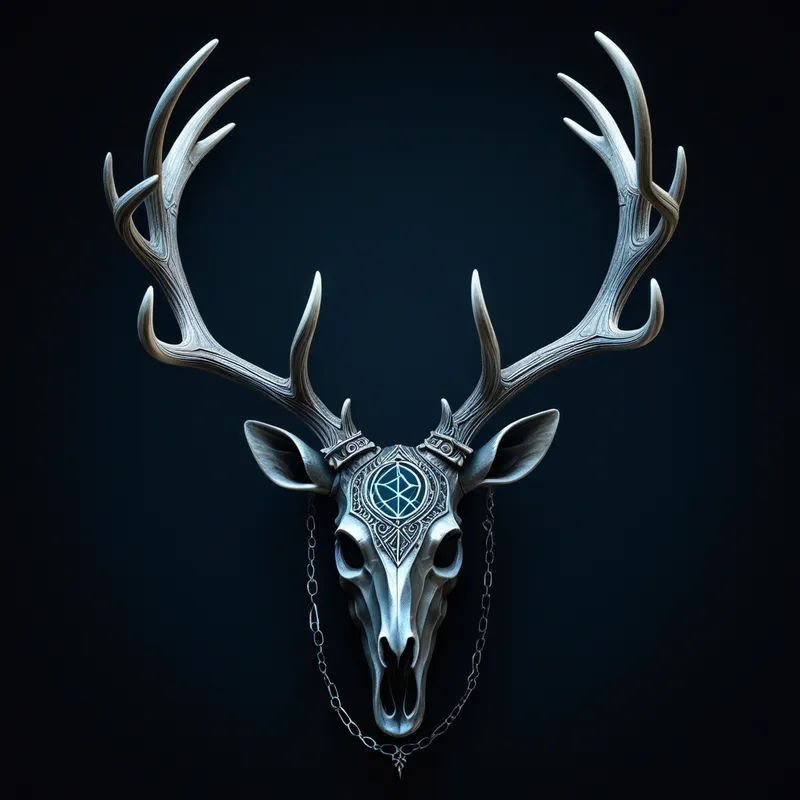
They come from the west, from the Sídhe mounds and the forgotten hollow hills. At their head rides Gwyn ap Nudd in the Welsh tales, or The Dagda in his darker aspect in Ireland. He is the Lord of the Wild, crowned with winter-stripped antlers, his face pale as the moon, his eyes holding the cold light of distant stars. His steed is the colour of bone and frost. Behind him streams his host: the restless dead, heroes of old whose battles are never done, and the unquiet spirits of those taken before their time. Their hounds—the Cŵn Annwn—run before them, eyes like coals, breath like mist on a grave.
To see them is to be marked. To hear the hunt is to feel your soul tremble on the threshold of your body. They ride the storm fronts, a furious, chaotic procession that sweeps the edges of the world. They are not hunting deer or boar. They hunt the wandering dead, gathering lost souls into their throng. They hunt the stagnant breath of the dying year, scouring the land clean. And some say, in a whisper, they hunt for those among the living who have broken the oldest oaths, who have spilled kin-blood or betrayed sacred hospitality.
If you are caught outdoors, you must throw yourself flat upon the earth, face down, and pray to the old stones that the host passes over you. To look upon the Huntsman’s face is to be swept up, your spirit torn from its mortal mooring to join the eternal, wailing chase. Or so the tales warn. But in the deepest, oldest versions, there is another thread. After the terror passes, after the last echo of the horn fades into the east, a strange stillness remains. The air is sharper, cleaner. The promise of a hard, bright frost glitters. The oppressive weight of the old year is broken. The hunt is a terror, yes, but it is also a purge. It is the violent, necessary breath of the world, exhaling its ghosts so that something new might, in time, dare to breathe again.
Cultural Origins & Context
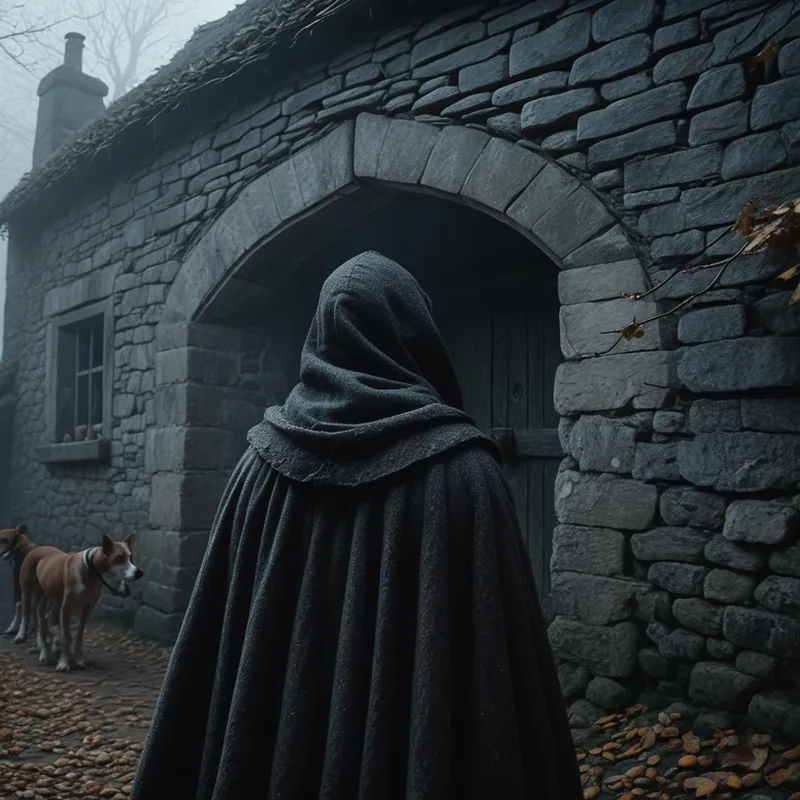
The myth of the Wild Hunt is a pan-European spectral folklore, but in its Celtic incarnations, it finds a particularly potent home. It is less a single, codified story and more a living, breathing belief that seeped from the pre-Christian substrate into medieval lore and even into early modern folk tales. Its primary function was cosmological and societal. It explained the violent, noisy storms of late autumn and winter—not as mere weather, but as a supernatural event. It served as a stark, communal reinforcement of taboos: stay inside, honor your family, keep your promises, or the Otherworld will claim you.
The tales were told by the fireside, not by bards in halls, passed down through generations of rural communities whose lives were intimately tied to the seasonal cycle. The leader of the hunt was often a syncretic figure, merging older pagan deities of sovereignty, the dead, and the wilderness (like Gwyn ap Nudd, a king of the Annwn) with later folkloric figures or even historical ghosts of notorious kings. This malleability shows its role as a cultural container for anxieties about death, disorder, and the invisible forces that govern fortune and misfortune. It was a story that policed the boundary between the community and the chaotic wilds, both literal and supernatural.
Symbolic Architecture
At its core, the Wild Hunt represents the eruption of the unconscious, the shadow, and the ancestral past into the ordered world of consciousness. It is chaos in its most primal form—not meaningless chaos, but a chaotic force with a purpose.
The Hunt does not come to destroy the world, but to scour it. Its terror is the terror of necessary dissolution.
The Huntsman, whether Gwyn ap Nudd or another, is an archetypal psychopomp, but of a fierce and sovereign kind. He is the ruler of the repressed contents of the psyche—all the forgotten grief, unexpressed rage, and unlived potentials that have been cast into the inner wilderness. His host is the collective shadow of a people, or of an individual’s lineage, both genetic and psychic. The hounds symbolize instinctual drives and deep, nose-to-the-ground knowing that track what is hidden. The stormy sky is the inner emotional landscape when these forces break through their dams.
The myth’s timing is critical: the dying of the year. It symbolizes that point in any cycle—psychological, creative, or life-stage—where old structures must be violently dismantled for renewal to be possible. The Hunt is the personified force of that dismantling.
The Dreamer’s Resonance
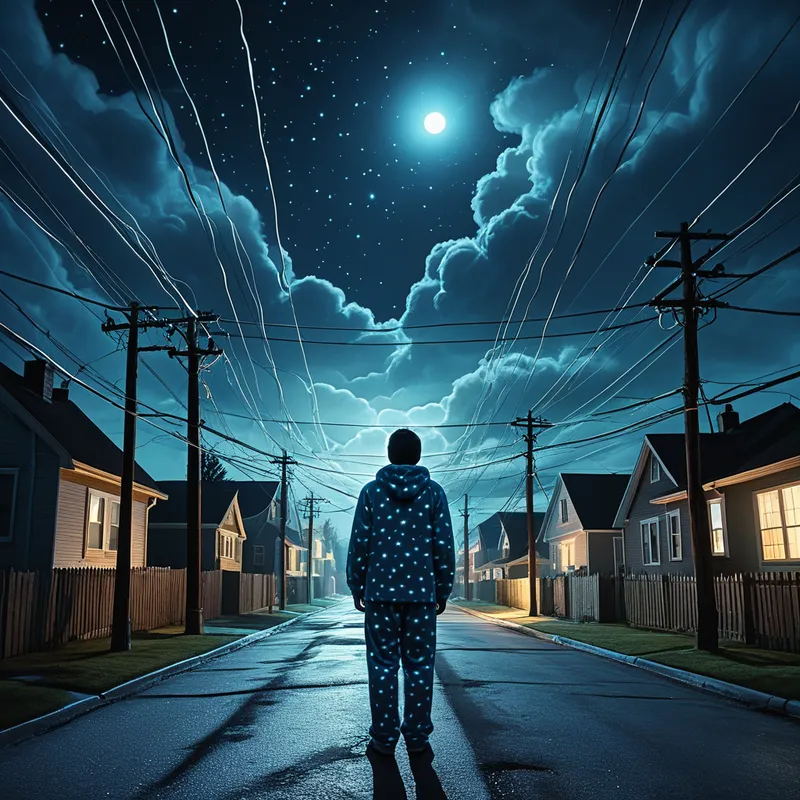
When the pattern of the Wild Hunt gallops through modern dreams, it signals a profound somatic and psychological upheaval. The dreamer is not merely having an anxious dream; they are experiencing an incursion. This often occurs during periods of intense stress, unresolved grief, or when long-buried family traumas are seeking expression.
Somatically, it may be preceded by feelings of restless energy, a sense of being “chased” by unnamed anxieties, or hearing internal “noise” (tinnitus, a rushing in the ears) that mirrors the hunt’s cacophony. Psychologically, the dream is an experience of the autonomous psyche in motion. The dreamer who witnesses the hunt from a hiding place is in a state of fearful observation of their own inner chaos. The dreamer who is chased is feeling actively persecuted by repressed contents. The rare, terrifying dream of joining the hunt indicates a potent, perhaps overwhelming, identification with these shadowy, ancestral, or chaotic forces—a potential psychotic break or, alchemically, a deep immersion in the nigredo of the soul.
Alchemical Translation
For the modern individual seeking wholeness, the myth of the Wild Hunt models the brutal but essential early phase of individuation. This is not the hero’s journey with a clear call and a defined boon. This is the psyche’s rebel force, its innate drive toward truth, storming the citadel of a stagnant, too-orderly conscious life.
To integrate the shadow, one must first acknowledge the Huntsman within—the fierce, sovereign part of the self that commands the terrifying host of all we have denied.
The process begins with the “horn heard on the wind”—a symptom, a depression, a sudden irrational rage, a dream that will not be ignored. This is the call one cannot refuse. The conscious ego’s task is not to fight the hunt, but to learn the art of the peasant in the tale: to find a grounded, humble place (the face-down posture on the earth) and witness the storm without being annihilated by it. This is the practice of observing one’s chaotic emotions and dark thoughts without identifying with them or being swept away.
The alchemical goal is to eventually recognize the Huntsman not as an external terror, but as a disowned part of one’s own sovereignty. The chaotic host is the raw, unintegrated material of the self. The purge of the old year is the dissolution of outworn personas and compulsive life patterns. The clean, sharp stillness after the hunt passes is the albedo—a moment of clarity and peace born not from avoidance, but from having survived the necessary, terrifying ride of the self through itself. The rebel archetype here rebels against the tyranny of a false, polished peace, forcing a confrontation with the wild truth that ultimately makes a more authentic order possible.
Associated Symbols
Explore related symbols from the CaleaDream lexicon: