
The Veil of Maya Myth Meaning & Symbolism
A goddess weaves a shimmering veil of illusion, hiding the world's true nature until a mortal's quest pierces the fabric of seeming reality.
The Tale of The Veil of Maya
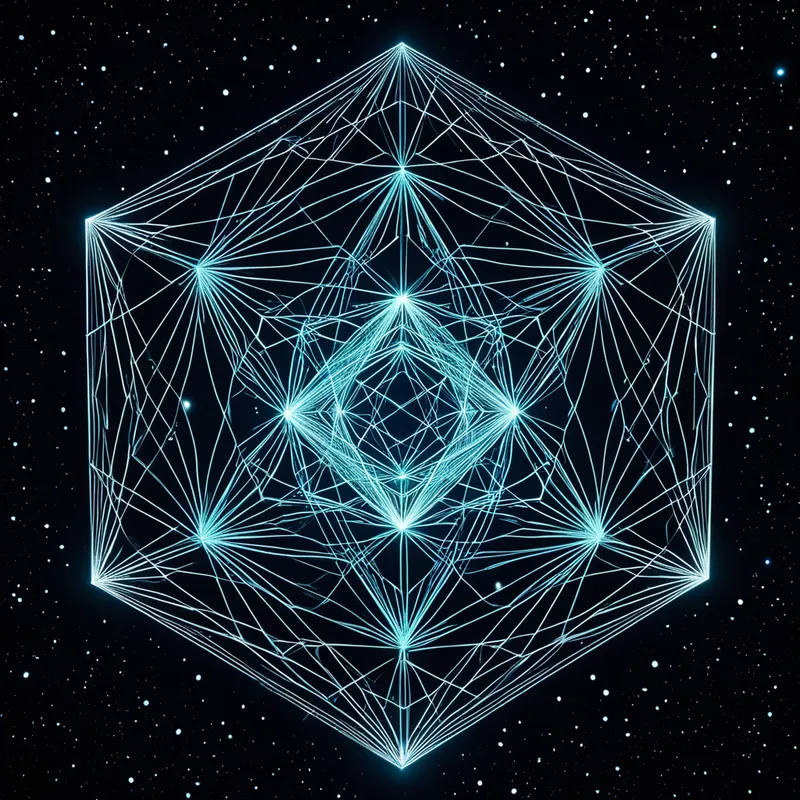
Listen, and let the firelight carry you back. Before the age of iron and certainty, when [the world](/myths/the-world “Myth from Tarot culture.”/) was young and the gods walked closer, there existed a truth so raw, so brilliant, it was unbearable to mortal sight. The cosmos pulsed with a naked, geometric fire, a lattice of pure cause and effect, of love and strife woven into the very bones of reality. To gaze upon it directly was to be unmade, to have the comforting stories of self and stone and stream dissolved into the terrifying, beautiful chorus of the All.
And so, from the deep compassion—or perhaps the profound irony—of the divine, a solution was woven. In a grove where light fell not as sunbeams but as liquid gold, there dwelt Maya. She was not a goddess of deceit, but of mercy. With fingers that plucked at the threads of potential, at the sighs of possibility, she began her great work. She took the raw song of existence and softened its edges. She took the blinding light of truth and fractured it into a million gentle hues. From the loom of her will, she spun a fabric of perception, a Veil of gossamer and starlight, of shadow and substance.
With a breath that was the first wind, she cast this Veil over the shoulders of the world. Where there was terrifying unity, now there appeared comforting separation: a tree here, a mountain there, a you and a me. The relentless flow of time was segmented into past, present, and future. Suffering became a singular event, not an eternal note in the cosmic chord. The world was made bearable, knowable, navigable. Mortals awoke and saw not the fiery loom, but its magnificent, softened tapestry. They named its patterns, fought for its territories, loved its reflections, and believed in the solidity of the stage upon which they walked.
Yet, [the Veil](/myths/the-veil “Myth from Various culture.”/) was not a wall, but a filter. At the edges of vision, in the silence between heartbeats, a haunting, more beautiful music sometimes leaked through. A few souls, with eyes tuned by sorrow or ecstasy, sensed the shimmer at [the horizon](/myths/the-horizon “Myth from Various culture.”/). They were the poets who spoke in riddles, the lovers who felt they merged into one, the madmen who babbled of connections unseen.
And so the world continued, generation upon generation, living within the glorious, necessary dream. The Veil was [the womb](/myths/the-womb “Myth from Various culture.”/) of all human experience—its art, its wars, its fleeting joys, and its profound loneliness. It was the condition of being alive, the price of admission to the theater of forms. To be human was to live within the weave of Maya’s merciful artifice, forever haunted by the ghost of a light you could not name, dancing in a world that was, and was not, what it seemed.

Cultural Origins & Context
While the name Maya finds its deepest roots in Eastern philosophical traditions, the core concept of a perceptual veil separating humanity from a truer reality resonates profoundly within the Greek philosophical and mystical imagination. This myth, as told here, is a synthesis—a “Greek” myth in spirit, drawing from the wellspring of pre-Socratic thought and the mystery traditions.
It is a tale that would have been whispered in the Mysteries, not written in public epics. Thinkers like Parmenides spoke of the “Way of Truth” versus the “Way of Seeming.” Plato’s Allegory of [the Cave](/myths/the-cave “Myth from Platonic culture.”/) is its direct philosophical cousin, depicting prisoners mistaking shadows on a wall for reality. The function of such stories was not merely explanatory but transformative. They served as initiatory maps, preparing the [psyche](/myths/psyche “Myth from Greek culture.”/) to question the solidity of its world, to recognize that the phenomenal reality—the phainomena—was a representation, not [the thing](/myths/the-thing “Myth from Norse culture.”/)-in-itself. This myth provided a symbolic container for the unsettling yet liberating realization that our lived experience is an interpretation, a masterpiece of divine artistry that also constitutes our fundamental confinement.
Symbolic Architecture
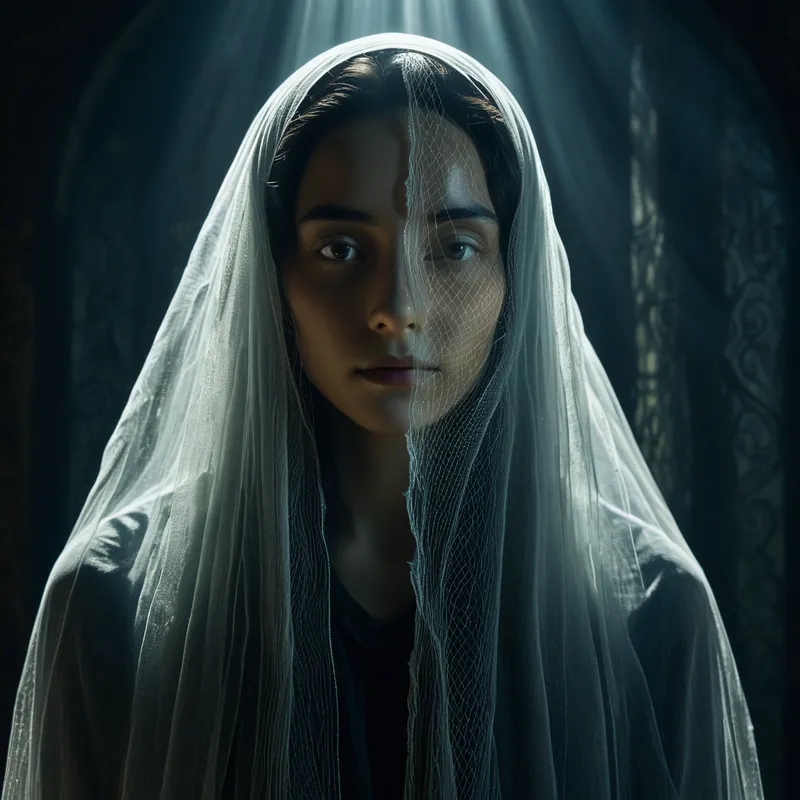
The [Veil](/symbols/veil “Symbol: A veil typically symbolizes concealment, protection, and transformation, representing both mystery and femininity across cultures.”/) is the ultimate [symbol](/symbols/symbol “Symbol: A symbol can represent an idea, concept, or belief, serving as a powerful tool for communication and understanding.”/) of the ego and the sensory-cognitive apparatus. It is not an [error](/symbols/error “Symbol: A dream symbol representing internal conflict, perceived failure, or a mismatch between expectations and reality.”/), but a necessary [organ](/symbols/organ “Symbol: An organ symbolizes vital aspects of life and health, often representing one’s emotional or physical state.”/) of [perception](/symbols/perception “Symbol: The process of becoming aware of something through the senses. In dreams, it often represents how one interprets reality or internal states.”/). It creates the stage of [life](/symbols/life “Symbol: The symbol of ‘Life’ represents a journey of growth, interconnectedness, and existential meaning, encompassing both the joys and challenges that define human experience.”/), allowing for [drama](/symbols/drama “Symbol: Drama signifies narratives, emotional expression, and the exploration of human experiences.”/), meaning, and individual existence.
The Veil does not hide the truth; it translates it into the only language the mortal soul can initially comprehend—the language of separation, story, and time.
Maya herself represents a profound [archetype](/symbols/archetype “Symbol: A universal, primordial pattern or prototype in the collective unconscious that shapes human experience, behavior, and creative expression.”/): the Divine [Artist](/symbols/artist “Symbol: An artist symbolizes creativity, expression, and the exploration of the human experience through various forms of art.”/) or the Great Mediatrix. She is not a [trickster](/symbols/trickster “Symbol: A boundary-crossing archetype representing chaos, transformation, and the subversion of norms through cunning and humor.”/), but the compassionate [aspect](/symbols/aspect “Symbol: A distinct feature, quality, or perspective of something, often representing a partial view of a larger whole.”/) of the [universe](/symbols/universe “Symbol: The universe symbolizes vastness, interconnectedness, and the mysteries of existence beyond the individual self.”/) that makes experience possible. She is [the principle](/symbols/the-principle “Symbol: A fundamental truth, law, or doctrine that serves as a foundation for a system of belief, behavior, or reasoning, often representing moral or ethical standards.”/) of morphē, of giving form to the formless. The unbearable “[truth](/symbols/truth “Symbol: Truth represents authenticity, honesty, and the quest for knowledge beyond mere appearances.”/)” behind the Veil symbolizes the [unus mundus](/myths/unus-mundus “Myth from Alchemical culture.”/) or the psychoid [reality](/symbols/reality “Symbol: Reality signifies the state of existence and perception, often reflecting one’s understanding of truth and life experiences.”/)—the state of non-duality where subject and object, cause and effect, are one. To perceive it directly is the “unmaking” of the individual ego, a psychic [death](/symbols/death “Symbol: Symbolizes transformation, endings, and new beginnings; often associated with fear of the unknown.”/) preceding a transcendental [rebirth](/symbols/rebirth “Symbol: A profound transformation where old aspects of self or life die, making way for new beginnings, growth, and renewal.”/).
The mortals who sense the “[shimmer](/symbols/shimmer “Symbol: A wavering, glimmering light or surface effect, often associated with illusion, magic, or subtle transformation.”/)” are those in whom the individuation process has been activated. Their discomfort is the sacred discontent, the call to look behind the set dressing of their own personalities and culturally conditioned realities.
The Dreamer’s Resonance
When this myth stirs in the modern unconscious, it manifests in dreams of profound perceptual shift. You may dream of living in a house where one wall is suddenly translucent, revealing a vast, unknown landscape beyond. You might dream of wearing a mask that fuses to your skin, or conversely, of peeling a false face away to reveal not another face, but a blinding light or a void.
These are dreams of ego-deconstruction. The somatic sensation is often one of vertigo, expansion, or dissolution. The dreamer is encountering the limits of their current [persona](/myths/persona “Myth from Greek culture.”/) and the constructed nature of their waking reality. A dream where familiar objects lose their solidity or melt into patterns of energy directly mirrors the myth’s core revelation. This is not a nightmare of annihilation, but a initiatory dream of the psyche preparing to relate to a broader, more complex reality. The anxiety present is the birth pang of a larger consciousness.
Alchemical Translation
The journey from living unquestioningly within the Veil to consciously relating to it is the alchemical [nigredo](/myths/nigredo “Myth from Alchemical culture.”/) and albedo. First, the blackening: the crushing realization that one’s world is contingent, that beliefs, identities, and even sensory data are filtered. This is a crisis of meaning, the “unmaking.”
The goal is not to destroy the Veil, but to become the weaver of your own portion of it—to transform fate into destiny, perception into conscious creation.
The whitening follows: the understanding that Maya is within. The Veil is the psyche itself. The task of individuation is not to escape illusion, but to take responsibility for the loom. We examine the threads we’ve been given—our complexes, our cultural conditioning, our traumas—and begin to re-weave them with more consciousness. We integrate the “shimmer” of the unconscious into the pattern.
The final stage is not piercing the Veil to escape, but achieving a dual citizenship. One learns to live fully and compassionately in the world of form (the Veil) while holding the silent knowledge of its sourced nature. The mortal who does this performs the ultimate alchemy: they transmute the leaden sleep of automatic perception into the gold of awakened participation. They no longer curse the dream; they learn to dream lucidly, and in doing so, find the divine not behind the Veil, but in the very act of its sacred, merciful weaving.
Associated Symbols
Explore related symbols from the CaleaDream lexicon: