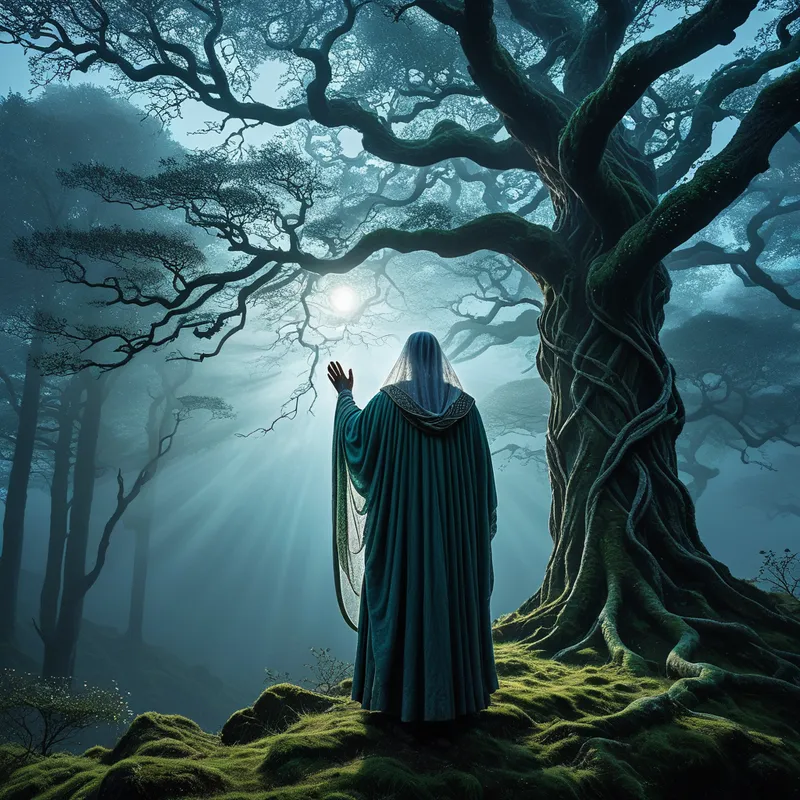
The Veil Between Worlds Myth Meaning & Symbolism
A myth of the liminal threshold, where the seen and unseen worlds touch, demanding respect, courage, and sacrifice from those who would cross.
The Tale of The Veil Between Worlds
Listen. There is a place where the breath of the world grows thin. It is not on any map drawn by human hand, yet every soul knows the path in its dreaming bones. It is the hollow hill that hums at midnight, the well whose water shows not your face but another’s, the forest pool that mirrors not the sky but a sky from a time before time. Here, the Tír na nÓg breathes against the skin of our world, and the separation is but a sigh.
In the days when kings were chosen by the land itself, there lived a warrior named Cúan. His strength was the oak, his sorrow a private sea. His beloved, Síomha, had been taken not by blade or plague, but by the fading light of a Samhain eve. One moment she stood by the hawthorn, the next, she was gone, leaving only the scent of apple-blossom in winter air. The fili whispered she had stepped through a tear in the world, drawn by a music only the dying could fully hear.
Driven by a love that was both his wound and his compass, Cúan sought the oldest of the druí, who lived where the river forked into three streams. “The way is not for the seeking,” the druid said, his voice like stone rubbing stone. “It is for the being-found. The Fáinne an tSaoil is not a door to be forced. It is a presence to be acknowledged. It thickens with arrogance and thins with sacrifice.”
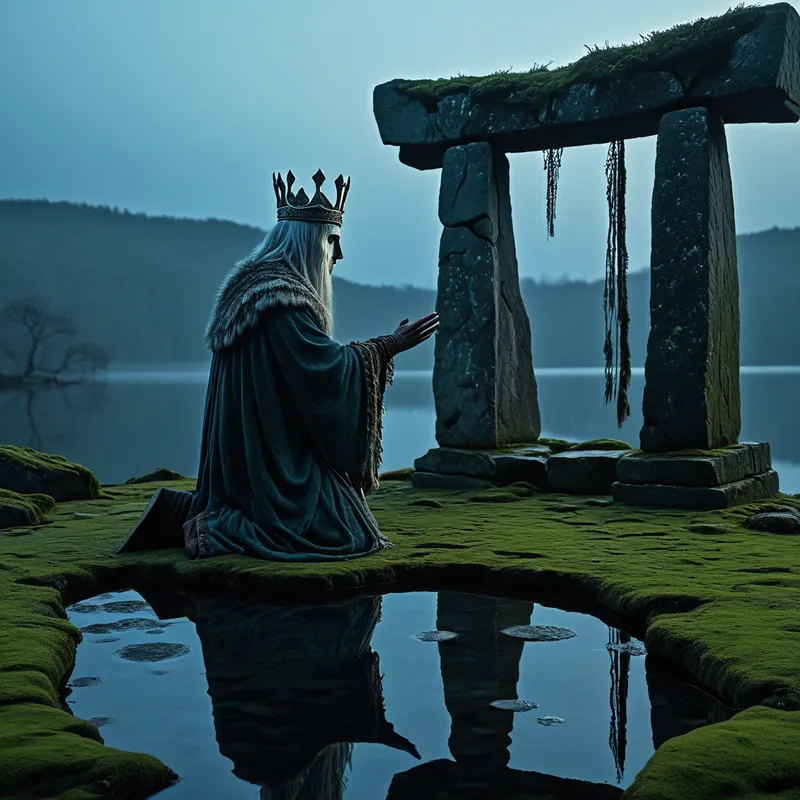
For a year and a day, Cúan prepared. He laid aside his sword, its iron a blasphemy to the Aos Sí. He learned the names of the local spirits in the old tongue. He offered the first of his hunt, the sweetest of his mead. He sat at the dolmen not as a conqueror, but as a petitioner, listening until he heard the faint, crystalline chime that lived in the silence between heartbeats.
On the next Samhain, when the worlds breathed together, he went to the pool of the nine hazels. He carried no weapon, only a torc of silver, the last gift Síomha had given him. As the moon drowned itself in the water, he saw her—not a reflection, but her living self, walking in an orchard of eternal gold. Between them hung the Veil: a shimmering, weightless tapestry woven from mist, spider-silk, and the last light of stars.
He did not charge. He knelt. He spoke her name, then his own, then the name of the pool, and finally, the true name of the love that bound them, which he had learned in his year of silence. He then offered the silver torc, letting it sink into the black water. The pool drank the silver, and for a moment, nothing. Then, from the depths, a hand of water and light emerged, holding the torc aloft, now glowing with a soft, interior moon. The Veil before him parted like a sigh, not as an opening, but as a thinning—a suggestion of a path through the apple trees.
To cross, he knew, was to leave something of his mortal weight behind. He stepped forward. The world did not break; it softened. The air tasted of honey and memory. He saw Síomha, and she him. But here, at the threshold, the myth holds its breath. For the tale does not end with a simple reunion. It ends with Cúan standing on the mossy bank, one foot in the world of rustling leaves and chill wind, the other in the world of unchanging light, the glowing torc now binding both worlds at his chest. He became not a man who crossed over, but the man who stands in the between, the guardian of his own threshold, forever touching both shores and fully belonging to neither. The Veil did not vanish; it lived within him.
Cultural Origins & Context
The concept of the Fáinne an tSaoil is not a single, codified myth from a singular text, but a pervasive, foundational pattern woven through the entire tapestry of Insular Celtic belief. It emerges from a worldview that saw the cosmos not as a hierarchy, but as a series of interpenetrating realities. The mortal realm (Midgard in a Norse sense, but here, our world) and the Tír na nÓg were not “far away,” but here, layered like the pages of a book held too close to separate.
This myth was carried in the oral tradition by the fili and druí, not as mere entertainment, but as a functional cosmology. It explained the uncanny: the sudden appearance of Aos Sí mounds, the prophetic visions at sacred wells, the potency of certain times (Samhain, Beltane) and places (fords, shorelines, forest clearings). Its societal function was one of profound ecology and ethics. It taught that the world is alive, sentient, and communicative, and that humanity exists in a relationship of delicate reciprocity with the unseen. To cross a threshold without proper offering, respect, or invitation was not adventure; it was a profound violation with consequences, as many tales of stolen mortals attest.
Symbolic Architecture
At its core, the Veil symbolizes the limen—the threshold itself as a sacred, potent, and dangerous state of being. It is not merely a barrier but the very substance of transition.
The Veil is not what separates the worlds; it is the seam where they are stitched together. To perceive it is to stand at the meeting point of Self and Not-Self.
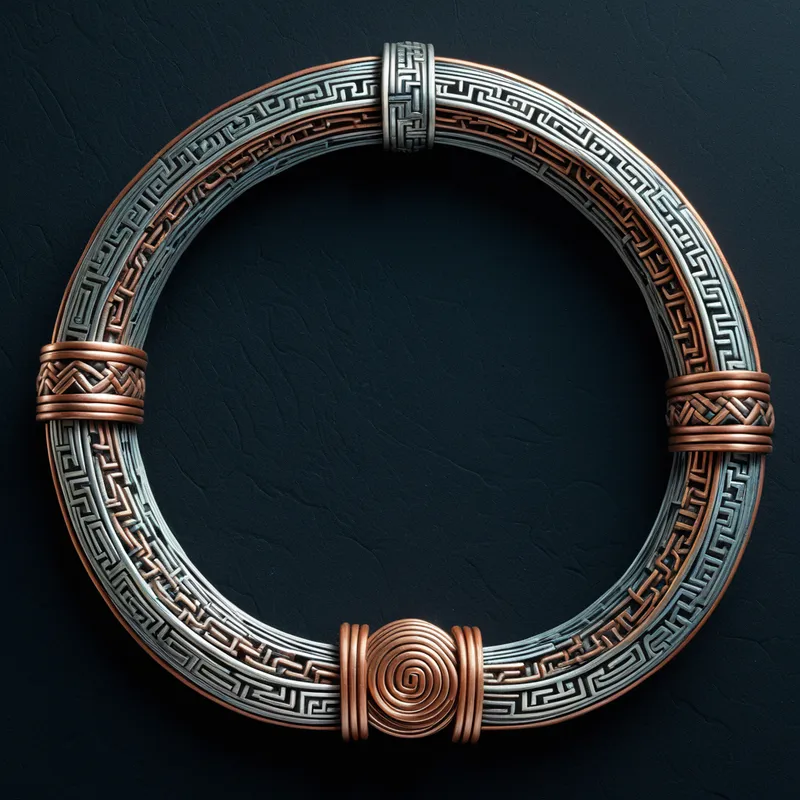
The hero’s journey in this myth is uniquely passive-aggressive. The triumph is not in conquest, but in preparation and recognition. Cúan’s offering of the silver torc—a symbol of his rank, his identity, and his bond—represents the necessary sacrifice of the ego’s rigid claims. Iron, the metal of will and war, is left behind; silver, the metal of the moon and intuition, is given. The Veil parts not for strength, but for vulnerability; not for demand, but for understood exchange.
Psychologically, the two worlds represent the conscious and unconscious minds. The Tír na nÓg is the timeless, archetypal realm of the psyche—the source of dreams, creativity, and the shadow. Our everyday reality is the realm of the ego. The Veil is the semi-permeable membrane of awareness, which thickens when we are dogmatic and self-assured (the “iron” of the ego), and thins when we approach with humility, curiosity, and symbolic offering (the “silver” of the soul).
The Dreamer’s Resonance
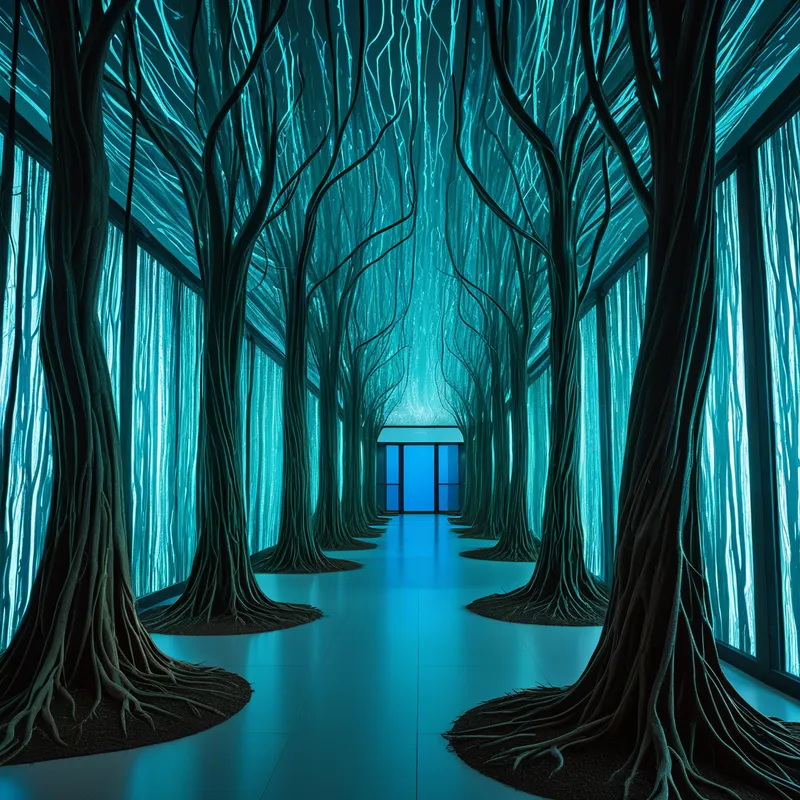
When this myth stirs in the modern dreamer, it announces a period of profound liminality. You may dream of corridors that lead to forests, doors that open onto impossible landscapes, or mirrors that reflect a different version of your life. These are somatic signals of the psyche at a threshold.
The psychological process is one of disorientation necessary for reorientation. The ego’s familiar map is failing. The dreamer is being called to acknowledge an unseen dimension of their own existence—perhaps a repressed talent, a buried grief, or an emerging calling that doesn’t fit their current life structure. The anxiety in such dreams is the friction of worlds rubbing together. The figure of the guide (the druid) or the beloved (Síomha) represents the psyche’s own attempt to provide a temenos, a sacred container, for this dangerous but vital crossing. The dream is an invitation to stop trying to “break through” and instead to learn the rituals of approach: to listen, to offer, to name things truly.
Alchemical Translation
The alchemical process modeled here is the solve et coagula—dissolve and coagulate—applied to the structure of the self. The old, solid identity (the warrior) must be dissolved in the waters of the unconscious (the pool). His defining symbol (the torc) is not discarded, but transmuted by being offered to the depths. It returns, glowing with a new, internal light.
Individuation is not about reaching a destination in the Otherworld, but about becoming the living Veil—a being capable of holding the tension of opposites within a single, resonant consciousness.
For the modern individual, this myth maps the journey of psychic integration. We all have our Tír na nÓg—the inner world of fantasy, shadow, and soul. Our culture often teaches us to wall it off with the “iron” of rationality, productivity, and persona. The myth instructs us otherwise. The path to wholeness requires us to go to the threshold places in our own lives—times of loss, transition, or creative void—and to not force a solution. Instead, we must make an offering of what we currently hold most dear: our certainty, our old story, our defensive identity. In that sacrificial act, the inner barrier transforms from a wall into a membrane. We don’t “escape” to fantasy or “conquer” the unconscious. We learn to let the two realms communicate through us. We become the dolmen: the enduring stone structure that both defines the gateway and allows the passage. We stand in the between, grounded yet permeable, fully human yet forever in dialogue with the mythic. That is the true crossing.
Associated Symbols
Explore related symbols from the CaleaDream lexicon: