The Var of Yima Myth Meaning & Symbolism
A king builds a divine enclosure to preserve life from a world-ending winter, becoming the guardian of a seed of the world to come.
The Tale of The Var of Yima
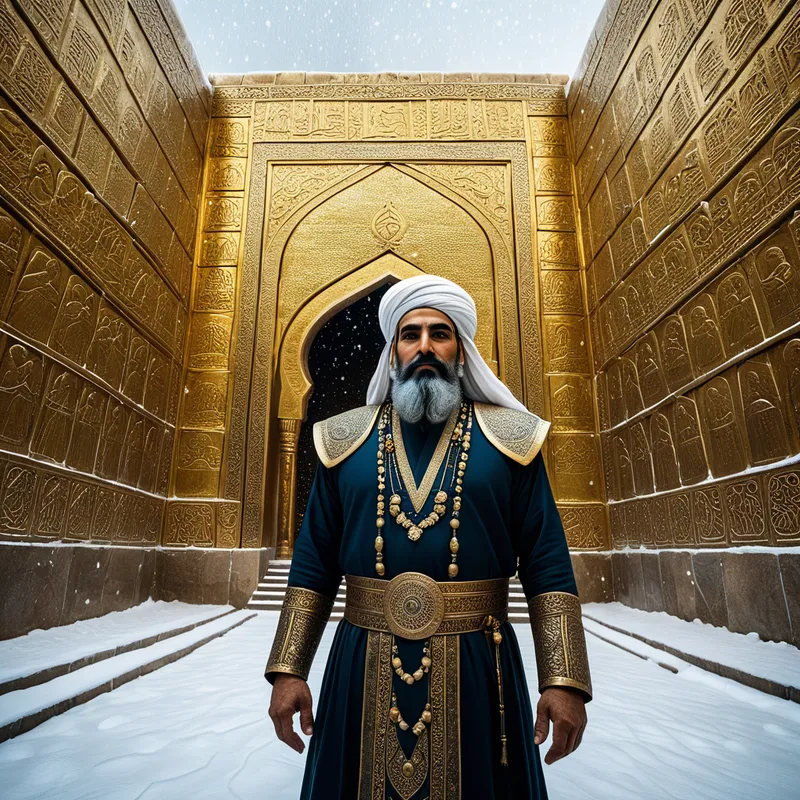
Listen, and hear the tale of the world’s first winter, a cold not of season, but of spirit. In the golden age of the first kings, when the sun was younger and the earth softer, there ruled a man named Yima, blessed with a radiance that rivaled the sun itself. He was the shepherd of all living things, and under his rule, there was no death, no decay, no lie. The world was a boundless pasture, and humanity thrived.
But the heavens are not static. The great [Ahura Mazda](/myths/ahura-mazda “Myth from Persian culture.”/), he who knows all fates, summoned Yima to a sun-drenched mountaintop. The air was thin and carried the scent of ozone and ancient stone. “Yima, radiant one,” spoke the voice that shaped the stars, “a great trial approaches. A mortal winter, a fury of snow and ice born from the heart of the Lie itself, will descend. It will scour the earth, and all life upon it will perish.”
Yima’s heart, which had never known fear, grew heavy as a mountain. “Then what is to be done, Wise Lord? Must I watch my flock be extinguished?”
Ahura Mazda’s presence shimmered like heat haze. “You must build a sanctuary. A Var. Not of stone and mortar, but of my word and your will. Take this golden ring and this goad, the symbols of your just rule. Stamp the earth with the ring, and mold the clay with the goad. The Var will grow.”
And so Yima did. He stamped the earth, and the ground yielded not dirt, but a substance of light and promise. He shaped it, and walls arose—long and perfect, glowing with an inner dawn. He built it in three concentric rings, a fortress for the soul of the world. Then came the command: “Gather within it the finest of all living things. A pair of every human, animal, bird, and plant. Gather the seeds of every tree and every fruit, most fragrant and most nourishing. Let them be stored in vessels that cannot break, in a light that does not fade.”
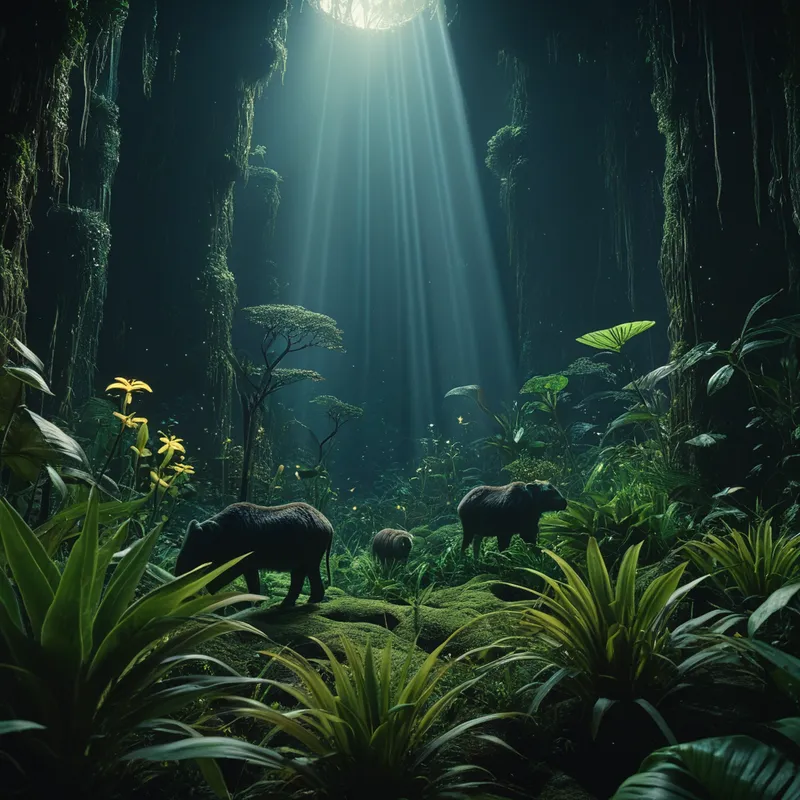
As the first cruel winds began to howl, whispering of the end, Yima led the chosen into the Var. The great gates, fashioned from the essence of sunlight, sealed behind them. Outside, the Malkōšān raged—a thousand years of winter, where stars froze in their tracks and the breath of creation turned to glass. But inside… inside was a different time. A perfect, unchanging twilight. No one grew old. No one knew sickness. The sweetest of foods appeared unbidden. The chosen lived in a state of grace, a memory of the world that was, preserved like a perfect dream in the heart of a nightmare.
And there, Yima the king became Yima the guardian. He walked the luminous corridors of his creation, not as a ruler, but as a watchful father, tending the last ember of a cosmic fire, waiting for the day the world would be made anew, and the gates could open once more.
Cultural Origins & Context
This myth originates from the Zoroastrian tradition, the pre-Islamic spiritual bedrock of Persian culture, and is most elaborately detailed in the Bundahišn and the Vendidad. It is not merely a story of a flood, but of a frost—a uniquely Iranian apocalyptic vision reflecting the very real threats of their high plateau environment. The myth served multiple profound functions. Esoterically, it was a cosmological map, explaining cycles of cosmic destruction and renewal. Societally, it reinforced the ideal of the just king (Farr) as the protector and shepherd (dāmdād) of all creation. Yima’s failure, which some texts allude to leading to his fall, served as a warning: even the most radiant sovereignty can be corrupted by pride, leading to the loss of the divine mandate. It was a myth told to bind the community to a vision of order (aša) against the ever-present threat of chaos (druj), and to affirm that preservation is a sacred duty.
Symbolic Architecture
The Var is not an ark. It is not a ship tossed on a flood, but a sealed, perfect [vessel](/symbols/vessel “Symbol: A container or structure that holds, transports, or protects something essential, representing the self, emotions, or life journey.”/) of [consciousness](/symbols/consciousness “Symbol: Consciousness represents the state of awareness and perception, encompassing thoughts, feelings, and experiences.”/) itself. Yima represents the archetypal principle of Aša—cosmic order and [truth](/symbols/truth “Symbol: Truth represents authenticity, honesty, and the quest for knowledge beyond mere appearances.”/)—made manifest in [human](/symbols/human “Symbol: The symbol of a human represents individuality, complexity of emotions, and social relationships.”/) form. His [task](/symbols/task “Symbol: A task represents responsibilities, duties, or challenges one faces.”/) is not to [adventure](/symbols/adventure “Symbol: ‘Adventure’ signifies exploration, discovery, and the pursuit of new experiences in one’s life journey.”/) or conquer, but to contain.
The hero’s ultimate task is sometimes not expansion, but profound, vigilant contraction—the creation of a sacred interiority where the essence of the world can wait out the storm of time.
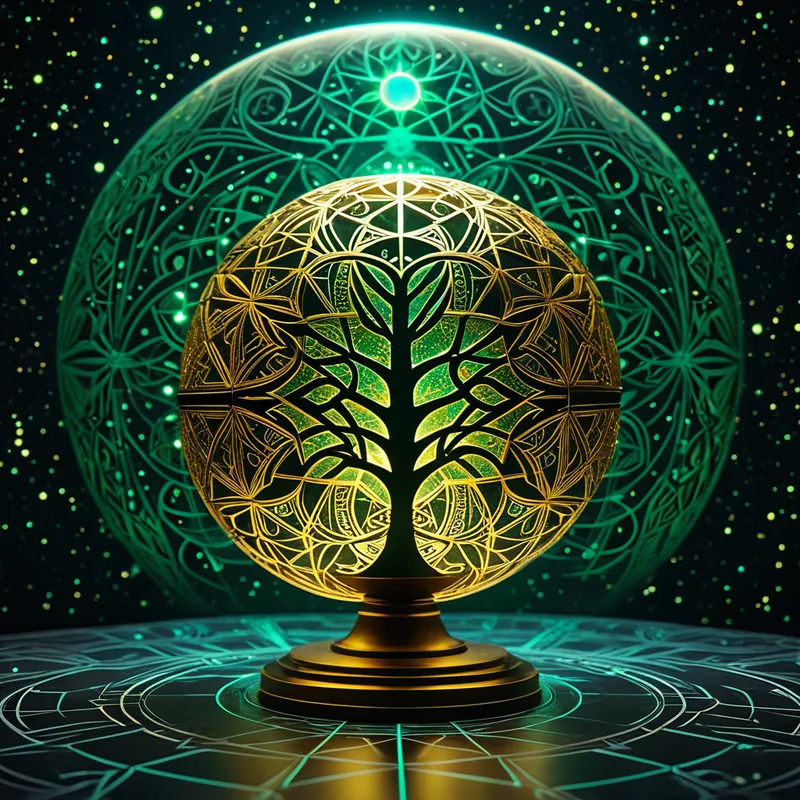
The catastrophic [winter](/symbols/winter “Symbol: Winter symbolizes a time of reflection, introspection, and dormancy, often representing challenges or a period of transformation.”/) symbolizes the inevitable psychic winters—periods of collective madness, spiritual desolation, or the encroachment of the unconscious [shadow](/symbols/shadow “Symbol: The ‘shadow’ embodies the unconscious, repressed aspects of the self and often represents fears or hidden emotions.”/) that threatens to obliterate the structures of the conscious self. The Var is the [symbol](/symbols/symbol “Symbol: A symbol can represent an idea, concept, or belief, serving as a powerful tool for communication and understanding.”/) of the individuated psyche’s core, the Self in Jungian terms, which must be constructed deliberately (with the golden ring of wholeness and the goad of directed will) to preserve the integrity of the [personality](/symbols/personality “Symbol: Personality in dreams often symbolizes the traits and characteristics of the dreamer, reflecting how they perceive themselves and how they believe they are perceived by others.”/) during periods of [fragmentation](/symbols/fragmentation “Symbol: The experience of breaking apart, losing cohesion, or being separated into pieces. Often represents disintegration of self, relationships, or reality.”/). The pairs of all living things represent the complete psychic contents—every complex, every potential, every instinct—that must be acknowledged and sheltered, not expelled, for the Self to remain whole.
The Dreamer’s Resonance
When this myth stirs in the modern soul, it often manifests in dreams of profound interiority and preservation. One may dream of finding a hidden, perfectly preserved room in a decaying house; of sealing oneself in a bunker or vault as a catastrophe unfolds outside; or of carefully placing precious, fragile objects into a protective box. The somatic feeling is one of deliberate retreat, of holding one’s breath psychically.
This signals a critical psychological process: the conscious retreat of the ego to fortify the boundaries of the Self. It is not regression, but a strategic consolidation. The dreamer is likely undergoing an existential “winter”—a depression, a burnout, a period of grief or collective trauma that feels world-ending. The psyche is instinctively building its Var, gathering the scattered, vulnerable parts of the self (the “finest pairs”) into a protected inner sanctum to survive the emotional glaciation. The dream is a map for active, conscious withdrawal for the purpose of preservation, not escape.

Alchemical Translation
The alchemical process mirrored here is not the solve (dissolution) but the coagula (coagulation). It is the stage where the distilled essence, having been broken down, must be sealed in the Hermetic vessel to incubate. Yima’s journey models the phase of individuation where one must construct a conscious relationship with the Self, becoming the steward of one’s own totality.
First, one receives the divine warning—an intuition, a crisis, a diagnosis—that a destructive pattern (the inner druj) threatens one’s entire psychic ecology. The ego, identified with the “radiant king,” must humble itself and take up the tools of consciousness (the ring of identity, the goad of discipline) to build an inner container. This is the work of therapy, meditation, or artistic practice—a deliberate structuring of inner space.
The alchemical vessel is forged in the humility of accepting what must be preserved, not in the triumph of what must be possessed.
Within this Var, the opposites are held in pairs: pride and shame, courage and fear, love and rage. They are not fought, but sheltered. The individual learns to dwell with their complete self in a state of reflective pause, where time is different. The goal is not to live in the Var forever, but to allow the inner “winter” to run its course outside, while within, the seeds of the future personality are kept vital. When the cycle turns, and the inner climate shifts, one emerges not merely saved, but carrying the seed of a renewed world within. The guardian becomes the progenitor.
Associated Symbols
Explore related symbols from the CaleaDream lexicon:
- Circle — The perfect, concentric rings of the Var symbolize wholeness, containment, and the sacred boundary that separates the preserved essence from the chaotic void.
- Seed — The preserved pairs and fruits within the Var represent the latent potential, the essential blueprint of life and psyche, waiting for the right conditions to regenerate.
- Winter — The catastrophic frost embodies periods of psychic death, stagnation, emotional coldness, and the necessary end of a cycle that precedes renewal.
- King — Yima as the archetypal ruler represents the ordering, shepherding principle of consciousness tasked with the supreme duty of stewardship and preservation.
- Door — The sealed gate of the Var signifies the threshold between annihilation and preservation, between the outer catastrophe and the inner sanctuary of the Self.
- Vessel — The Var itself is the ultimate symbol of the container, the alchemical vas that holds and protects the transforming essence during its incubation.
- Light — The eternal, unfading illumination within the Var represents the undiminished spark of consciousness and spirit that persists through all cycles of darkness.
- Mountain — The high place where Ahura Mazda delivers the divine warning symbolizes the elevated perspective, revelation, and connection to transcendent authority required for the task.
- Order — The entire myth is an ode to Aša, the cosmic principle of truth and right order, which must be actively constructed and maintained against entropy.
- Guardian — Yima’s ultimate role transforms from conqueror to protector, symbolizing the mature ego’s function as the watchful steward of the inner world.
- Gold — The substance of the ring and the implied perfection of the Var signify incorruptibility, divine value, and the highest, most enduring level of psychic integration.
- Destiny — The myth frames preservation not as accident but as a sacred, pre-ordained duty, aligning individual action with a cosmic plan for cyclical renewal.