The Underworld Myth Meaning & Symbolism
A descent into the realm of the dead, a negotiation with shadow, and a return transformed—the ancient map of the soul's deepest journey.
The Tale of The Underworld
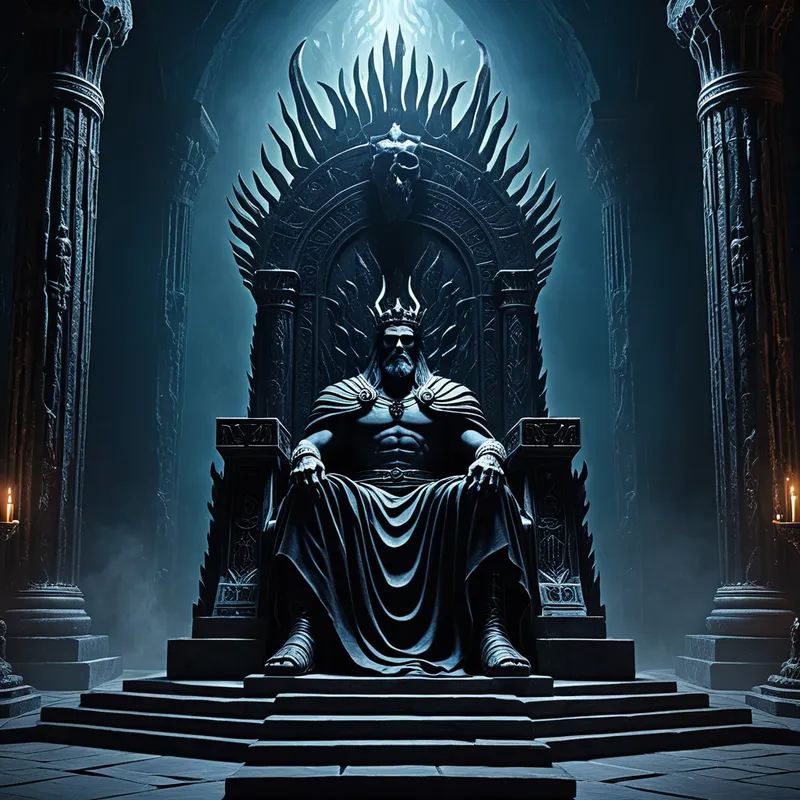
Listen, and hear the tale of the land where the sun’s chariot never rolls, where the light of life is a forgotten memory. This is the realm of [Hades](/myths/hades “Myth from Greek culture.”/), the Unseen One, brother to Zeus and [Poseidon](/myths/poseidon “Myth from Greek culture.”/), who rules a kingdom of shades and silence.
It begins not with a hero, but with a cry that pierced the very earth. [Persephone](/myths/persephone “Myth from Greek culture.”/), radiant daughter of Demeter, was gathering blossoms in a sun-drenched meadow. [The earth](/myths/the-earth “Myth from Hindu culture.”/) trembled. From a great fissure, a chariot of blackest iron erupted, drawn by steeds whose breath was frost. A powerful arm, colder than winter stone, seized the maiden. Her flowers scattered like fallen stars as she was pulled down, down into the yawning darkness, her scream swallowed by the closing earth. Above, the sun shone on, ignorant. Below, the gates of the [underworld](/myths/underworld “Myth from Greek culture.”/)—forged of adamant and guarded by the monstrous Cerberus—clanged shut.
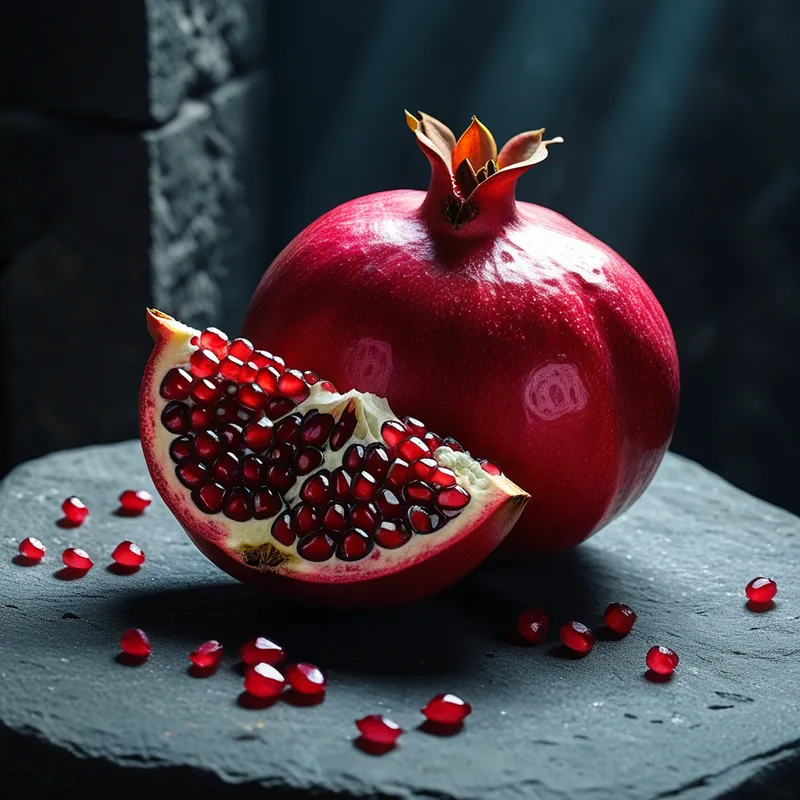
Here, the air is weighty and still, smelling of damp earth and forgotten things. The mournful river Acheron groans under the pole of the skeletal ferryman, Charon, who demands a coin for passage. Souls drift like mist through the fields of Asphodel, their whispers a ceaseless, hollow breeze. In the distance, the wicked suffer their eternal punishments: [Sisyphus](/myths/sisyphus “Myth from Greek culture.”/) strains against his rock, [Tantalus](/myths/tantalus “Myth from Greek culture.”/) reaches for fruit that forever eludes him. And in the deepest hall, on a throne of black rock, sits Hades, his gaze holding the depth of [the abyss](/myths/the-abyss “Myth from Kabbalistic culture.”/). To him came Persephone, a spark of life in the kingdom of death. He offered her not chains, but a crown. He offered her not a prison, but a throne at his side. In her grief, she took nothing… until, weakened by hunger, she accepted his gift: six seeds of a blood-red pomegranate.
Above, Demeter’s grief blighted [the world](/myths/the-world “Myth from Tarot culture.”/). Crops failed. Winter gripped the land, and humanity faced extinction. Zeus, king of gods, intervened. A deal was struck in the silent halls of the dead. For each seed consumed, Persephone would spend one month of the year in the underworld as its queen. For the rest, she could return to the light. And so, she emerged, transformed. No longer just the maiden of flowers, she was now the Queen who had tasted the fruit of the underworld. Where she walked, flowers bloomed. Where she departed, the earth grew cold and waited. The cycle was sealed: descent, reign, and return. The world itself now breathed to the rhythm of her journey between the realms of her mother and her husband.
Cultural Origins & Context
This was not a singular story but a living tapestry woven from the deepest fears and questions of the ancient Greek world. It was the heart of the Eleusinian Mysteries, the most sacred and guarded religious rites of the ancient Mediterranean. For over a millennium, initiates—from slaves to emperors—underwent a ritual process that promised them a favorable fate in the afterlife, a hope born directly from the myth of Demeter and Persephone. The story was not merely recited; it was experienced through ritual drama, likely re-enacting the goddess’s descent and return. This myth provided a sacred map for the ultimate human transition—death—and offered a powerful, feminine-centered narrative of cyclical renewal that stood alongside the more linear, heroic tales of male gods. It was told at hearths, performed in temples, and etched into the cultural [psyche](/myths/psyche “Myth from Greek culture.”/) as the fundamental explanation for the seasons and the nature of the soul’s journey after death.
Symbolic Architecture
The [Underworld](/symbols/underworld “Symbol: A symbolic journey into the unconscious, representing exploration of hidden aspects of self, transformation, or confronting repressed material.”/) is not a place, but a state of being—the unconscious psyche in its totality. [Hades](/symbols/hades “Symbol: Greek god of the underworld, representing death, the unconscious, and hidden aspects of existence.”/) represents not evil, but the necessary, sovereign principle of the deep self, the keeper of all that is repressed, forgotten, or deemed unacceptable.
To descend is not to be damned, but to be confronted with the un-lived life that shapes us from below.
Persephone’s abduction is the inevitable call of the [soul](/symbols/soul “Symbol: The soul represents the essence of a person, encompassing their spirit, identity, and connection to the universe.”/) to deepen, a [rupture](/symbols/rupture “Symbol: A sudden break or tear in continuity, often representing abrupt change, separation, or the shattering of established patterns.”/) of [innocence](/symbols/innocence “Symbol: A state of purity, naivety, and freedom from guilt or corruption, often associated with childhood and moral simplicity.”/) that initiates the [journey](/symbols/journey “Symbol: A journey in dreams typically signifies adventure, growth, or a significant life transition.”/) of [consciousness](/symbols/consciousness “Symbol: Consciousness represents the state of awareness and perception, encompassing thoughts, feelings, and experiences.”/). Her consumption of the [pomegranate seeds](/myths/pomegranate-seeds “Myth from Greek culture.”/) is the critical [moment](/symbols/moment “Symbol: The symbol of a ‘moment’ embodies the significance of transient experiences that encapsulate emotional depth or pivotal transformations in life.”/) of engagement with the [shadow](/symbols/shadow “Symbol: The ‘shadow’ embodies the unconscious, repressed aspects of the self and often represents fears or hidden emotions.”/). It is not a violation, but a [choice](/symbols/choice “Symbol: The concept of choice often embodies decision-making, freedom, and the multitude of paths available in life.”/) that binds her to the [depths](/symbols/depths “Symbol: Represents the subconscious, hidden emotions, or foundational aspects of the self, often linked to primal fears or profound truths.”/), transforming her from a [victim](/symbols/victim “Symbol: A person harmed by external forces, representing vulnerability, injustice, or sacrifice in dreams. Often symbolizes powerlessness or moral conflict.”/) into a [queen](/symbols/queen “Symbol: A queen represents authority, power, nurturing, and femininity, often embodying leadership and responsibility.”/) who holds [authority](/symbols/authority “Symbol: A symbol representing power structures, rules, and control, often reflecting one’s relationship with societal or personal governance.”/) in both realms. The pomegranate, with its multitude of seeds hidden beneath a tough rind, is the [symbol](/symbols/symbol “Symbol: A symbol can represent an idea, concept, or belief, serving as a powerful tool for communication and understanding.”/) of [life](/symbols/life “Symbol: The symbol of ‘Life’ represents a journey of growth, interconnectedness, and existential meaning, encompassing both the joys and challenges that define human experience.”/), [fertility](/symbols/fertility “Symbol: Symbolizes creation, growth, and abundance, often representing new beginnings, potential, and life force.”/), and [destiny](/symbols/destiny “Symbol: A predetermined course of events or ultimate purpose, often linked to spiritual forces or cosmic order, representing life’s inherent direction.”/) contained within the [realm](/symbols/realm “Symbol: The symbol of ‘Realm’ often signifies the boundaries of one’s consciousness, experiences, or emotional states, suggesting aspects of reality that are either explored or ignored.”/) of [death](/symbols/death “Symbol: Symbolizes transformation, endings, and new beginnings; often associated with fear of the unknown.”/). Her cyclical return models the [rhythm](/symbols/rhythm “Symbol: A fundamental pattern of movement or sound in time, representing life’s cycles, emotional flow, and universal order.”/) of the psyche: periods of introspection and dwelling with our inner truths ([winter](/symbols/winter “Symbol: Winter symbolizes a time of reflection, introspection, and dormancy, often representing challenges or a period of transformation.”/)) followed by periods of [expression](/symbols/expression “Symbol: Expression represents the act of conveying thoughts, emotions, and individuality, emphasizing personal communication and creativity.”/) and growth in the outer world (spring).
The Dreamer’s Resonance
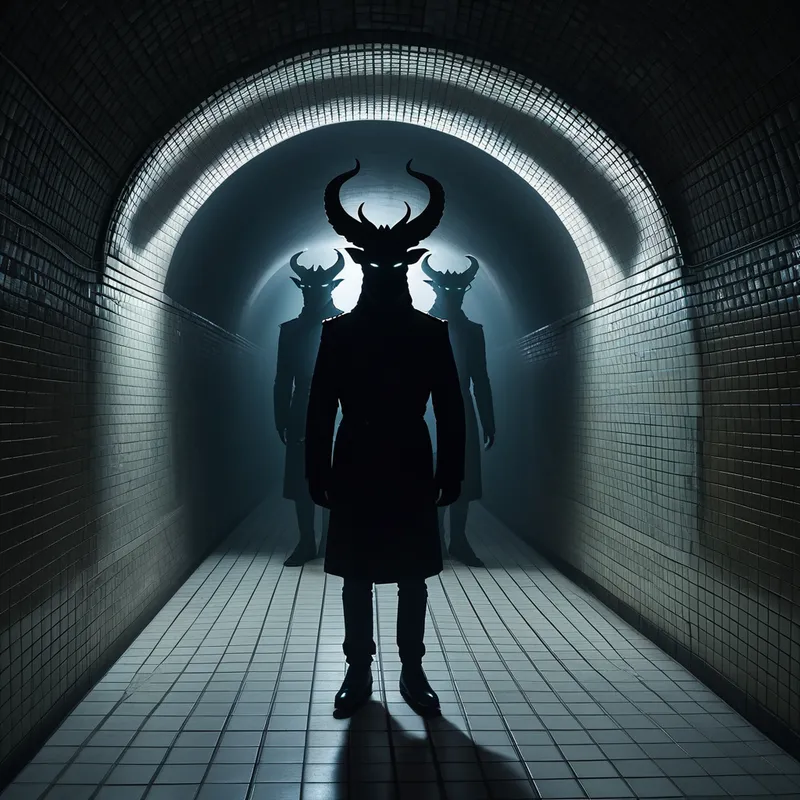
When this myth stirs in modern dreams, it announces a profound psychological initiation. Dreaming of descending into caves, basements, subways, or being pulled into deep [water](/myths/water “Myth from Chinese culture.”/) often signals an unconscious summons to the underworld of the psyche. The dreamer may encounter a formidable, dark figure (Hades) who feels both terrifying and strangely authoritative—this is the archetypal Shadow, the inner other who holds rejected power. A dream of eating a strange fruit in a dark place mirrors Persephone’s fateful meal, symbolizing the unconscious assimilation of a complex, perhaps difficult, truth about oneself. The somatic experience is often one of weight, pressure, or chilling cold—a literal feeling of being “depressed” (pressed down) into the material of the soul. This is not pathology, but process: the psyche preparing to retrieve something vital from its own depths.
Alchemical Translation
The myth’s entire structure is a perfect model for the alchemical process of individuation. The descent (nekyia) is the initial stage of [nigredo](/myths/nigredo “Myth from Alchemical culture.”/), the blackening, where one confronts [the shadow](/myths/the-shadow “Myth from Jungian culture.”/) and the rubble of the [persona](/myths/persona “Myth from Greek culture.”/). It feels like dissolution and despair.
The throne of Hades is the seat of self-sovereignty we must claim from our own darkness.
Persephone’s rule as Queen is the stage of albedo, the whitening, where one learns to relate to and order the contents of the unconscious, finding clarity and reflection in the dark. Her marriage to Hades represents the sacred union (hieros gamos) of the conscious ego with the animus/animus or the deep Self. Finally, her cyclical return embodies [rubedo](/myths/rubedo “Myth from Alchemical culture.”/), the reddening, the return to the world bearing the integrated wisdom of the depths, which now enriches and gives meaning to life on the surface. For the modern individual, this translates to any profound journey through depression, grief, or crisis that ultimately leads to a more authentic, grounded, and potent sense of self. One does not “beat” the underworld; one learns its laws, pays its toll to Charon (accepts the cost of consciousness), and returns having forged an alliance with the very depths that once seemed only to threaten. We are all, in our seasons, both the mourning Demeter and the reigning Persephone, cycling between the light of day and the profound, fertile darkness within.
Associated Symbols
Explore related symbols from the CaleaDream lexicon: