The Titans vs. Olympians Myth Meaning & Symbolism
The primal, chaotic Titans are overthrown by their Olympian children, a cosmic war that forges a new world order from the ashes of the old.
The Tale of The Titans vs. Olympians
Before time was measured, [the world](/myths/the-world “Myth from Tarot culture.”/) was a raw, roaring [thing](/myths/thing “Myth from Norse culture.”/). The first gods, the Titans, were born from the marriage of [Ouranos](/myths/ouranos “Myth from Global/Universal culture.”/) and Gaia. They were forces, not faces—the shuddering earthquake, the relentless ocean tide, the memory of stars. Their king was Cronus, who wielded a jagged sickle of adamant and ruled with a grip of stone. He had heard a prophecy, a whisper from [the Earth](/myths/the-earth “Myth from Hindu culture.”/) herself, that his own child would usurp him. So, when his sister-queen Rhea bore their children, he opened his maw and swallowed them whole: [Hestia](/myths/hestia “Myth from Global/Universal culture.”/), Demeter, [Hades](/myths/hades “Myth from Greek culture.”/), [Poseidon](/myths/poseidon “Myth from Greek culture.”/). Each divine light was extinguished in the cavern of his belly, imprisoned in a dark that knew no dawn.
But Rhea’s grief turned to cunning. When her sixth child was born, she wrapped a stone in swaddling clothes and gave it to Cronus. He swallowed the deception without a thought. The true infant, Zeus, was spirited away to a cave on Crete, where his cries were drowned by the clashing of shields and the roar of sacred youths. He drank the milk of a divine goat and grew, not in the slow time of mountains, but with the swift, fierce heat of a coming storm.
Years later, a stranger came to Cronus’s hall. It was Zeus, grown and powerful, bearing a draught of honey and mustard. The Titan king drank, and his gut convulsed. One by one, he disgorged his children—whole, alive, and blazing with a fury that had been tempered in the dark. They stood beside their brother, a new [pantheon](/myths/pantheon “Myth from Roman culture.”/) forged in betrayal. The war that followed, the Titanomachy, shook the pillars of the cosmos. [The Titans](/myths/the-titans “Myth from Greek culture.”/), led by Cronus, rallied from Mount Othrys. The Olympians, from [Mount Olympus](/myths/mount-olympus “Myth from Global/Universal culture.”/), were younger, brighter, but outmatched in raw, ancient power.
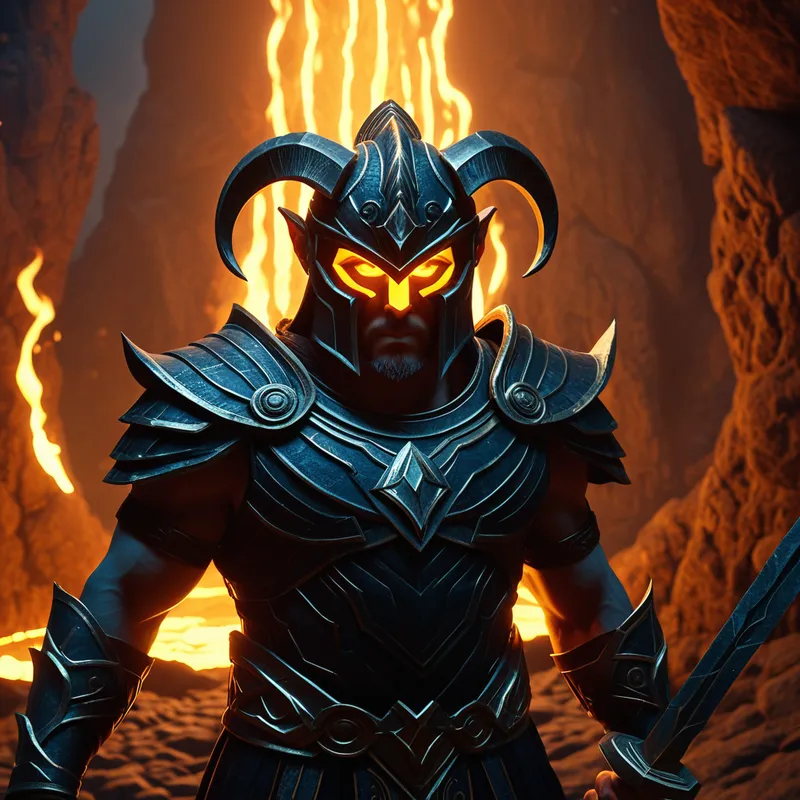
Zeus knew he needed more than youthful rage. He ventured into the abyssal pit of [Tartarus](/myths/tartarus “Myth from Greek culture.”/) and freed the monstrous, forgotten children of Gaia: the one-eyed Cyclopes and the hundred-handed Hekatoncheires. In gratitude, the Cyclopes forged the terrible symbols of the new order: the thunderbolt for Zeus, the trident for Poseidon, the helmet of darkness for Hades.
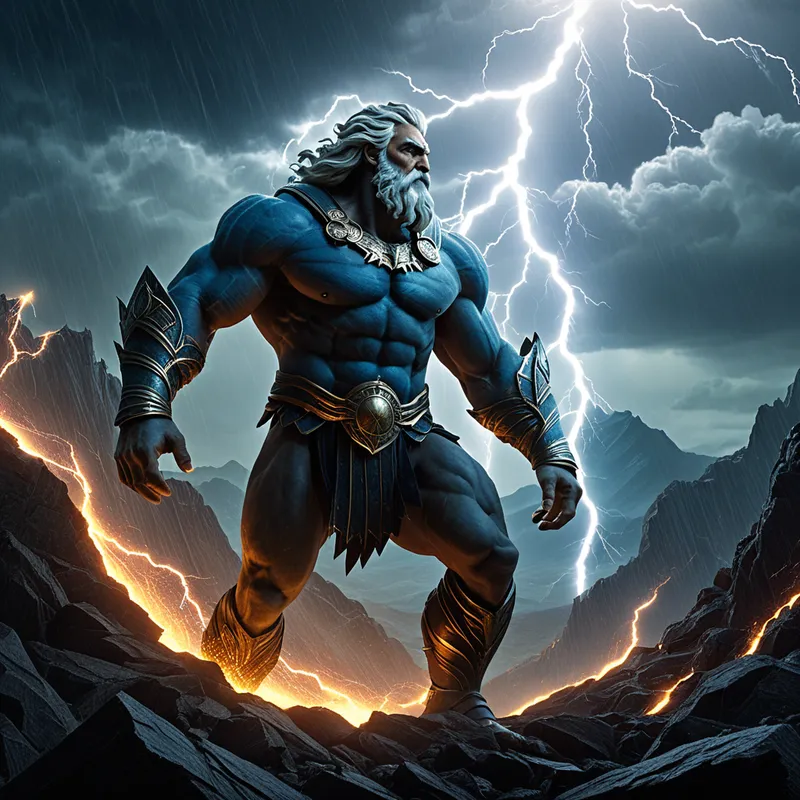
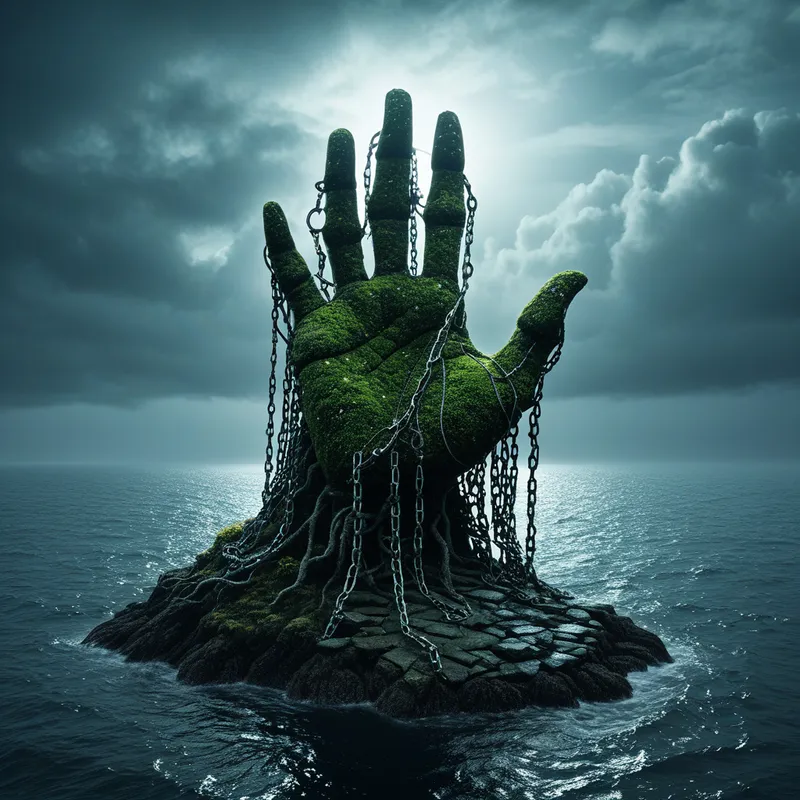
The final battle was not a clash of armies, but of worlds. The Hekatoncheires, with their three hundred hands, rained down mountains upon the Titans. Zeus split [the sky](/myths/the-sky “Myth from Persian culture.”/) with lightning that smelled of ozone and wrath. Poseidon stirred the seas into tsunamis that clawed at the foundations of Othrys. For ten years, the conflict raged until, with a cataclysmic roar, the Titan fortress fell. Most were cast, bound in chains forged by their own kin, into the sunless dungeons of Tartarus. Atlas, however, was given a unique torment: to bear the weight of the celestial dome upon his shoulders for all eternity. Silence, then, fell over a scarred and smoking world. From the throne of Olympus, Zeus and his siblings looked out upon a cosmos that was, for the first time, theirs to shape.
Cultural Origins & Context
This foundational myth was not mere entertainment for the ancient Greeks; it was their cosmic genealogy and a charter for reality. Its primary vessel was the epic poetry of Hesiod, whose Theogony (c. 700 BCE) provides the most systematic account. Performed at religious festivals and aristocratic symposia, these verses served a critical societal function: they explained the origin of the world (cosmogony) and justified the current divine order (theogony). The story legitimized the supremacy of [the Olympian gods](/myths/the-olympian-gods “Myth from Greek culture.”/), whose cults were central to Greek polis life, over older, perhaps more chthonic and chaotic, deities represented by the Titans. It framed a fundamental Greek worldview: that order (cosmos) is not a given, but a hard-won victory over primal chaos (chaos), and that this victory requires both cunning and terrible violence. The myth was a cultural memory of a theological and possibly social revolution, encoding the transition from an older, more brutal order to a newer one governed by (slightly) more recognizable laws and patron deities.
Symbolic Architecture
At its [heart](/symbols/heart “Symbol: The heart symbolizes love, emotion, and the core of one’s existence, representing deep connections with others and self.”/), the Titanomachy is the archetypal [drama](/symbols/drama “Symbol: Drama signifies narratives, emotional expression, and the exploration of human experiences.”/) of succession. It is the inevitable, violent transition from one mode of being to another. The Titans symbolize the Primal [Pattern](/symbols/pattern “Symbol: A ‘Pattern’ in dreams often signifies the underlying structure of experiences and thoughts, representing both order and the repetitiveness of life’s situations.”/)—the unconscious, instinctual, and often tyrannical structures that precede individual [consciousness](/symbols/consciousness “Symbol: Consciousness represents the state of awareness and perception, encompassing thoughts, feelings, and experiences.”/). They are the raw materials of existence: [earth](/symbols/earth “Symbol: The symbol of Earth often represents grounding, stability, and the physical realm, embodying a connection to nature and the innate support it provides.”/), time, [memory](/symbols/memory “Symbol: Memory symbolizes the past, lessons learned, and the narratives we construct about our identities.”/), and sheer undifferentiated force. Cronus, who devours his children, represents [the tyranny](/symbols/the-tyranny “Symbol: A symbol of oppressive control, unjust authority, and systemic domination that suppresses individual freedom and collective well-being.”/) of the past that consumes the future, the stagnant order that cannot tolerate novelty or growth.
The old king must be deposed for the new world to be born. This is not cruelty, but cosmology.
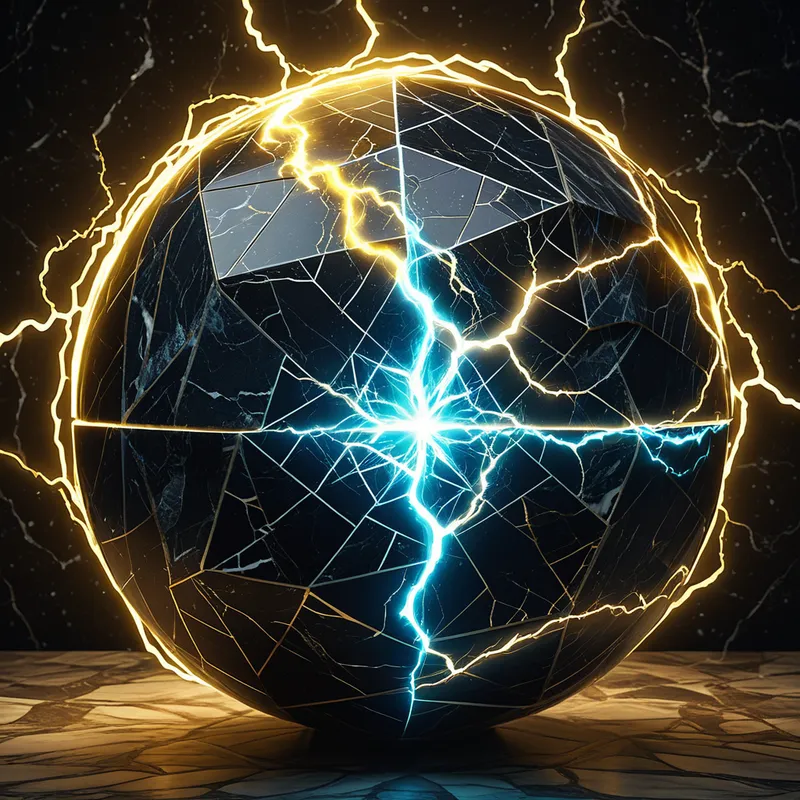
The Olympians symbolize Differentiated Consciousness—the light of [awareness](/symbols/awareness “Symbol: Conscious perception of self, surroundings, or internal states. Often signifies awakening, insight, or heightened sensitivity.”/) that names, separates, and creates law. Zeus, the strategist who frees forgotten allies, represents the emerging ego that must integrate the rejected, monstrous aspects of the [psyche](/myths/psyche “Myth from Greek culture.”/) (the Cyclopes, the Hekatoncheires) to gain the power to overthrow the parental complex. Their weapons are not just tools of war, but symbols of distinct faculties: the [lightning](/symbols/lightning “Symbol: Lightning symbolizes sudden insights or revelations, often accompanied by powerful emotions or disruptive change.”/) bolt of [insight](/symbols/insight “Symbol: A sudden, deep understanding of a complex situation or truth, often arriving unexpectedly and illuminating hidden connections.”/) and decisive judgment, the trident of emotional [depth](/symbols/depth “Symbol: Represents profound layers of consciousness, hidden truths, or the unknown aspects of existence, often symbolizing introspection and existential exploration.”/) and power, the [helmet](/symbols/helmet “Symbol: A helmet in dreams typically symbolizes protection, security, and the mental frameworks we use to shield ourselves from emotional pain.”/) of the [ability](/symbols/ability “Symbol: In dreams, ‘ability’ often denotes a recognition of skills or potential that one possesses, whether acknowledged or suppressed.”/) to retreat into the unconscious for wisdom.
The war itself is the painful, protracted process of individuation—the struggle of the nascent self to break free from the internalized, all-encompassing [authority](/symbols/authority “Symbol: A symbol representing power structures, rules, and control, often reflecting one’s relationship with societal or personal governance.”/) of the parental [archetype](/symbols/archetype “Symbol: A universal, primordial pattern or prototype in the collective unconscious that shapes human experience, behavior, and creative expression.”/). The binding of the Titans in Tartarus is not their annihilation, but their relegation to the [foundation](/symbols/foundation “Symbol: A foundation symbolizes the underlying support systems, values, and beliefs that shape one’s life, serving as the bedrock for growth and development.”/) of the [personality](/symbols/personality “Symbol: Personality in dreams often symbolizes the traits and characteristics of the dreamer, reflecting how they perceive themselves and how they believe they are perceived by others.”/). They become the bedrock upon which consciousness is built, the chaotic potential that is contained but never entirely eradicated.
The Dreamer’s Resonance
When this myth stirs in the modern dreamer, it announces a profound internal upheaval. To dream of titanic, earth-shaking figures, of being trapped in a dark belly or a deep pit, or of wielding a weapon like a lightning bolt, is to experience the somatic reality of psychic revolution.
The dreamer may feel the “Cronus complex”: a sense of being swallowed, stifled, or prevented from expressing their true potential by an internalized voice of tradition, a job, a family expectation, or their own rigid self-concept. The rising “Olympian” energy feels like a restless, stormy power—a righteous anger, a burst of creative insight, or a desperate need for autonomy that seems to risk everything. The dream landscape itself may transform: stable ground quakes, old structures crumble, and a new, though frightening, vista opens. This is the psyche’s innate drive toward growth, enacting its own Titanomachy to dismantle an outdated psychological regime. The anxiety and chaos felt are not signs of breakdown, but of breakthrough.
Alchemical Translation
The alchemical journey mirrored in this myth is the [nigredo](/myths/nigredo “Myth from Alchemical culture.”/)—the blackening, the chaotic battle—that precedes the albedo, the whitening or illumination. For an individual, the process begins with the Recognition of the Tyrant. This is the moment one realizes that the source of their suffering is not merely external, but an internalized Titan—a pattern of thought, a belief, or an emotional habit that devours one’s vitality.
The next phase is the Descent to Free the Monsters. This is the courageous, often terrifying, work of shadow integration. Like Zeus venturing into Tartarus, we must go into our own personal abyss to retrieve the disowned parts of ourselves: our raw creativity (Cyclopes), our overwhelming emotional or physical power (Hekatoncheires), our neglected strengths. These are the allies needed for the fight.
The weapon that binds the old chaos is forged in the heart of the chaos itself.
Finally, there is the Binding and Enthronement. Victory is not the murder of the old self, but its transformation. The chaotic, instinctual Titan energy is bound and placed in service to the conscious self. [The ego](/myths/the-ego “Myth from Jungian culture.”/) (Zeus) takes its rightful place as ruler, not as a solitary dictator, but as part of a council (the Olympian pantheon), meaning we integrate multiple aspects—wisdom, emotion, mystery, hearth—into a functioning whole. The old order becomes the foundation, not the prison. The individual emerges from their personal Titanomachy not unscarred, but sovereign, having established a new, more conscious order within the kingdom of [the self](/myths/the-self “Myth from Jungian culture.”/).
Associated Symbols
Explore related symbols from the CaleaDream lexicon: