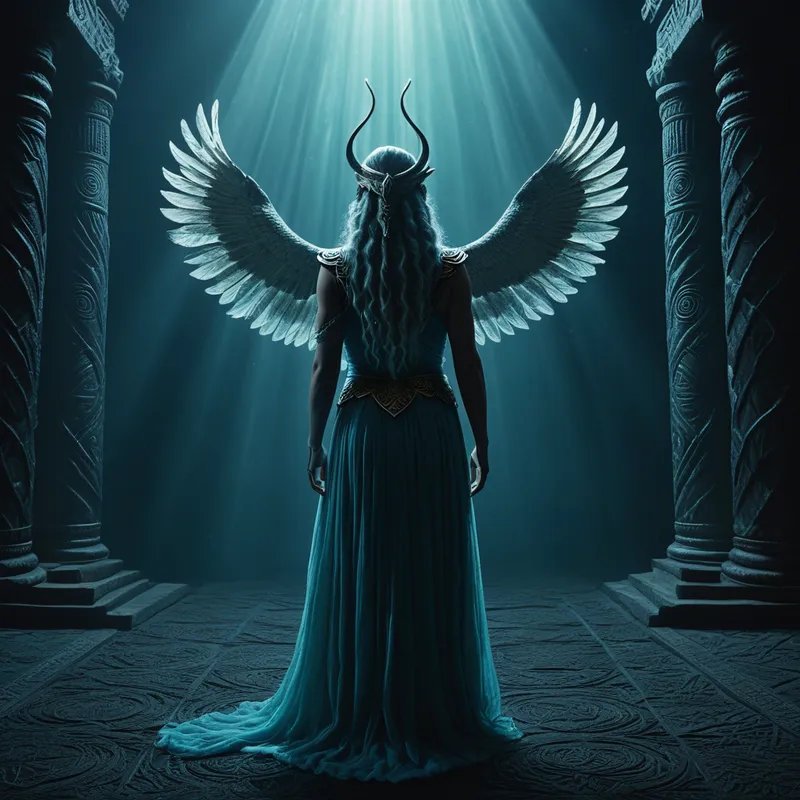
The Thirty Six Lamed Vavniks
A Jewish mystical tradition holds that 36 anonymous righteous individuals secretly uphold the world's existence through their virtue, remaining hidden even from themselves.
The Tale of The Thirty Six Lamed Vavniks
In the hidden heart of [the world](/myths/the-world “Myth from Tarot culture.”/), beneath the clamor of history and the weight of human suffering, there exists a secret. It is a [covenant](/myths/covenant “Myth from Christian culture.”/) written not on parchment but in the substance of the soul. At any given moment, scattered across the face of [the earth](/myths/the-earth “Myth from Hindu culture.”/)—perhaps a humble shoemaker in a narrow alley, a washerwoman by a river, a silent scholar in a dusty room, or a farmer tending a stubborn plot—walk thirty-six souls. They are the Lamed Vavniks, the Thirty-Six Hidden Righteous Ones.
They do not know who they are. This is the first and most profound condition of their existence. A Lamed Vavnik may feel only an ordinary person’s aches and doubts, their quiet joys and private griefs. They possess no outward signs of sainthood, no halos of light, no miraculous powers they consciously wield. Their righteousness is not in grand pronouncements or public piety, but in the texture of their being—an innate, unwavering chesed (loving-kindness), a humility so deep it erases [the self](/myths/the-self “Myth from Jungian culture.”/), and a steadfast integrity that holds fast even in darkness.
It is said that the entire world, in all its beauty and terror, its glory and its injustice, rests upon their merit. The divine presence, the [Shekhinah](/myths/shekhinah “Myth from Jewish Mysticism culture.”/), dwells among them. Their collective, unconscious goodness is the hidden foundation stone, the metaphysical keystone that prevents the architecture of creation from collapsing into [chaos](/myths/chaos “Myth from Greek culture.”/). Should their number ever fall below thirty-six, even for a moment, the legend whispers that the world would dissolve. The breath of life would be withdrawn, not in punishment, but because the moral and spiritual gravity necessary to sustain existence would simply cease to be.
Thus, they walk among us, unknown and unknowing. A story is told of a great sage who, through profound mystical insight, believed he had identified one of the Thirty-Six in his own city. He sought the man out, a poor [water](/myths/water “Myth from Chinese culture.”/)-carrier, and humbly served him for years, hoping to learn the secrets of the universe. The water-carrier, confused by the attention, remained simple and kind, his only concern his daily labor and small acts of decency. In the end, the sage learned nothing of esoteric mysteries, but everything about the nature of true righteousness: it is its own purpose, hidden even from itself.
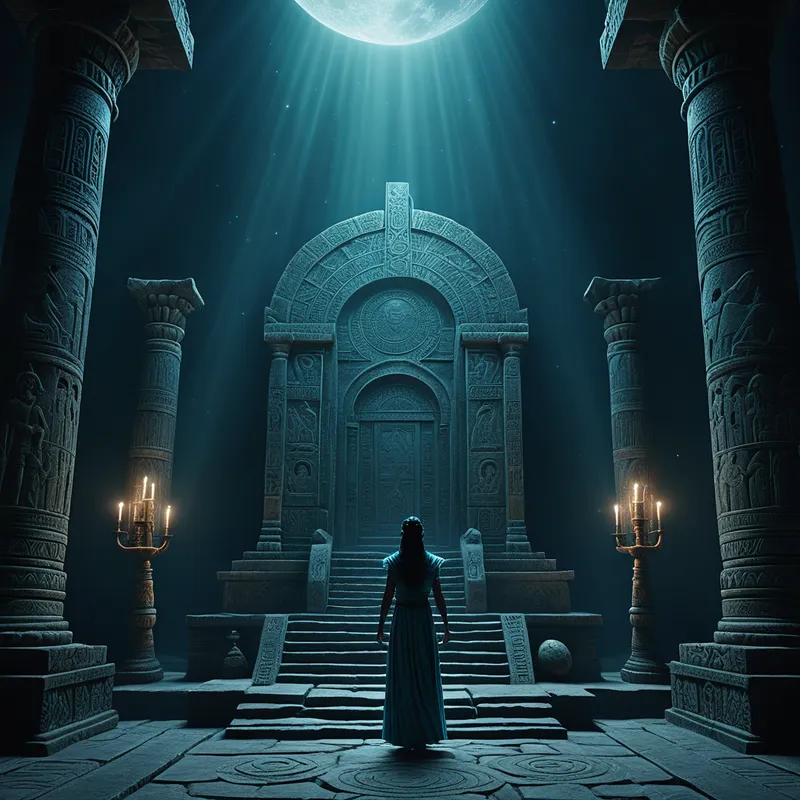
Cultural Origins & Context
The tradition of the Thirty-Six emerges from the fertile ground of Jewish mysticism and folklore, with roots in the Talmud. In Tractate Sanhedrin and Sukkah, it is suggested that the world is never without thirty-six righteous individuals who greet the Divine Presence. The concept blossomed within the Kabbalistic imagination, particularly following the profound crises of Jewish history—the destruction of the Second Temple, the Spanish Expulsion, and the waves of persecution in Eastern Europe.
In a world that often felt morally unmoored and violently unstable, the myth of the Lamed Vavniks provided a profound psychological and theological anchor. It asserted that goodness was not defeated, even if it was invisible. It democratized sainthood, removing it from the realm of institutional power and placing it in the hands—and hearts—of the utterly humble. This was a mysticism of the alleyway, not the academy; a theology of the anonymous, not the acclaimed.
The number thirty-six itself is laden with significance. In [gematria](/myths/gematria “Myth from Kabbalistic culture.”/), the Hebrew letters Lamed (ל, value 30) and Vav (ו, value 6) sum to 36. It is twice chai (life), whose letters Chet (ח) and Yud (י) sum to 18. Thus, the Thirty-Six are the double-life, the hidden vitality of the world. They are also connected to the 36 hours Adam spent in the light of primordial creation before his exile, and to the 36 candles traditionally kindled during the eight days of Hanukkah—a small, persistent light holding back a great darkness.
Symbolic Architecture
The Lamed Vavniks represent the ultimate [archetype](/symbols/archetype “Symbol: A universal, primordial pattern or prototype in the collective unconscious that shapes human experience, behavior, and creative expression.”/) of the hidden sage, whose wisdom is not intellectual but existential, expressed through being rather than teaching. They are the living embodiment of the world’s ethical substratum.
They symbolize the profound psychological truth that the ego, the conscious “I,” is not the seat of our highest potential. The sustaining power of the soul operates from a place of anonymity, a selfless core that exists prior to personal identity and achievement.
Their secrecy is not a game but a necessity. To know oneself as a pillar of the world would be to invite the corruption of pride, the very force that would crumble the pillar. Their hiddenness protects the integrity of their function. They are the ultimate [shadow](/symbols/shadow “Symbol: The ‘shadow’ embodies the unconscious, repressed aspects of the self and often represents fears or hidden emotions.”/) figures of [virtue](/symbols/virtue “Symbol: A moral excellence or quality considered good, often representing inner character, ethical principles, or spiritual ideals in dreams.”/)—carrying the collective’s moral [weight](/symbols/weight “Symbol: Weight symbolizes burdens, responsibilities, and emotional loads one carries in life.”/) in the unconscious, allowing the conscious world to proceed, flawed and struggling, without being crushed by the full burden of its own spiritual [responsibility](/symbols/responsibility “Symbol: Responsibility in dreams often signifies the weight of duties and the expectations placed upon the dreamer.”/).
The myth creates a cosmology of radical interdependence. The [fate](/symbols/fate “Symbol: Fate represents the belief in predetermined outcomes, suggesting that some aspects of life are beyond human control.”/) of the [cosmos](/symbols/cosmos “Symbol: The entire universe as an ordered, harmonious system, often representing the totality of existence, spiritual connection, and the unknown.”/) is entrusted not to kings, armies, or even official priests, but to the quality of a [stranger](/symbols/stranger “Symbol: A stranger in dreams can represent unfamiliar aspects of the self or new experiences.”/)’s [heart](/symbols/heart “Symbol: The heart symbolizes love, emotion, and the core of one’s existence, representing deep connections with others and self.”/). It suggests that salvation is always present, but never centralized; it is a distributed network of grace.
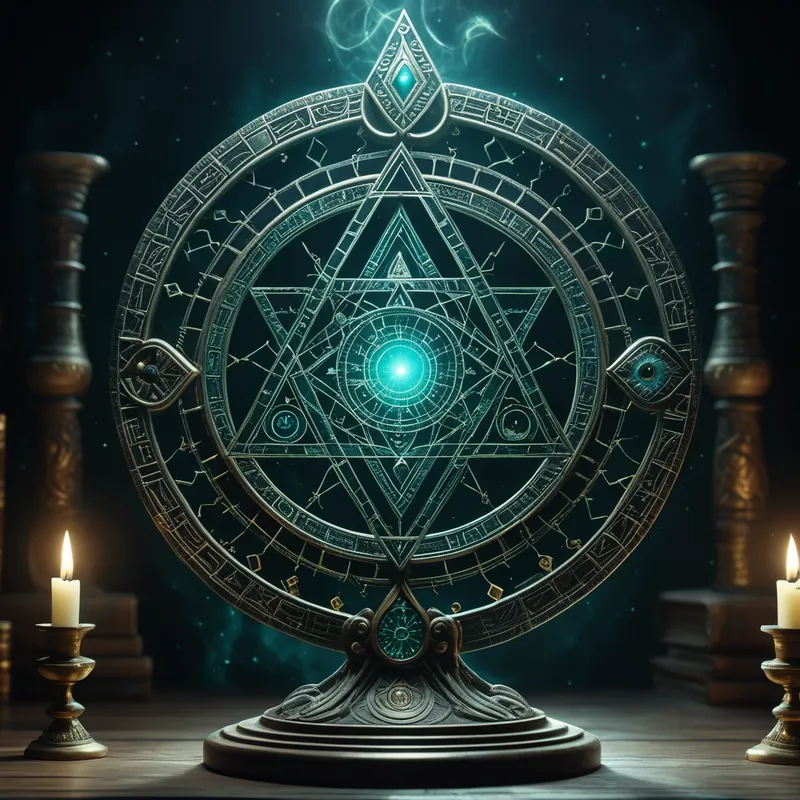
The Dreamer’s Resonance
To encounter this myth psychologically is to be invited into a profound examination of one’s own hidden life. It asks: What sustains you? What are the anonymous, unacknowledged acts of integrity and kindness in your own [psyche](/myths/psyche “Myth from Greek culture.”/) that keep your inner world from collapsing into despair or chaos?
The Lamed Vavnik represents the part of the Self that does good without needing recognition, the inner compass that guides us rightly even when no one is watching. It is the antidote to the performative ego, the part that seeks validation for every virtue. In a culture obsessed with visibility and personal brand, the myth whispers that our most important work may be the work that never earns a like, a title, or a reward.
It also speaks to the experience of carrying a hidden burden—a depression, a grief, a responsibility—that feels foundational to one’s existence yet is invisible to others. The myth reframes this burden not as a pathology to be cured, but potentially as a sacred, sustaining function. Are we, in our own hidden struggles, somehow holding a piece of the world together? The myth suggests it is possible.

Alchemical Translation
The alchemical process here is one of humiliation in its literal sense—being returned to the humus, the earth. The Lamed Vavnik is the [prima materia](/myths/prima-materia “Myth from Alchemical culture.”/) of spirit: common, overlooked, and essential. Their transformation is not from lead to gold, but from anonymous individual to universal function. They are the living stone at the foundation, undergoing no outward change, yet their steadfastness transmutes the base metal of a fallen world into a vessel that can still contain the divine.
This is the alchemy of being, not doing. The great work is completed not in the spectacular solve (dissolution) of the ego, but in its quiet coagula (coagulation) into a selfless vessel. Their lives are the slow, patient fire that maintains the temperature of the world-soul.
They represent the ultimate integration of the shadow—not the personal shadow of repressed darkness, but the transpersonal shadow of repressed light. Humanity’s highest potential, its capacity for pure righteousness, is hidden away in [the collective unconscious](/myths/the-collective-unconscious “Myth from Jungian culture.”/), operating autonomously for the good of the whole. To integrate this is to realize that our deepest, most anonymous acts of love are part of a vast, sustaining pattern.
Associated Symbols
Explore related symbols from the CaleaDream lexicon:
- Foundation Stone — The mythical stone at the spiritual center of the world, upon which all creation rests and which anchors reality.
- Shadow — The hidden, unconscious part of the psyche, which here holds the repressed light of virtue and anonymous righteousness.
- Light — Not a blazing sun, but the small, persistent candle-flame of hidden goodness that holds back the great darkness of chaos.
- Mask — The ordinary face worn by the Lamed Vavnik, concealing their cosmic function even from themselves; the anonymity that is essential to their purity.
- Humility — The fertile ground from which this hidden righteousness grows; [the ego](/myths/the-ego “Myth from Jungian culture.”/)’s dissolution into service.
- Righteousness — The core substance of the Lamed Vavnik, a quality of being that is inherently sustaining and generative.
- Destiny — Not a personal fate, but a collective, anonymous destiny to uphold the moral order of existence through simple being.
- Soul — Understood here as the transpersonal vessel of merit, connecting the individual anonymously to the fate of the whole.
- Burden — The weight of the world carried unconsciously, a sacred duty that shapes a life from within.
- Covenant — The hidden agreement between the divine and humanity, maintained not by nations or laws, but by the quiet virtue of thirty-six anonymous hearts.