The Ten Plagues of Egypt Myth Meaning & Symbolism
A mythic saga of divine power confronting tyrannical order, where ten catastrophic plagues shatter a world to liberate an enslaved people.
The Tale of The Ten Plagues of Egypt
Hear now the tale of the breaking of [the world](/myths/the-world “Myth from Tarot culture.”/), a story whispered in the reeds of the Nile and shouted from the mountain. In the land of Kemet, under the gaze of a hundred stone gods, a people groaned. They were the children of Israel, bound in the mud and straw, their backs bent to raise monuments to a king who knew them not.
The air in the court of [Pharaoh](/myths/pharaoh “Myth from Egyptian culture.”/) was thick with incense and absolute power. Into this hall of certainty walked two men: [Moses](/myths/moses “Myth from Biblical culture.”/), slow of speech, and his brother Aaron. Their demand was a tremor in the foundation: “Let my people go.” It was met with the cold laughter of empire. The god-king hardened his heart. Thus began the unraveling.
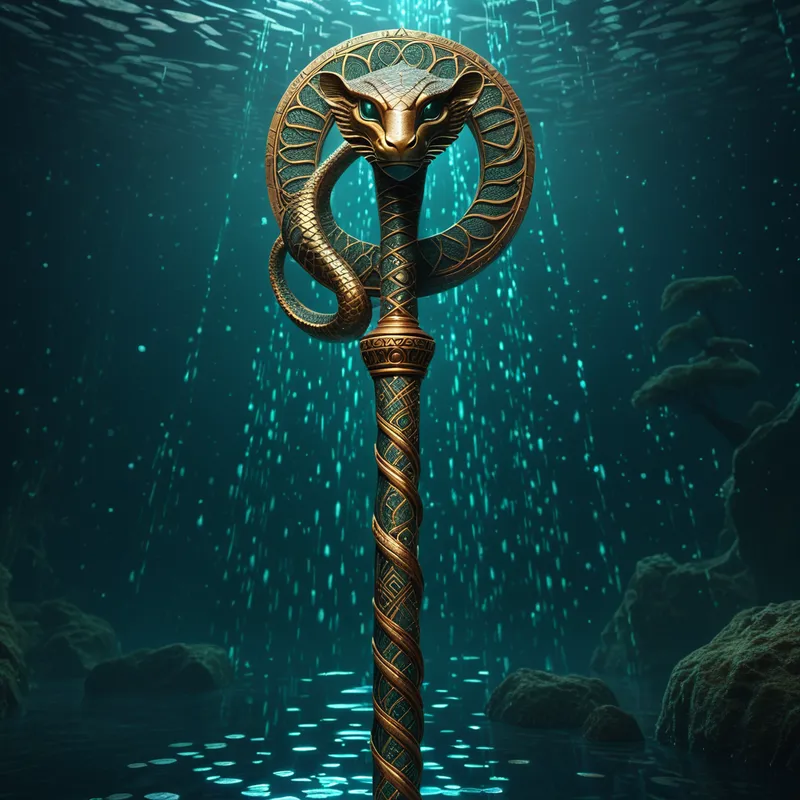
First, the lifeblood of Egypt turned against her. Aaron raised the staff, struck the waters, and the great Nile—source of all bounty, worshipped as Hapi—churned and thickened into a foul, clotting blood. Fish died, [the river](/myths/the-river “Myth from Buddhist culture.”/) stank, and the people thirsted. Still, Pharaoh’s will was stone.
Then came the frogs, an invasion of croaking, leaping life, spilling from the riverbanks into beds, ovens, and kneading bowls. The land seethed with them. They were scraped into heaps, and the stench of their death filled the air. Next, the dust of [the earth](/myths/the-earth “Myth from Hindu culture.”/) became kinim, a creeping, biting misery upon man and beast. The magicians of Egypt, who mimicked the first two wonders, could not mimic this. “This is the finger of God,” they whispered, a crack in their certainty.
The fourth blow was the arov, dense swarms that ruined the land, a plague that, for the first time, distinguished between Goshen, where [the Israelites](/myths/the-israelites “Myth from Abrahamic culture.”/) dwelt, and Egypt. A line was drawn in the sand of creation. Then, a pestilence fell upon the livestock, striking the heart of Egyptian wealth and sacrifice. Boils, painful and erupting, afflicted every man and animal from Pharaoh to the lowest slave. Hail, fire, and ice mingled in a storm from heaven, shattering trees and flattening crops, a violence so explicit it forced a momentary flinch from the throne.
The eighth plague was a living, devouring wind: locusts in such number they blotted out the sun, leaving not a green [thing](/myths/thing “Myth from Norse culture.”/) in their wake. Then, a darkness that could be felt—a tangible, suffocating blackness for three days, a silence so deep it was a weight upon the soul, while light remained in the dwellings of the Hebrews.
The final act was not a plague upon the land, but upon the firstborn. At midnight, a great cry went up, for there was not a house in Egypt without one dead. From the heir to the throne to the captive in the dungeon, to the firstborn of the cattle, the breath of life was taken. Only where the blood of a lamb marked the doorpost—a stark, terrible sign—did the destroyer pass over.
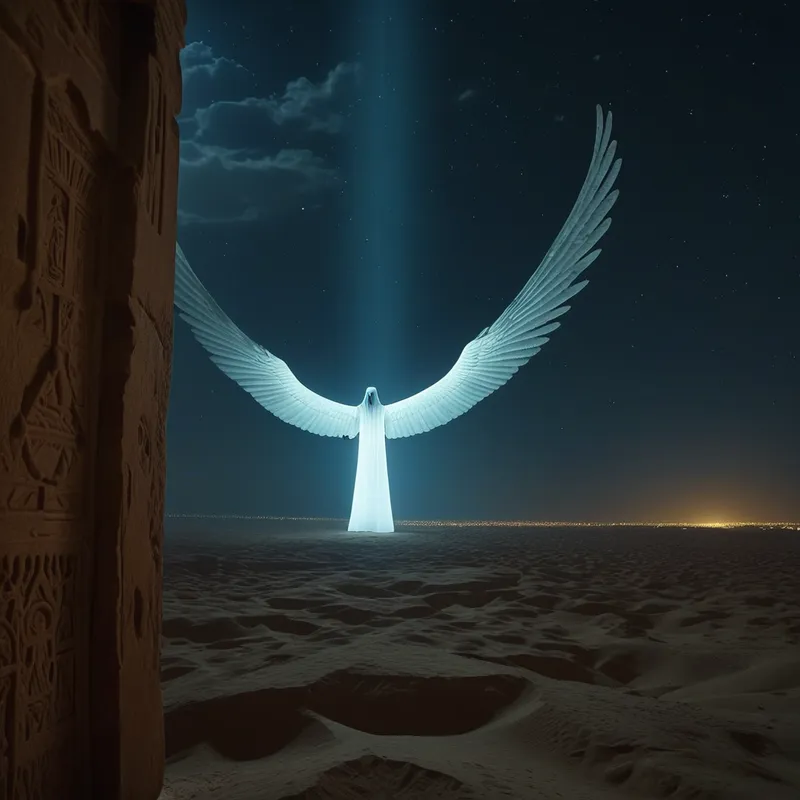
In that night of universal mourning, the will of the empire shattered. Pharaoh, broken, thrust them out. And the children of Israel, laden with the wealth of Egypt, walked out from the house of bondage into the vast, unknown desert, following a [pillar of cloud](/myths/pillar-of-cloud “Myth from Biblical culture.”/) by day and a pillar of fire by night, toward a mountain and a promise.
Cultural Origins & Context
This foundational narrative is the axial myth of the Israelite people, forming the core of the Torah’s Book of Exodus. It was not merely history but sacred identity, recited annually during Pesach (Passover) in answer to a child’s question: “Why is this night different?” Its societal function was multifaceted: it established a theology of a liberating God active in history, defined the community as a people chosen for covenant, and served as a perpetual polemic against the tyranny of empire and the impotence of other gods. Passed down through priestly custodians and familial ritual, it was a story of collective memory designed to forge resilience, ethical orientation (remember you were slaves), and a profound sense of being a people brought from chaos to order, from non-being to being, by a sovereign will.
Symbolic Architecture
The plagues are not random punishments but a systematic deconstruction of a psychic and cosmic order. Egypt, Mitzrayim in Hebrew, literally means “the narrow place.” It represents the totalizing [psyche](/myths/psyche “Myth from Greek culture.”/) of the tyrant—both internal and external—where all elements of [life](/symbols/life “Symbol: The symbol of ‘Life’ represents a journey of growth, interconnectedness, and existential meaning, encompassing both the joys and challenges that define human experience.”/) are subjugated to a single, rigid [identity](/symbols/identity “Symbol: Identity represents the sense of self, encompassing personal beliefs, cultural background, and social roles.”/) (Pharaoh’s ego). The plagues dismantle this false order by turning its own foundations against it.
The process of liberation often requires the sacred contamination of the very sources we believed sustained us.
Each [plague](/symbols/plague “Symbol: A symbol of widespread affliction, collective suffering, and uncontrollable forces that threaten social order and personal survival.”/) targets a pillar of Egyptian [reality](/symbols/reality “Symbol: Reality signifies the state of existence and perception, often reflecting one’s understanding of truth and life experiences.”/) and divinity: the Nile (Hapi), the land (Geb), the sun (Ra), [the Pharaoh](/myths/the-pharaoh “Myth from Egyptian culture.”/) himself (often seen as the son of Ra). The [sequence](/symbols/sequence “Symbol: The symbol of ‘sequence’ often signifies the order of events and the progression towards a desired outcome or goal.”/) moves from the external environment ([water](/symbols/water “Symbol: Water symbolizes the subconscious mind, emotions, and the flow of life, representing both cleansing and creation.”/), land, animals) to the physical [body](/symbols/body “Symbol: The body in dreams often symbolizes the dreamer’s self-identity, personal health, and the relationship they have with their physical existence.”/) (boils) and finally to the very [structure](/symbols/structure “Symbol: Structure in dreams often symbolizes stability, organization, and the framework of one’s life, reflecting how one perceives their environment and personal life.”/) of time and [lineage](/symbols/lineage “Symbol: Represents ancestral heritage, family connections, and the transmission of traits, values, and responsibilities across generations.”/) (the firstborn). It is a psychic apocalypse, revealing the [shadow](/symbols/shadow “Symbol: The ‘shadow’ embodies the unconscious, repressed aspects of the self and often represents fears or hidden emotions.”/) side of a civilization built on oppression. The hardening of Pharaoh’s [heart](/symbols/heart “Symbol: The heart symbolizes love, emotion, and the core of one’s existence, representing deep connections with others and self.”/) is a profound psychological [mystery](/symbols/mystery “Symbol: An enigmatic, unresolved element that invites curiosity and exploration, often representing the unknown or hidden aspects of existence.”/)—it represents the tyrannical ego’s tragic commitment to its own identity, even unto self-destruction. The Passover [lamb](/symbols/lamb “Symbol: A symbol of innocence, purity, sacrifice, and new beginnings, often representing vulnerability and gentleness.”/)’s [blood](/symbols/blood “Symbol: Blood often symbolizes life force, vitality, and deep emotional connections, but it can also evoke themes of sacrifice, trauma, and mortality.”/) is the ultimate [symbol](/symbols/symbol “Symbol: A symbol can represent an idea, concept, or belief, serving as a powerful tool for communication and understanding.”/) of the threshold: it marks the [difference](/symbols/difference “Symbol: Difference symbolizes diversity, change, and the contrast between ideas or people.”/) between the old, doomed order and the new, nascent [community](/symbols/community “Symbol: Community in dreams symbolizes connection, support, and the need for belonging.”/). It is the conscious act that spares one from the unconscious, devouring force (Mashchit) unleashed by the [system](/symbols/system “Symbol: A system represents structure, organization, and interrelated components functioning together, often reflecting personal or social order.”/)’s own injustices.
The Dreamer’s Resonance
To dream of plagues—of [water](/myths/water “Myth from Chinese culture.”/) turning foul, of infestations, of palpable darkness—is to experience the psyche’s own corrective, deconstructive process. The dreamer is not Pharaoh, but the entire landscape of Egypt. It signals that a long-held, perhaps unconscious, structure of [the self](/myths/the-self “Myth from Jungian culture.”/) has become tyrannical. This could be a rigid career identity, a suffocating relationship pattern, or an internalized critical voice that enslaves all other impulses.
The somatic feeling is one of visceral violation and collapse: the very elements of one’s inner world rebel. The plague of darkness speaks to a depressive or nihilistic episode where meaning and direction are utterly lost—a darkness that can be felt. Dreaming of the Angel of Death passing over may indicate a profound, non-negotiable ending approaching in the psyche, where only a stark, sacrificial act of truth (the blood on the doorpost) can preserve the nascent, authentic self (the firstborn of one’s potential) from being annihilated in the general collapse.

Alchemical Translation
The myth models the brutal but necessary alchemy of individuation. The enslaved Hebrews symbolize the latent, undifferentiated Self, trapped in the service of a monolithic, conscious attitude (Pharaoh/Egypt). The plagues are the [nigredo](/myths/nigredo “Myth from Alchemical culture.”/), the blackening—the chaotic, often terrifying dissolution of that old, oppressive conscious order. Every comfort, every source of “life” (water, food, health, light) is shown to be poisoned by its service to the tyrant-ego.
The journey to the promised self begins not with a gentle nudge, but with the catastrophic failure of the world you have built.
Moses, the reluctant prophet, embodies the emerging ego-consciousness that aligns itself with the deeper, transpersonal Self (YHWH). His confrontations are the painful, iterative work of bringing the tyranny to light. The ultimate alchemical fire is the death of the “firstborn”—the most cherished product and heir of the old system. Psychologically, this is the sacrifice of [the ego](/myths/the-ego “Myth from Jungian culture.”/)’s primary identity, its most prized achievement or self-conception. It is a devastating loss, but it is the price of passage.
The transmutation is complete not in Egypt’s ruin, but in [the Exodus](/myths/the-exodus “Myth from Abrahamic culture.”/)—the [separatio](/myths/separatio “Myth from Alchemical culture.”/). The liberated elements, having passed through [the crucible](/myths/the-crucible “Myth from Alchemical culture.”/) of the plagues and protected by the mark of sacrifice, are now free to wander, to be tested, and to be reconstituted under a new law at Sinai. The individual emerges from the “narrow place” into [the wilderness](/myths/the-wilderness “Myth from Biblical culture.”/) of possibility, no longer defined by what oppressed them, but journeying toward a covenant with their own deepest, most demanding truth.
Associated Symbols
Explore related symbols from the CaleaDream lexicon: