
The Tears of Aphrodite Myth Meaning & Symbolism
A myth where the goddess of love weeps for a mortal, her tears transforming into amber, symbolizing grief's power to create enduring beauty.
The Tale of The Tears of Aphrodite
Hear now a tale not of love’s first blush, but of its deepest, most resonant echo. It begins not on Olympus, where laughter rings eternal, but on the mortal earth, where beauty is forever touched by [the shadow](/myths/the-shadow “Myth from Jungian culture.”/) of time.
The sun, [Helios](/myths/helios “Myth from Greek culture.”/), had a son, [Phaethon](/myths/phaethon “Myth from Global/Universal culture.”/), born of a mortal mother. The boy burned with a pride as fierce as his father’s chariot, and he begged to steer the solar steeds across [the sky](/myths/the-sky “Myth from Persian culture.”/) for a single day. Against his better judgment, [Helios](/myths/helios “Myth from Greek culture.”/) consented. The result was catastrophe. The untamed horses, feeling a weak hand upon the reins, plunged too low, scorching [the earth](/myths/the-earth “Myth from Hindu culture.”/), and soared too high, freezing the heavens. To prevent [the world](/myths/the-world “Myth from Tarot culture.”/)’s incineration, Zeus himself struck the boy down with a thunderbolt. [Phaethon](/myths/phaethon “Myth from Global/Universal culture.”/) fell like a dying star, his body crashing into the sacred river Eridanus.
His sisters, the [Heliades](/myths/heliades “Myth from Greek culture.”/), rushed to the riverbank. Their grief was a sound beyond weeping—a keening so pure and profound it moved the very trees to pity. As they mourned, their bodies stiffened, their feet took root, their arms stretched skyward as branches, and their tears hardened upon their bark-like skin. They were transformed into poplar trees, and their tears, wept for a brother who dared too much, became the first amber, fossilized droplets of eternal sorrow.
But this is only the prelude. For the lament of the Heliades reached the ears of Aphrodite. She who presides over the union of hearts came to witness this monument to separation. She stood upon the bank of the Eridanus, the [water](/myths/water “Myth from Chinese culture.”/) still whispering of the fiery fall. She looked upon the grove of weeping trees, heard [the wind](/myths/the-wind “Myth from Various culture.”/) sigh through their leaves—a perpetual sigh of loss. And in that moment, the goddess of joy and connection felt the full, desolate weight of mortal grief.
Aphrodite, who had laughed at the foibles of gods and men, found no laughter here. A profound sorrow, vast and oceanic, welled up within her. It was the sorrow for all beauty that is extinguished, for all love that is severed by fate’s cruel shears. Tears, not of celestial nectar, but of pure, empathetic grief, began to flow from her eyes. They were tears of gold and sunlight, the very essence of her divine compassion. They fell, one by one, into the dark waters of the Eridanus, mingling with the hardened tears of the Heliades.
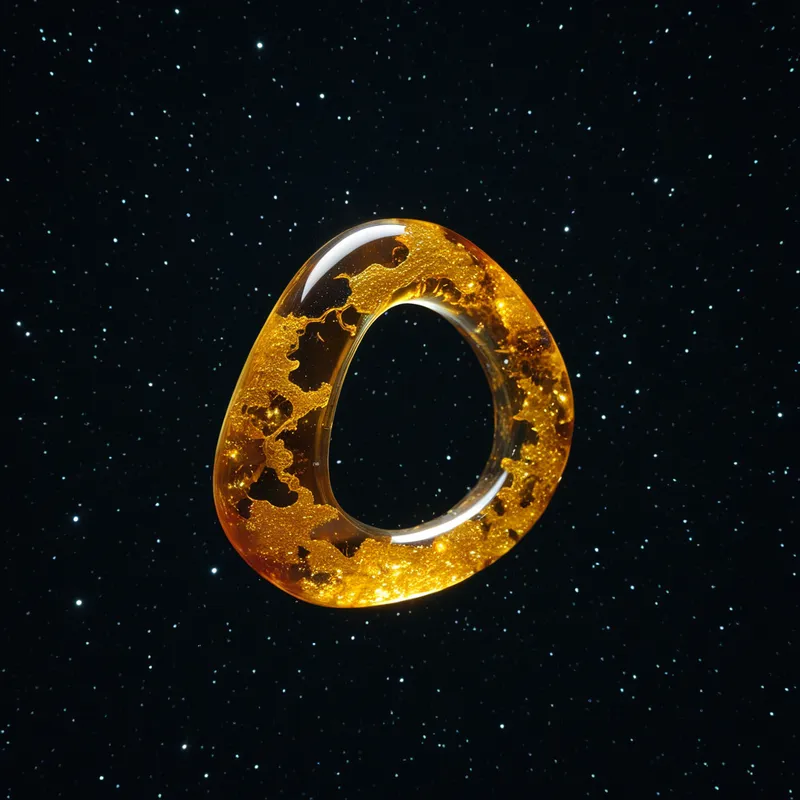
Where her divine tears touched the water and the resinous tears of the trees, a miracle of transmutation occurred. They did not dissolve. Instead, they solidified into stones of warm, honeyed light—amber. This was no ordinary stone. It held within it the warmth of the sun (Phaethon’s legacy), the salt of mortal grief (the Heliades’ lament), and now, the golden compassion of divine love (Aphrodite’s tears). Washed onto the riverbanks, these stones became treasures, capturing light within their depths, forever holding the story of a grief so beautiful it could only create.

Cultural Origins & Context
The story of Aphrodite’s tears is not a singular, canonical myth from a source like [Homer](/myths/homer “Myth from Greek culture.”/), but a poignant fragment woven into the larger, tragic cycle of Phaethon. It is found in the works of later poets and mythographers like Ovid, who collected and elaborated on Hellenistic traditions. This places the tale in a cultural context where myths were becoming more psychological, exploring the emotional responses of the gods to human suffering.
Its primary function was etiological—explaining the origin of amber, particularly the prized amber that came from the north, traded along [the river](/myths/the-river “Myth from Buddhist culture.”/) routes that the Greeks associated with the Eridanus. But to dismiss it as mere “just-so” story is to miss its depth. In a culture that understood the gods as personifications of cosmic forces, this myth served a profound societal purpose: it sacralized grief. It stated that the deepest sorrow was witnessed, validated, and ultimately transformed by the very principle of Love itself. It offered a narrative where human loss touched the divine heart, and that touch left a tangible, beautiful residue in the world.
Symbolic Architecture
At its core, this myth is an alchemical map of the [heart](/symbols/heart “Symbol: The heart symbolizes love, emotion, and the core of one’s existence, representing deep connections with others and self.”/)’s most painful, yet creative, process. Phaethon represents the soaring, fiery aspiration of [the ego](/myths/the-ego “Myth from Jungian culture.”/)—brilliant, destined, but ultimately fragile and subject to catastrophic [inflation](/symbols/inflation “Symbol: A dream symbol representing feelings of diminishing value, loss of control, or expansion beyond sustainable limits in one’s life or psyche.”/). His fall is the inevitable crash of untempered ambition, the [moment](/symbols/moment “Symbol: The symbol of a ‘moment’ embodies the significance of transient experiences that encapsulate emotional depth or pivotal transformations in life.”/) where one’s personal sun is extinguished.
The Heliades embody the initial, raw, and immobilizing stage of [grief](/symbols/grief “Symbol: A profound emotional response to loss, often manifesting as deep sorrow, yearning, and a sense of emptiness.”/). Their transformation into poplars—trees known for their trembling leaves—symbolizes how profound [loss](/symbols/loss “Symbol: Loss often symbolizes change, grief, and transformation in dreams, representing the emotional or psychological detachment from something or someone significant.”/) can freeze us in a state of perpetual mourning, our very being defined by the tremor of sorrow. Their hardened tears are the first crystallization of pain; it is real, tangible, but [static](/symbols/static “Symbol: Static represents interference, disruption, and the breakdown of clear communication or signal, often evoking feelings of frustration and disconnection.”/).
Aphrodite’s intervention represents the crucial, transformative ingredient: conscious, compassionate witness. Her tears are not of identical pain, but of empathetic recognition.
She is the [archetype](/symbols/archetype “Symbol: A universal, primordial pattern or prototype in the collective unconscious that shapes human experience, behavior, and creative expression.”/) of the [Anima](/symbols/anima “Symbol: The feminine archetype within the male unconscious, representing soul, creativity, and connection to the inner world.”/) or the Magna Mater encountering the [shadow](/symbols/shadow “Symbol: The ‘shadow’ embodies the unconscious, repressed aspects of the self and often represents fears or hidden emotions.”/) of her own domain—for what is love’s greatest shadow but the [agony](/symbols/agony “Symbol: Intense physical or emotional suffering, often representing unresolved pain, internal conflict, or profound transformation.”/) of its loss? Her divine grief is the act of holding the sorrow without being destroyed by it. The resulting [amber](/symbols/amber “Symbol: Fossilized tree resin symbolizing preservation, trapped time, and ancient energy. Often represents memory, protection, and transformation.”/) is the [symbol](/symbols/symbol “Symbol: A symbol can represent an idea, concept, or belief, serving as a powerful tool for communication and understanding.”/) of the coniunctio oppositorum—the union of sun and [water](/symbols/water “Symbol: Water symbolizes the subconscious mind, emotions, and the flow of life, representing both cleansing and creation.”/), fire and tear, [mortality](/symbols/mortality “Symbol: The awareness of life’s finitude, often representing transitions, impermanence, or existential reflection in dreams.”/) and divinity, tragedy and [beauty](/symbols/beauty “Symbol: This symbol embodies aesthetics, harmony, and the appreciation of life’s finer qualities.”/). It is grief alchemized into a substance that preserves warmth and light.
The Dreamer’s Resonance
When this myth stirs in the modern unconscious, it may manifest in dreams not of goddesses, but of profound, transformative weeping. One might dream of finding strange, warm stones by a riverbed that glow with an [inner light](/myths/inner-light “Myth from Buddhist culture.”/), or of tears that fall and solidify into precious objects. The somatic sensation is often one of a deep, cathartic release—a weeping that feels it is altering the very fabric of the dreamscape.
Psychologically, this signals a movement through a liminal crisis. The dreamer is in the “Eridanus phase”—feeling scorched by a fall from grace (a failed project, a lost relationship, a death) and perhaps immobilized in the “poplar” state of chronic sorrow. The appearance of the amber-tear symbol is the [psyche](/myths/psyche “Myth from Greek culture.”/)’s assurance that this grief is not meaningless. It indicates the nascent emergence of a compassionate witness within [the Self](/myths/the-self “Myth from Jungian culture.”/)—the inner Aphrodite—who is beginning to hold the pain with love, thereby initiating its transmutation from a paralyzing wound into a potential source of inner value and wisdom.

Alchemical Translation
The individuation process modeled here is the alchemy of personal tragedy into meaning. We all experience our “Phaethon” moments—where our brightest ambitions or dearest attachments crash and burn. The first, instinctual response is the “Heliades” reaction: to become identified with the grief, to let it define and rigidify us.
The work of the modern soul is to invoke the “Aphrodite” function. This is not about bypassing grief with positive thinking, but about bringing the quality of divine, compassionate observation to our own suffering. It is to ask: Can I behold this pain with a heart that does not flinch? Can I shed tears for my own loss that contain not just salt, but the gold of understanding?
The amber is the symbol of the integrated personality. It is the hard-won treasure of the psyche, formed under immense pressure and time, which contains and beautifies the memory of the wound.
This process translates to actively creating from our grief. It might be writing from the place of loss, creating art that holds the contradiction of beauty and pain, or simply forging a deeper, more compassionate connection with others because of our own fractures. The myth assures us that our tears, when met with conscious love, do not merely stain; they have the latent potential to become the amber of our character—durable, warm to the touch, and capable of holding light captive within the darkness of our experience. We do not get over the loss; we learn to carry it forward as a sacred, luminous weight.
Associated Symbols
Explore related symbols from the CaleaDream lexicon: