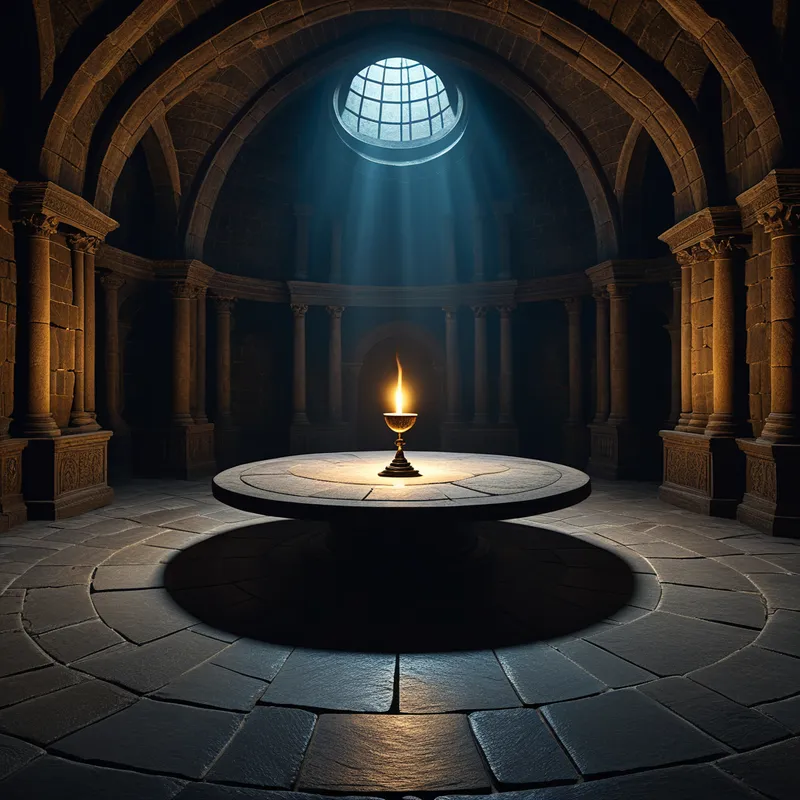
The Table Round of King Arthur Myth Meaning & Symbolism
A fellowship of knights bound by a sacred circle, seeking a holy vessel, their quest a mirror for the soul's journey toward wholeness and integrity.
The Tale of The Table Round of King Arthur
Listen, and hear a tale not of one man, but of a circle. In [the mist](/myths/the-mist “Myth from Celtic culture.”/)-wrapped isle of Logres, when the land bled from the wounds of old Rome’s retreat, a king was born of prophecy. Arthur Pendragon, they named him, son of Uther, raised in secret, his right to rule proven when his hand alone drew the sword from the stone. But a sword divides; a king must unite.
His seer and guide, the enchanter [Merlin](/myths/merlin “Myth from Arthurian culture.”/), whose eyes saw the future woven into the past, brought forth a wonder. It was not a throne, nor a crown, but a table. A vast, [round table](/myths/round-table “Myth from Arthurian culture.”/) of ancient oak, its surface smooth as a still lake, its circumference unbroken. “Here,” [Merlin](/myths/merlin “Myth from Arthurian culture.”/)’s voice echoed in the great hall of Camelot, “no man sits at the head. Here, all are equal in fellowship and purpose.” To this circle, Arthur summoned the bravest, the truest, the most noble knights from all corners of the fractured land. [Lancelot](/myths/lancelot “Myth from Arthurian culture.”/) of the Lake, whose heart was his greatest strength and his fatal flaw; [Galahad](/myths/galahad “Myth from Arthurian culture.”/), whose soul was a clear vessel; Gawain; Bedivere. One by one, they took their seats, their names carved into the wood, their shields hanging above, a constellation of colored steel and heraldic beasts.
The Table Round was not a place of rest, but a hearth from which quests blazed. Its true purpose was revealed in a hushed moment, when a vision of the San Graal—[the Holy Grail](/myths/the-holy-grail “Myth from Global/Universal culture.”/)—appeared, veiled in celestial light, hovering above the table’s empty center. A silence, profound and aching, filled the hall. From that day, the great quest was sworn. Not for land or gold, but for this divine vessel that promised healing and the presence of the sacred itself.
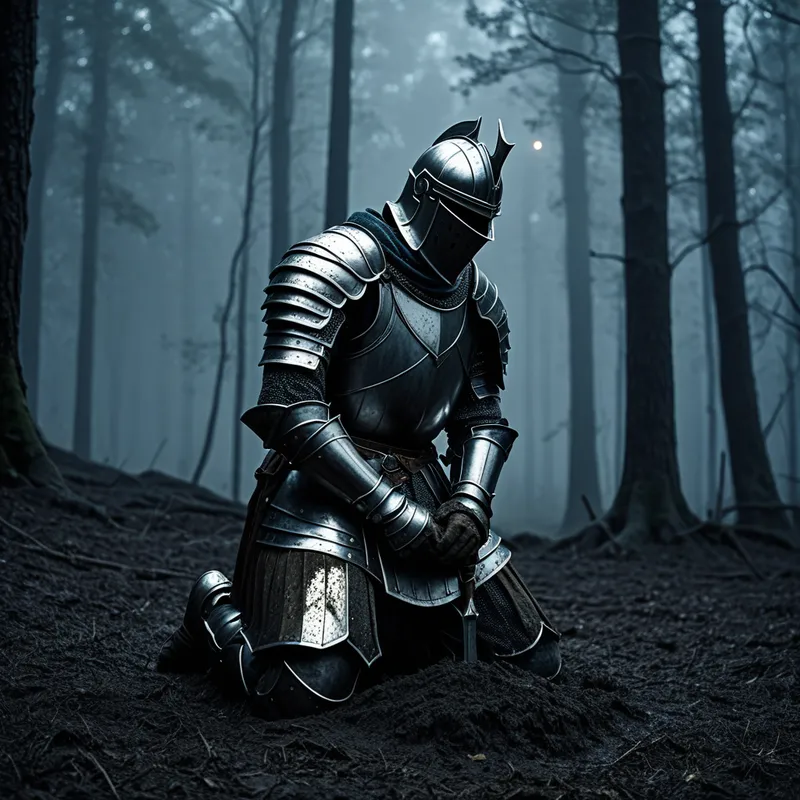
The knights rode out, each path a lonely thread through dark forests and desolate wastes. They faced not only dragons and enchanters but the specters within: pride, lust, doubt. Many failed, turned back by invisible walls only their own impurities could erect. Some, like Lancelot, were blinded by earthly love. But a few, whose hearts were singular as a mirror, pressed on. [Sir Galahad](/myths/sir-galahad “Myth from Arthurian culture.”/), with Percival and Bors, finally attained the sight of [the Grail](/myths/the-grail “Myth from Arthurian culture.”/) in the mystical city of Corbenic. In that transcendent moment, the circle’s purpose was fulfilled, yet in its fulfillment, the end began. The quest had bound them; its completion scattered them. Betrayal, war, and fate’s cruel turn saw the fellowship shattered, the table left empty, and Arthur borne away to the isle of Avalon to sleep until the land’s deepest need. The circle was broken, yet its shape remained, etched forever in the soul of [the world](/myths/the-world “Myth from Tarot culture.”/).
Cultural Origins & Context
The myth of the Table Round is a profound amalgam, a cultural syncretism that crystallized in the high medieval period. Its roots dig deep into Celtic sovereignty myths, where the health of the land (hiraeth) is directly tied to the virtue of its ruler. The early Welsh tales of Arthur, such as those in the Mabinogion, depict him as a warlord of a warrior band, not yet a king of a chivalric court.
The transformation into the myth we know was largely the work of 12th-century authors like Geoffrey of Monmouth and, most significantly, the French poet Chrétien de Troyes. Chrétien, writing for the courtly aristocracy, infused the tales with the ideals of chivalry and fin’amor (refined love). [The Round Table](/myths/the-round-table “Myth from Arthurian culture.”/) became the perfect symbol for this new aristocracy—a fellowship where status was earned by deed and character, not merely by birth, reflecting a societal shift towards a more meritocratic, though still elite, ideal. It was a myth told in great halls to inspire knights, and later, in printed books to inspire a literate public, functioning as both a model for conduct and a nationalistic symbol of a lost, unified [golden age](/myths/golden-age “Myth from Universal culture.”/).
Symbolic Architecture
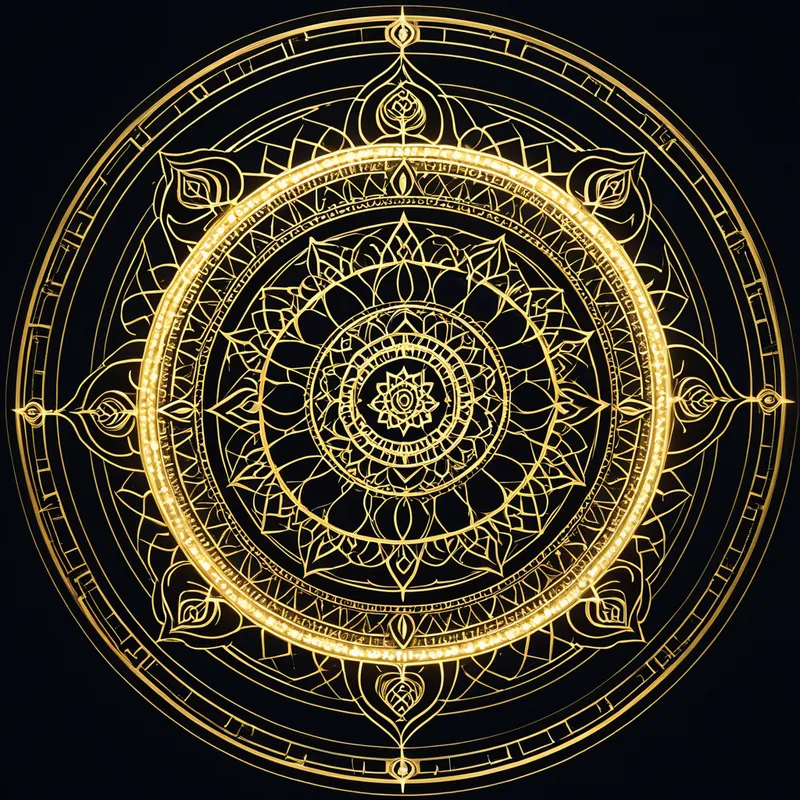
At its core, the Round [Table](/symbols/table “Symbol: Tables in dreams often symbolize stability, social interactions, and a platform for discussions, negotiations, or decisions in our waking life.”/) is a [symbol](/symbols/symbol “Symbol: A symbol can represent an idea, concept, or belief, serving as a powerful tool for communication and understanding.”/) of the Self, the central [archetype](/symbols/archetype “Symbol: A universal, primordial pattern or prototype in the collective unconscious that shapes human experience, behavior, and creative expression.”/) of wholeness in Jungian [psychology](/symbols/psychology “Symbol: Psychology in dreams often represents the exploration of the self, the subconscious mind, and emotional conflicts.”/). It is the [mandala](/symbols/mandala “Symbol: A sacred geometric circle representing wholeness, the cosmos, and the journey toward spiritual integration.”/), a sacred circle that contains and orders the multiplicity of the [psyche](/myths/psyche “Myth from Greek culture.”/).
The circle has no beginning and no end; at its center, not a king, but a sacred absence waiting to be filled.
Each [knight](/symbols/knight “Symbol: The knight symbolizes honor, chivalry, and the pursuit of noble causes, reflecting the ideal of the noble warrior.”/) represents a distinct [aspect](/symbols/aspect “Symbol: A distinct feature, quality, or perspective of something, often representing a partial view of a larger whole.”/) of the individual’s potential: Lancelot is the passionate, flawed [animus](/symbols/animus “Symbol: In Jungian psychology, the masculine inner personality in a woman’s unconscious, representing logic, action, and spiritual guidance.”/) (or the feeling function); Gawain, the solar champion of [consciousness](/symbols/consciousness “Symbol: Consciousness represents the state of awareness and perception, encompassing thoughts, feelings, and experiences.”/) and loyalty; Galahad, the transcendent spiritual aspiration. The table is [the ego](/myths/the-ego “Myth from Jungian culture.”/)’s [task](/symbols/task “Symbol: A task represents responsibilities, duties, or challenges one faces.”/): to provide a stable [structure](/symbols/structure “Symbol: Structure in dreams often symbolizes stability, organization, and the framework of one’s life, reflecting how one perceives their environment and personal life.”/) where these often-warring inner figures can commune as equals. The [quest](/symbols/quest “Symbol: A quest symbolizes a journey or search for purpose, fulfillment, or knowledge, often representing life’s challenges and adventures.”/) for the [Grail](/myths/grail “Myth from Christian culture.”/) is the [journey](/symbols/journey “Symbol: A journey in dreams typically signifies adventure, growth, or a significant life transition.”/) of individuation—the search for the divine core of one’s being. The empty seat, the [Siege Perilous](/myths/siege-perilous “Myth from Arthurian culture.”/), reserved for the worthiest, symbolizes the latent, unrealized potential within the psyche that can only be occupied by the one who has achieved complete [integration](/symbols/integration “Symbol: The process of unifying disparate parts of the self or experience into a cohesive whole, often representing psychological wholeness or resolution of internal conflict.”/), often at great cost.
The Dreamer’s Resonance
When the Table Round appears in modern dreams, it rarely manifests as a medieval hall. It may be a conference table, a dinner table with empty places, or simply a powerful sense of a circular gathering. This is the psyche signaling a critical moment of self-assembly. The dreamer is likely at a crossroads where different aspects of their life—career, relationships, personal ambitions, spiritual yearnings—feel fragmented and in conflict.
The somatic experience can be one of anxious anticipation or profound loneliness amidst a crowd. Dreaming of taking a seat at such a table indicates a readiness to acknowledge and commit to a part of one’s identity. Dreaming of the table empty, or of being unable to find one’s place, speaks to a crisis of purpose or a feeling of exile from one’s own inner community. The quest is active; the dreamer is being called to reconcile their inner knights, to send them out into the forests of their unconscious to seek what is missing.

Alchemical Translation
The alchemical process mirrored in the myth is the [opus circulatorium](/myths/opus-circulatorium “Myth from Alchemical culture.”/)—the circular work. The knights’ departure from the table into the wild world (the [nigredo](/myths/nigredo “Myth from Alchemical culture.”/), or blackening, of chaos and ordeal) and their return (or attempted return) with hard-won wisdom is the cycle of dissolution and coagulation.
The Grail is not found by building, but by hollowing; it is the vas spiritus, the vessel that must be emptied of ego to be filled with spirit.
For the modern individual, the alchemical translation is this: the creation of one’s own inner Table Round is the first work. One must consciously identify and give a seat to the diverse, often contradictory, parts of oneself—the ambitious hero, the nurturing caregiver, the creative child, the critical sage. The subsequent quest is the lifelong engagement with these parts, sending them out on life’s endeavors. Failure (a Lancelot’s betrayal) is as crucial as success (a Galahad’s vision), for each reveals the impurities in [the vessel](/myths/the-vessel “Myth from Alchemical culture.”/) of [the self](/myths/the-self “Myth from Jungian culture.”/). The ultimate goal is not to possess the Grail, but to become a vessel capable of perceiving it—to transform the psyche itself into a living, breathing Round Table, where the center is no longer empty but radiates with the integrated light of a realized life. The circle, thus fulfilled, becomes a conduit between the personal and the transpersonal, the human and the divine.
Associated Symbols
Explore related symbols from the CaleaDream lexicon: