The Sword in the Stone / The Round Table Myth Meaning & Symbolism
A forgotten boy pulls a sword from an anvil on a stone, proving his divine right to rule and uniting a fractured land with a circle of equals.
The Tale of The Sword in the Stone / The Round Table
Listen, and hear a tale of a land adrift. In the wake of the great dragon Uther Pendragon, Logres—that is, Britain—was a kingdom of shadows. [The crown](/myths/the-crown “Myth from Various culture.”/) lay vacant, a prize fought over by petty lords whose ambition bled the hills dry. The people whispered of a prophecy, a sign from God and the old ways alike, that a true king would come. But hope was a thin, cold [thing](/myths/thing “Myth from Norse culture.”/).
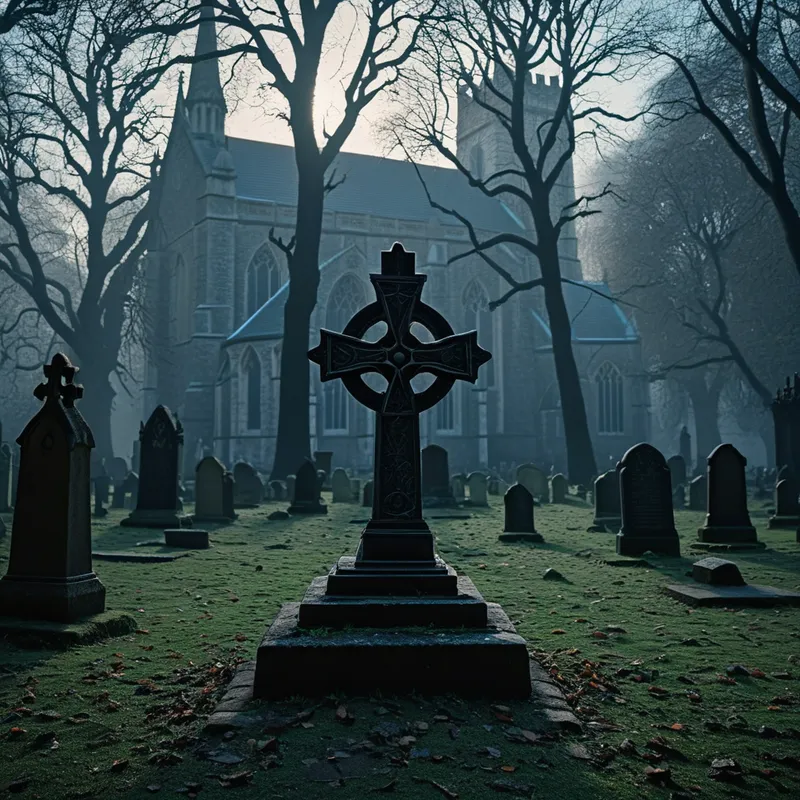
In the churchyard of the greatest city, a miracle appeared. Not a burning bush, but a cold, hard truth. Upon a great stone slab sat an anvil of iron, and through that anvil was thrust a splendid sword. Letters of gold, graven upon the stone, spoke a law: Whoso pulleth out this sword of this stone and anvil, is rightwise king born of all England. The news spread like wildfire. On Christmas morn, and again at the New Year, the high lords and famed knights came. They came in their polished mail, with their strong hands and prouder hearts. Each grasped the jewelled hilt. They strained until veins stood out on their brows and their breaths came in grunts of effort. The sword did not budge. It was as if the steel grew roots deep into the heart of the land itself. The stone mocked them, and the land remained kingless.
Now, in a quiet castle in the wilds of the West Country, there lived a forgotten boy named Arthur, ward to the good knight Sir Ector. He knew nothing of prophecies or crowns; his world was of stables and forests, of serving his foster-brother Sir Kay. When a great tournament was called in London, a chance for knights to win glory, Arthur rode as Kay’s squire. In the frantic bustle of preparation, Kay discovered he had left his own sword behind. He commanded Arthur, “Ride and fetch me a sword.”
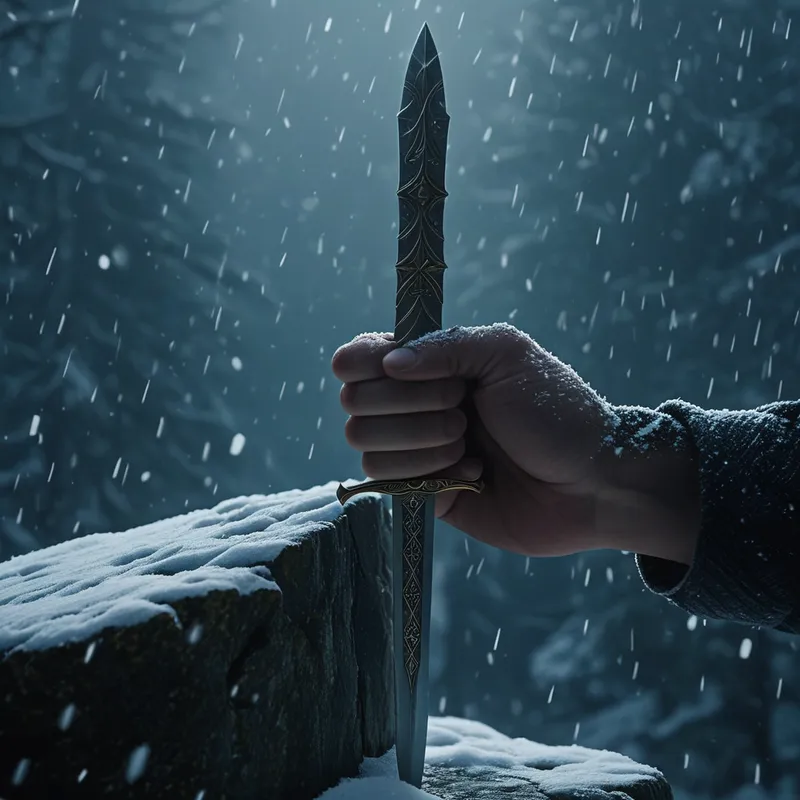
Arthur, dutiful, sped back through the frozen streets. But the inn was locked. Desperate to fulfil his charge, his eyes fell upon the churchyard, and [the sword in the stone](/myths/the-sword-in-the-stone “Myth from Global/Universal culture.”/). Seeing no guardian, thinking it a piece of spare armour placed there for the tournament, he did not read the letters. He simply took the hilt in his hand. There was no mighty strain, no cosmic fanfare. It was a simple, clean motion. The sword slid free with a sound like a sigh of release. He carried it back to Sir Kay.
Kay, recognizing the blade at once, seized his chance and claimed to have drawn it. But the truth cannot be hidden from stone. When Arthur was made to replace the sword before the assembled lords, and it once more came free at his lightest touch, a gasp swept the crowd. Some cried fraud, some witchcraft. Yet, when the test was repeated for all people at the high feast of [Pentecost](/myths/pentecost “Myth from Christian culture.”/), the result was the same. For this boy alone, the iron yielded. The Archbishop declared the will of heaven. Sir Ector and Kay knelt before him, revealing his lost birthright as Uther’s son. The once-forgotten squire stood, the sword Caliburn in his hand, a king revealed not by conquest, but by a quiet, inherent right.
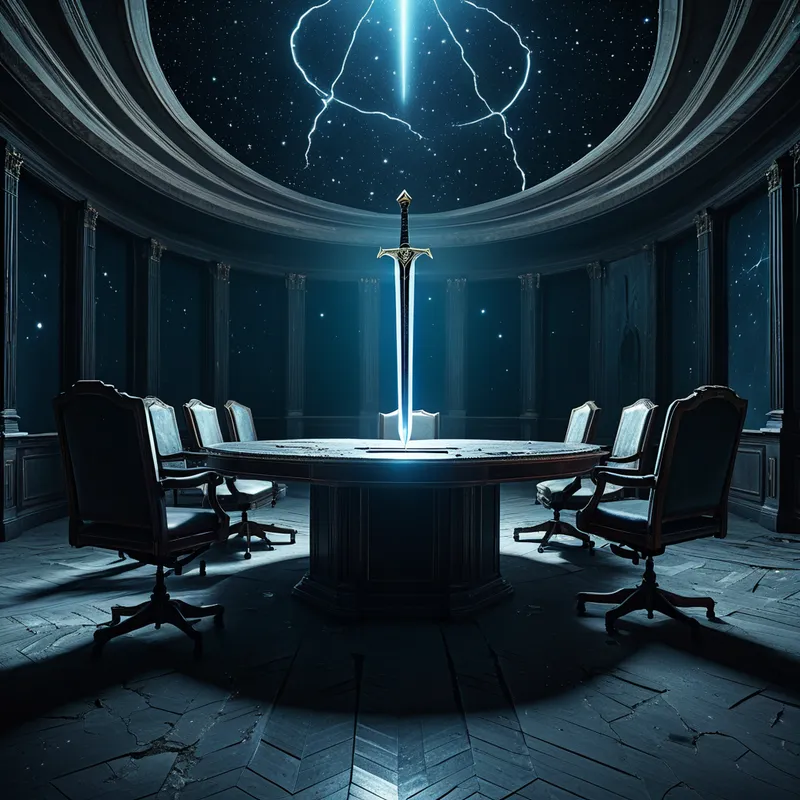
His reign began not with a throne, but with a table. To unite the rivalrous knights who would become his brothers, the wizard [Merlin](/myths/merlin “Myth from Arthurian culture.”/) fashioned a great [Round Table](/myths/round-table “Myth from Arthurian culture.”/). It had no head, no foot, no place of higher or lower honour. Here, the king who was pulled from obscurity seated himself as primus inter pares—first among equals. The knight who sought only his own glory found his place defined by a circle, his vanity challenged by a geometry of fellowship. The sword from the stone appointed one man king; [the Round Table](/myths/the-round-table “Myth from Arthurian culture.”/) made a kingdom of knights.
Cultural Origins & Context
The Arthurian mythos is a palimpsest, written over centuries. Its earliest roots are in the fragmentary histories and heroic elegies of post-Roman Britain (5th-6th centuries CE), a time of collapsed empire and Saxon invasion. Figures like the Welsh Artúr or the Romano-British dux bellorum (“leader of battles”) provided a kernel of historical memory around which legend crystallized.
The specific motifs of the Sword in the Stone and the Round Table were largely sculpted in the 12th and 13th centuries by courtly authors like Geoffrey of Monmouth, Chrétien de Troyes, and later, Sir [Thomas](/myths/thomas “Myth from Christian culture.”/) Malory. These were not folk tales told around hearths, but sophisticated literary works composed for aristocratic audiences. They served a potent societal function: to model ideals of kingship (the Sword) and chivalric community (the Table) for a feudal society often riven by personal ambition. The myth became a container for exploring tensions between divine-right monarchy and collaborative governance, between individual heroism and collective responsibility.
Symbolic Architecture
The myth presents two foundational symbols for the [psyche](/myths/psyche “Myth from Greek culture.”/): the Vertical and the Horizontal, the Chosen One and the Circle of Selves.
The Sword in the [Stone](/symbols/stone “Symbol: In dreams, a stone often symbolizes strength, stability, and permanence, but it may also represent emotional burdens or obstacles that need to be acknowledged and processed.”/) is an [axis](/symbols/axis “Symbol: A central line or principle around which things revolve, representing stability, orientation, and the fundamental structure of reality or consciousness.”/) mundi, a world-pillar connecting [heaven](/symbols/heaven “Symbol: A symbolic journey toward ultimate fulfillment, spiritual transcendence, or connection with the divine, often representing life’s highest aspirations.”/), [earth](/symbols/earth “Symbol: The symbol of Earth often represents grounding, stability, and the physical realm, embodying a connection to nature and the innate support it provides.”/), and the [underworld](/symbols/underworld “Symbol: A symbolic journey into the unconscious, representing exploration of hidden aspects of self, transformation, or confronting repressed material.”/). The [stone](/symbols/stone “Symbol: In dreams, a stone often symbolizes strength, stability, and permanence, but it may also represent emotional burdens or obstacles that need to be acknowledged and processed.”/) represents the hardened, petrified state of the [kingdom](/symbols/kingdom “Symbol: A kingdom symbolizes authority, belonging, and a sense of identity within a larger context or community.”/)—and by extension, the collective psyche—in [crisis](/symbols/crisis “Symbol: A crisis symbolizes turmoil, urgent challenges, and the need for immediate resolution or change.”/). The anvil is the transformative [crucible](/symbols/crucible “Symbol: A vessel for intense transformation through heat and pressure, symbolizing spiritual purification, testing, and alchemical change.”/), the place where raw matter is shaped by will. The sword is sovereign [consciousness](/symbols/consciousness “Symbol: Consciousness represents the state of awareness and perception, encompassing thoughts, feelings, and experiences.”/) itself: the integrating principle of [justice](/myths/justice “Myth from Tarot culture.”/), discernment, and decisive [action](/symbols/action “Symbol: Action in dreams represents the drive for agency, motivation, and the ability to take control of situations in waking life.”/).
The true king is not he who takes the sword by force, but he from whom the sword has no need to hide. Sovereignty is a recognition, not a seizure.
Arthur’s effortless draw signifies a psychological [truth](/symbols/truth “Symbol: Truth represents authenticity, honesty, and the quest for knowledge beyond mere appearances.”/): authentic [authority](/symbols/authority “Symbol: A symbol representing power structures, rules, and control, often reflecting one’s relationship with societal or personal governance.”/) arises from alignment with [the Self](/myths/the-self “Myth from Jungian culture.”/) (Jung’s [term](/symbols/term “Symbol: The term often represents boundaries, defined concepts, or experiences that have a specific meaning in a given context.”/) for the total, integrated [personality](/symbols/personality “Symbol: Personality in dreams often symbolizes the traits and characteristics of the dreamer, reflecting how they perceive themselves and how they believe they are perceived by others.”/)), not from [the ego](/myths/the-ego “Myth from Jungian culture.”/)’s straining ambition. He is “rightwise [king](/symbols/king “Symbol: A symbol of ultimate authority, leadership, and societal order, often representing the dreamer’s inner power or external control figures.”/) born” because the [role](/symbols/role “Symbol: The concept of ‘role’ in dreams often reflects one’s identity or how individuals perceive their place within various social structures.”/) is an [expression](/symbols/expression “Symbol: Expression represents the act of conveying thoughts, emotions, and individuality, emphasizing personal communication and creativity.”/) of his innate, though hidden, wholeness.
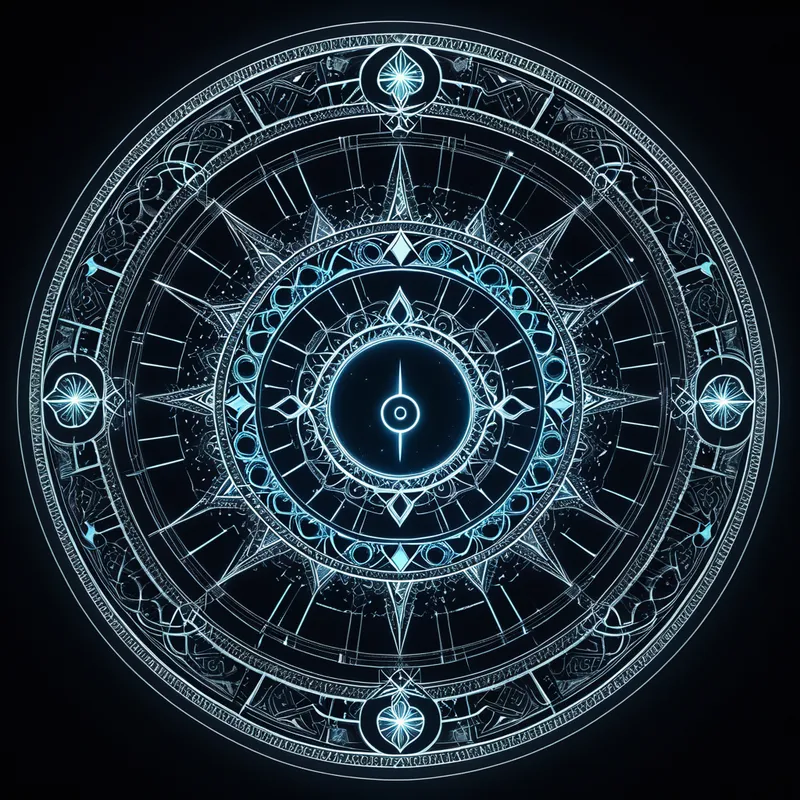
The Round [Table](/symbols/table “Symbol: Tables in dreams often symbolize stability, social interactions, and a platform for discussions, negotiations, or decisions in our waking life.”/) then translates this individual sovereignty into a relational field. It is a [mandala](/symbols/mandala “Symbol: A sacred geometric circle representing wholeness, the cosmos, and the journey toward spiritual integration.”/) of the completed Self. No [knight](/symbols/knight “Symbol: The knight symbolizes honor, chivalry, and the pursuit of noble causes, reflecting the ideal of the noble warrior.”/) sits above another; each must face the center and, by extension, each other. The [table](/symbols/table “Symbol: Tables in dreams often symbolize stability, social interactions, and a platform for discussions, negotiations, or decisions in our waking life.”/) transforms a band of potential rivals (the fragmented aspects of the personality—the [warrior](/symbols/warrior “Symbol: A spiritual archetype representing inner strength, discipline, and the struggle for higher purpose or self-mastery.”/), the [lover](/symbols/lover “Symbol: A lover in dreams often represents intimacy, connection, and the emotional aspects of relationships.”/), the [seeker](/symbols/seeker “Symbol: A person actively searching for meaning, truth, or a higher purpose, often representing the dreamer’s own quest for identity or fulfillment.”/)) into a functioning [council](/symbols/council “Symbol: A council represents collective decision-making and guidance, embodying communal wisdom and authority.”/). The king at the Round [Table](/symbols/table “Symbol: Tables in dreams often symbolize stability, social interactions, and a platform for discussions, negotiations, or decisions in our waking life.”/) rules not from a [pinnacle](/symbols/pinnacle “Symbol: The highest point or peak, representing achievement, culmination, or spiritual transcendence.”/), but from within a circumference. The [symbol](/symbols/symbol “Symbol: A symbol can represent an idea, concept, or belief, serving as a powerful tool for communication and understanding.”/) resolves the [tension](/symbols/tension “Symbol: A state of mental or emotional strain, often manifesting physically as tightness, pressure, or unease, signaling unresolved conflict or anticipation.”/) between the [hero](/symbols/hero “Symbol: A hero embodies strength, courage, and the ability to overcome significant challenges.”/)’s singular [destiny](/symbols/destiny “Symbol: A predetermined course of events or ultimate purpose, often linked to spiritual forces or cosmic order, representing life’s inherent direction.”/) and the [community](/symbols/community “Symbol: Community in dreams symbolizes connection, support, and the need for belonging.”/)’s need for [harmony](/symbols/harmony “Symbol: A state of balance, agreement, and pleasing combination of elements, often associated with musical consonance and visual or social unity.”/).
The Dreamer’s Resonance
When this myth stirs in modern dreams, it signals a profound crossroads in the dreamer’s psychological development. To dream of a sword stuck fast in an improbable object—a desk, a tree in a backyard, a kitchen counter—speaks to the recognition of a latent power or destiny that feels inaccessible. The somatic feeling is often one of frustration mixed with awe. The dream ego may try and fail to pull it free, mirroring the ego’s futile attempts to will itself into a state of wholeness or authority it has not yet earned inwardly.
Dreaming of a round table, especially one that is empty, broken, or awaiting occupants, points to the psyche’s readiness to integrate its disparate parts. It may reflect a longing for true community or a council of inner voices. The mood is often one of poignant anticipation or solemn responsibility. These dreams ask: What in me is the “rightwise” authority that can unite my inner kingdom? Who are the knights—the skills, virtues, and even shadowy aspects—that must be given a seat at my table to create a functioning whole?
Alchemical Translation
The Arthurian cycle is a grand allegory for the alchemical process of individuation. The Sword in the Stone represents the initial stage: the [nigredo](/myths/nigredo “Myth from Alchemical culture.”/) or blackening. The land is in chaos (the psyche in disarray), the old king is dead (outmoded conscious attitudes have collapsed). The miraculous sword is the lapis, the philosopher’s stone, hidden in the most common of materials—waiting for the correct, humble consciousness to discover it. Arthur’s act is the [separatio](/myths/separatio “Myth from Alchemical culture.”/), the extraction of the precious from the worthless, of spirit from matter.
The stone is the unindividuated mass; the sword is the differentiating consciousness that must be withdrawn from it to begin the work.
Pulling the sword is only the first miracle. The second, greater work is the creation of the Round Table. This is the albedo (whitening) and coniunctio ([sacred marriage](/myths/sacred-marriage “Myth from Alchemy culture.”/))—the stage of synthesis and community-building. The isolated, redeemed consciousness (Arthur) must not rule as a tyrant but create a vessel—the round table—where opposition can be held. The knights, with their conflicting vows and passions, represent the complex of the psyche. [Lancelot](/myths/lancelot “Myth from Arthurian culture.”/) is the idealistic shadow, Gawain the solar consciousness, Percival the innocent intuition. The table is the vas, the sealed container where these elements are brought into relationship without annihilation.
The ultimate failure of the Round Table—the betrayal by [Lancelot and Guinevere](/myths/lancelot-and-guinevere “Myth from Arthurian culture.”/)—is not a negation of the myth but its deepest psychological truth. Individuation is not a static achievement but a dynamic, often tragic, process of holding the tension between the ideal (the perfect fellowship) and the human (the flawed individuals within it). The myth teaches that the quest for wholeness begins with a single, destined act of self-recognition, but is fulfilled only in the courageous and perpetual attempt to build a circle of equals within oneself.
Associated Symbols
Explore related symbols from the CaleaDream lexicon: