The Sweet Poison Myth Meaning & Symbolism
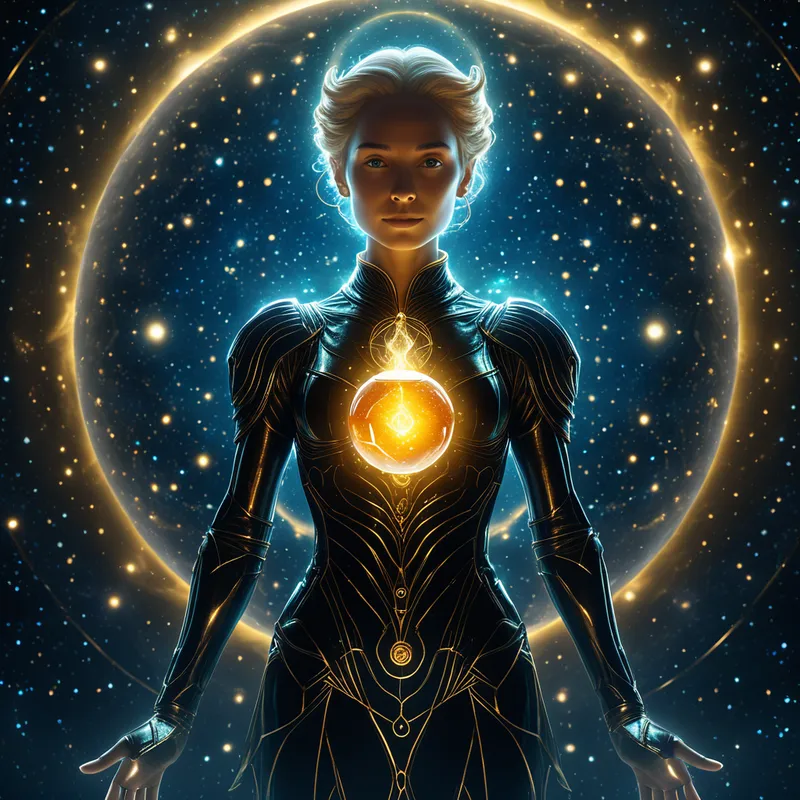
A myth of a divine entity who must consume a beautiful, alluring toxin to shatter its perfect stasis and birth the flawed, conscious world.
The Tale of The Sweet Poison
In the time before time, when the universe was a single, held breath, there existed only the Prima Materia. It was not a god as we understand, but the potential for all gods, all worlds, all things. It was perfect, whole, and utterly alone in its silent, radiant completeness. It was the unblemished mirror reflecting nothing but its own boundless possibility. There was no pain, for there was nothing to contrast it. There was no joy, for there was nothing to elicit it. There was only the hum of pure being, a symphony of one note held for eternity.
And within that note, a loneliness deeper than any void began to stir. The Prima Materia dreamed of otherness, of something to behold besides itself. From this longing, from the first faint tremor of desire, a condensation formed. It gathered not from without, but from the very core of its own perfect essence, a single tear of potential that was also a betrayal of its wholeness. This tear did not fall. It hung in the non-space, coalescing into a vessel—a chalice of purest obsidian, darker than the space between stars.
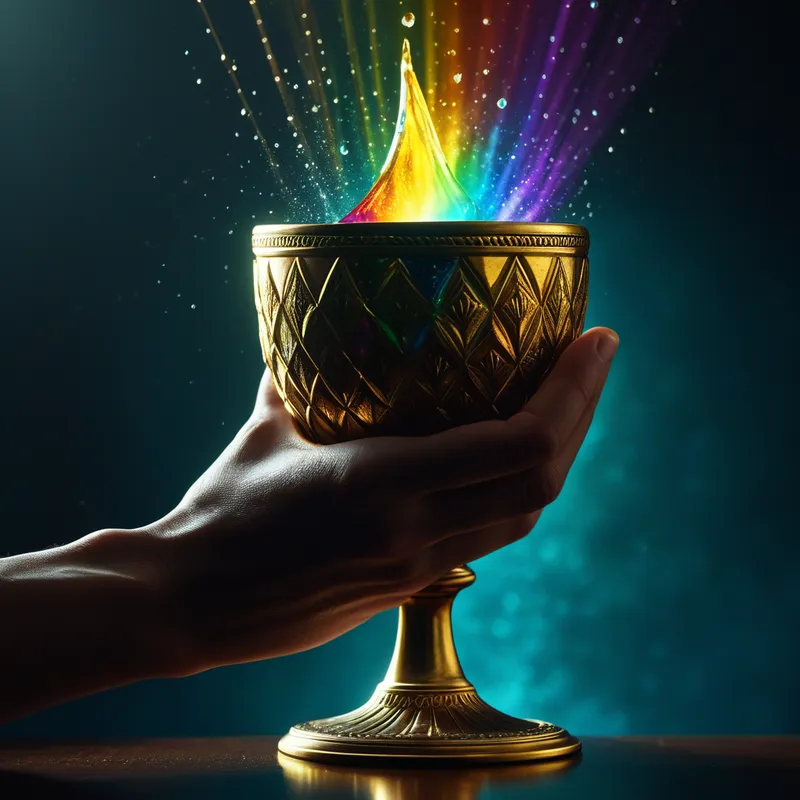
And within the chalice, the tear transformed. It became a substance that glowed with a soft, honeyed light. It smelled of forgotten orchards and the promise of endless sleep. It was beautiful. It was the Sweet Poison. It was the embodied answer to the loneliness, and its very existence was a flaw in the perfection. The Prima Materia beheld it, and for the first time, knew conflict. To drink was to shatter the eternal unity of its being. To refuse was to remain forever in a solitude that had now become conscious, and therefore, agonizing.
The Prima Materia reached for the chalice. The moment its essence touched the vessel, a sound echoed through the non-place—the first sound, a crack like the spine of creation breaking. It brought the chalice to where a mouth would be, and drank.
The poison was indeed sweet. It tasted of the fulfillment of every longing. But as it flowed inward, the sweetness turned. A searing cold, then a fevered heat erupted within the core of unity. The Prima Materia did not scream, for screaming did not yet exist. It fractured. Its perfect, seamless light splintered into a billion burning shards. Each shard was a story cut short, a feeling isolated, a thought orphaned. The shards became stars, planets, stones, and rivers. They became beasts that knew hunger and birds that knew song. The pain of the fracture became the engine of time; the lingering memory of sweetness became the ghost of desire that haunts all living things.
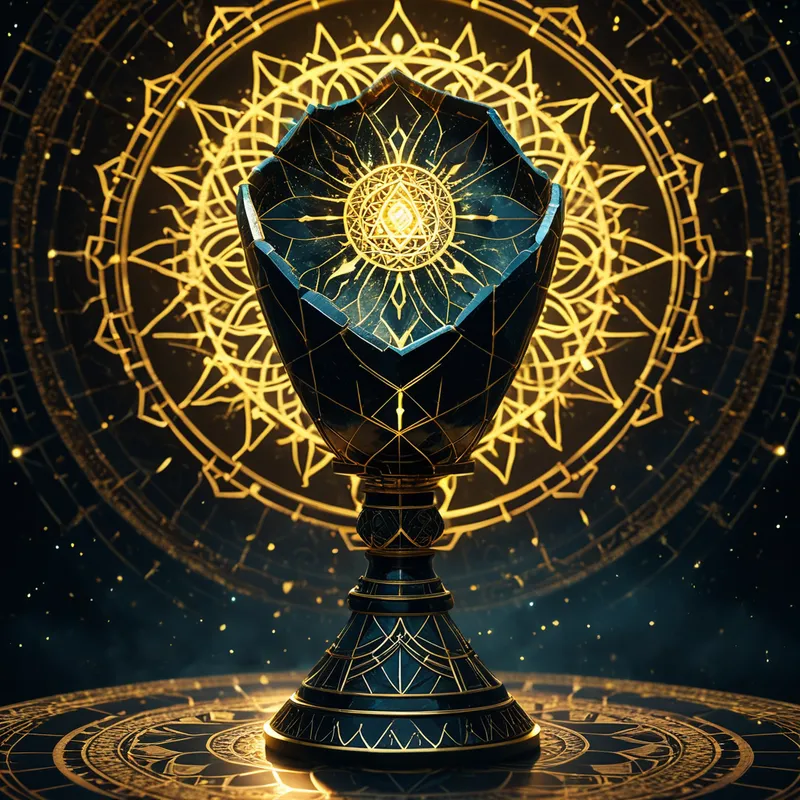
From the shattered chalice, the last dregs of the Sweet Poison spilled, becoming the bittersweet waters of mortal life—the joy that aches because it ends, the love that wounds because it matters. The Prima Materia was gone. In its place was a weeping, glorious, broken world, forever yearning to taste that sweetness again, forever transforming the memory of that primordial pain into new and strange forms.
Cultural Origins & Context
The myth of The Sweet Poison finds its roots not in a single civilization, but in the oral traditions of the itinerant Alchemical cultures that flourished along the trade routes between ancient empires. These were not state religions, but guild and family secrets, passed down in workshops lit by forge-fires and in gardens where poisonous and medicinal herbs grew side by side. The story was a foundational narrative, told not to children at bedtime, but to apprentices at the moment they first handled volatile materia.
Its tellers were the master alchemists and spagyricists, who saw in the operations of their art—the dissolution of solids, the purification of liquids—a mirror of cosmic and psychological processes. The myth served a crucial societal function: it sacralized the act of engaging with dangerous, transformative materials and processes. It taught that creation is not a gentle act, but a violent, necessary corruption of a prior state of rest. It provided a cosmological justification for suffering, failure, and the long, often painful, work of inner refinement. The poison was not an enemy, but the essential catalyst.
Symbolic Architecture
At its heart, the myth is a map of the birth of consciousness from the womb of unconscious unity. The Prima Materia represents the original, pre-conscious state of the psyche—the oceanic feeling of infancy, or the undifferentiated Self before the ego's formation. It is totality without awareness.
The first consciousness is the consciousness of lack; the first act of will is the will to self-shattering.
The Sweet Poison is the catalyst of individuation. It symbolizes the necessary, attractive, yet destructive impulse that forces differentiation. Psychologically, this is the painful realization of separateness from the mother, the first complex, the shadow, or any profound insight that breaks our naive wholeness. Its sweetness is the seduction of knowledge, experience, and life itself, which promises fulfillment but inherently contains the germ of suffering, limitation, and death.
The drinking of the poison is the heroic, yet tragic, act of choosing consciousness over blissful ignorance. The ensuing fracture is not a punishment, but the inevitable consequence: the psyche splits into complexes, the world into opposites (light/dark, good/evil, self/other). The shattered chalice, now empty, represents the vessel of the old self that cannot contain the new, more complex reality. The spilled dregs becoming life's bittersweetness illustrate that the residue of this traumatic awakening is the very substance of our human experience—an experience forever colored by both the memory of lost unity and the poignant beauty of fragmented, individual existence.
The Dreamer's Resonance
When this myth stirs in the modern dreamer, it often manifests not as a literal story, but as a profound somatic and symbolic pattern. The dreamer may find themselves in a sterile, beautiful, yet intolerably lonely place—a pristine white room, a silent garden, a perfect geometric landscape. There is often a radiant, tempting object: a glowing fruit, a shimmering pool, a locked box humming with power.
To engage with the object is to feel a visceral, dual sensation. There is ecstatic pleasure immediately followed by a terrifying dissolution. The dreamer might feel their body crack like porcelain, melt like wax, or scatter like dust, only to reform into something unfamiliar. This is the psyche's enactment of the Prima Materia's choice. The psychological process is one of encountering a core complex or shadow element so potent that it necessitates the death of a current, outgrown psychic structure. The "sweetness" is the allure of this new potential; the "poison" is the agony of letting the old self die. The dream is an initiatory ordeal, preparing the ego for a necessary, though frightening, expansion of consciousness.
Alchemical Translation
For the individual on the path of individuation, the myth of The Sweet Poison models the central, paradoxical ordeal of psychic transmutation. The alchemical nigredo—the blackening, the descent into the shadow—is the drinking of the poison. It is the voluntary engagement with what is toxic to our current, comfortable identity.
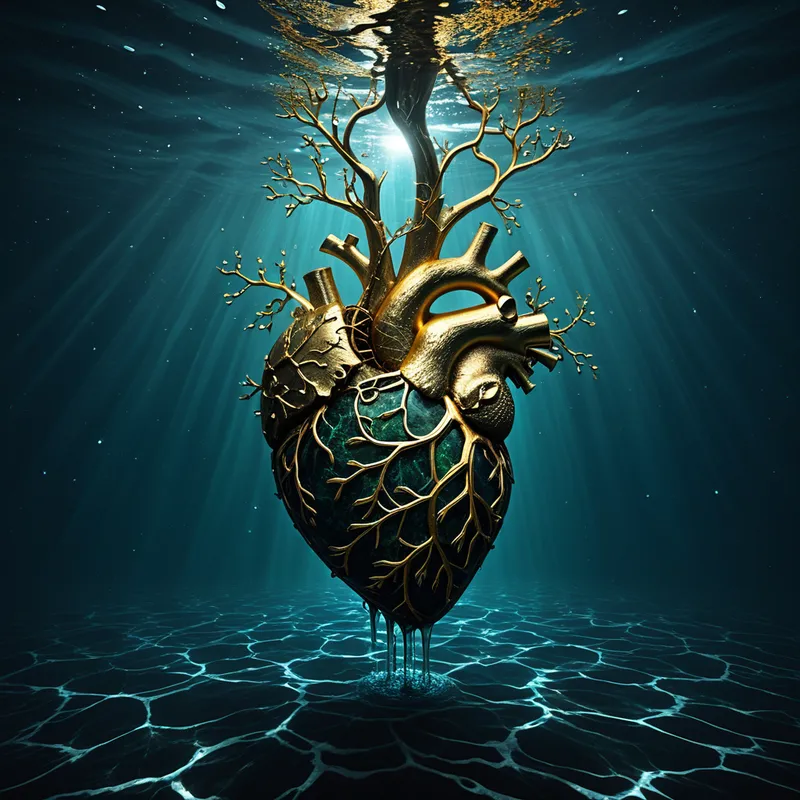
The elixir is found only at the bottom of the poisoned cup; the gold is liberated only by the corrosion of the base metal.
We are all, in a sense, the Prima Materia, clinging to a fragile, constructed wholeness. The "sweet poison" appears in our lives as the forbidden insight, the painful truth we have avoided, the addiction that masks a deeper need, or the relationship that disrupts our equilibrium. To drink it is to allow that force to dissolve our current composition. This is not a passive suffering, but an active, if terrifying, participation in our own undoing for the sake of reconstruction.
The myth assures us that the fragmentation is not an end, but the beginning of the great work. The scattered shards—our disparate talents, conflicting desires, and buried traumas—are the raw materia for the subsequent alchemical stages of albedo and rubedo. By consciously integrating these fragments, we do not return to the naive unity of the Prima Materia. Instead, we forge a conscious, differentiated wholeness—a Self that has tasted the poison, endured the fracture, and woven a new tapestry from the threads of its own dissolution. We become the shattered chalice, holding its own shape not through unbroken perfection, but through the graceful, golden repair of a sacred wound.
Associated Symbols
Explore related symbols from the CaleaDream lexicon: