The Sieve of the Danaides Myth Meaning & Symbolism
Forty-nine sisters, cursed for murdering their husbands, eternally attempt to fill a leaky vessel in the Underworld, a symbol of endless, futile effort.
The Tale of The Sieve of the Danaides
Hear now a tale not of Olympus’s bright peaks, but of the sunless realms below, where the Cocytus weeps and the shadows have weight. It begins not with a god’s whim, but with a king’s fear. Danaus, brother to Aegyptus, fled across the wine-dark sea with his fifty daughters, [the Danaides](/myths/the-danaides “Myth from Greek culture.”/), escaping the demand that his girls wed their fifty cousins. They found sanctuary in Argos, a city of ancient stones, but the past is a hound with a keen nose.
The demand followed. The fifty sons of Aegyptus came, armed not for war but with marriage torches. Under the heavy gaze of gods and the heavier weight of paternal command, the daughters consented. But on the wedding night, when the stars were veiled and the palace slept, a whisper passed among the bridal chambers—a whisper of steel and a father’s secret decree. All but one, the fair Hypermnestra, took the dagger given to them and, in the marriage bed, spilled their husbands’ lifeblood instead of their love. The halls of Argos, decked in flowers, ran red.
[The Furies](/myths/the-furies “Myth from Greek culture.”/), those ancient hags with serpents for hair and eyes that drip with the memory of every crime, awoke at the scent of kin-blood. They pursued the forty-nine murderous sisters with relentless breath. No altar could cleanse them, no prayer could soothe. Their crime was against philia, the very order of [the world](/myths/the-world “Myth from Tarot culture.”/).
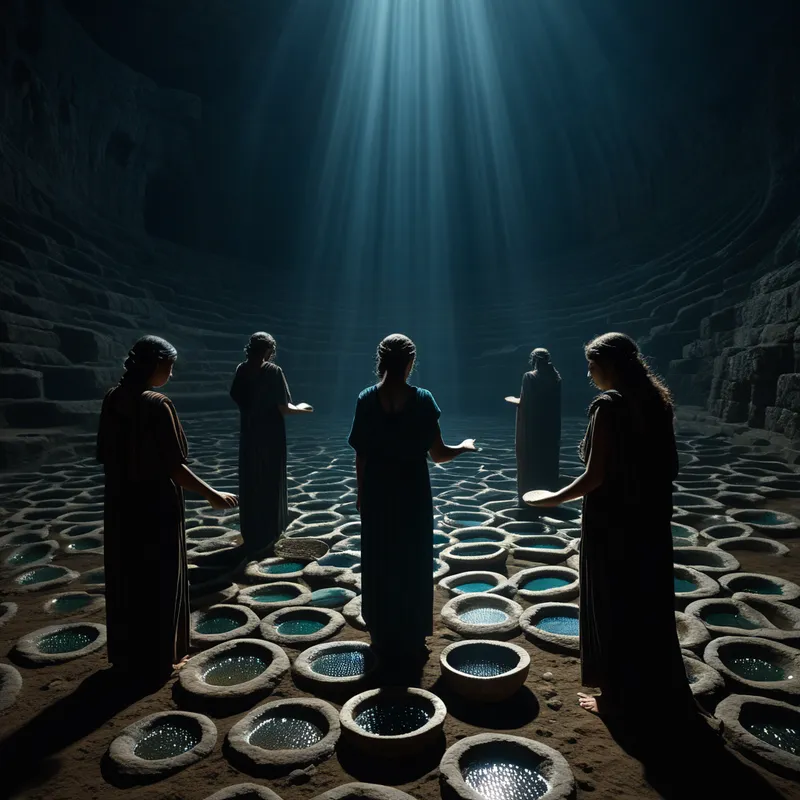
When their mortal lives ended, they descended to the domain of [Hades](/myths/hades “Myth from Greek culture.”/). There, in the grey fields of the Asphodel Meadows, the final judgment was passed. Not the fiery torment of [Tartarus](/myths/tartarus “Myth from Greek culture.”/), but a punishment of exquisite, eternal irony. They were given jars—or some say, a single, great sieve—and led to a vast, cracked plain. A task was set: to fill a great, bottomless cistern with [water](/myths/water “Myth from Chinese culture.”/) from a nearby, brackish pool. They labored, these graceful daughters of a king, bending their backs, dipping their vessels, and rushing to the cistern. But the water, the life they had stolen, would not be kept. It trickled, it streamed, it poured through the countless holes in their sieve-vessels before they could take three steps. The cistern remained forever empty, a yawning mouth of thirst. And so they pace, forever, in that silent, twilit land, their arms aching with the ghost of the weight they can never bear, [the vessel](/myths/the-vessel “Myth from Alchemical culture.”/) they can never fill, the debt they can never repay. Their labor has no beginning and no end, only the endless, sighing now.
Cultural Origins & Context
This haunting myth reaches us primarily through the later Roman poet Ovid and the travel writer Pausanias, though its roots are far older, likely woven into the tragic cycles of the legendary history of Argos. It was a cautionary tale told not just for entertainment, but as a societal pillar. It served as a dire warning against the violation of two supreme ancient Greek laws: the sanctity of the guest-host relationship ([xenia](/myths/xenia “Myth from Greek culture.”/)) and the imperative against kin-slaying. The Danaides betrayed both by murdering their husbands, who were both family and, by the rites of marriage, guests in their new home.
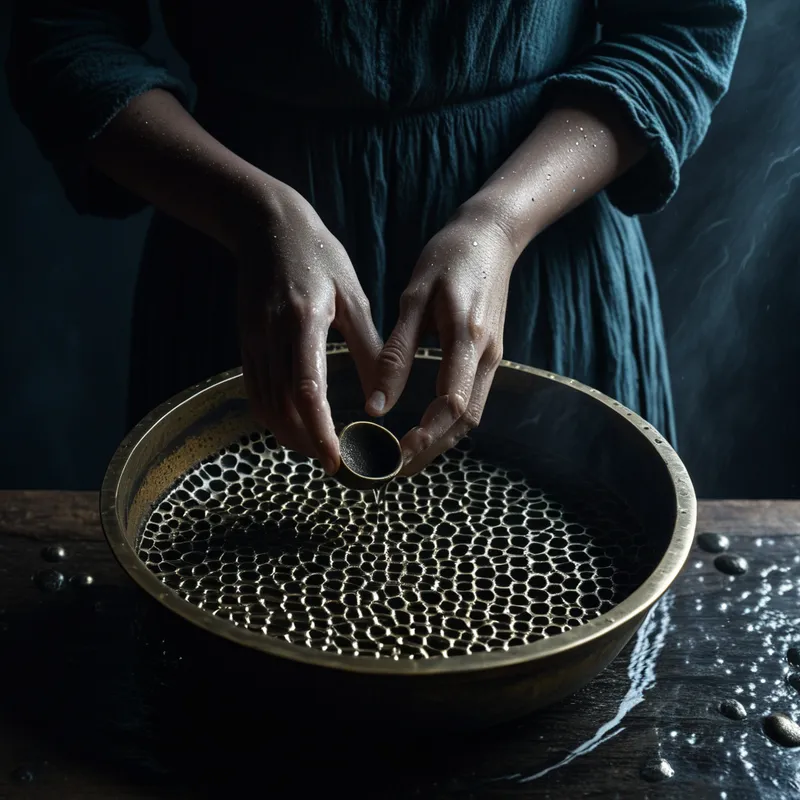
The myth also functioned as an aetiology. The “Danaid” punishment was famously depicted on the hydria, a water-jar, linking the myth to the essential, daily, and often arduous task of women fetching water. It transformed a common chore into a cosmic parable about the consequences of disorder. Furthermore, the myth was tied to rituals. In some traditions, the Danaides were said to have introduced the [Thesmophoria](/myths/thesmophoria “Myth from Greek culture.”/), a women-only festival dedicated to Demeter and her daughter, suggesting a complex link between their crime, their punishment, and later rites of atonement and agricultural fertility managed by women.
Symbolic Architecture
The sieve is the myth’s central, devastating [symbol](/symbols/symbol “Symbol: A symbol can represent an idea, concept, or belief, serving as a powerful tool for communication and understanding.”/). It represents a [vessel](/symbols/vessel “Symbol: A container or structure that holds, transports, or protects something essential, representing the self, emotions, or life journey.”/) of [consciousness](/symbols/consciousness “Symbol: Consciousness represents the state of awareness and perception, encompassing thoughts, feelings, and experiences.”/) or a [structure](/symbols/structure “Symbol: Structure in dreams often symbolizes stability, organization, and the framework of one’s life, reflecting how one perceives their environment and personal life.”/) of the [psyche](/myths/psyche “Myth from Greek culture.”/) that cannot retain what is essential. It is [the ego](/myths/the-ego “Myth from Jungian culture.”/) attempting to contain the [soul](/symbols/soul “Symbol: The soul represents the essence of a person, encompassing their spirit, identity, and connection to the universe.”/)’s waters with a [framework](/symbols/framework “Symbol: Represents the underlying structure of one’s identity, emotions, or life. It signifies the mental or emotional scaffolding that supports or confines the self.”/) full of holes—holes of unresolved [trauma](/symbols/trauma “Symbol: A deeply distressing or disturbing experience that overwhelms the psyche, often manifesting in dreams as unresolved emotional wounds or psychological injury.”/), unexamined [guilt](/symbols/guilt “Symbol: A painful emotional state arising from a perceived violation of moral or social standards, often tied to actions or inactions.”/), repressed instinct, or spiritual [blindness](/symbols/blindness “Symbol: Represents a lack of awareness, insight, or refusal to see truth, often tied to emotional avoidance or spiritual ignorance.”/).
The punishment is not the labor, but the revelation. The sieve shows the Danaid the true nature of her own soul: a vessel designed for leakage, for loss.
The [water](/symbols/water “Symbol: Water symbolizes the subconscious mind, emotions, and the flow of life, representing both cleansing and creation.”/) they carry is [multi](/symbols/multi “Symbol: Multi signifies multiplicity and diversity, often representing various aspects of life or identity in dreams.”/)-faceted. It is the libido, the [life](/symbols/life “Symbol: The symbol of ‘Life’ represents a journey of growth, interconnectedness, and existential meaning, encompassing both the joys and challenges that define human experience.”/)-[energy](/symbols/energy “Symbol: Energy symbolizes vitality, motivation, and the drive that fuels actions and ambitions.”/) they squandered in an act of destructive rage. It is the emotional experience they refused to fully hold—the complexity of being both [victim](/symbols/victim “Symbol: A person harmed by external forces, representing vulnerability, injustice, or sacrifice in dreams. Often symbolizes powerlessness or moral conflict.”/) and perpetrator, of fearing [marriage](/symbols/marriage “Symbol: Marriage symbolizes commitment, partnership, and the merging of two identities, often reflecting one’s feelings about relationships and social obligations.”/) and committing murder. It is also the symbolic “[water](/symbols/water “Symbol: Water symbolizes the subconscious mind, emotions, and the flow of life, representing both cleansing and creation.”/) of [life](/symbols/life “Symbol: The symbol of ‘Life’ represents a journey of growth, interconnectedness, and existential meaning, encompassing both the joys and challenges that define human experience.”/)” related to [fertility](/symbols/fertility “Symbol: Symbolizes creation, growth, and abundance, often representing new beginnings, potential, and life force.”/) and feminine creative power, which they corrupted and now cannot access. The bottomless [cistern](/symbols/cistern “Symbol: A reservoir for collecting and storing water, often underground. Symbolizes containment, hidden resources, and emotional reserves.”/) is the unconscious itself, an insatiable maw that demands [integration](/symbols/integration “Symbol: The process of unifying disparate parts of the self or experience into a cohesive whole, often representing psychological wholeness or resolution of internal conflict.”/). The futile [effort](/symbols/effort “Symbol: Effort signifies the physical, mental, and emotional energy invested toward achieving goals and personal growth.”/) to fill it with a sieve is the neurotic repetition of behaviors that can never address the core wound, because the tool of consciousness is flawed.
The forty-nine sisters (excluding the redeemed Hypermnestra) represent a collective feminine [shadow](/symbols/shadow “Symbol: The ‘shadow’ embodies the unconscious, repressed aspects of the self and often represents fears or hidden emotions.”/)—a rage born of forced agency, of being pawns in a patriarchal conflict (the feud of the brothers) that erupts in a horrifying, self-damning rebellion. They are not innocent maidens; they are matricides of the future, severing the possibility of [lineage](/symbols/lineage “Symbol: Represents ancestral heritage, family connections, and the transmission of traits, values, and responsibilities across generations.”/) and love in a single, bloody [night](/symbols/night “Symbol: Night often symbolizes the unconscious, mystery, and the unknown, representing the realm of dreams and intuition.”/).

The Dreamer’s Resonance
When this myth stirs in the modern dreamer, it often manifests as dreams of futile, repetitive tasks. You may dream of trying to fill a bathtub with a colander, of writing an urgent message that vanishes as the pen touches paper, or of packing for a crucial journey only to find your suitcase full of holes. The somatic sensation is one of profound exhaustion, frustration, and a sinking despair—a feeling that your fundamental life energy is draining away into an invisible ground.
Psychologically, this signals a confrontation with a “leaky” complex. The dreamer is engaged in a life task—a relationship, a career, a creative project, a process of healing—but using a flawed internal structure. There is a disconnect between effort and result. The dream asks: What is the hole in your vessel? Is it a perfectionism that never allows completion? A fear of fulfillment that sabotages success? An unprocessed guilt that nullifies any attempt at self-love? The dream of the sieve is the soul’s way of making the futility conscious, of forcing the dreamer to stop and examine the tool, not just redouble their effort at the well.
Alchemical Translation
The alchemical journey modeled here is not one of glorious conquest, but of humiliating, necessary failure. [The first stage](/myths/the-first-stage “Myth from Alchemical culture.”/) is the [Nigredo](/myths/nigredo “Myth from Alchemical culture.”/), the blackening: the murderous act and the ensuing curse. This is the descent into [the shadow](/myths/the-shadow “Myth from Jungian culture.”/), the recognition of one’s own capacity for destruction and the ensuing psychic “death.”
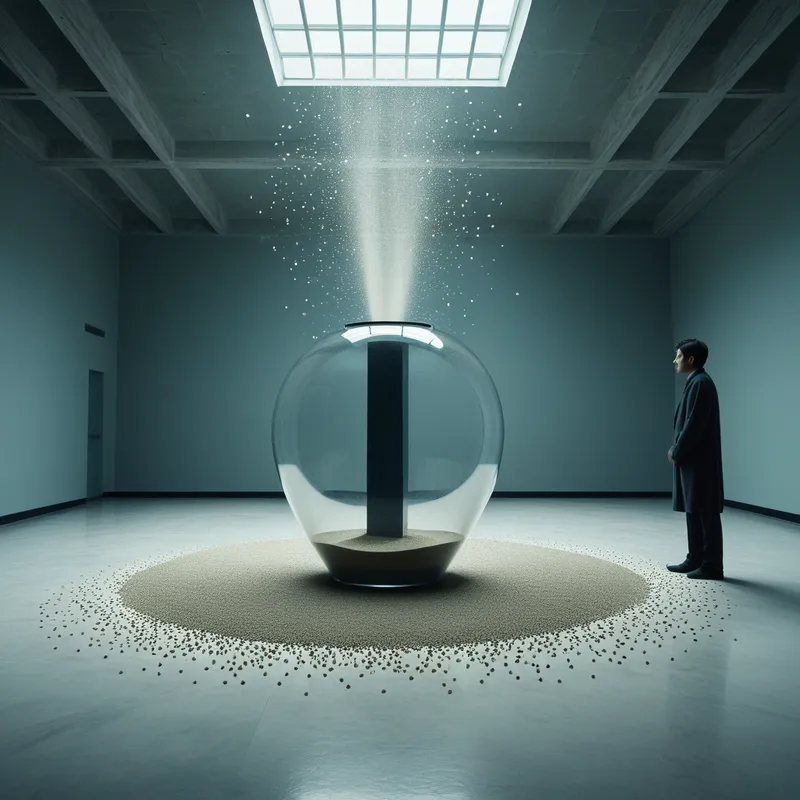
The eternal labor with the sieve is the long, torturous Albedo, the whitening or purification. It is not the purification of success, but of repeated, conscious failure. Each trip to the pool, each attempt to carry the water, is an iteration. The transformative moment is not in filling the cistern, but in the gradual, agonizing realization that the sieve itself must change.
Individuation often begins not with building a tower, but with admitting your bricks are made of sand.
Hypermnestra, the one sister who spared her husband Lynceus, provides the key. She disobeyed the paternal, fear-based command (the old, flawed structure) and chose a different vessel: relationship, trust, and eros. In the alchemical myth, she is the one who achieves a form of redemption, founding a royal lineage. For the modern individual, the transmutation occurs when the futile labor is finally abandoned, and the attention turns inward to mend the sieve. This mending is the integration of the shadow—owning the rage, the guilt, the fear—not to justify it, but to understand its source and transmute its energy. It is learning to carry water in cupped hands, in a whole heart, in a redeemed vessel of being. The cistern may never be “full,” for the unconscious is infinite, but one can learn to carry a sustaining draft, ending the curse of eternal, meaningless thirst.
Associated Symbols
Explore related symbols from the CaleaDream lexicon: