The Sidhe Mounds Myth Meaning & Symbolism
A tale of a mortal king who enters the luminous, timeless mounds of the Sidhe, confronting the price of true sovereignty and the nature of reality.
The Tale of The Sidhe Mounds
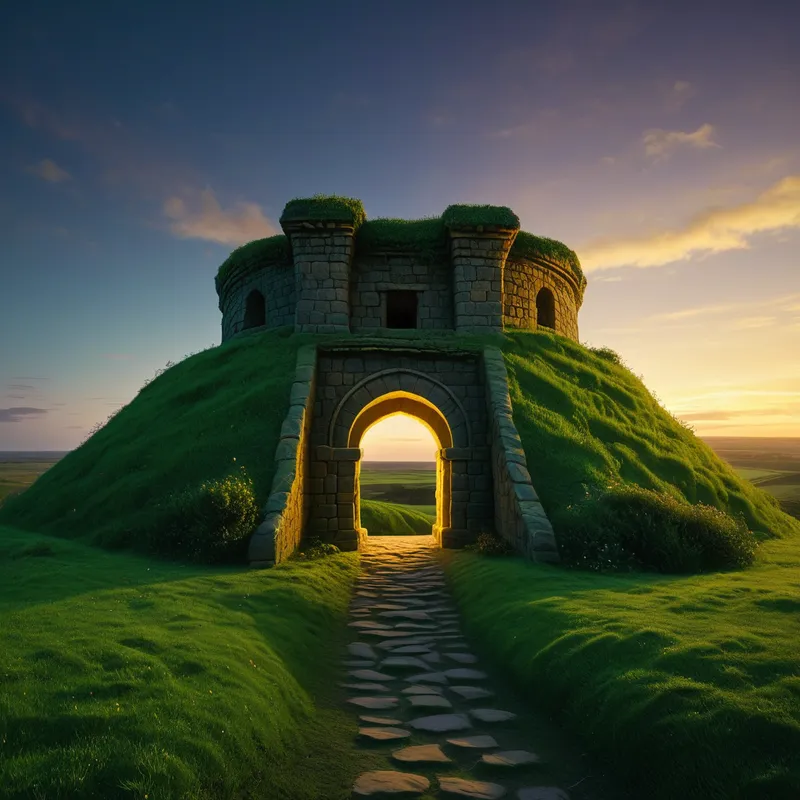
Listen now, and let the firelight cast the shadows. [The world](/myths/the-world “Myth from Tarot culture.”/) you know is but one layer of a cloth woven with threads of light and time. In the days when kings were wedded to the land itself, there existed places where [the veil](/myths/the-veil “Myth from Various culture.”/) grew thin. Not mountains, but gentle, green swellings of [the earth](/myths/the-earth “Myth from Hindu culture.”/)—the Síd. To the eye, they were grassy knolls, home to sheep and wild [thyme](/myths/thyme “Myth from Greek culture.”/). But to the soul that knew how to see, they were doorways.
It is said a king, a true king whose heart was heavy with the weight of rule, once walked the twilight borders of his realm. The land was at peace, yet a profound unrest stirred in his chest, a longing for a wisdom that mortal counsel could not provide. He came upon such a mound, and where a rabbit hole should have been, there stood an arch of ancient, fitted stone. From within, a sound drifted—not a song of words, but a melody that plucked at the very strings of memory and desire. It was the music of the Aos Sí.
Pushing aside the hanging ivy, he entered. The air within was not of earth and root, but of honeyed light and perpetual spring. Time unspooled differently here; an hour was a century, a glance was a lifetime. He found himself in a hall of impossible beauty, where the pillars were great oaks and the ceiling was the night sky captured. Here sat the lords and ladies of the [Tír na nÓg](/myths/tr-na-ng “Myth from Celtic culture.”/). They were neither small nor winged, but tall, fierce, and fair, their eyes holding the calm of deep lakes. They welcomed him as a guest of honor, for a mortal of pure heart and royal blood was a rare curiosity.
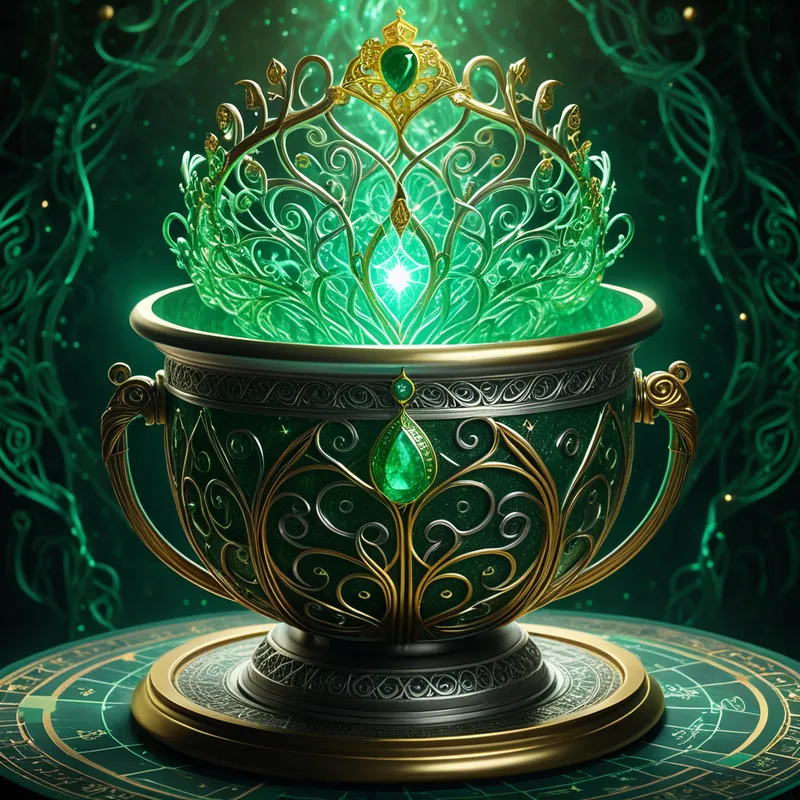
For three days, or so it seemed, he feasted. He drank from a cauldron that never emptied, ate food that tasted of his fondest memories, and was enraptured by music that healed a weariness he did not know he carried. The sovereign of this place, a lord with hair like silver frost, offered him a gift: a crystal cup filled with a liquid that shimmered with all colors and none. “Drink,” said the lord, “and the wisdom of the land will be yours. You will see the illness in the root before it touches the leaf, hear the sorrow of the stone, and know [the true name](/myths/the-true-name “Myth from Various culture.”/) of [the wind](/myths/the-wind “Myth from Various culture.”/). Your reign will be legendary.”
But as the king reached for it, a sorrowful lady of [the Sidhe](/myths/the-sidhe “Myth from Celtic culture.”/) caught his eye. A single tear traced a path down her cheek, and in that tear, he saw a fleeting vision: his own kingdom, overgrown and forgotten, his people aged and gone, mourning a king who vanished into a fairy hill. The gift was also a test, the wisdom a chain. To accept the cup was to stay forever, to become a story whispered by [the hearth](/myths/the-hearth “Myth from Norse culture.”/), not a king ruling in the sun.
The music halted. The king lowered his hand. “My wisdom,” he said, his voice echoing in the sudden silence, “must be earned in the world of plough and council, of birth and passing. I thank you for your hospitality, but my sovereignty is a pact with the soil that knows the seasons, not the stone that defies them.” A profound respect, tinged with sadness, filled the hall. The [Sidhe](/myths/sidhe “Myth from Celtic culture.”/) lord nodded. He was led not back through the stone arch, but to a door of woven light. “Remember,” the lord said, “the mound is always here. You have passed through the door of temptation and chosen the path of mortal grace. That is a wisdom we cannot give.”
He stepped through, and found himself not where he entered, but on the ramparts of his own castle, the dawn breaking. In his hand was not a crystal cup, but a simple sprig of [hawthorn](/myths/hawthorn “Myth from Celtic culture.”/), still wet with dew from a world that never knew day.
Cultural Origins & Context
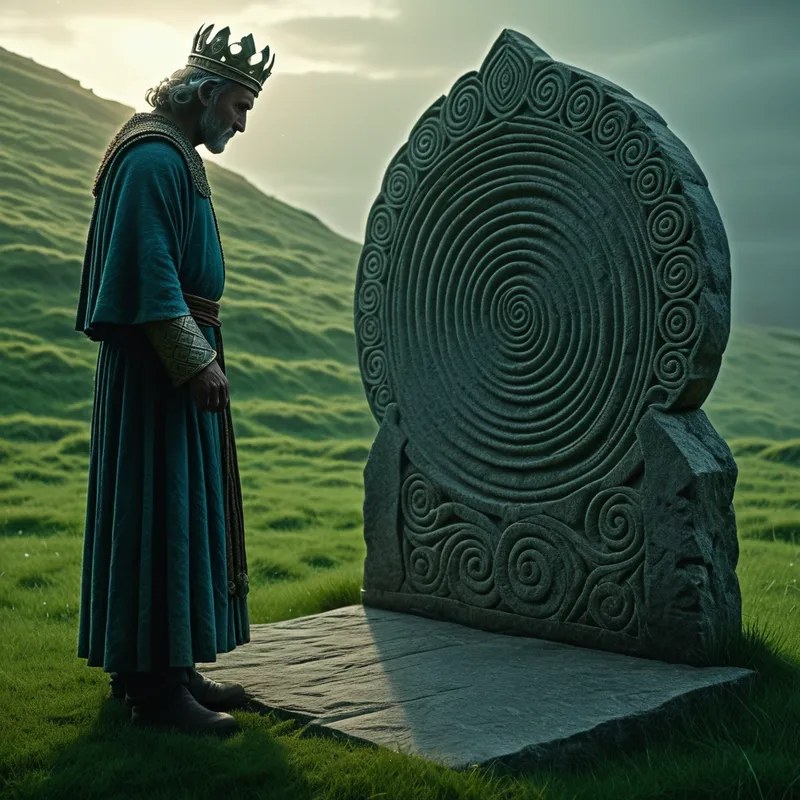
This narrative pattern is woven deeply into the Insular Celtic tradition, particularly of Ireland and Scotland. The Sidhe are not the diminutive “fairies” of later Victorian fancy, but are best understood as the Tuatha Dé Danann in their later, folkloric guise. After their mythic defeat, they were said to have retreated into [the hollow hills](/myths/the-hollow-hills “Myth from Celtic culture.”/), the [sídhe](/myths/sdhe “Myth from Celtic / Irish culture.”/), becoming the powerful, capricious, and timeless people of [the Otherworld](/myths/the-otherworld “Myth from Celtic culture.”/).
These stories were the province of the filid (poet-seers) and later, seanchaís (storytellers). They were not mere entertainment but served vital societal functions. They explained the numinous presence felt in the landscape, turning geographical features into mythic anchors. They reinforced social codes about hospitality, sovereignty, and the perilous allure of the unknown. Most importantly, they mapped a psychic geography. The mound was a literal and spiritual boundary marker between the ordinary world (an saol seo) and the extraordinary (an saol eile), teaching that the two realms are in constant, delicate negotiation.
Symbolic Architecture
The Sidhe Mound is the ultimate [symbol](/symbols/symbol “Symbol: A symbol can represent an idea, concept, or belief, serving as a powerful tool for communication and understanding.”/) of the liminal—[the threshold](/myths/the-threshold “Myth from Folklore culture.”/) state. It is not a hell or a [heaven](/symbols/heaven “Symbol: A symbolic journey toward ultimate fulfillment, spiritual transcendence, or connection with the divine, often representing life’s highest aspirations.”/), but a [realm](/symbols/realm “Symbol: The symbol of ‘Realm’ often signifies the boundaries of one’s consciousness, experiences, or emotional states, suggesting aspects of reality that are either explored or ignored.”/) of potential, of un-lived lives and untapped wisdom. It represents the unconscious itself: alluring, organized by its own eternal laws, and filled with both nourishing and entrapping contents.
The true test at the heart of the mound is not of bravery, but of identity. Will you consume the archetype and be consumed by it, or will you carry its reflection back to shape the world of form?
The [king](/symbols/king “Symbol: A symbol of ultimate authority, leadership, and societal order, often representing the dreamer’s inner power or external control figures.”/) is [the ego](/myths/the-ego “Myth from Jungian culture.”/)-[consciousness](/symbols/consciousness “Symbol: Consciousness represents the state of awareness and perception, encompassing thoughts, feelings, and experiences.”/), the ruling principle. His [journey](/symbols/journey “Symbol: A journey in dreams typically signifies adventure, growth, or a significant life transition.”/) is a necessary nekyia, a descent into the unconscious to gather resources. The feast is the seductive pull of [inflation](/symbols/inflation “Symbol: A dream symbol representing feelings of diminishing value, loss of control, or expansion beyond sustainable limits in one’s life or psyche.”/)—the temptation to identify with the magical, timeless powers of the deep [psyche](/myths/psyche “Myth from Greek culture.”/) ([the Self](/myths/the-self “Myth from Jungian culture.”/)) and abandon the difficult, temporal work of individual [life](/symbols/life “Symbol: The symbol of ‘Life’ represents a journey of growth, interconnectedness, and existential meaning, encompassing both the joys and challenges that define human experience.”/). The [crystal](/symbols/crystal “Symbol: Crystals often symbolize clarity, purity, and the amplification of energy and intentions within dreams.”/) cup is the poisoned gift of perfection, the archetypal [solution](/symbols/solution “Symbol: A solution symbolizes resolution, clarity, and the overcoming of obstacles, often representing a sense of accomplishment.”/) that bypasses [human](/symbols/human “Symbol: The symbol of a human represents individuality, complexity of emotions, and social relationships.”/) struggle. His refusal is the critical act of [differentiation](/symbols/differentiation “Symbol: The process of distinguishing or separating parts of the self, emotions, or identity from a whole, often marking a developmental or psychological milestone.”/); he chooses the flawed, mortal process of becoming over the [static](/symbols/static “Symbol: Static represents interference, disruption, and the breakdown of clear communication or signal, often evoking feelings of frustration and disconnection.”/) perfection of being a mythic figure.
The Dreamer’s Resonance
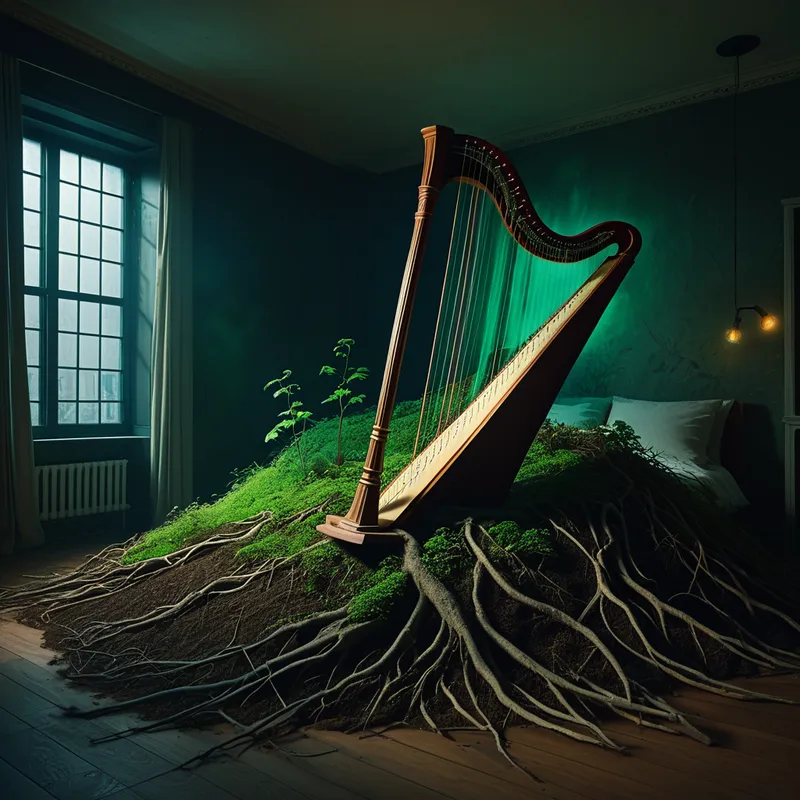
When this myth stirs in modern dreams, it often manifests as finding a hidden room in a familiar house, discovering a vast, beautiful landscape just beyond a forgotten door, or encountering a group of captivating, enigmatic strangers who offer a life free from one’s current burdens. The somatic feeling is one of awe mixed with deep anxiety—the “uncanny.”
This dream pattern signals a profound encounter with the Self. The dreamer is at a point where a latent potential or a buried complex (the “[Otherworld](/myths/otherworld “Myth from Celtic culture.”/)” within) is offering itself for integration. The temptation to “stay at the feast” reflects a real psychological danger: of becoming possessed by a new identity, a spiritual bypass, or a grandiose fantasy that severs connection to ordinary life. The dream is a rehearsal for the conscious choice: to acknowledge the magnificence of this inner world without being captured by it, to take only the “hawthorn sprig”—a token of connection and protection—and return to the work of living.
Alchemical Translation
The alchemical process mirrored here is the [solve et coagula](/myths/solve-et-coagula “Myth from Alchemical culture.”/)—dissolve and coagulate. The king’s journey into the mound is the solve: the dissolution of his ordinary royal identity in the face of the archetypal. He is stripped of his worldly context and tested in [the crucible](/myths/the-crucible “Myth from Alchemical culture.”/) of timelessness.
Individuation is not about becoming a denizen of the mound, but about becoming the guardian of its threshold—the one who can traffic between realms without losing allegiance to either.
His conscious refusal of the cup is the pivotal moment of [separatio](/myths/separatio “Myth from Alchemical culture.”/), distinguishing what belongs to the eternal from what belongs to the temporal soul. This is not a rejection of the unconscious, but a defining of the relationship. The return, with the hawthorn sprig, is the coagula: the re-integration of consciousness now informed by the numinous. The sovereign who returns is no longer just a ruler of men, but a steward of the mystery. His wisdom is no longer the perfect, static knowledge of the Sidhe, but an embodied, earthy wisdom—a “sovereignty” that means being responsibly rooted in both the world of action and the world of meaning, mediating the golden light of the mound into the breaking dawn of daily life.
Associated Symbols
Explore related symbols from the CaleaDream lexicon: