The Shapeshifter Myth Meaning & Symbolism
A tale of a goddess-queen who transforms into a bird of prey to reclaim her stolen sovereignty, embodying the soul's fluid, untamed nature.
The Tale of The Shapeshifter
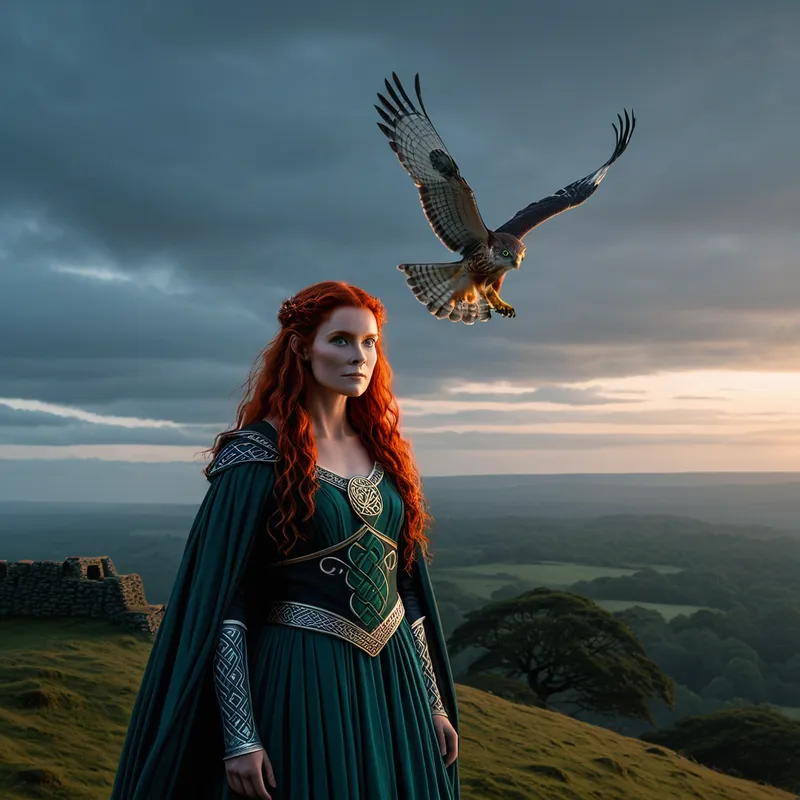
Listen, and let the fire’s shadows tell you of a time when [the world](/myths/the-world “Myth from Tarot culture.”/) was raw and the borders between forms were thin as mist. In the land of Ériu, there was a queen, a goddess of the land itself. Her name was Étaín, and her beauty was not that of mere flesh, but the deep, humming beauty of a fruitful hill under a summer sun. She was sovereignty incarnate, and her presence made the king true, the harvest abundant, the rivers run clear.
But a shadow fell. Midir of the Tuatha Dé Danann, consumed by a love that was more possession than devotion, used the druid arts to steal her away. He could not keep her in her true form, for the world would cry out at the theft. So, with words of power that tasted of ozone and turned the air cold, he transformed her. Her queenly form dissolved, shimmering like heat haze. From the dissipating light emerged not a woman, but a creature of air and grace: a magnificent, fluttering moth, its wings the color of polished rainwater.
For years, she lived as this fragile [thing](/myths/thing “Myth from Norse culture.”/), buffeted by winds, drawn to lonely flames. Yet, even in this diminished state, her essence called out. A gust cast her into the cup of the wife of a Ulster chieftain, who drank her down. From this vessel, Étaín was reborn a millennium later, a woman again, with no memory of her past glory, yet carrying the unspoken weight of a kingdom in her bones.
Midir found her once more. In a grand hall, amidst boasting and games, he challenged her mortal husband to a game of fidchell. His prize, if he won: a kiss from Étaín. He won. And as he embraced her, before the stunned court, he spoke her true name. Memory, like a dam breaking, flooded back. In that instant of reclaimed identity, the final, furious transformation took hold. She did not become a fragile moth. Her form swelled, darkened, grew fierce. Feathers of silver and grey erupted from her skin; her arms became vast, powerful wings; her eyes sharpened to a predator’s golden gaze. She was a hawk now, a terror of the skies. With a cry that split the air, she launched from the mortal hall, Midir following as a matching hawk, and together they vanished into the cloud-veiled mountains, leaving behind only the echo of wings and a kingdom forever wondering at the wildness that had lived, undiscovered, at its heart.
Cultural Origins & Context
This story of Étaín is preserved in the medieval Irish text Tochmarc Étaíne. While recorded by Christian scribes, its bones are iron-age Celtic. It belongs to the Mythological Cycle, where deities interact with the land and each other in narratives that were far more than entertainment. These tales were the sacred history and psychological map of the people.
The myth was likely the domain of the filid, the poet-seers. They were not mere storytellers but custodians of imbas, poetic inspiration that was a form of divine knowledge. Telling this story was an act of remembering the true nature of reality: fluid, interconnected, and sovereign. Its societal function was profound. It explained the relationship between a rightful ruler and the land (sovereignty), warned of the chaos of obsessive possession, and, most importantly, modeled the fundamental Celtic worldview that identity was not a fixed prison. [The self](/myths/the-self “Myth from Jungian culture.”/), like the world, was in a state of permissible, sacred flux.
Symbolic Architecture
At its core, the [Shapeshifter](/symbols/shapeshifter “Symbol: A shapeshifter embodies transformation and adaptability, often indicating change on a personal or societal level.”/) myth dismantles the illusion of a monolithic, [static](/symbols/static “Symbol: Static represents interference, disruption, and the breakdown of clear communication or signal, often evoking feelings of frustration and disconnection.”/) self. Étaín is not changed; she reveals different layers of her inherent, divine totality. The [moth](/symbols/moth “Symbol: The moth is a symbol of transformation, intuition, and exploration, representing a journey towards enlightenment and the desire for freedom.”/) represents the vulnerable, ephemeral [soul](/symbols/soul “Symbol: The soul represents the essence of a person, encompassing their spirit, identity, and connection to the universe.”/), easily captured and controlled by external forces (spells, societal roles, [trauma](/symbols/trauma “Symbol: A deeply distressing or disturbing experience that overwhelms the psyche, often manifesting in dreams as unresolved emotional wounds or psychological injury.”/)). The woman is the conscious, [human](/symbols/human “Symbol: The symbol of a human represents individuality, complexity of emotions, and social relationships.”/) [persona](/symbols/persona “Symbol: The social mask or outward identity one presents to the world, often concealing the true self.”/), often amnesiac to her own deeper power. The hawk is the untamed [spirit](/symbols/spirit “Symbol: Spirit symbolizes the essence of life, vitality, and the spiritual journey of the individual.”/), the assertive, penetrating [consciousness](/symbols/consciousness “Symbol: Consciousness represents the state of awareness and perception, encompassing thoughts, feelings, and experiences.”/) that can see from a great [height](/symbols/height “Symbol: Height often symbolizes ambition, perspective, and the elevation of one’s self-awareness.”/) and strike with [precision](/symbols/precision “Symbol: The quality of being exact, accurate, and meticulous. It represents control, clarity, and the elimination of error in thought or action.”/) to reclaim what is its own.
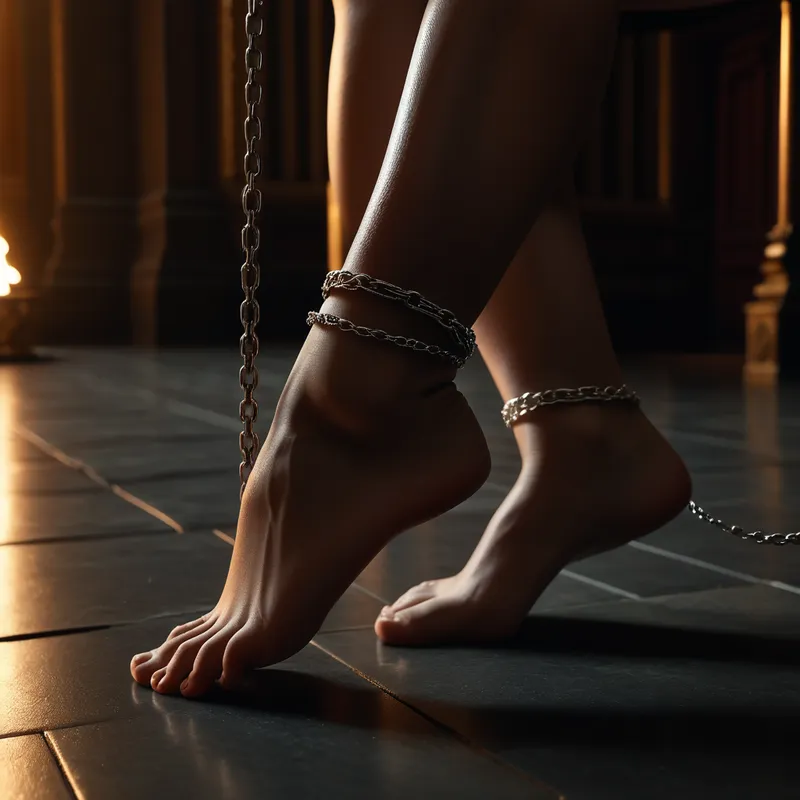
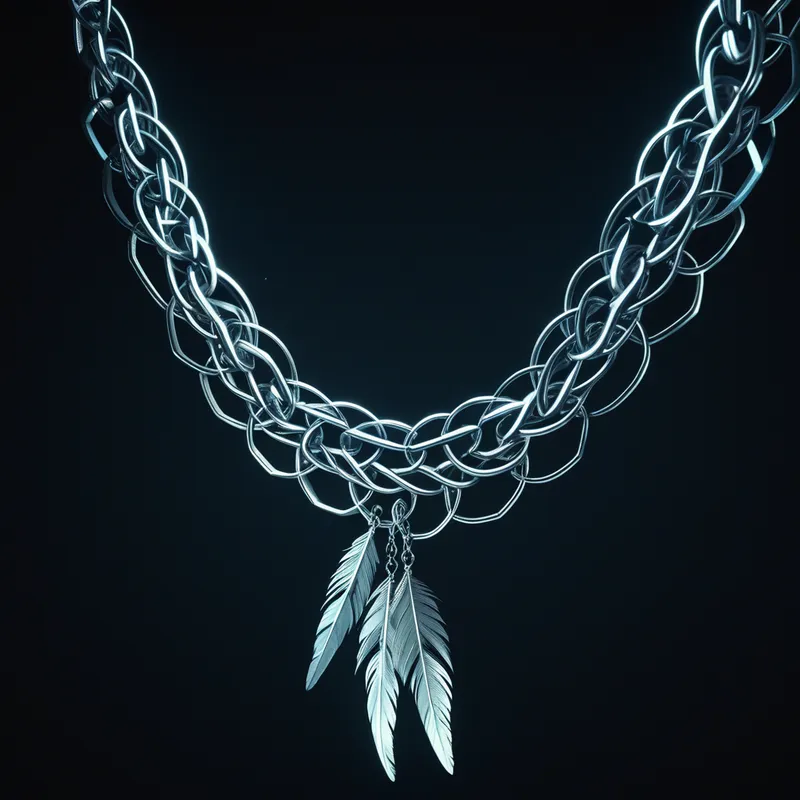
The chain that binds the shapeshifter is never made of iron, but of forgotten names and unspoken truths.
The transformations are not random. They follow an alchemical [progression](/symbols/progression “Symbol: Symbolizes forward movement, development, or advancement through stages toward a goal or state of being.”/): from the earthly [queen](/symbols/queen “Symbol: A queen represents authority, power, nurturing, and femininity, often embodying leadership and responsibility.”/) (lead), to the dissolved, passive moth ([nigredo](/myths/nigredo “Myth from Alchemical culture.”/)), to the reborn but unaware woman ([albedo](/symbols/albedo “Symbol: In alchemy, the whitening stage representing purification, spiritual ascension, and the emergence of consciousness from darkness.”/)), and finally to the sovereign, integrated hawk ([rubedo](/myths/rubedo “Myth from Alchemical culture.”/)). Midir represents the possessive complex—a powerful, often enchanting force within the [psyche](/myths/psyche “Myth from Greek culture.”/) that seeks to own and fix an [aspect](/symbols/aspect “Symbol: A distinct feature, quality, or perspective of something, often representing a partial view of a larger whole.”/) of the soul, freezing its natural fluidity. The final [flight](/symbols/flight “Symbol: Flight symbolizes freedom, escape, and the pursuit of one’s aspirations, reflecting a desire to transcend limitations.”/) is not an escape, but an [ascension](/symbols/ascension “Symbol: A profound sense of rising upward, often representing spiritual enlightenment, personal growth, or transcendence beyond physical limitations.”/) to a different [plane](/symbols/plane “Symbol: Dreaming of a plane often symbolizes a desire for freedom, adventure, and new possibilities, as well as transitions in life.”/) of being, where duality (the two hawks) exists in dynamic, aerial partnership rather than envious [stasis](/symbols/stasis “Symbol: A state of inactivity, equilibrium, or suspension where no change or progress occurs, often representing psychological or existential paralysis.”/).
The Dreamer’s Resonance
When this myth stirs in the modern dreamer, it signals a profound somatic and psychological process: the struggle for integration against [the force](/myths/the-force “Myth from Science Fiction culture.”/) of coercive fixation. You may dream of being trapped in a form not your own—an animal, an object, a younger version of yourself. This is the somatic echo of the moth-phase, the feeling of being acted upon, powerless, your true voice silenced.
Dreams of sudden, unexpected transformation—growing wings, finding you can breathe underwater—mark the awakening of the hawk-potential. These are not fantasies, but psychic realities breaking through. The anxiety in such dreams often comes not from the change itself, but from the perceived loss of the familiar, “safe” prison. The dream-ego, like Étaín’s mortal husband, may fight to keep you in the known hall. The myth playing out in the dreamscape is the soul’s insistence that to remain fixed is to betray your own sovereignty. The process is one of dis-identification: you are not your job, your trauma, your role in the family. You are the one who can wear, and shed, all forms.
Alchemical Translation
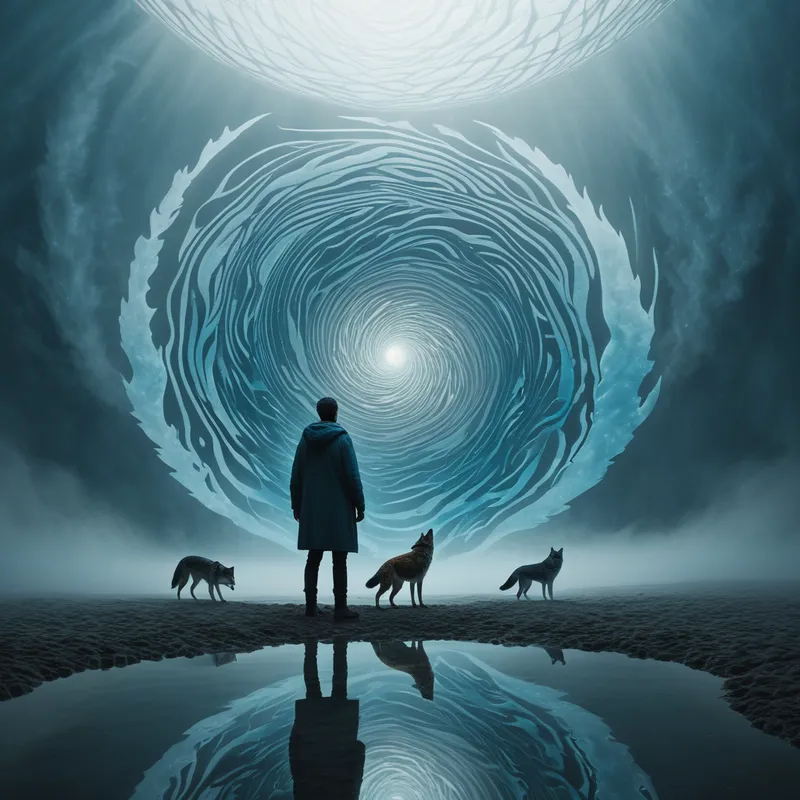
For the modern individual navigating the path of individuation, the Shapeshifter myth is a direct map for psychic transmutation. The goal is not to become a hawk and flee the world, but to achieve the capacity of the hawk while walking [the earth](/myths/the-earth “Myth from Hindu culture.”/) as a woman. It is the development of psychological fluidity.
The first step is recognizing the “Midir complex”—the inner voice or pattern that seeks to possess and define you rigidly. “I am a victim,” “I must be perfect,” “I am only what they see.” This is the druidic spell. The alchemical work is to drink the cup of experience (like the chieftain’s wife) that dissolves this fixed form, even if it leads through a period of dissolution and confusion (the moth, the rebirth without memory).
Individuation is not about creating a better statue of yourself, but about learning the sacred art of becoming momentarily, and perfectly, river, stone, and wind.
The final translation is the reclaiming of your true name—your essential, non-negotiable value and purpose. When that name is spoken to yourself, by yourself, the final transformation occurs. The hawk that emerges is the integrated Self. It sees the whole landscape of your life from a detached, compassionate height. It can act with fierce precision to protect your boundaries (sovereignty) but is no longer bound to the ground of literal, rigid identity. You gain [the magician](/myths/the-magician “Myth from Tarot culture.”/)’s archetypal power: the conscious understanding that while you inhabit a form, you are not limited to it. Your identity becomes a chosen vessel, not a forgotten chain, and in that freedom, you finally rule the inner kingdom.
Associated Symbols
Explore related symbols from the CaleaDream lexicon: