The Seven Planetary Gods Myth Meaning & Symbolism
A celestial myth of seven wandering gods, whose rebellion and binding forged the cosmic order and the human experience of time and fate.
The Tale of The Seven Planetary Gods
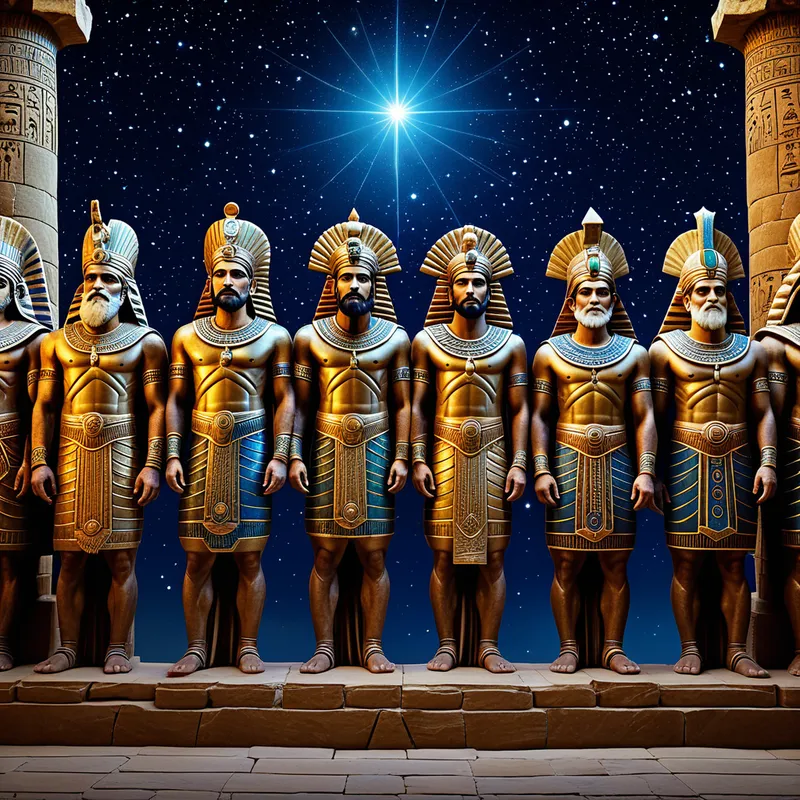
Before the counting of days, when the sky was a dark and formless sea, there moved the Seven. They were not like the fixed stars, those patient sentinels of the firmament. No, these were the wanderers, the restless ones, the children of the first chaos. Their names were whispered by the wind: Shamash, the blazing judge; Sin, the gentle measurer; Ishtar, the radiant and terrible; Marduk, the storm-king; Ninurta, the stern warrior; Nabu, the swift word; and Nergal, the lord of the scorched earth.
They danced a wild, unpredictable dance across the heavens. There was no rhythm to their steps, no pattern to their paths. Their light was beautiful but terrifying, a sign of capricious will, not cosmic law. The younger gods of the earth and sky trembled, for how could they build a world upon a foundation of such splendid anarchy? The Seven’s freedom was a tyranny of chance.
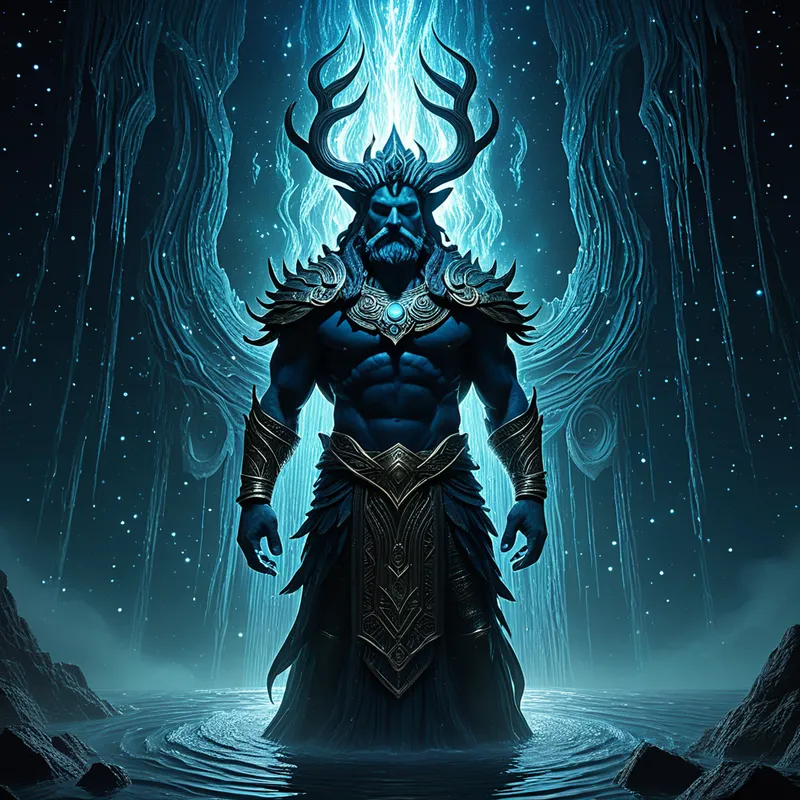
The great god Ea, who knows the shape of all things in the deep waters of Apsu, perceived the danger. This celestial chaos echoed the primeval tumult, the war of the generations of gods that had nearly unmade all existence. He went to the assembly of the gods, his voice the sound of deep, flowing waters. “The Wanderers must be bound,” he declared. “Not in prison, but in purpose. Their wildness must be given a road. Their light must mark the hours, the months, the years. They must become the measures of destiny itself.”
And so, in the secret places where clay is still soft with the memory of creation, Ea, with the aid of Tiamat’s subdued essence, fashioned not chains of iron, but fetters of fate. He wove them from the substance of time and the mathematics of the spheres. These were bonds of sublime geometry, paths etched into the very fabric of the sky.
The night of the binding was a silent, awe-filled spectacle. As the Seven wandered into the appointed sector of the heavens, the celestial roads—the ecliptic—glistened into being beneath their feet. They did not so much stop as find their groove, the inevitable track that had always awaited them. Shamash was given the east-to-west road of day; Sin was given his waxing and waning cycle; Ishtar, her dazzling morning and evening apparitions. Each was assigned a station, a speed, a domain. Their rebellion was not punished; it was translated. Their wild fire was banked into the eternal lamps of the clock of the world. From that night forth, a shepherd could look up and know the season, a king could seek an omen, and a human soul could feel the vast, orderly wheel of destiny turning, guided by the seven luminous hands of the bound gods.
Cultural Origins & Context
This myth is not a single narrative poem like the Enuma Elish, but a theological and astrological doctrine woven into the very fabric of Babylonian civilization. It emerged from the meticulous night-watch of the ummânu, the scholar-priests who mapped the heavens from their ziggurat observatories. For them, the planets were not mere lights but manifestations of the great gods, and their observed, predictable movements were proof of a divine covenant of order.
The myth functioned as the sacred foundation of Babylonian astrology and cosmology. It explained why the planets moved as they did—they were walking their divine, pre-ordained paths. It justified the practice of celestial omen-reading (astrology), for if the gods’ movements were regulated, then their positions at any moment were a deliberate divine communication. Society was a microcosm of this cosmic state: just as the gods accepted their stations for the greater order, so too must every citizen, from king to slave, accept their place within the rigid, hierarchical structure of Mesopotamian life. The myth was passed down through ritual, astronomical tablets, and the training of scribes, cementing the idea that human fate was inextricably linked to, and mirrored by, the celestial drama above.
Symbolic Architecture
At its core, this myth is about the imposition of kosmos (order, harmony) upon chaos. The Seven Planets represent the primal, unintegrated powers of the psyche—raw drives, brilliant talents, compulsive emotions—that wander uncontrollably, creating internal and external turmoil. They are the “complexes” in their sovereign, autonomous state.
The binding is not a suppression, but an initiation into meaning. A wild talent becomes a craft only when it accepts the discipline of form.
Ea, the god of wisdom and the deep unconscious (Apsu), represents the ordering principle of the Self. He does not destroy the planetary powers; he provides them with a mandala, a sacred architecture—the ecliptic and the Zodiac. This is the symbolic structure of consciousness itself. Each planet-god, by accepting its path, becomes an archetypal function within a greater whole: Shamash (the Sun) as conscious awareness and judgment; Sin (the Moon) as the rhythmic, feeling unconscious; Ishtar (Venus) as relatedness and value; Marduk (Jupiter) as the expansive, guiding principle; and so on. Their rebellion is the necessary chaos of potential; their binding is the equally necessary act of integration that makes a coherent personality and a meaningful life possible.
The Dreamer’s Resonance
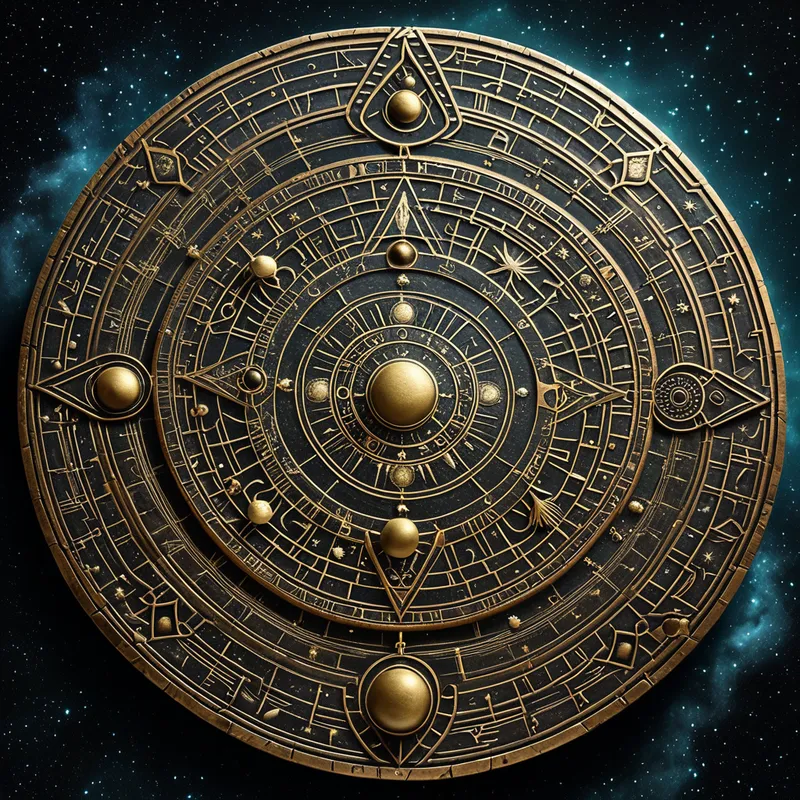
When this myth stirs in the modern dreamer, it often manifests as dreams of chaotic, compelling, or frightening celestial phenomena: seven bright lights moving erratically in the bedroom, a planet breaking from its orbit, or the terrifying beauty of a starless, lawless sky. Somaticly, this can correlate with feelings of being “all over the place,” driven by conflicting impulses, or experiencing life as a series of random, overpowering events.
The psychological process is one of confrontation with autonomous complexes. The dream ego is the younger gods, trembling before the unbound power of its own inner “planets.” The dream is signaling a critical juncture: the raw materials of the psyche are demanding recognition and integration. The anxiety comes from the lack of an inner Ea—a missing capacity for deep, reflective ordering. The dreamer is being called to move from being a victim of internal chaos to becoming the architect of their own inner cosmos, to find the “fetters of fate” which are, paradoxically, the paths to true freedom and purpose.
Alchemical Translation
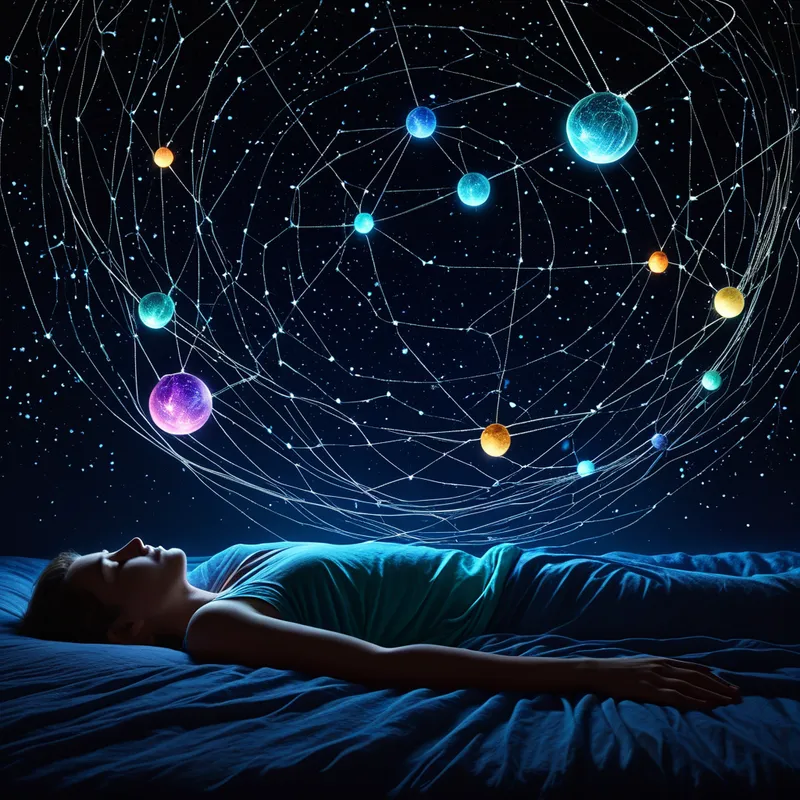
The alchemical process mirrored here is coagulatio—the fixing of the volatile. The wandering, mercurial spirits (the planets) are fixed into their rightful places, transforming chaotic prima materia into the opus of the ordered self. For the individual undergoing individuation, this myth models a non-violent integration of shadow and anima/animus contents.
One does not slay the inner demons; one gives them a job and a name in the economy of the soul.
The modern seeker’s journey is to become their own Ea. This involves descending into the Apsu of the unconscious—through introspection, active imagination, or engaging with deep emotions—to discover the innate “mathematics of the sphere,” the unique, authentic pattern that belongs to one’s own soul. Integrating the “Seven” means consciously acknowledging and directing one’s core drives: ambition (Nergal/Mars), love (Ishtar/Venus), intellect (Nabu/Mercury), morality (Shamash/Sun), intuition (Sin/Moon), growth (Marduk/Jupiter), and discipline (Ninurta/Saturn). To bind them is to cease identifying with each passing impulse and to instead witness them moving along the greater circuit of the Self. The triumph is not control, but orchestration. The individual becomes a microcosm, a stable heaven within, where the luminous gods of their own nature move in a harmonious, meaningful dance, casting the light by which they can finally read their own destiny.
Associated Symbols
Explore related symbols from the CaleaDream lexicon: