The Self Myth Meaning & Symbolism
The story of the psyche's journey from fragmentation to wholeness, where the conscious ego encounters the vast, guiding totality of the unconscious Self.
The Tale of The Self
In the beginning, there was a kingdom, but it was a kingdom of one. A solitary ruler sat upon a throne of polished reason, in a castle built of certainties. This ruler, the Ego, believed the castle walls contained all that was real and worthy. The land beyond was a wild, uncharted territory—a whispering forest of forgotten memories, a churning sea of strange impulses, a mountain range of towering, shadowy figures. [The Ego](/myths/the-ego “Myth from Jungian culture.”/) called this land the Unconscious, and deemed it perilous.
But in the deepest heart of that wild land, at [the summit](/myths/the-summit “Myth from Taoist culture.”/) of the highest mountain, there existed a presence. It was not a king, but the Kingdom itself. It was the Self. It was the sun around which the Ego, unknowing, orbited. It was the source of the strange dreams that drifted like fog into the castle at night, and the origin of the sudden, inexplicable yearnings that would seize the ruler’s heart.
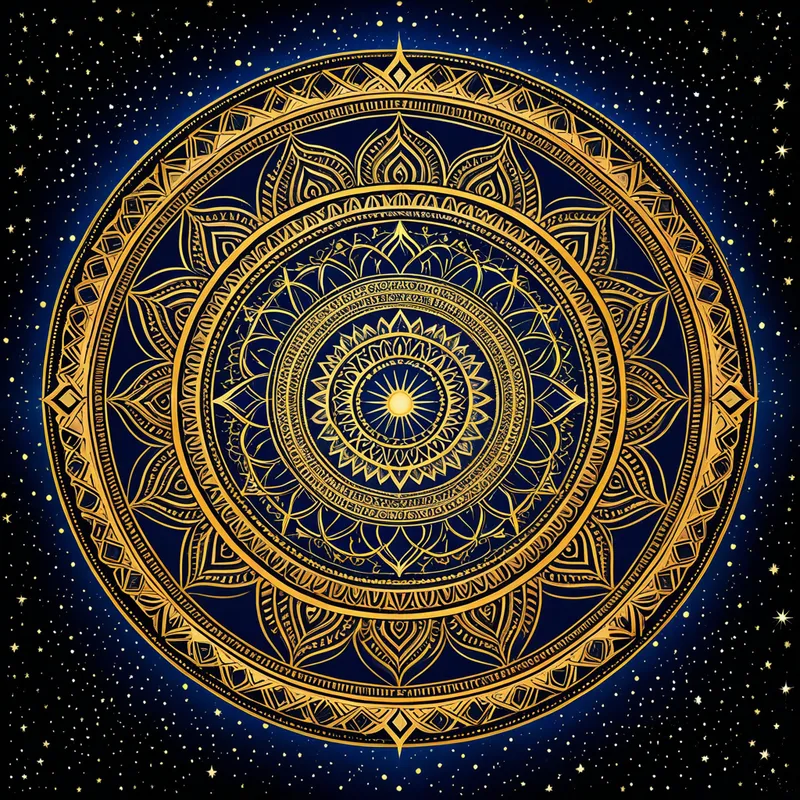
One night, a dream came that would not be ignored. It showed the Ego a magnificent, shimmering [Mandala](/myths/mandala “Myth from Buddhist culture.”/)—a circle of impossible complexity and beauty, and at its center, a face both utterly alien and profoundly familiar. Upon waking, the Ego found a single, perfect golden thread had appeared, spooling from the foot of the throne, out the castle gate, and into the dark woods. It was an invitation, and a command.
The journey was the unmaking of a world. The familiar castle vanished behind the trees. The Ego encountered figures from the shadows: the Shadow, a twin of hidden rage and desire; the Anima, a captivating and terrifying spirit of soul; the Animus, a figure of relentless, penetrating thought. Each meeting was a battle and a baptism, stripping away another layer of the Ego’s certainty. It was led astray by will-o’-the-wisps of illusion and forced to confront monsters of its own making.
Just as despair threatened to dissolve the traveler entirely, the golden thread led to a vast, silent lake at the mountain’s base. Peering in, the Ego did not see its own, familiar reflection. It saw [the Mandala](/myths/the-mandala “Myth from Architectural culture.”/) from the dream, and within it, the totality of the journey: the castle, the forest, [the shadow](/myths/the-shadow “Myth from Jungian culture.”/), the spirit, the mountain. It saw that it was not the ruler of this kingdom, but a vital, necessary part of its landscape. The reflection spoke without words: You are not the center, but you are essential to the circle.
The mountain remained, but the need to conquer it faded. The Ego turned, not back to the old castle, but to begin the true work: building a bridge between the conscious shore and the unconscious depths, guided now by the distant, steady light of the Self.

Cultural Origins & Context
This is not a myth carved in stone or sung in ancient epics. It is a living mythology born in the consulting rooms and private journals of the 20th century, articulated by the Swiss psychiatrist Carl Gustav Jung. The “culture” is that of analytical psychology itself—a tradition passed down not by bards, but by analysts, therapists, and individuals engaged in the work of Individuation.
Its primary texts are dreams, active imaginations, and the symbolic patterns that erupt from the [psyche](/myths/psyche “Myth from Greek culture.”/) during times of crisis or profound growth. Jung and his successors collected these personal narratives, finding in them a common, archetypal grammar. The myth of the Self was thus reconstructed from the shared psychic substrate of humanity, making it a modern, psychological creation myth. Its societal function is therapeutic and transformative, providing a map for navigating inner chaos and finding meaning beyond the narrow confines of the personal ego.
Symbolic Architecture
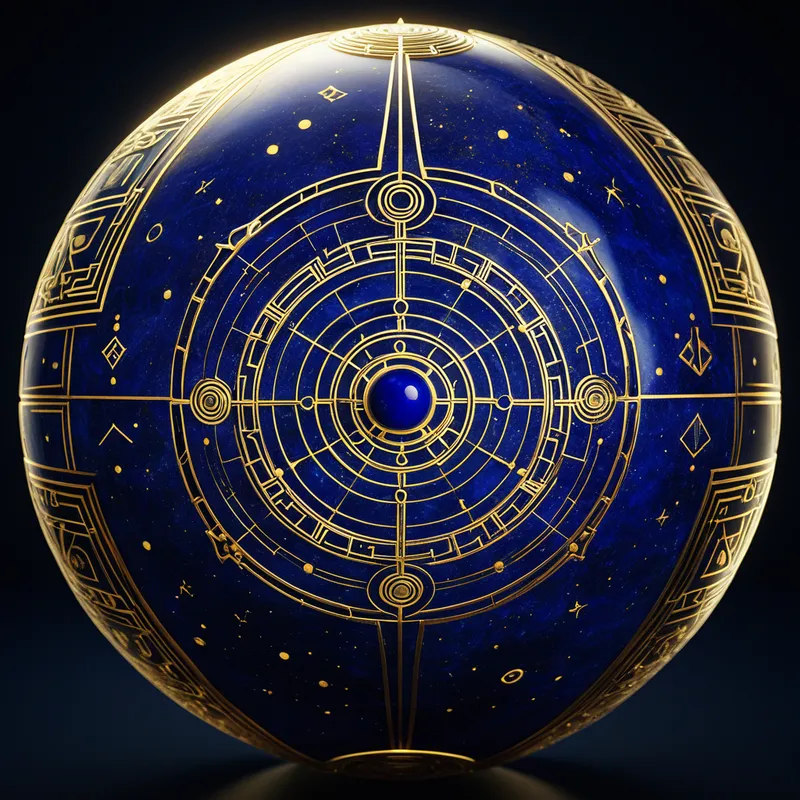
The myth’s core [symbol](/symbols/symbol “Symbol: A symbol can represent an idea, concept, or belief, serving as a powerful tool for communication and understanding.”/) is the Self as the central, organizing principle of the total psyche. It is the [archetype](/symbols/archetype “Symbol: A universal, primordial pattern or prototype in the collective unconscious that shapes human experience, behavior, and creative expression.”/) of meaning and the [blueprint](/symbols/blueprint “Symbol: A blueprint represents the foundational plan or design for something, often symbolizing potential, structure, and the mapping of one’s inner self or future.”/) for wholeness.
The Self is the sun, and the ego is the earth that believes, for a time, it is the center of all things.
The [Mandala](/symbols/mandala “Symbol: A sacred geometric circle representing wholeness, the cosmos, and the journey toward spiritual integration.”/) is its perfect [emblem](/symbols/emblem “Symbol: A symbolic design representing identity, authority, or ideals, often used in heraldry, logos, or artistic expression.”/)—a squared circle representing the union of opposites (conscious/unconscious, masculine/feminine, [chaos](/symbols/chaos “Symbol: In Arts & Music, chaos represents raw creative potential, uncontrolled expression, and the breakdown of order to forge new artistic forms.”/)/order). The [journey](/symbols/journey “Symbol: A journey in dreams typically signifies adventure, growth, or a significant life transition.”/) of the Ego symbolizes the necessary [inflation](/symbols/inflation “Symbol: A dream symbol representing feelings of diminishing value, loss of control, or expansion beyond sustainable limits in one’s life or psyche.”/) and subsequent humiliation of conscious [identity](/symbols/identity “Symbol: Identity represents the sense of self, encompassing personal beliefs, cultural background, and social roles.”/). One must first believe oneself to be the sole ruler (inflation) to have the courage to embark, and then one must have that identity shattered (humiliation) to make [space](/symbols/space “Symbol: Dreaming of ‘Space’ often symbolizes the vastness of potential, personal freedom, or feelings of isolation and exploration in one’s life.”/) for the greater totality.
The wild [landscape](/symbols/landscape “Symbol: Landscapes in dreams are powerful symbols representing the dreamer’s emotional state, personal journey, and the broader context of life situations.”/) represents the untamed, autonomous [nature](/symbols/nature “Symbol: Nature symbolizes growth, connectivity, and the primal forces of existence.”/) of the unconscious, which operates by its own laws. The guiding golden thread is the subtle, often overlooked promptings of the Self—synchronicities, compelling dreams, and those inexplicable pulls toward a [destiny](/symbols/destiny “Symbol: A predetermined course of events or ultimate purpose, often linked to spiritual forces or cosmic order, representing life’s inherent direction.”/) that the conscious mind cannot yet comprehend.
The Dreamer’s Resonance
When this myth stirs in modern dreams, it announces a profound shift in the dreamer’s psychological foundation. Dreams of searching for a lost center, of discovering a hidden room in one’s house, or of encountering a supremely wise, often numinous figure (a guru, a king, a divine child) are its hallmarks.
Somatically, this process can feel like a dissolution—a literal “falling apart” accompanied by anxiety or depression as old ego structures crack. This is often followed by dreams of profound integration: healing fountains, sacred marriages (Coniunctio), or the appearance of a stabilizing, geometric Mandala. The psyche is physically and emotionally reorganizing itself around a new, more authentic center. The dreamer is not having a dream; they are being dreamed by the Self into a new form.
Alchemical Translation
The myth models the alchemical Opus Magnum—[the Great Work](/myths/the-great-work “Myth from Alchemical culture.”/) of psychic transmutation. The base metal of the fragmented, ego-led personality is subjected to the fires of conflict ([Nigredo](/myths/nigredo “Myth from Alchemical culture.”/)) in the forest of the unconscious. The encounters with shadow and soul are the washing and separating ([Separatio](/myths/separatio “Myth from Alchemical culture.”/)) of elements.
Individuation is the alchemy of the soul, where the lead of the persona is transmuted into the gold of the Self, not by avoiding darkness, but by circulating through it.
The vision in the lake is the whitening (Albedo), a lunar illumination by the reflective wisdom of the Self. The return to build the bridge represents the reddening ([Rubedo](/myths/rubedo “Myth from Alchemical culture.”/))—the embodiment of this new consciousness in [the world](/myths/the-world “Myth from Tarot culture.”/) of daily life. The ego does not become the Self; that is the fatal error of inflation. Instead, it becomes its faithful servant and vessel, creating a conscious relationship between the personal and the transpersonal. The [triumph](/myths/triumph “Myth from Roman culture.”/) is not conquest, but connection; not perfection, but the enduring, dynamic tension of a completed circle.
Associated Symbols
Explore related symbols from the CaleaDream lexicon: