The Secret Garden in Attar's 'Conference of the Birds' Myth Meaning & Symbolism
A flock of birds journeys to find their legendary king, only to discover the ultimate truth lies in the annihilation of the self within a hidden garden.
The Tale of The Secret Garden in Attar’s ‘Conference of the Birds’
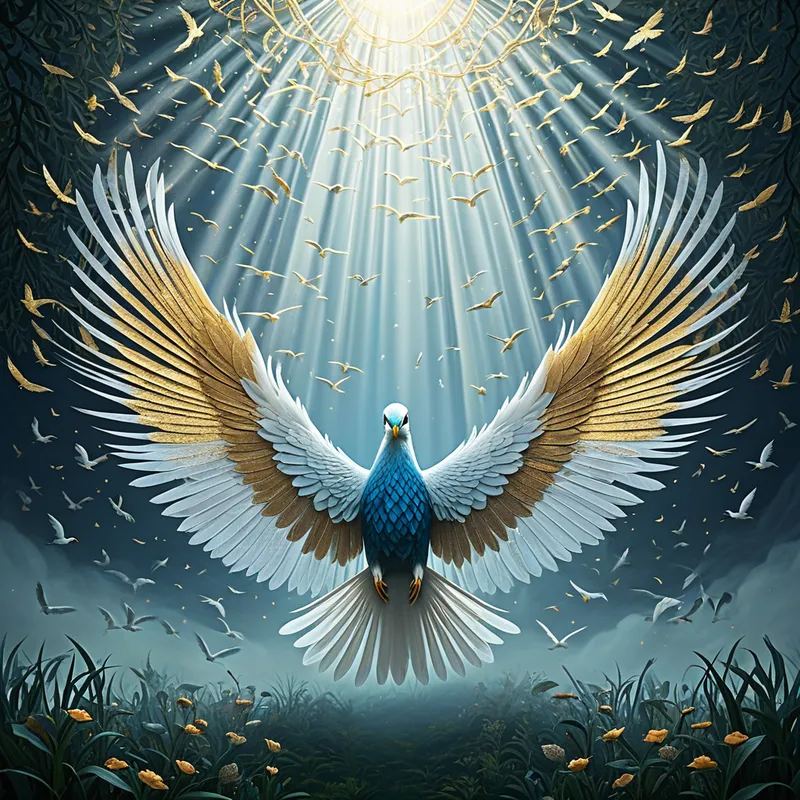
Listen, and let the tale unfold. In a time before time was measured, in a land where [the desert](/myths/the-desert “Myth from Biblical culture.”/) whispered secrets to [the sky](/myths/the-sky “Myth from Persian culture.”/), the birds of [the world](/myths/the-world “Myth from Tarot culture.”/) gathered in a state of great distress. They were a parliament of feathers and song, from the proud eagle to the humble sparrow, yet their hearts were heavy with a singular longing. They lived without a king, and a world without a sovereign is a nest without a center.
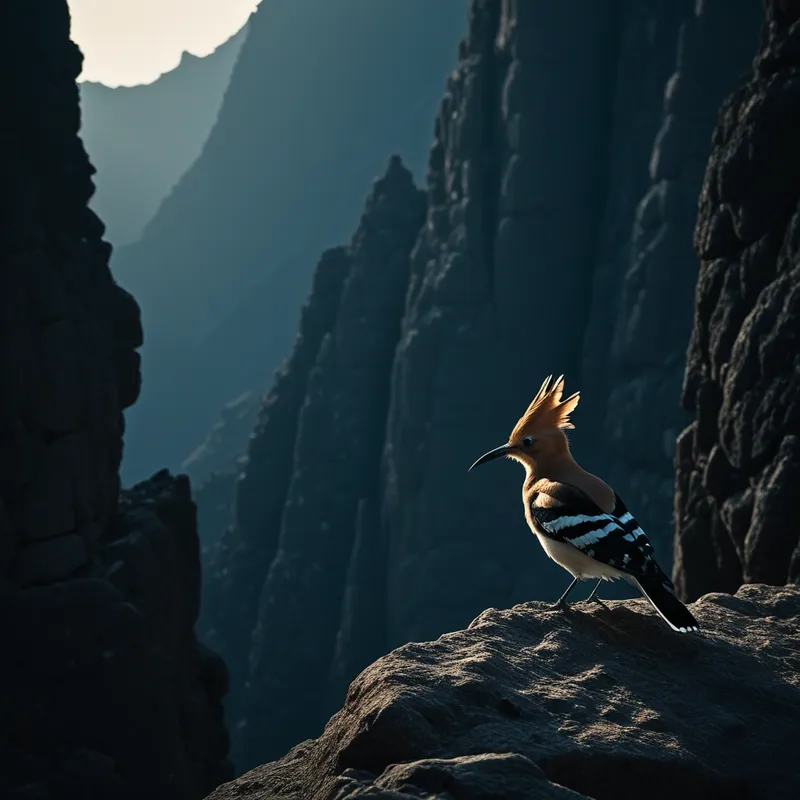
A hoopoe, its crown a regal crest of truth, alighted before them. It spoke of a legendary monarch, the [Simurgh](/myths/simurgh “Myth from Persian culture.”/), who dwelt far beyond the known world, in the sacred, hidden heart of the Mount Qaf. The [Simurgh](/myths/simurgh “Myth from Persian culture.”/), it was said, was the king they sought, a being of such sublime perfection that to behold it was to know the meaning of existence. But the path, the hoopoe warned, was a journey of seven treacherous valleys.
And so, the great conference set forth. Many turned back at the first valley, the Valley of the Quest, where all earthly attachments were stripped away. More perished in the Valley of Love, where reason burned to ash in the furnace of longing. They traversed the Valley of Insight, where knowledge itself became a blinding light, and the Valley of Detachment, where every desire, even for the journey’s end, had to be surrendered. Through the Valley of Unity, where multiplicity shimmered and dissolved, and the Valley of Bewilderment, where all maps were lost and the soul knew only stupefied awe, they stumbled.
At last, a mere thirty birds, survivors of the long annihilation, reached the final threshold. Before them lay not a palace, but a sacred, silent garden—a secret garden veiled in the purest light. A celestial attendant emerged, holding a scroll. He read the names of those who had persevered, and the thirty birds stepped forward. Then, he presented them with a mirror.
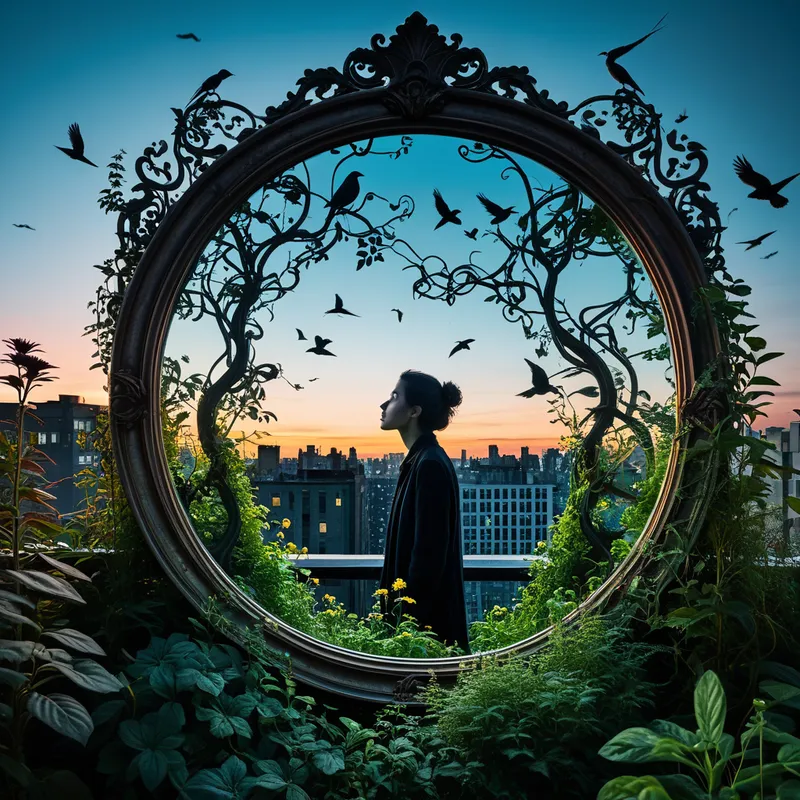
In that polished surface, they did not see the feathered reflections they expected. They saw only the glorious, radiant form of the Simurgh. In a flash of unbearable understanding, they realized the secret. Si murgh—in their own tongue, it meant “Thirty Birds.” The king they had sought across impossible distances, through valleys of death and rebirth, was not an external lord. It was their own collective, purified essence. The seeker and the sought, the lover and the beloved, were one. In that moment of sublime recognition, in the heart of the secret garden, they were annihilated into the Simurgh, losing themselves utterly to find the only Self that truly is.
Cultural Origins & Context
This myth is the culminating allegory of Mantiq al-Tayr ([The Conference of the Birds](/myths/the-conference-of-the-birds “Myth from Persian culture.”/)), a masterpiece of Sufi mystical poetry composed in the 12th century by Farid ud-Din Attar. Attar lived in Nishapur, a major center of Persian culture and Islamic scholarship, during a [golden age](/myths/golden-age “Myth from Universal culture.”/) of Sufi thought. Sufism, the mystical dimension of Islam, sought direct, experiential knowledge of the Divine (Allah), often through metaphor, poetry, and the language of love and longing.
Attar did not invent the Simurgh, a being rooted in pre-Islamic Persian mythology, but he alchemized it into the central symbol of Sufi theology. The poem, written in masnavi (rhyming couplet) form, was designed to be recited, heard, and meditated upon. Its societal function was not merely entertainment but spiritual instruction. It provided a roadmap for the soul (nafs)—represented by the diverse, flawed birds—on its journey (suluk) toward divine reality (al-Haqq). It was a myth passed from teacher to disciple, a story to be lived, not just understood.
Symbolic Architecture
The myth’s power lies in its layered, precise [symbolism](/symbols/symbolism “Symbol: The use of symbols to represent ideas or qualities, often conveying deeper meanings beyond literal interpretation. In dreams, it’s the language of the unconscious.”/). The birds represent the different [human](/symbols/human “Symbol: The symbol of a human represents individuality, complexity of emotions, and social relationships.”/) personalities and spiritual stations—the egoistic hawk, the love-struck nightingale, the timid partridge—each with a specific flaw to overcome. The seven valleys are the sequential, non-negotiable stages of spiritual purification and awakening.
The Secret Garden is not a place, but a state of consciousness; it is the ground of being that appears only when the illusion of a separate self has been completely traversed.
The Hoopoe is the guide, the [inner voice](/symbols/inner-voice “Symbol: A spiritual or subconscious guide representing intuition, conscience, or higher self, often seen as a connection to divine wisdom or ancestral knowledge.”/) of wisdom or the external sheikh. [The mirror](/myths/the-mirror “Myth from Various culture.”/) is the ultimate [symbol](/symbols/symbol “Symbol: A symbol can represent an idea, concept, or belief, serving as a powerful tool for communication and understanding.”/) of self-recognition and [revelation](/symbols/revelation “Symbol: A sudden, profound disclosure of truth or insight, often through artistic or musical means, that transforms understanding.”/). But the core alchemical formula is the pun: Si-murgh (Thirty Birds) as the Simurgh. This reveals the myth’s profound psychological and theological [truth](/symbols/truth “Symbol: Truth represents authenticity, honesty, and the quest for knowledge beyond mere appearances.”/): the divine is not a [projection](/symbols/projection “Symbol: The unconscious act of attributing one’s own internal qualities, emotions, or shadow aspects onto external entities, people, or situations.”/) out there, but the realized, unified essence of the purified self-in-[community](/symbols/community “Symbol: Community in dreams symbolizes connection, support, and the need for belonging.”/). The annihilation (fana) of the thirty birds is not destruction, but the [dissolution](/symbols/dissolution “Symbol: The process of breaking down, dispersing, or losing form, often representing transformation, release, or the end of a state of being.”/) of [the ego](/myths/the-ego “Myth from Jungian culture.”/)’s boundaries into a vaster, truer [identity](/symbols/identity “Symbol: Identity represents the sense of self, encompassing personal beliefs, cultural background, and social roles.”/).
The Dreamer’s Resonance
When this myth stirs in the modern unconscious, it often manifests as dreams of a profound, elusive quest. One might dream of searching for a hidden room in a familiar house, a lost key to a forgotten garden, or a revered but faceless teacher. There is a somatic quality of weary perseverance—dreams of crossing endless landscapes, swimming against strong currents, or climbing a mountain that never seems to have a summit.
Psychologically, this signals a process of decentering. The ego, which believes itself to be the sole hero of its story, is being called to undertake a journey where it is not the winner, but the sacrifice. The dreamer is in the valleys, experiencing the necessary deaths: the death of an old identity (Quest), the burning away of a limiting passion (Love), the confusion of outdated beliefs (Bewilderment). To dream of finally seeing the mirror is rare and profound, indicating a moment of radical self-recognition where one’s deepest wound and highest purpose are revealed to be the same.
Alchemical Translation
For the modern individual, this myth models the process of individuation—not as a project of building a better, stronger ego, but of dissolving its illusory autonomy to discover [the Self](/myths/the-self “Myth from Jungian culture.”/). The journey begins with a holy discontent, a sense that one’s current identity is a cage.
The alchemy occurs not in finding the treasure, but in realizing you are the crucible in which the base metal of the ego is being transmuted.
The seven valleys translate to the non-linear, often painful stages of psychological growth: confronting [the shadow](/myths/the-shadow “Myth from Jungian culture.”/) (Quest), navigating the complexities of eros and relationship (Love), acquiring then transcending intellectual knowledge (Insight), releasing neurotic attachments (Detachment), experiencing synchronicity and interconnection (Unity), and enduring [the dark night of the soul](/myths/the-dark-night-of-the-soul “Myth from Christian Mysticism culture.”/) where all meaning evaporates (Bewilderment). The “thirty birds” represent the fragmented parts of our own [psyche](/myths/psyche “Myth from Greek culture.”/)—our inner critic, child, [persona](/myths/persona “Myth from Greek culture.”/), anima/animus—that must be acknowledged and integrated.
The arrival at the Secret Garden is the moment of psychic integration, where one no longer identifies with any single part but with the wholeness that contains them. The mirror shows that the authority, the wisdom, the “kingdom of heaven” one sought externally was, all along, the birthright of the unified Self. The annihilation is the final release of the ego’s claim to ownership, resulting not in oblivion, but in a liberated participation in existence. One becomes, as the myth concludes, a mirror reflecting nothing but the eternal.
Associated Symbols
Explore related symbols from the CaleaDream lexicon: