The Sable and the Sky Myth Meaning & Symbolism
A myth where a dark sable's sacrifice to reach the unreachable sky weaves the first threads of destiny, binding earth and heaven.
The Tale of The Sable and the Sky
Listen. In the time before time, when the world was raw and new, the Sky was a distant, cold father. He arched high above the Earth, a dome of deepest blue by day and a cloak of impenetrable black by night, studded with the cold, watchful eyes of the stars. Between them lay the Great Silence, a vast and empty gulf. The Earth teemed with life—the mutter of pines, the rush of rivers, the pad of paws on soft moss—but it was a life turned inward, a circle without a center. All creatures looked down, or at best, across. None looked up, for the Sky was unreachable, a perfect, untouchable ceiling.
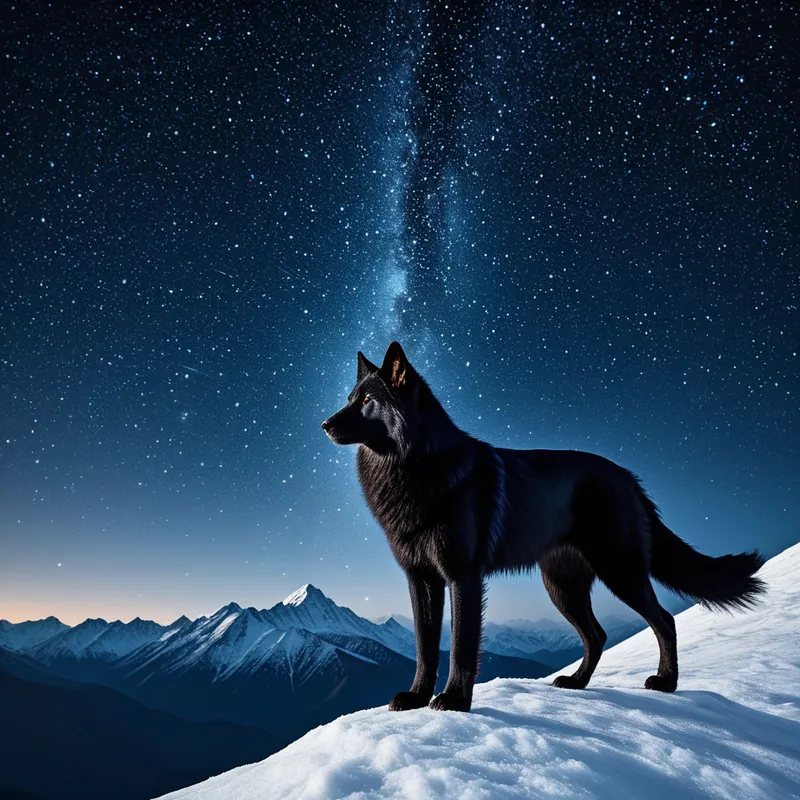
But in the deepest Forest, where sunlight fell in dappled coins on the needle-strewn floor, lived a Sable. Its fur was not merely brown, but the very essence of darkness—the darkness of rich soil, of shadowed hollows, of the space between stars. It was a creature of the Earth’s deepest embrace. Yet, in its small, bright eyes burned a curious fire, a reflection of something it could not name. Each night, it would climb the tallest pine on the highest ridge, and there it would sit, its nose quivering, gazing into the infinite black.
The Sky noticed. A single, cold star pulsed. A whisper moved through the high winds. “Why do you watch me, little shadow of the ground? I am forever beyond your reach.”
The Sable’s voice was a soft rustle. “Because you are beautiful. And because the silence between us is a loneliness that aches in my bones.”
The Sky was silent for an age, the stars wheeling slowly. “To bridge a gulf,” it sighed, a sound like the aurora flickering to life, “requires a thread. And a thread requires a sacrifice. You must give me something of your world, something perfect and self-contained, and you must place it where your world touches the highest possibility of itself. Only then might a thread be spun.”
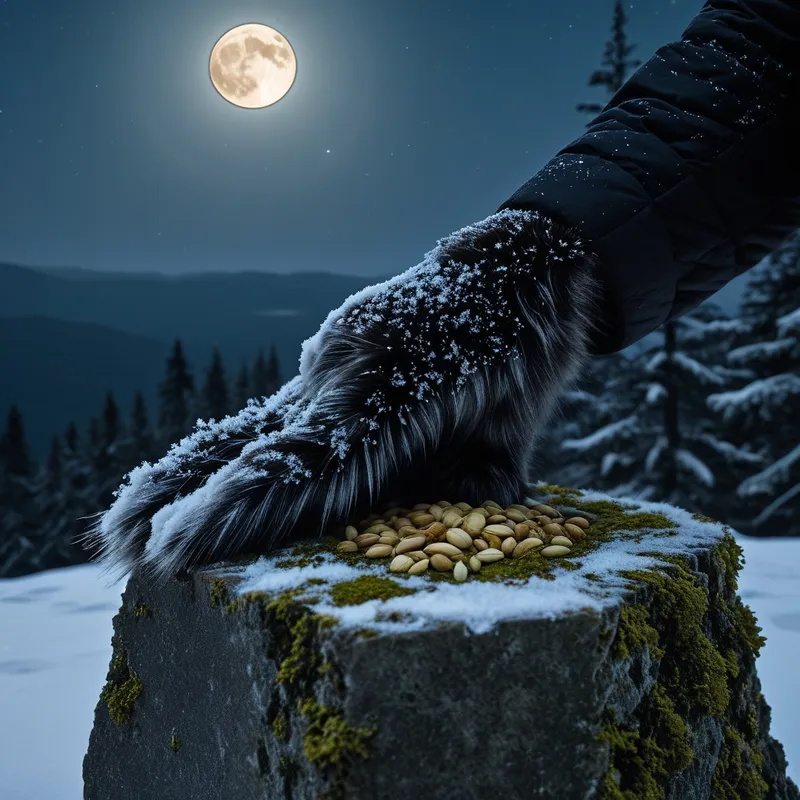
The Sable descended, its heart a drum of purpose. What was perfect and self-contained? Not the roaring River, for it was never the same. Not the mighty Tree, for it reached but could not let go. Then it saw it: a single pine nut, fallen in a cradle of moss. A tiny, hard capsule holding the entire pattern of a forest within it. A perfect seed.
The journey was the struggle. The Sable took the nut in its mouth and began to climb. Not a tree this time, but the very bones of the Earth—the jagged, wind-scoured Mountain. Ice cut its paws. Winds stole its breath. The air grew thin, and the world below became a patchwork of green and white. The Sky loomed ever larger, colder, more immense. Doubt, a heavier burden than the mountain itself, whispered that it was a fool, a dark speck defying the cosmic order.
Finally, upon the ultimate peak, where stone met wind and nothing else grew, the Sable stood. It placed the perfect pine nut upon a bare altar of rock. It looked up, offering not just the seed, but its own yearning, its fatigue, its very will.
For a moment, nothing. Then, a single shaft of starlight, sharp as a needle, pierced the night and struck the nut. The nut did not burn. It glowed from within. And from that point of contact, a thread began to unspool—a filament of silver light, finer than spider silk, stronger than fate. It rose from the nut, weaving into the fabric of the Sky. And from the Sable’s uplifted form, from its dark, earth-bound essence, another thread, this one of deepest umber, spiraled upward to meet it. They intertwined, the dark and the light, forming the first delicate bridge.
The Sable, its Spirit poured into the thread, dissolved. Its dark fur became the velvet of the night itself. Its bright eyes became two new, gentle stars. The sacrifice was complete. The Great Silence was broken. Now, the Sky could send down rain, and the Earth could send up mist. Dreams could travel up, and inspiration could travel down. The gulf was bridged, not by force, but by a thread spun from yearning and a perfect, given seed.
Cultural Origins & Context
This myth finds its breath among the indigenous peoples of Southern Siberia, particularly the Turkic-speaking groups like the Altai, Khakas, and Tuvans, as well as the Mongolic Buryats. It is a story of the taiga and the steppe, born under vast, domed skies and amidst forests so dense they hold their own silence. It was not written, but carried—on the smoke of campfires, in the rhythmic chants of shamans (böö or kam), and in the teaching tales elders told to children.
Its societal function was profound yet practical. It explained the palpable, sacred connection between the human realm (the Middle World) and the Upper World of spirits and celestial deities. It taught that connection is not a given; it is earned through a courageous act of offering. The sable, a creature whose luxurious pelt was a key item of trade and survival, symbolically represented the greatest value of the forest world being offered to the spiritual world. The myth justified and sanctified the shamanic Ritual, where the shaman, like the sable, makes a perilous journey (Journey) to bridge the worlds for the healing of the community.
Symbolic Architecture
The myth’s power lies in its stark, alchemical [symbolism](/symbols/symbolism “Symbol: The use of symbols to represent ideas or qualities, often conveying deeper meanings beyond literal interpretation. In dreams, it’s the language of the unconscious.”/). The Sable is the embodied [Shadow](/symbols/shadow “Symbol: The ‘shadow’ embodies the unconscious, repressed aspects of the self and often represents fears or hidden emotions.”/)—not as evil, but as the deepest, most grounded part of the earthly psyche. It is our instinct, our embodied [life](/symbols/life “Symbol: The symbol of ‘Life’ represents a journey of growth, interconnectedness, and existential meaning, encompassing both the joys and challenges that define human experience.”/), our [connection](/symbols/connection “Symbol: Connection symbolizes relationships, communication, and bonds among individuals.”/) to the dark, [fertile soil](/symbols/fertile-soil “Symbol: Fertile soil symbolizes potential, growth, and nurturing, representing the foundation for new beginnings and creativity.”/) of the unconscious. Its darkness is not void, but potential.
The bridge to the sublime is not built by the part of us that is already light, but by the part of us that knows the depth of the dark.
The unreachable Sky represents the transcendent function, the [realm](/symbols/realm “Symbol: The symbol of ‘Realm’ often signifies the boundaries of one’s consciousness, experiences, or emotional states, suggesting aspects of reality that are either explored or ignored.”/) of [spirit](/symbols/spirit “Symbol: Spirit symbolizes the essence of life, vitality, and the spiritual journey of the individual.”/), [consciousness](/symbols/consciousness “Symbol: Consciousness represents the state of awareness and perception, encompassing thoughts, feelings, and experiences.”/), and the archetypal Self. The “Great Silence” is the [dissociation](/symbols/dissociation “Symbol: A psychological separation from one’s thoughts, feelings, or identity, often experienced as a journey away from the self during trauma or stress.”/) between our instinctual [nature](/symbols/nature “Symbol: Nature symbolizes growth, connectivity, and the primal forces of existence.”/) and our spiritual aspirations. The perfect pine nut, the Seed, is the conscious ego’s most valued offering—a [symbol](/symbols/symbol “Symbol: A symbol can represent an idea, concept, or belief, serving as a powerful tool for communication and understanding.”/) of wholeness, potential, and concentrated life-force. Placing it on the [mountain peak](/symbols/mountain-peak “Symbol: Represents spiritual ascension, ultimate achievement, and connection to the divine or higher consciousness.”/) is the act of surrendering this egoic [treasure](/symbols/treasure “Symbol: A hidden or valuable object representing spiritual wealth, inner potential, or divine reward.”/) to a higher [purpose](/symbols/purpose “Symbol: Purpose signifies direction, meaning, and intention in life, often reflecting personal ambitions and core values.”/).
The resulting bridge, woven from dark and light threads, symbolizes the coniunctio oppositorum—the sacred [marriage](/symbols/marriage “Symbol: Marriage symbolizes commitment, partnership, and the merging of two identities, often reflecting one’s feelings about relationships and social obligations.”/) of opposites within the psyche. It is the [integration](/symbols/integration “Symbol: The process of unifying disparate parts of the self or experience into a cohesive whole, often representing psychological wholeness or resolution of internal conflict.”/) of shadow and spirit, [body](/symbols/body “Symbol: The body in dreams often symbolizes the dreamer’s self-identity, personal health, and the relationship they have with their physical existence.”/) and [soul](/symbols/soul “Symbol: The soul represents the essence of a person, encompassing their spirit, identity, and connection to the universe.”/), [earth](/symbols/earth “Symbol: The symbol of Earth often represents grounding, stability, and the physical realm, embodying a connection to nature and the innate support it provides.”/) and [heaven](/symbols/heaven “Symbol: A symbolic journey toward ultimate fulfillment, spiritual transcendence, or connection with the divine, often representing life’s highest aspirations.”/), that creates a functioning, living connection to the numinous.
The Dreamer’s Resonance
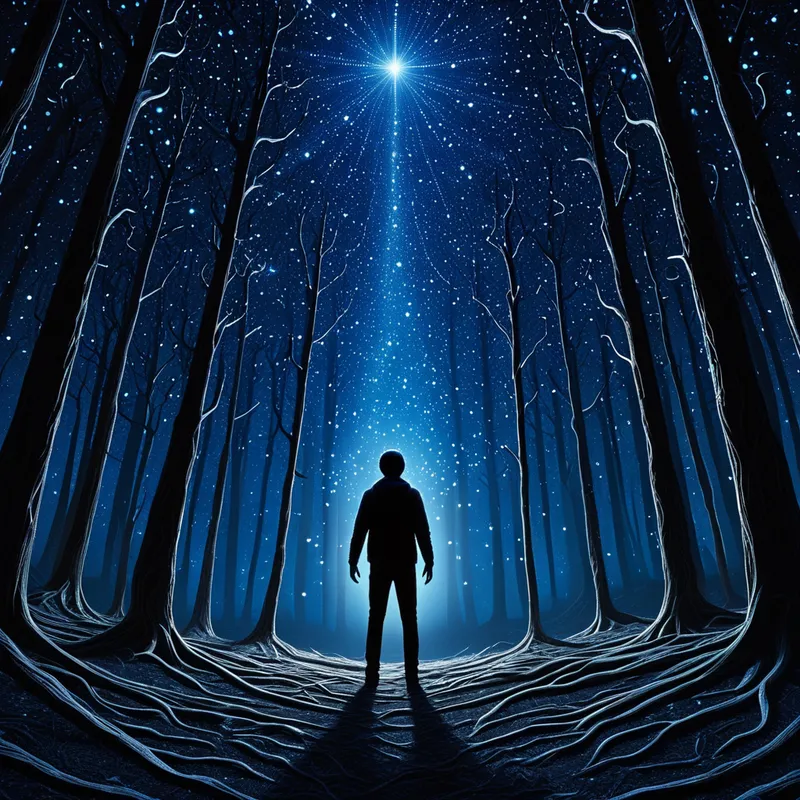
When this myth stirs in the modern Dream, it often manifests as dreams of attempting to reach something impossibly high—a balcony, a star, a light in a tower. You may be climbing a sheer cliff with bare hands, or struggling to send a vital message that never arrives. The somatic feeling is one of profound exertion mixed with futility, yet underpinned by a non-negotiable imperative.
This dream pattern signals that the psyche is engaged in the brutal, necessary work of building a connection between a deeply buried, instinctual self (the sable in its dark forest) and an aspirational, spiritual ideal (the cold, distant sky). You are in the climb. The Wound felt is the loneliness of that disconnect. The dream is the process of making the Sacrifice—what cherished, self-contained part of your current identity (a belief, a comfort, a pride) must you offer up to create a genuine link to a larger, more meaningful existence?
Alchemical Translation
The myth of The Sable and the Sky is a flawless map for the alchemical stage of sublimatio—the spiritualization of matter, the lifting of the base into the celestial. For the individual, it models the core of individuation.
First, one must become the Sable: to acknowledge and inhabit one’s own “darkness”—the earthy, instinctual, perhaps shameful or neglected aspects of the personality. This is not wallowing, but a deep grounding in one’s fundamental nature. From this grounded place, one feels the yearning for the “Sky”—for meaning, consciousness, and connection to the Self.
The climb up the mountain is the conscious, arduous work of analysis, introspection, and enduring the suffering (nigredo) that comes with confronting one’s own heights and depths. The pine nut is the conscious attitude, the valued ego-complex, which must be willingly surrendered at the peak of effort.
The transformation occurs not in the keeping, but in the giving away. The ego does not become the Self; it offers itself to the service of the Self, and in that dissolution, a new connective tissue is born.
The dissolution of the Sable is not annihilation, but transmutation. The integrated psyche is the starry night itself—the dark earth and the distant light now part of one continuous, beautiful fabric. The bridge remains. It is the ongoing, living dialogue between the personal and the transpersonal, where instinct informs spirit and spirit gives meaning to instinct. One is no longer just of the earth, or yearning for the sky, but a living conduit between the two.
Associated Symbols
Explore related symbols from the CaleaDream lexicon:
- Sacrifice — The central, transformative act of offering something of profound personal value to achieve a connection greater than the self, as the Sable offers its essence.
- Sky — The transcendent realm of spirit, consciousness, and the archetypal Self, representing that which we aspire to connect with but often feels impossibly distant.
- Mountain — The arduous path of ascent and ordeal, the necessary struggle to reach a point of meeting between the earthly and the divine.
- Seed — The concentrated potential and wholeness offered in sacrifice, symbolizing the core of one’s current life or ego-structure given up for transformation.
- Bridge — The living connection forged between opposites, the result of successful sacrifice, enabling dialogue and flow between different realms of being.
- Journey — The long, perilous process from unconscious grounding to conscious connection, embodying the psychic quest for integration.
- Shadow — The dark, earthy, instinctual nature of the Sable, representing the part of the self that must be acknowledged and engaged to build the bridge.
- Spirit — The animating force that seeks connection, which is both the yearning of the Sable and the essence that travels the newly formed bridge.
- Tree — The initial, organic connection to height and growth, which must be transcended for the more arduous, elemental climb up the mountain.
- Star — The individuated point of light born from the sacrifice, representing a new, conscious aspect of the self integrated into the greater cosmos.
- Forest — The realm of the instinctual and unconscious, the dark, fertile womb from which the yearning for consciousness first emerges.
- Light — The illuminating thread spun from the sacrifice, representing consciousness, spirit, and the guiding principle that weaves the new connection.