The Runes Myth Meaning & Symbolism
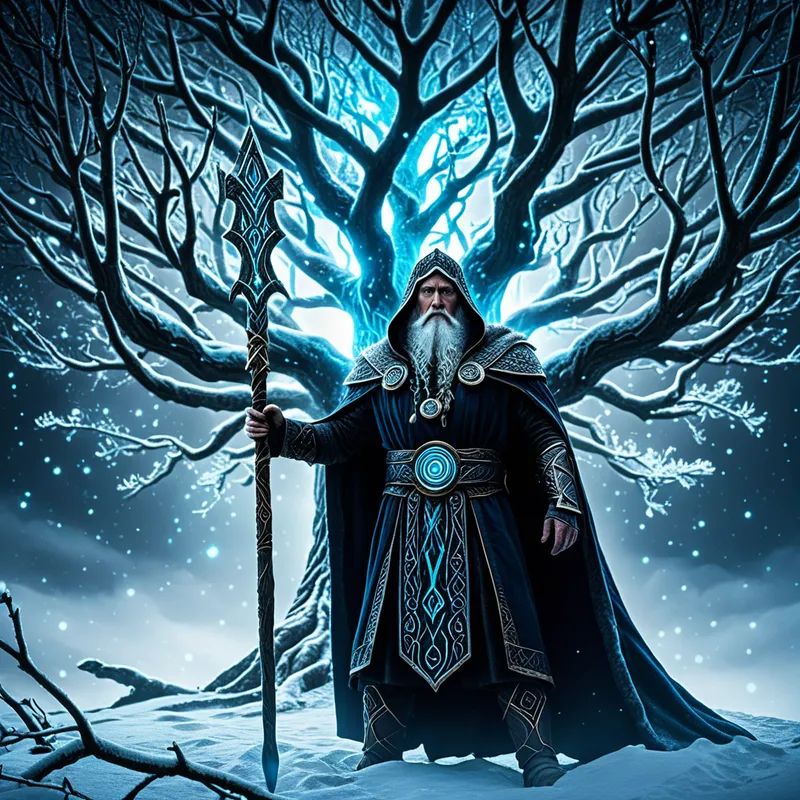
The god Odin hangs himself on the World Tree, pierced by his own spear, to gain the secret wisdom of the Runes.
The Tale of The Runes
Listen. In the time before time, when the mists of Ginnungagap still clung to the bones of the worlds, there was a hunger. It was not a hunger of the belly, but of the soul—a deep, gnawing void that not even the mead of the gods could fill. This hunger lived in the heart of the All-Father, Odin. He who traded an eye for a drink from the Well of Mimir still thirsted. He knew the names of all things, yet the deepest name, the root-song of reality itself, was hidden from him. This secret was the Runes.
They were not carved on stone or wood. They were woven into the roots of Yggdrasil, humming in the sap of the great Ash. They shimmered in the depths of Mimir’s well. They were the hidden architecture of fate, and to know them was to hold the power to shape, to bind, to heal, and to unravel. But the price… the price was everything.
Driven by his terrible need, Odin journeyed to the center of all things. Before him rose Yggdrasil, its branches scratching the skull of the sky, its roots clawing into the wells of the underworld. The wind in its boughs was a chorus of whispers, and in them, he heard the echo of the Runes. He took up his own spear, Gungnir, its point forged in the dwarven dark. With a cry that was both a prayer and a curse, he drove it deep into his own side. Then, with the strength of despair, he hoisted himself upon the tree, hanging himself from a great, gnarled limb.
For nine nights and nine days, the god hung. A sacrifice to himself. The winds of the nine worlds tore at his cloak. The cold of Niflheim seeped into his bones. The eagle perched high above screeched, and the serpent Nidhogg gnawed at the roots below. Hunger and thirst became his only companions. The pain was a fire that burned away everything he thought he was—the ruler of Asgard, the father of hosts, the wise one. All identity fell away like ash.
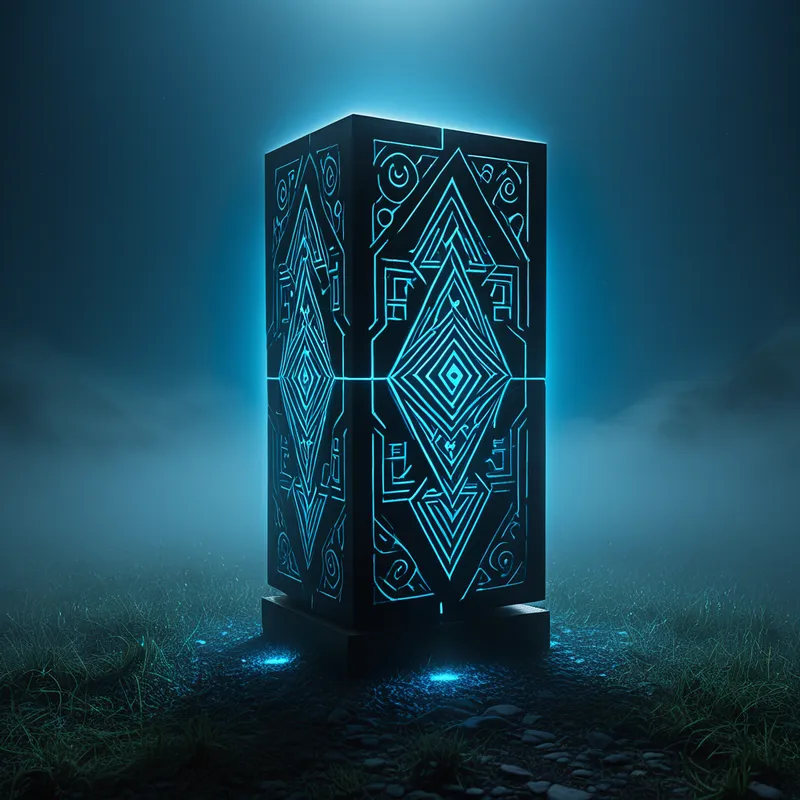
On the final, longest night, as death’s shadow embraced him, a vision broke through the agony. The world tree was no longer wood and leaf, but a lattice of pure, shimmering light. In its fibers, he saw them: the angular, stark forms of the Runes. They were not given; they were revealed. They flowed from the wound made by Gungnir, up through his straining body, and into his mind’s eye. He saw Fehu, the mobile wealth of cattle and energy. He saw Uruz, the raw, untamed power of the aurochs. He saw Thurisaz, the thorn and the giant, a force of destruction and defense. One by one, the twenty-four primal mysteries unveiled themselves.
With a final, gasping effort, he reached down—not with his hand, but with his spirit—and seized them. The knowledge roared into him like a silent lightning strike. The bonds of the tree loosened. He fell, a dead weight, to the frost-hardened earth. But in that moment of impact, life surged back, transformed. He was no longer just Odin. He was Runatal, the Master of Runes. He rose, forever marked, forever burdened, forever empowered. He had died to his old self and was reborn, carrying the terrible, beautiful keys to the universe in his scarred hands.
Cultural Origins & Context
This myth, known as the Hávamál or “Sayings of the High One,” is preserved in the Poetic Edda. It is presented as Odin’s own first-person account, a staggering act of poetic and religious framing. This was not a story told lightly around a fire; it was sacred lore, the foundational narrative for a system of magic, divination, and existential philosophy.
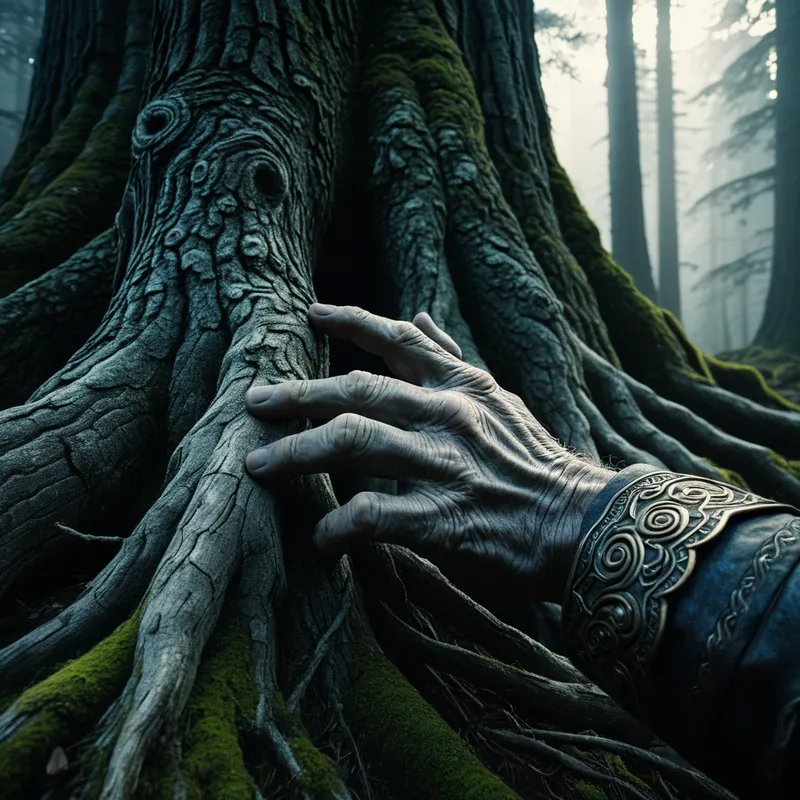
In the pragmatic and often harsh world of the Norse, the Runes were not mere letters. They were active, numinous forces. Carving a rune was an act of invocation, of directing a specific cosmic power into the world—to bless a sword, to heal a sickness, to curse an enemy, to protect a voyage. The myth of Odin’s sacrifice provided the ultimate legitimization for this practice. It established that the highest wisdom (Óðr, the ecstatic fury that is Odin’s namesake) is not found through casual study or divine birthright, but through extreme, willing ordeal. It was a model for the seiðr worker or the skald, for whom knowledge was a hard-won prize, paid for in personal suffering. The myth served as both a warning and an invitation: the deepest truths demand everything you have.
Symbolic Architecture
At its core, this is not a myth about acquiring a tool, but about undergoing a fundamental transformation of consciousness. Odin’s ordeal on Yggdrasil is the ultimate archetype of the shamanic initiation—the ritual death and rebirth necessary to mediate between the worlds of the seen and the unseen.
The tree, Yggdrasil, is the axis of all reality, the connecting structure of the psyche itself, linking the conscious ego (Asgard/Midgard), the personal unconscious (Jotunheim), and the collective, instinctual depths (Hel/Niflheim). To hang upon it is to be stretched between all these layers of existence.
The spear, Gungnir, represents the focused, penetrating will—the same will that must be turned inward to pierce the illusions of the self. The ultimate sacrifice is made with one’s own weapon.
The nine nights symbolize a gestation, a complete cycle within the womb of the world. The hunger and thirst are the annihilation of earthly desires and dependencies, creating the perfect void—the Ginnungagap within the soul—into which new creation can flow. Odin does not “learn” the Runes; he incorporates them through his suffering. They become part of his very substance. This is the symbolic truth: wisdom that does not change you is not wisdom at all; it is merely data. True knowledge is alchemical; it requires the dissolution of the old man to create the new.
The Dreamer’s Resonance
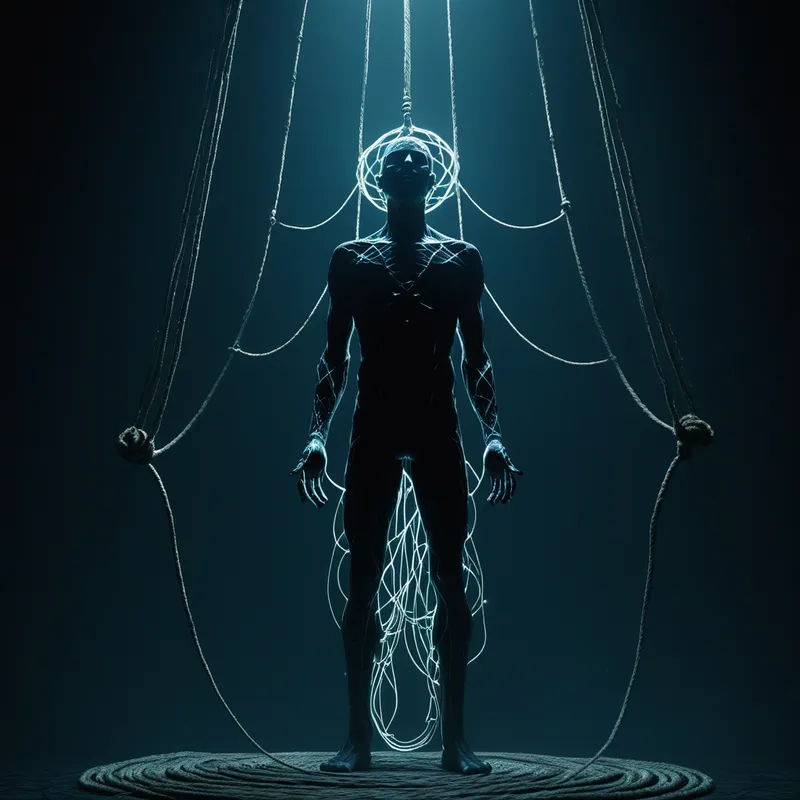
When this myth stirs in the modern unconscious, it often manifests in dreams of profound isolation, suspension, or piercing revelation. You may dream of hanging in a void, tethered by a single thread to something vast and ancient. You may feel a sharp, clinical pain in your side or chest—not of injury, but of incision, as if something essential is being surgically removed or implanted.
These are somatic signals of a psychic initiation in progress. The ego is being “hung up,” its normal operations suspended. The dreamer is in the liminal space—no longer who they were, not yet who they will become. This can be a terrifying and lonely period, mirroring Odin’s vigil. The hunger and thirst in the dream state reflect a deep, spiritual yearning for meaning that ordinary life cannot satisfy. The dream is the psyche’s way of enacting the necessary ordeal, preparing the ground for a new, more integrated understanding of the self to take root. It is the soul’s version of the hero’s journey, where the battlefield is interior.
Alchemical Translation
For the individual, Odin’s quest is a precise map of the individuation process—the Jungian journey toward psychological wholeness. The first step is Odin’s divine discontent, the “hunger” that propels us beyond comfortable ignorance. This is the call to self-knowledge, however painful.
The hanging on Yggdrasil is the nigredo, the dark night of the soul. It is the voluntary descent into one’s own complexes, shadows, and broken pieces. Turning the spear on oneself is the brutal honesty of therapy, shadow-work, or any profound introspection where we confront the wounds we have inflicted on ourselves and others. We must be willing to be stripped bare, to let our old identities (the “god” of our own personal narrative) die.
The revelation of the Runes is the albedo, the illuminating insight that follows the darkness. These are not foreign symbols, but the innate, archetypal patterns of our own psyche coming into conscious view—our core drives (Uruz), our creative energies (Kenaz), our protective boundaries (Algiz).
Finally, seizing the Runes and rising reborn is the rubedo, the integration. The acquired wisdom is not used to lord over others, but to shape one’s own life with greater consciousness and responsibility. The modern individual who undergoes this alchemy does not become a magician in the mythical sense, but a more authentic human. They gain the “runes” of self-awareness: the ability to name their inner forces, to understand their personal fate, and to inscribe their will upon reality with clarity and purpose, having paid the ultimate price of facing themselves.
Associated Symbols
Explore related symbols from the CaleaDream lexicon: