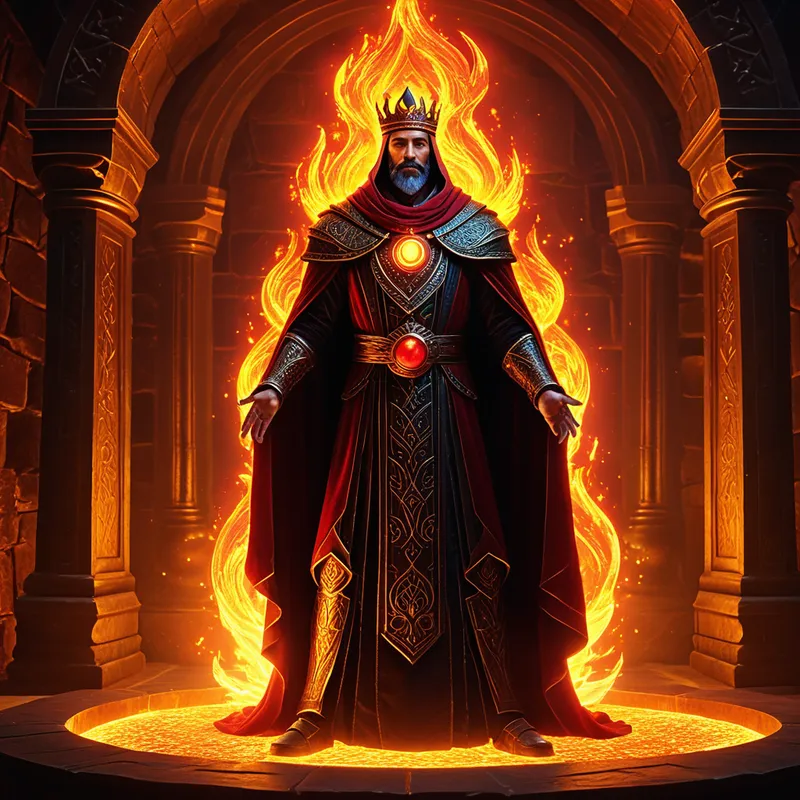
The Rubedo Myth Meaning & Symbolism
The final, fiery stage of the alchemical opus where the purified soul emerges radiant and whole, signifying the completion of the Great Work.
The Tale of The Rubedo
Listen, and hear the tale of the final fire, the last and greatest trial of the Work.
For an age beyond counting, the Artifex has labored. In the blackness of the [Nigredo](/myths/nigredo “Myth from Alchemical culture.”/), the old self was broken down to primal matter. In the washing whiteness of the Albedo, the spirit was cleansed and raised, a silver queen upon a lunar throne. Two principles were extracted: the volatile, mercurial soul and the fixed, solar body. They have danced their courtship in the sealed glass, the [Hermetic Vessel](/myths/hermetic-vessel “Myth from Alchemical culture.”/). They have conjoined in the pale marriage of the Citrinitas, a yellow dawn promising a sun that does not yet rise.
But the Work is not complete. A profound stillness falls upon [the laboratory](/myths/the-laboratory “Myth from Alchemical culture.”/). The dawn yellows and fades. The united substance within [the vessel](/myths/the-vessel “Myth from Alchemical culture.”/)—now neither wholly silver nor gold, but a strange, potent alloy of both—grows heavy, inert. It sleeps. And in that sleep, [the Artifex](/myths/the-artifex “Myth from Alchemical culture.”/) knows a terrible truth: this is not the goal. This is a pause, a reconciliation that has not yet found its final form. It is a king and queen asleep on their throne, dreaming of a crown they do not yet wear.
Then, from the depths of the furnace, a new heat is summoned. Not the gentle heat of incubation, but the fierce, penetrating, relentless fire of the [Rubedo](/myths/rubedo “Myth from Alchemical culture.”/). This is the fire of the innermost heart, the fire of the sun at its zenith. It is applied not with haste, but with a dreadful, unwavering patience.
The substance within the vessel begins to stir. It does not melt as common metal, but transmutes. A glow emerges from its core, faint as a dying coal. The Artifex, face lit by the furnace’s fury, does not flinch. The heat intensifies. The glow deepens, from cherry to crimson, from crimson to the deep, living red of arterial blood, of [pomegranate seeds](/myths/pomegranate-seeds “Myth from Greek culture.”/), of a rose held against the sun.
The vessel itself seems to dissolve in the light. There is a sound like a great, silent bell tolling. The red deepens further, becoming luminous, transparent. Within it, the fixed and the volatile are no longer two things joined, but one [thing](/myths/thing “Myth from Norse culture.”/) born. The red brightens until it is unbearable, a miniature sun contained in glass. Then, at the moment of absolute intensity, the color stabilizes. The fire is withdrawn.
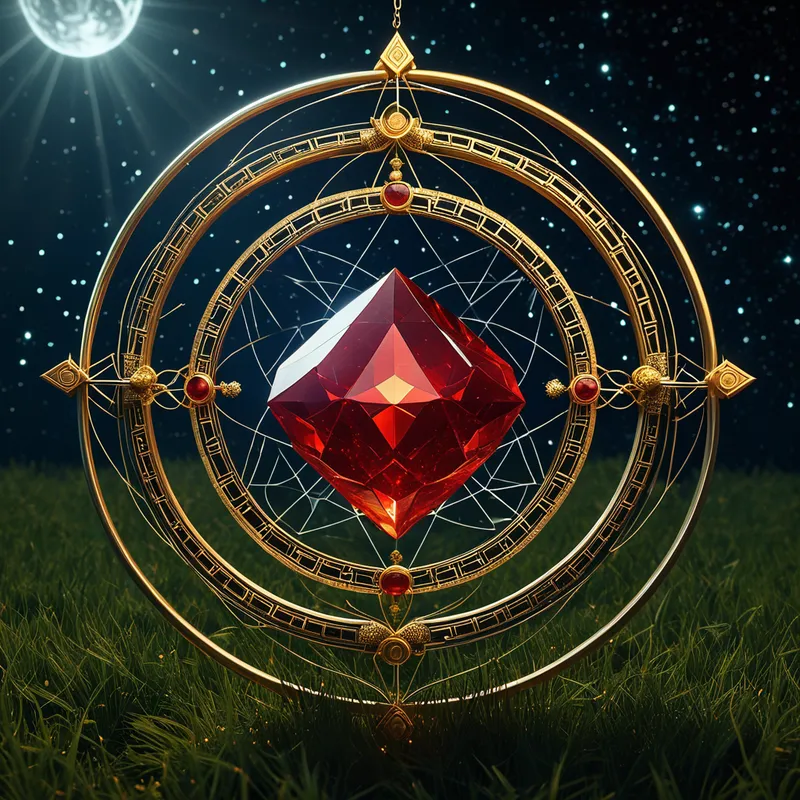
In the sudden, sacred quiet, the Artifex beholds it. Resting in the vessel is no longer a compound, but a Stone. It is solid, yet radiant; heavy with the weight of [the earth](/myths/the-earth “Myth from Hindu culture.”/), yet glowing with a light that is purely its own. It is [the Red Stone](/myths/the-red-stone “Myth from Chinese culture.”/), the Elixir Vitae. The long labor is over. The king and queen are awake, and they are crowned. [The divine spark](/myths/the-divine-spark “Myth from Gnostic culture.”/), the Scintilla, has been made manifest, permanent, and tangible. The Work is complete.
Cultural Origins & Context
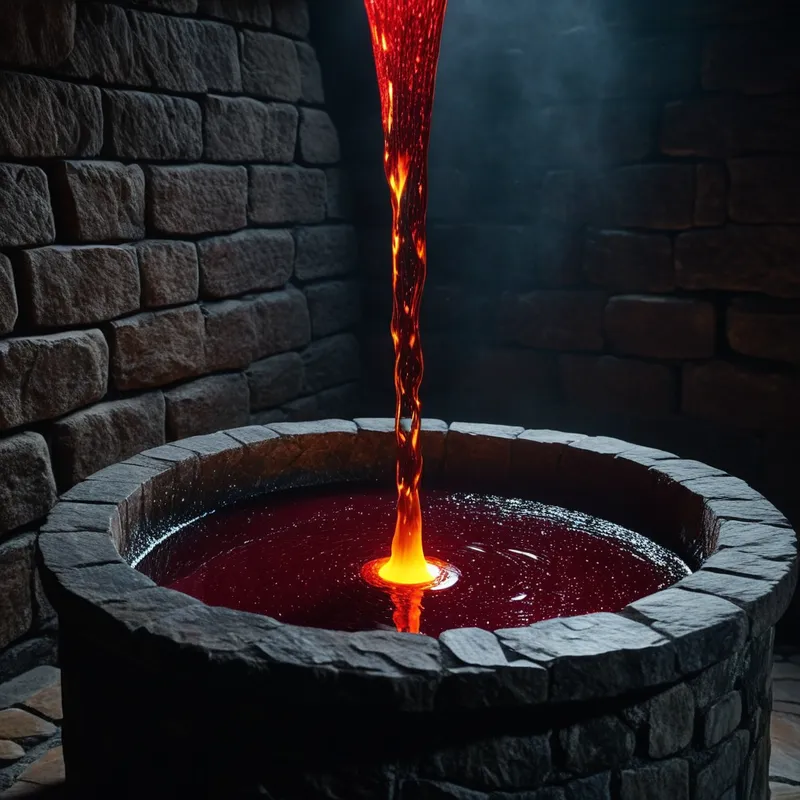
The mythos of the Rubedo is not a story told in market squares, but one encoded in the cryptic manuscripts, emblematic drawings, and laboratory journals of European alchemists from the late Medieval period through the Renaissance. It existed as the pinnacle of a secretive, oral, and visual tradition. The narrative was passed not as a linear tale, but as a series of stages—the Four Colors—depicted in symbolic woodcuts showing kings, queens, dragons, and suns.
Its primary “storytellers” were the alchemists themselves, working in private laboratories often sponsored by nobility or the church. The myth functioned on multiple levels: as a practical (though flawed) guide to metallurgy and chemistry, as a profound spiritual allegory for Christian mystics seeking union with God, and as a psychological map for individuals pursuing inner refinement. Societally, it represented the ultimate humanist dream: that through diligent work (labora), prayer (ora), and the application of natural philosophy, a human being could participate in the divine act of creation, achieving not just knowledge, but a fundamental state of perfected being.
Symbolic Architecture
The Rubedo is the [symbol](/symbols/symbol “Symbol: A symbol can represent an idea, concept, or belief, serving as a powerful tool for communication and understanding.”/) of achieved wholeness, the [climax](/symbols/climax “Symbol: The peak moment in a narrative or musical composition, representing resolution, transformation, or ultimate expression.”/) of the [individuation process](/symbols/individuation-process “Symbol: The psychological journey toward self-realization and wholeness, integrating conscious and unconscious aspects of personality.”/). It represents the point where all inner conflicts are not merely balanced, but synthesized into a new, irreducible substance—the conscious [personality](/symbols/personality “Symbol: Personality in dreams often symbolizes the traits and characteristics of the dreamer, reflecting how they perceive themselves and how they believe they are perceived by others.”/).
The Rubedo is the moment the soul stops seeking and becomes what it sought. It is the embodiment of the paradox: the most fixed stability born from the most intense fire.
The inert, yellowed union of the Citrinitas symbolizes a preliminary, intellectual understanding of wholeness. It is “knowing about” [the Self](/myths/the-self “Myth from Jungian culture.”/). The Rubedo’s fire is the heat of lived experience, of unavoidable suffering, of passionate engagement with [the world](/myths/the-world “Myth from Tarot culture.”/). It forces the theoretical union to prove itself, to withstand the ultimate pressure. The resulting Red [Stone](/symbols/stone “Symbol: In dreams, a stone often symbolizes strength, stability, and permanence, but it may also represent emotional burdens or obstacles that need to be acknowledged and processed.”/) is the Self made concrete in the individual’s [life](/symbols/life “Symbol: The symbol of ‘Life’ represents a journey of growth, interconnectedness, and existential meaning, encompassing both the joys and challenges that define human experience.”/). It is no longer a concept, but a functioning [reality](/symbols/reality “Symbol: Reality signifies the state of existence and perception, often reflecting one’s understanding of truth and life experiences.”/). The color red itself unites the [blood](/symbols/blood “Symbol: Blood often symbolizes life force, vitality, and deep emotional connections, but it can also evoke themes of sacrifice, trauma, and mortality.”/) of earthly [life](/symbols/life “Symbol: The symbol of ‘Life’ represents a journey of growth, interconnectedness, and existential meaning, encompassing both the joys and challenges that define human experience.”/) ([body](/symbols/body “Symbol: The body in dreams often symbolizes the dreamer’s self-identity, personal health, and the relationship they have with their physical existence.”/), [passion](/symbols/passion “Symbol: Intense emotional or physical desire, often linked to love, creativity, or purpose. Represents life force and deep engagement.”/), suffering) with the fire of the [spirit](/symbols/spirit “Symbol: Spirit symbolizes the essence of life, vitality, and the spiritual journey of the individual.”/) ([illumination](/symbols/illumination “Symbol: A sudden clarity or revelation, often representing spiritual awakening, intellectual breakthrough, or the dispelling of ignorance.”/), divinity, love).
The Dreamer’s Resonance
When the pattern of the Rubedo stirs in modern dreams, it signals a profound somatic and psychological culmination. The dreamer may be undergoing a period of intense stress or “trial by fire”—a career crisis, a relational reckoning, a deep creative struggle—that feels like a final, necessary ordeal.
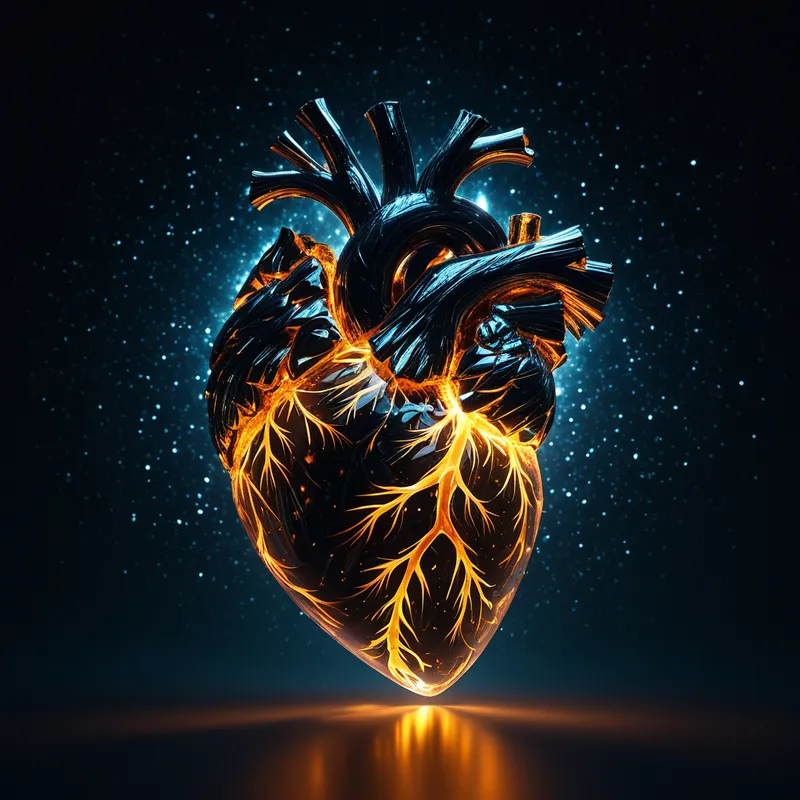
Dreams may feature images of a contained, transformative blaze: a beloved house burning down yet leaving a precious, intact heirloom in the ashes; a heart surgery where the organ is removed, healed in a flame, and returned; or finding a common stone that begins to glow with a warm, red light in the palm. There is a somatic sense of pressure and heat giving way to a deep, calm solidity. Psychologically, this marks the resolution of a long-standing inner division. The dreamer is not negotiating between two sides of themselves anymore; they are, often painfully, being forged into a new shape where those sides are integral parts of a single, resilient entity. The feeling upon waking is not of excitement, but of a solemn, earned peace.
Alchemical Translation
For the modern individual, the Rubedo models the final phase of psychic transmutation: the embodiment of insight. We all experience preliminary “unions”—moments of clarity, therapy breakthroughs, spiritual epiphanies (the Citrinitas). But these insights are fragile. The Rubedo is the process of taking that insight into the forge of daily life, relationships, and responsibilities.
Individuation is not concluded in the therapist’s office or on the meditation cushion, but in the marketplace, the home, and the heart under duress. The Rubedo is where philosophy becomes character.
This is the “reddening” of the personality. It means one’s values (the gold/sun) and one’s adaptable spirit (the silver/moon) have fused so completely that actions arise from an authentic, undivided center. The person no longer “tries to be” wise or compassionate; under pressure, wisdom and compassion become the inevitable, fiery radiance of their being. The struggle is the application of the ultimate, enduring heat—the commitment to live one’s truth despite all costs. The [triumph](/myths/triumph “Myth from Roman culture.”/) is not a dramatic victory, but the quiet, potent presence of the Self: a human being who has become a vessel for something both uniquely personal and universally redemptive. The Work is never truly finished, but in the Rubedo, one becomes a living stone, capable of touching base metal and inspiring its own longing for transformation.
Associated Symbols
Explore related symbols from the CaleaDream lexicon: