The Round Table Knights Myth Meaning & Symbolism
A fellowship of equals bound by a sacred code, seeking a divine vessel that heals the wounded king and the fractured kingdom within.
The Tale of The Round Table Knights
Listen, and hear the tale of the Table that was not a table, but a world. In the mist-shrouded isle of Logres, where the old magic of the land whispered through the oak and the stone, a king was crowned by a hand not wholly mortal. His name was Arthur, and in his heart burned a fire not just for rule, but for rightness. He saw a kingdom fractured by the boasts of barons, where the strongest arm claimed the highest seat and the loudest voice drowned the whisper of justice.
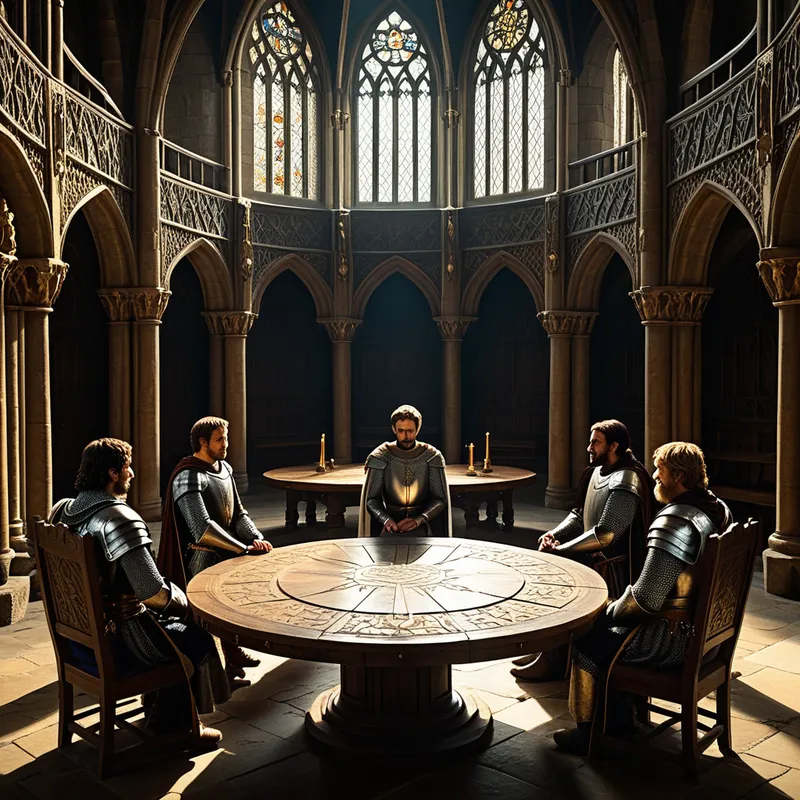
From the deep Welsh forests and the Breton shores, from the marble halls of Rome-remembered cities, they came. Not to a throne, but to an idea. The great carpenter Merlin had fashioned it at Arthur’s bidding: a vast disc of ancient oak, its circumference perfect, without head or foot. Here, no man could claim precedence. Here, a duke and a landless knight breathed the same air of council. The Knights of the Round Table were sworn, their names carved into the wood itself—Lancelot of the Lake, whose valor was a shining, brittle thing; Gawain of the keen axe and the fiercer pride; Galahad, whose soul was like a clear pane of glass; and a brotherhood of a hundred and more. Their oath was the breath of the realm: to live for chivalry, to right wrongs, to protect the helpless, and to seek the glory of God.
For a time, the Table was a sun around which a golden age orbited. The land knew peace. Adventures—quests against giants, enchanters, and tyrants—were not mere battles, but the weeding of a sacred garden. Yet, within the perfect circle, a flaw festered. One seat, the Siege Perilous, remained eternally empty, a silent judgment. And in the heart of the fellowship, a love bloomed like a poisoned rose between Lancelot and the Queen, Guinevere, a crack in the foundation of their sworn loyalty.
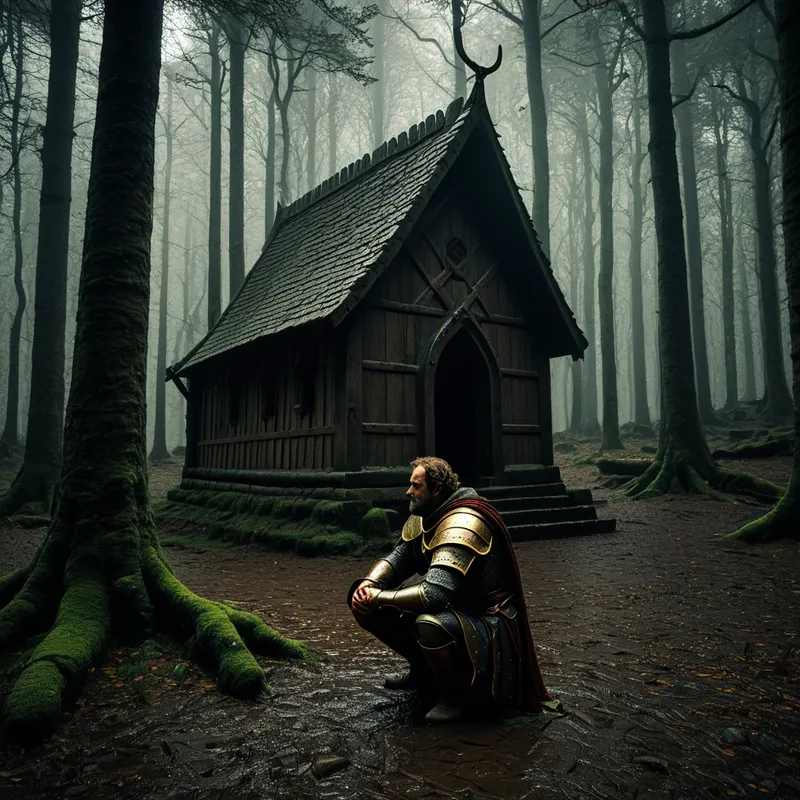
Then came the vision that shattered the sun. In the high feast of Pentecost, the Holy Grail appeared, veiled in samite, filling the hall with a scent of paradise and an unbearable ache. It was a call not to arms, but to the soul. The fellowship, the perfect circle, broke into a hundred solitary paths as each knight vowed to seek the vessel. They rode out from Camelot into the Wasteland—a blighted, psychic reflection of a king’s inner wound—and into the Forest of Adventure, where each faced not monsters, but the mirror of their own nature.
Gawain, in his haste, found only phantoms. Lancelot, for all his might, could only glimpse the Grail from a paralyzing distance, his sin a wall between him and grace. But the pure Galahad, with the gentle Percival and the steadfast Bors, attained the sacred castle of Corbenic. There, before the maimed Fisher King, Galahad healed the ancient wound with a question of compassion, and the Grail shone unveiled. Having touched eternity, the circle of his life was complete; he died in ecstasy, his quest done.
The knights returned, but the Table was forever changed. The quest had scattered them, revealed their fractures. The love of Lancelot and Guinevere erupted into war, the perfect circle splintering into factions. The final battle on the fog-choked field of Camlann was not against a foreign foe, but against the shadow of the Table itself, in the form of Arthur’s son, Mordred. The king fell, the fellowship was broken, and the Table passed into legend. Yet, they say Arthur did not die, but was borne to the isle of Avalon, and that the Round Table waits, not as wood, but as a pattern in the world’s soul, for a time when the need for rightness is greatest again.
Cultural Origins & Context
The myth of the Round Table is not a single story, but a tapestry woven over centuries. Its threads begin in the fragmentary histories of post-Roman Britain, where a war-leader named Arthur may have rallied against invading Saxons. This historical grit was enchanted by the bards of Wales, in tales like the Mabinogion, where Arthur appears as a peerless chieftain in a world of magic.
The myth was crystallized in the 12th century by Geoffrey of Monmouth and, most crucially, the French poet Chrétien de Troyes. Chrétien introduced the elaborate pageantry of chivalry, the adulterous romance of Lancelot, and the mystical quest for the Grail. The Round Table itself became a central symbol of this new, idealized feudal order—a political fantasy of unity among the warrior class, sponsored by a righteous king. It was a myth for the aristocracy, recited in courts to model behavior and inspire loyalty, yet its deeper chords resonated with the universal human yearning for belonging and purpose beyond mere power.
Symbolic Architecture
At its core, the Round Table is a mandala of the Self. It represents the aspiration for a psyche where all competing forces—the warrior, the lover, the mystic, the ruler—are integrated as equals under the sovereignty of a central, unifying principle (Arthur as the ego or the conscious Self).
The circle admits no hierarchy, only responsibility. It is the geometry of the soul in its potential wholeness.
The Siege Perilous is the placeholder for the transcendent function, the unknown and transformative element that must be integrated for the Self to be complete. It remains empty until Galahad arrives, symbolizing the incorruptible aspect of the spirit that can bridge the human and the divine.
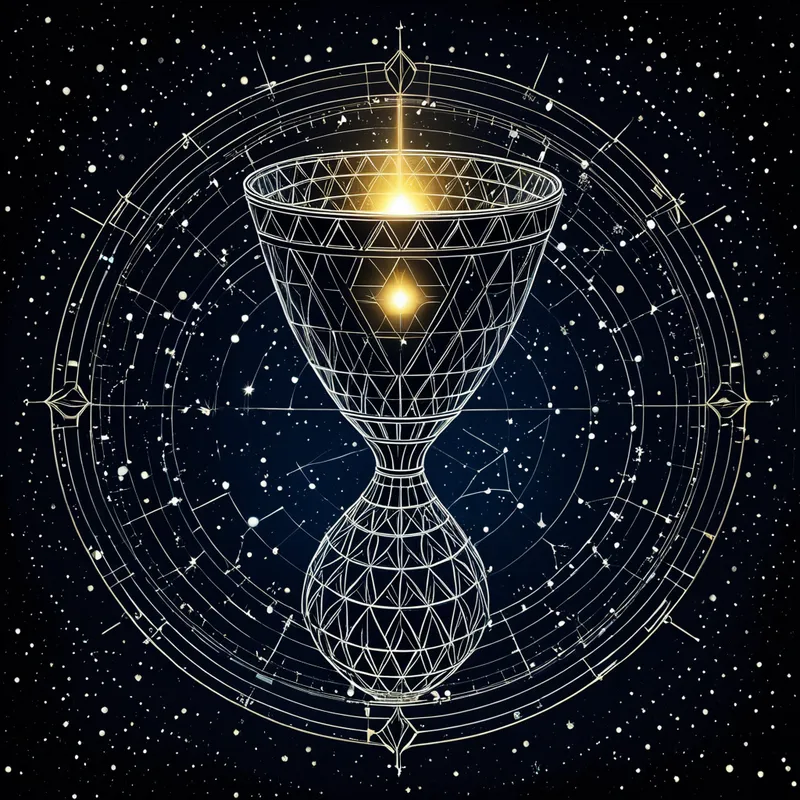
The Holy Grail quest is the ultimate symbol of the individuation journey. It forces the collective ego (the fellowship) to dissolve so that each individual knight must confront his own shadow in the solitary forest. The Grail is not a trophy but a state of grace, the healing of the Fisher King—the archetype of the wounded masculine, the ruler whose inner sickness is reflected in the outer Wasteland. Healing comes not through force, but through the right question, an act of compassionate consciousness.
The Dreamer’s Resonance
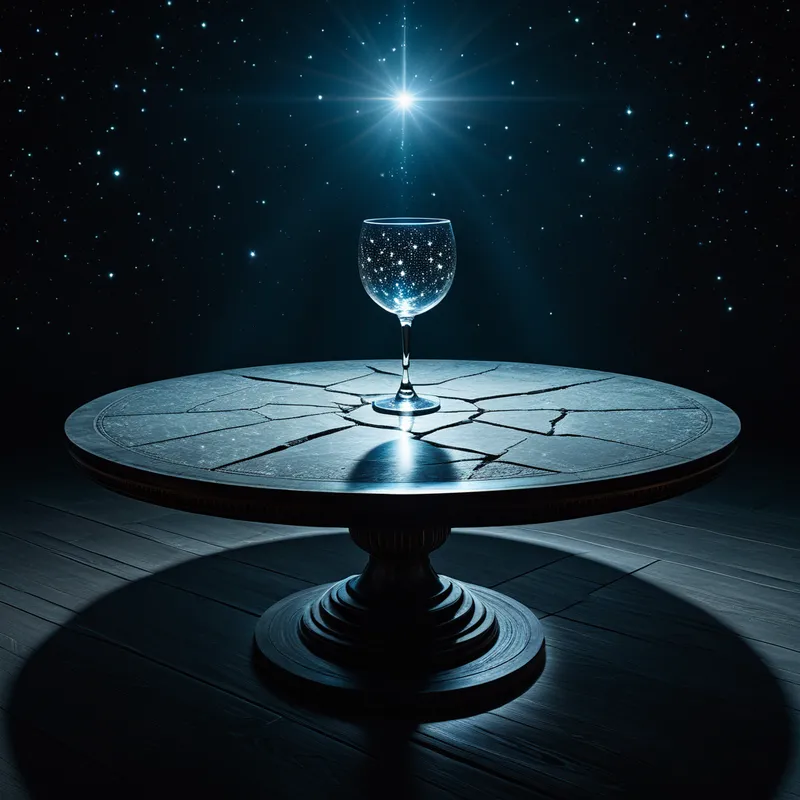
To dream of the Round Table is to dream of one’s own inner council. The dreamer may find themselves at a circular meeting where various aspects of their personality—the ambitious knight, the loyal friend, the secret lover, the spiritual seeker—are gathered. An empty seat may signify a missing quality, like integrity or courage, that feels perilous to claim. The table itself might be cracked, indicating a felt disunity in one’s life or values.
Dreaming of the Grail quest often accompanies a profound psychological or spiritual crisis. The dreamer may be wandering a wasteland (a period of depression, meaninglessness) or lost in a tangled forest (confusion, life transitions). The appearance of the Grail, even as a distant glow, signals the emergence of a deep, healing potential from the unconscious. The dream is somatic; it speaks of a yearning for wholeness that is felt in the chest—an ache for a connection that repairs the fracture between one’s earthly actions and one’s soul’s purpose.
Alchemical Translation
The myth of the Round Table models the alchemical opus of individuation in three stages: Nigredo, Albedo, and Rubedo.
First, the Nigredo: the initial, noble formation of the ego (Camelot’s golden age) is an illusion of completeness. The shadow, in the form of hidden passion (Lancelot/Guinevere) and unintegrated ambition (the empty Siege), blackens this ideal. The call of the Grail is the call into the dark night of the soul, the necessary dissolution of the comfortable, collective identity.
The quest begins not with an answer, but with the shattering of the vessel you believed was whole.
Second, the Albedo: the purification. Each knight’s solitary journey through the forest is the arduous work of confronting personal shadows—pride, lust, doubt. Galahad’s purity represents the distilled, focused consciousness required to approach the divine. Percival’s lesson from the hermit is the whitening, the gaining of wisdom through humility and spiritual guidance.
Finally, the Rubedo: the reddening, the achievement of the philosopher’s stone. This is not Galahad’s ascension alone, but the healing of the Fisher King. It is the integration of the transcendent experience (the Grail) back into the wounded, earthly reality. For the modern individual, this is the moment when a profound insight or healing actually changes one’s life in the world. The redeemed inner king (the healed Self) can, in theory, restore the Wasteland. While the Arthurian story ends in cyclical tragedy, the alchemical model within it offers the pattern: the circle of the Table is ultimately forged in the fire of the quest, and its true seat is found not in a hall, but in the redeemed human heart.
Associated Symbols
Explore related symbols from the CaleaDream lexicon: