The Rosetta Stone Myth Meaning & Symbolism
A divine artifact inscribed with the lost primal tongue, hidden by the gods, becomes the key to remembering the world's original, unifying name.
The Tale of The Rosetta Stone
Hear now a tale not of heroes and monsters, but of a silence, a forgetting, and a key. In the age when [the world](/myths/the-world “Myth from Tarot culture.”/) was young and the breath of the Protogenoi still warmed the stones, there was one tongue. It was not Greek, nor Egyptian, nor the chittering of beasts. It was the [Logos](/myths/logos “Myth from Christian culture.”/) Archaeon, the Primal Word, the sound with which Gaia shaped the mountains and [Ouranos](/myths/ouranos “Myth from Global/Universal culture.”/) sprinkled the stars. To speak it was not to describe a [thing](/myths/thing “Myth from Norse culture.”/), but to call it forth, to be in perfect resonance with its essence. The rivers knew their names, and the oaks answered.
But as generations of mortals sprouted from the soil like wheat, their ears grew dense. The clear stream of the Logos Archaeon fractured into a thousand babbling brooks—dialects, then languages, then cacophony. With misunderstanding came conflict; with conflict, the sundering of tribes. The gods on Olympus watched this [tower of Babel](/myths/tower-of-babel “Myth from Biblical culture.”/) not with wrath, but with a profound sorrow. The unity of creation was unraveling, thread by thread.
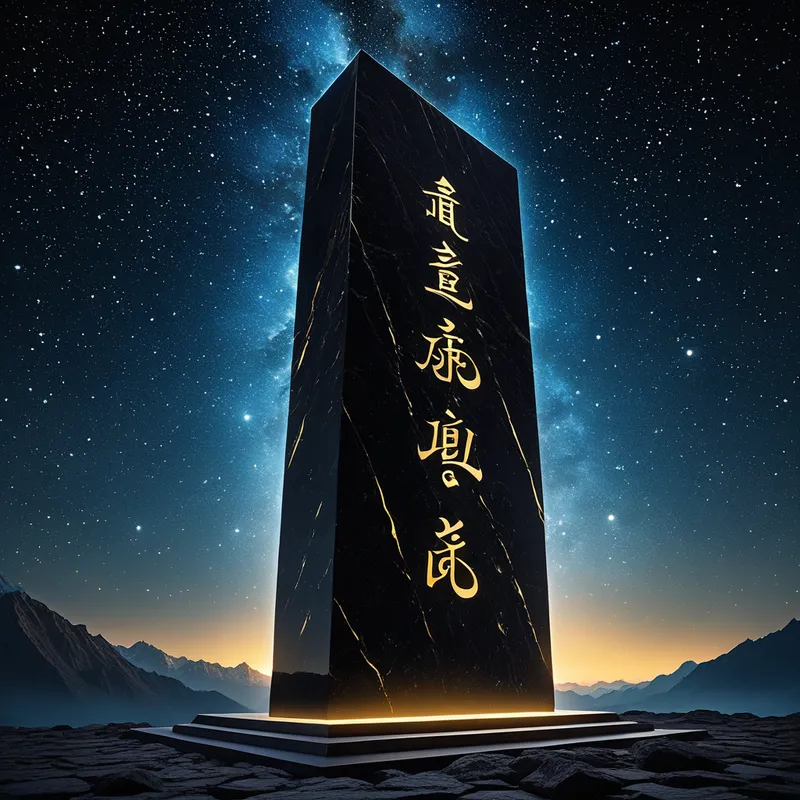
Then, [Hephaestus](/myths/hephaestus “Myth from Global/Universal culture.”/), in his smoky forge, and Athena, with her luminous mind, conspired in compassion. From the heart of a fallen star and the memory of the first dawn, they crafted a stele. It was a slab of obsidian deeper than night, veined with gold like captured lightning. Upon its face, they inscribed a single, profound truth—[the True Name](/myths/the-true-name “Myth from Various culture.”/) of the World—in three scripts.
The top was the script of the Divine: geometric, perfect, a language of pure idea that hummed with the power of the Protogenoi. The middle was the script of the Mortal: the elegant, flowing letters of the Hellenes, capturing the beauty and tragedy of human experience. The bottom was the script of [the Earth](/myths/the-earth “Myth from Hindu culture.”/): a chthonic, sigilic language, the whisper of roots and stones, the language things use to speak to themselves.
This was the [Rosetta Stone](/myths/rosetta-stone “Myth from Egyptian culture.”/). It was not a decree, but a bridge. It was placed not in a temple, but at a crossroads in the mortal realm, where a dusty path met an olive grove under the wide, watching sky. The gods then withdrew, veiling the Stone with a gentle forgetfulness, letting it weather and be half-buried by time. It became a curious relic, a soldier’s spoil, a scholar’s puzzle. Its power was not in proclamation, but in potential. It waited, patient as geology, for the day a mind, fractured by the world’s noise, would yearn so deeply for the original song that it would learn to listen to all three voices at once, and in their triangulation, hear the one Word that had been lost.
Cultural Origins & Context
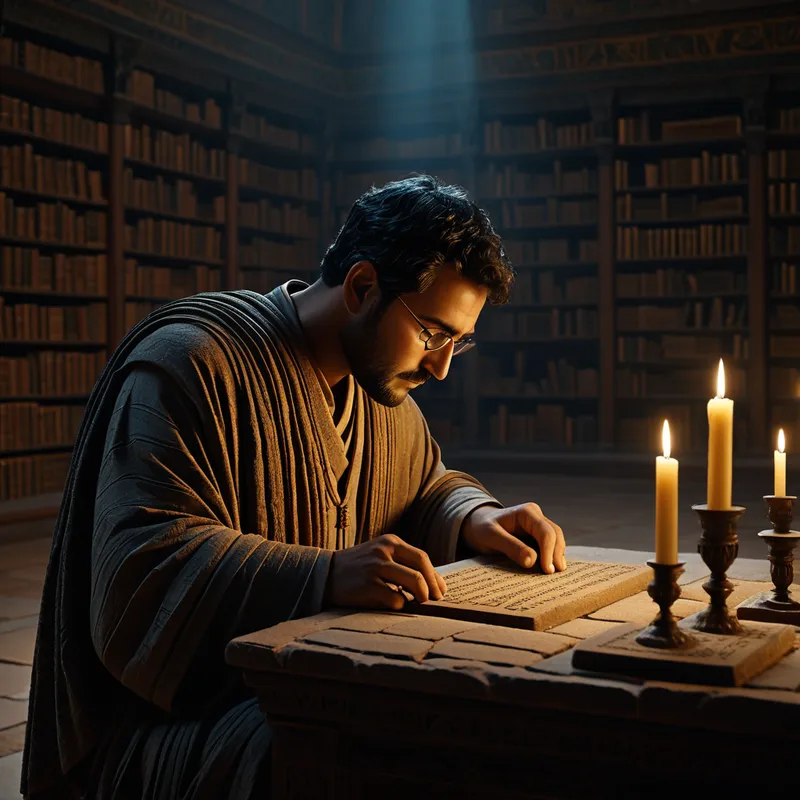
While the term “Rosetta Stone” is historically anchored to the Ptolemaic Egypt of 196 BCE, its resonance as a mythological concept is deeply Hellenic. The Greeks were consummate linguists and philosophers of language. Heraclitus spoke of the Logos as the underlying principle of the cosmos. The story of the Rosetta Stone is, in essence, a mythologization of this philosophical pursuit. It is a “what if” tale born from the Greek experience of encountering older, inscrutable civilizations (Egyptian, Mesopotamian) and their own poetic sense of a lost [Golden Age](/myths/golden-age “Myth from Universal culture.”/).
This narrative would not have been a single, codified myth recited at festivals. Instead, it lived in the tradition of the mythos philosophikos—philosophical myths told in symposia and academies. It was a thought-experiment for poets like Hesiod and philosophers like Plato, who in his Cratylus debates the “correctness of names.” Its societal function was to explain the profound human experience of miscommunication and the aching intuition that behind the chaos of tongues lies a fundamental, comprehensible order. It served as an allegory for the Hellenic project itself: to use reason (logos) to decipher the cryptic laws (nomoi) of nature and the divine.
Symbolic Architecture
The Rosetta [Stone](/symbols/stone “Symbol: In dreams, a stone often symbolizes strength, stability, and permanence, but it may also represent emotional burdens or obstacles that need to be acknowledged and processed.”/) is the ultimate [symbol](/symbols/symbol “Symbol: A symbol can represent an idea, concept, or belief, serving as a powerful tool for communication and understanding.”/) of the interpreter, the key, and the fractured whole. Its power lies not in a single, monolithic [truth](/symbols/truth “Symbol: Truth represents authenticity, honesty, and the quest for knowledge beyond mere appearances.”/), but in the [relationship](/symbols/relationship “Symbol: A representation of connections we have with others in our lives, often reflecting our emotional state.”/) between perspectives.
The Stone does not speak a truth; it provides the grammar by which all apparent truths can be translated into understanding.
The Three Scripts represent the tripartite [reality](/symbols/reality “Symbol: Reality signifies the state of existence and perception, often reflecting one’s understanding of truth and life experiences.”/) of existence: the Divine (the [realm](/symbols/realm “Symbol: The symbol of ‘Realm’ often signifies the boundaries of one’s consciousness, experiences, or emotional states, suggesting aspects of reality that are either explored or ignored.”/) of archetypes and first causes), the [Human](/symbols/human “Symbol: The symbol of a human represents individuality, complexity of emotions, and social relationships.”/) (the [realm](/symbols/realm “Symbol: The symbol of ‘Realm’ often signifies the boundaries of one’s consciousness, experiences, or emotional states, suggesting aspects of reality that are either explored or ignored.”/) of [consciousness](/symbols/consciousness “Symbol: Consciousness represents the state of awareness and perception, encompassing thoughts, feelings, and experiences.”/) and culture), and the Chthonic (the [realm](/symbols/realm “Symbol: The symbol of ‘Realm’ often signifies the boundaries of one’s consciousness, experiences, or emotional states, suggesting aspects of reality that are either explored or ignored.”/) of the unconscious, the [body](/symbols/body “Symbol: The body in dreams often symbolizes the dreamer’s self-identity, personal health, and the relationship they have with their physical existence.”/), and instinctual [nature](/symbols/nature “Symbol: Nature symbolizes growth, connectivity, and the primal forces of existence.”/)). Our modern dilemma is that we are often fluent in only one, perhaps two, of these languages, leading to a fragmented [life](/symbols/life “Symbol: The symbol of ‘Life’ represents a journey of growth, interconnectedness, and existential meaning, encompassing both the joys and challenges that define human experience.”/): spiritual disconnection, psychological repression, or cultural alienation.
The Act of Decipherment is the central symbolic [action](/symbols/action “Symbol: Action in dreams represents the drive for agency, motivation, and the ability to take control of situations in waking life.”/). It is not a violent conquest, but a patient, scholarly, and deeply intuitive act of reconciliation. It represents [the ego](/myths/the-ego “Myth from Jungian culture.”/)‘s [task](/symbols/task “Symbol: A task represents responsibilities, duties, or challenges one faces.”/) of mediating between the super-ego’s divine demands, the id’s primal urges, and the social world’s expectations. The [hero](/symbols/hero “Symbol: A hero embodies strength, courage, and the ability to overcome significant challenges.”/) of this myth is not a [warrior](/symbols/warrior “Symbol: A spiritual archetype representing inner strength, discipline, and the struggle for higher purpose or self-mastery.”/), but a linguist, an archaeologist of the [soul](/symbols/soul “Symbol: The soul represents the essence of a person, encompassing their spirit, identity, and connection to the universe.”/).
The Dreamer’s Resonance
To dream of the Rosetta Stone is to dream of a core, integrative process struggling to occur within the [psyche](/myths/psyche “Myth from Greek culture.”/). The dreamer may be presented with a book in an unknown language, a machine with unreadable controls, or a map with cryptic symbols.
Somatically, this often accompanies a feeling of frustration edged with profound importance—a “tip-of-the-tongue” sensation on a soul level. Psychologically, it signals that the dreamer is in possession of all the pieces of a vital understanding (about themselves, a relationship, or a life direction), but these pieces exist in separate, non-communicating compartments of their being. The intellectual self has one piece, the emotional body another, and the instinctual self a third. The dream is an expression of [the Self](/myths/the-self “Myth from Jungian culture.”/)’s imperative to integrate. The anxiety in the dream is the friction of these parts beginning to move toward alignment, the grinding of long-separated psychic tectonic plates.

Alchemical Translation
In the alchemical journey of individuation, the Rosetta Stone models the stage of coniunctio—[the sacred marriage](/myths/the-sacred-marriage “Myth from Various culture.”/)—but of a cognitive, rather than purely erotic, nature. It is the marriage of languages.
The modern individual begins in a state of confused multiplicity: the different “languages” of their professional [persona](/myths/persona “Myth from Greek culture.”/), their inner child, their societal mask, and their shadow all speak at once, creating internal cacophony and existential meaninglessness. The “work” is to become the archaeologist of one’s own soul. One must excavate the personal fragments—the childhood memory (chthonic script), the spiritual yearning (divine script), and the logical life-plan (mortal script).
The alchemical gold is not found in any one text, but in the moment of translation—the shocking, silent “click” when a pain from the past suddenly explains a present pattern, or a dream image illuminates a conscious dilemma.
This process of decipherment leads to the creation of an inner Rosetta Stone—a stable, core structure of meaning within the personality. Once this inner key is fashioned, the world itself begins to shift from a barrage of disconnected events into a legible, though often tragic and beautiful, text. The individual does not become omniscient, but they become literate. They learn to read the language of their own fate, and in doing so, gain the only true sovereignty: the ability to author, with greater consciousness, the next chapter.
Associated Symbols
Explore related symbols from the CaleaDream lexicon: