The River Styx from Greek myth Myth Meaning & Symbolism
The sacred, binding river of the Greek underworld, a boundary of oaths and death, where souls are ferried into the realm of Hades.
The Tale of The River Styx from Greek myth
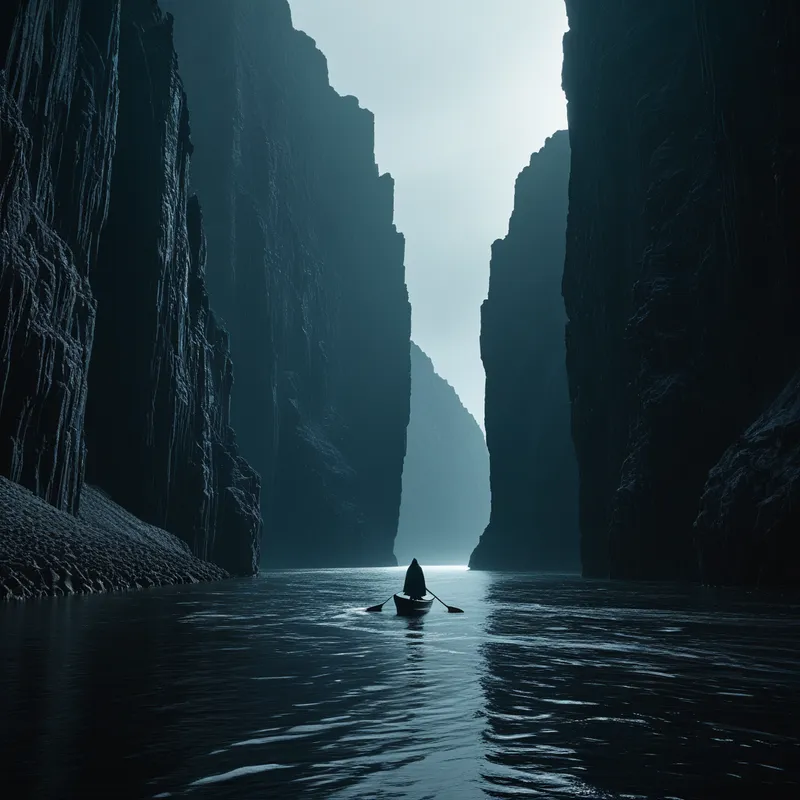
Listen. There is a place where all oaths are final, and all journeys find their end. It is not a place of sun or soil, but of eternal dusk and profound silence. This is the realm of [Hades](/myths/hades “Myth from Greek culture.”/), and at its very threshold runs a river that is not [water](/myths/water “Myth from Chinese culture.”/) as we know it. It is a current of liquid shadow, a stream of forgotten promises and extinguished memories. Its name is Styx, and to speak it is to invoke the most terrible and binding power in all creation.
[The river](/myths/the-river “Myth from Buddhist culture.”/) coils around [the underworld](/myths/the-underworld “Myth from Greek culture.”/) nine times, a serpent of darkness guarding the land of the dead. Its banks are not sand, but the packed ash of eons. No bird calls here. The only sound is the low, mournful sigh of the current, a sound that pulls at the very substance of the soul. To cross it is to leave [the world](/myths/the-world “Myth from Tarot culture.”/) of the living irrevocably behind. And for this passage, there is only one ferryman: Charon, ancient and grim, his eyes like chips of flint in a face of weathered driftwood. He extends a bony hand—not for kindness, but for the coin placed upon the lips of the deceased. No coin, no passage; the soul is left to wander the desolate shore for a hundred years, a whisper among the reeds.
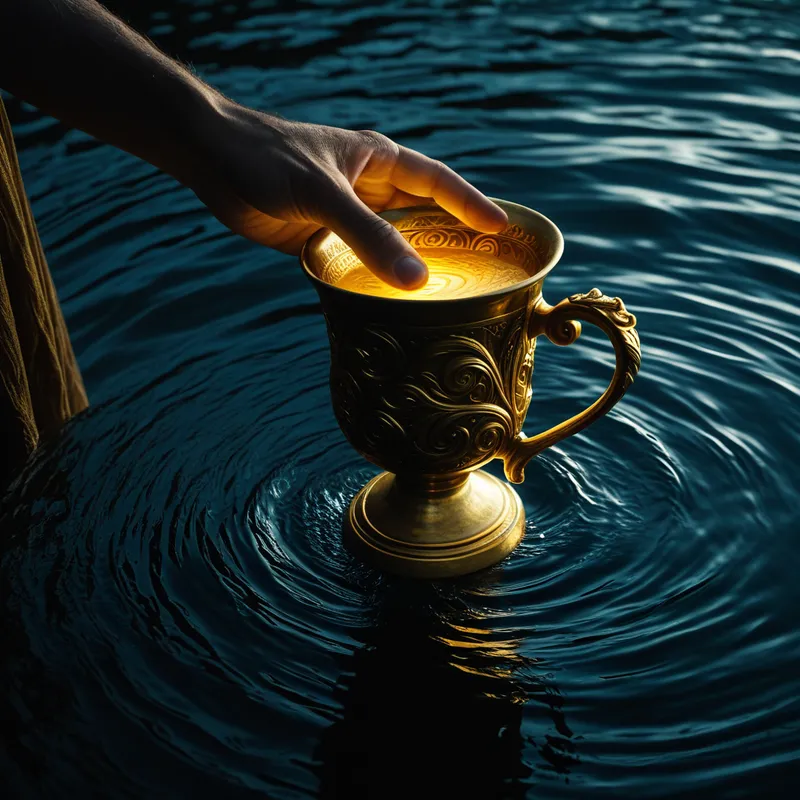
But [the Styx](/myths/the-styx “Myth from Greek culture.”/) is more than a boundary for the dead. It is the ultimate witness for the gods themselves. When a deity must swear an oath of absolute consequence, they descend to its black shores. Iris, the rainbow, is summoned to fill a golden cup from its depths. The swearing god pours the libation, and the words spoken are absorbed by the dark waters. To break such an oath means a fall from grace so profound it brings a paralysis, a breathless stillness, for nine great years—a year for each coil of the sacred river. Even Zeus trembles before this power. It is said the goddess Styx herself, the river’s divine personification, was the first to ally with Zeus against [the Titans](/myths/the-titans “Myth from Greek culture.”/), and for her loyalty, her waters were granted this unbreakable authority.
So the river flows, eternal and implacable. It receives the newly dead, ferried by Charon’s silent craft. It holds the most sacred promises of the undying. It is the first and final truth of the Greek cosmos: all things, even the mightiest Olympian, are subject to a law deeper than their own will. The price of crossing is a coin. The price of swearing is your essence. And the river, in its silent, dark majesty, collects both without judgment.
Cultural Origins & Context
The myth of [the River Styx](/myths/the-river-styx “Myth from Greek culture.”/) emerges from the deep, collective [psyche](/myths/psyche “Myth from Greek culture.”/) of ancient Greece, crystallized in the epic poetry of [Homer](/myths/homer “Myth from Greek culture.”/)’s Iliad and Odyssey and later systematized in Hesiod’s Theogony. It was not a singular story told around a fire, but a fundamental piece of cosmological architecture, a shared understanding of the universe’s moral and physical geography. Bards and poets were its primary custodians, weaving the river into tales of heroism, divine conflict, and the human condition.
Its societal function was multifaceted. On a practical, religious level, it explained the necessity of the funeral rite of placing an obol in the mouth of the deceased—a cultural imperative to ensure safe passage. On a philosophical level, it established a universal principle of accountability. If even the gods were bound by the oath of the Styx, then no power in the cosmos was truly arbitrary; there was a foundational order, however severe. The river served as the ultimate boundary, defining the most critical transition known to humanity: that from life to death. It gave shape to the formless terror of the afterlife, providing a map, however bleak, of what lay beyond.
Symbolic Architecture
The [River](/symbols/river “Symbol: A river often symbolizes the flow of emotions, the passage of time, and life’s journey, reflecting transitions and movement in one’s life.”/) Styx is not merely a [location](/symbols/location “Symbol: The symbol of ‘Location’ signifies a sense of place, context, and the environment in which experiences unfold.”/); it is a living [symbol](/symbols/symbol “Symbol: A symbol can represent an idea, concept, or belief, serving as a powerful tool for communication and understanding.”/) of the ultimate thresholds within the psyche and the [cosmos](/symbols/cosmos “Symbol: The entire universe as an ordered, harmonious system, often representing the totality of existence, spiritual connection, and the unknown.”/).
The River Styx is the psychological membrane between the known self and the vast, uncharted country of the unconscious. To cross it is to die to who you were.
It represents the [Boundary](/symbols/boundary “Symbol: A conceptual or physical limit defining separation, protection, or identity between entities, spaces, or states of being.”/) of the Unconscious. Just as it encircles [Hades](/symbols/hades “Symbol: Greek god of the underworld, representing death, the unconscious, and hidden aspects of existence.”/), it symbolizes the [perimeter](/symbols/perimeter “Symbol: A perimeter in dreams may symbolize boundaries, safety, and the limitations we impose on ourselves or are subject to in life.”/) of the personal and collective [shadow](/symbols/shadow “Symbol: The ‘shadow’ embodies the unconscious, repressed aspects of the self and often represents fears or hidden emotions.”/)—all that we have repressed, forgotten, or fear. The [Oath](/symbols/oath “Symbol: A solemn promise or vow, often invoking a higher power or sacred principle, binding individuals to specific actions or loyalties.”/) Upon Its Waters symbolizes the [moment](/symbols/moment “Symbol: The symbol of a ‘moment’ embodies the significance of transient experiences that encapsulate emotional depth or pivotal transformations in life.”/) of profound psychic commitment, when an [intention](/symbols/intention “Symbol: Intention represents the clarity of purpose and direction in one’s life and can symbolize motivation and commitment within a dream context.”/) or promise moves from casual thought to an integral part of one’s being, with severe consequences for [betrayal](/symbols/betrayal “Symbol: A profound violation of trust in artistic or musical contexts, often representing broken creative partnerships or artistic integrity compromised.”/). This is the [psychology](/symbols/psychology “Symbol: Psychology in dreams often represents the exploration of the self, the subconscious mind, and emotional conflicts.”/) of [integration](/symbols/integration “Symbol: The process of unifying disparate parts of the self or experience into a cohesive whole, often representing psychological wholeness or resolution of internal conflict.”/): swearing by your deepest, often darkest, [truth](/symbols/truth “Symbol: Truth represents authenticity, honesty, and the quest for knowledge beyond mere appearances.”/).
Charon and his fee symbolize the Necessity of [Payment](/symbols/payment “Symbol: Symbolizes exchange, obligation, and value. Represents what one gives to receive something in return, often tied to fairness, debt, or spiritual balance.”/) for Transition. No profound change—no facing of [the shadow](/myths/the-shadow “Myth from Jungian culture.”/), no integration of a complex—comes without a cost. The “coin” is the conscious acknowledgment, the [effort](/symbols/effort “Symbol: Effort signifies the physical, mental, and emotional energy invested toward achieving goals and personal growth.”/), or the sacrifice required to move from one state of being to another. The river itself, as The Waters of [Dissolution](/symbols/dissolution “Symbol: The process of breaking down, dispersing, or losing form, often representing transformation, release, or the end of a state of being.”/), is not a cleanser but a dissolver. It does not wash away sin; it dissolves [the ego](/myths/the-ego “Myth from Jungian culture.”/)’s attachments, preparing the [soul](/symbols/soul “Symbol: The soul represents the essence of a person, encompassing their spirit, identity, and connection to the universe.”/) (or the psyche) for a re-[constitution](/symbols/constitution “Symbol: A foundational document or set of principles that establishes the structure, rights, and governance of a society, representing collective agreement and order.”/) in a new [realm](/symbols/realm “Symbol: The symbol of ‘Realm’ often signifies the boundaries of one’s consciousness, experiences, or emotional states, suggesting aspects of reality that are either explored or ignored.”/) of understanding.
The Dreamer’s Resonance
When the imagery of the Styx surfaces in modern dreams, it signals a profound interior transition. The dreamer is not necessarily facing physical death, but the death of an old identity, a defunct way of being, or a long-held illusion.
You may dream of standing on the edge of a black, still body of water—a lake, a canal, a flooded street—feeling a compulsion to cross but seeing no boat. This somatic experience is one of liminal anxiety, the body’s echo of the soul poised at a threshold. The dreamer is in the “ashy bank” phase, aware that a chapter is ending but not yet able to move on. The missing “boat” or “coin” often points to an unpaid psychological price: an unacknowledged truth, a grief unmourned, a responsibility avoided.
Dreams of a silent, imposing ferryman (who may wear modern garb) indicate the emergence of an inner [psychopomp](/myths/psychopomp “Myth from Greek culture.”/)—an autonomous complex within the psyche that guides consciousness into uncomfortable but necessary depths. The feeling is rarely comforting; it is solemn, fateful, and irrevocable. To dream of drinking from or touching these dark waters can symbolize a moment of terrifying but sacred oath-making with oneself, a commitment to a difficult truth that will reshape one’s life.

Alchemical Translation
The journey of the Styx models the alchemical stage of [nigredo](/myths/nigredo “Myth from Alchemical culture.”/), the initial descent into darkness and putrefaction that is necessary for any genuine transformation. In the process of individuation—becoming one’s whole, unique self—we must all, at some point, call upon our inner Charon and pay the fare to cross our own Styx.
The alchemical gold of the integrated self is forged not in the sunlight of the ego, but in the dark, dissolving waters of the Stygian unconscious.
First, we must Acknowledge the Boundary. We confront the limit of our current consciousness—a depression, a recurring failure, a relationship rupture—and recognize it as the shore of a river we must cross. Then, we must Find the Coin. This is the act of brutal self-honesty: What part of my current self must I “spend” or sacrifice to move forward? Is it my pride, my victimhood, a comforting narrative? This coin is the ticket.
The crossing itself is the Dissolution in the Dark. In therapy, deep reflection, or creative ordeal, we allow the old structures to be broken down by the “water.” This feels like despair, but it is the necessary chaos before re-formation. Finally, we Swear the Oath. Upon reaching the other side, having survived the dissolution, we make a new covenant with ourselves from a place of hard-won truth. This oath, sworn on the very waters that tried us, holds the unbreakable power of the Styx itself. It seals the transformation, granting authority to the newly integrated aspect of [the self](/myths/the-self “Myth from Jungian culture.”/). We do not leave the river behind; we carry its solemn, binding power within us, as the gods carried the memory of their oaths. We have met [the psychopomp](/myths/the-psychopomp “Myth from Various culture.”/), paid the fare, endured the crossing, and in doing so, have expanded the realm of our own sovereignty.
Associated Symbols
Explore related symbols from the CaleaDream lexicon: