
The River Lethe of Greek myth Myth Meaning & Symbolism
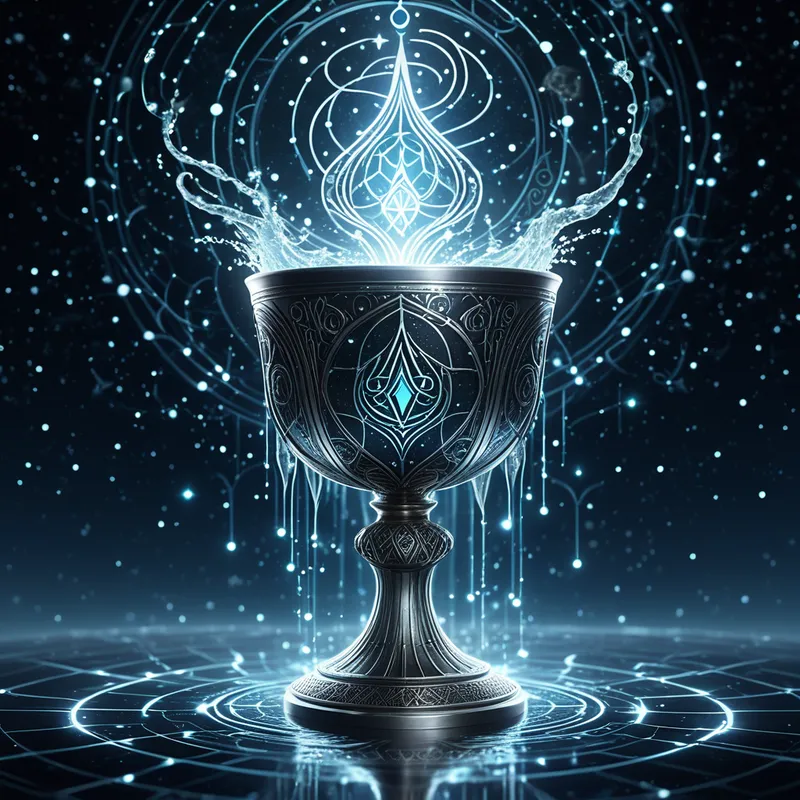
The river of forgetfulness in the Greek underworld, whose waters erase the memories of the dead, severing their ties to the life they once knew.
The Tale of The River Lethe of Greek myth
Beneath the roots of [the world](/myths/the-world “Myth from Tarot culture.”/), where the sun is a forgotten rumor, there flows a river of silence. This is not the Cocytus, whose waters are made of tears, nor the Phlegethon, which burns with eternal flame. This is the [Lethe](/myths/lethe “Myth from Greek culture.”/), whose current is a cool, silver amnesia.
After the final breath is drawn and the soul is weighed, after Charon’s coin is paid and the gates of [Hades](/myths/hades “Myth from Greek culture.”/) groan shut, the newly dead find themselves in a vast, grey plain. The air is still and scentless. Here grow the asphodel, pale flowers of indifferent bliss. And through this plain winds the Lethe.
The shades do not rush to its banks. They are drawn, slowly, as dust is drawn to still [water](/myths/water “Myth from Chinese culture.”/). There is no ceremony, no decree from the throne of the Unseen One. It is simply the next step in the unraveling of being. A shade approaches, its form still flickering with the echoes of a life—the warmth of a lover’s touch, the sting of a betrayal, the taste of salt air, the crushing weight of a crown. It kneels at [the river](/myths/the-river “Myth from Buddhist culture.”/)’s edge.
The water does not splash or babble. It slips past, soundless and deep. The shade cups its hands and drinks. And as the liquid, cool as a midnight thought, passes its insubstantial lips, the flickering echoes begin to dim. The lover’s face softens into a blur of light. The betrayal loses its emotional hook, becoming a mere fact, then less than a fact. [The crown](/myths/the-crown “Myth from Various culture.”/)’s weight evaporates into nothingness. The shade’s posture straightens, not with relief, but with emptiness. The tumult of a lifetime is smoothed into a featureless calm. It turns from the riverbank and joins the countless others wandering the Fields of Asphodel, beings of pure potential, stripped of story, ready—though they know it not—for what may come next. The river flows on, an eternal, gentle eraser.

Cultural Origins & Context
The myth of the Lethe is woven into the fabric of ancient Greek eschatology—the poetry and philosophy concerning the soul’s fate. Its most famous literary appearances are in epic poems like Plato’s “Republic” (in the Myth of Er) and Virgil’s “Aeneid,” where it is a key feature of [the underworld](/myths/the-underworld “Myth from Greek culture.”/) topography. However, its roots are older, emerging from the oral traditions and mystery cults, particularly the Eleusinian Mysteries and Orphism.
For the Greeks, memory was not merely a mental faculty; it was a sacred tether to identity, to lineage, and to kleos (glorious fame). To be forgotten was a second death. [The River Lethe](/myths/the-river-lethe “Myth from Global/Universal culture.”/) served a crucial societal and psychological function: it explained the absolute boundary between the living and the dead. It was the ultimate cleanser, ensuring that souls, burdened by the passions and pains of their earthly existence, could be recycled—either into the blissful Elysian Fields or into a new life through metempsychosis. In the mystery cults, initiates sought a-letheia (truth, literally “un-forgetting”)—a divine remembrance of their immortal origin—as an antidote to the Lethe’s oblivion. Thus, the river was both a terror and a necessity, a cornerstone in the architecture of the ancient Greek soul.
Symbolic Architecture
The Lethe is far more than a mythological [location](/symbols/location “Symbol: The symbol of ‘Location’ signifies a sense of place, context, and the environment in which experiences unfold.”/); it is a profound [symbol](/symbols/symbol “Symbol: A symbol can represent an idea, concept, or belief, serving as a powerful tool for communication and understanding.”/) of the [psyche](/myths/psyche “Myth from Greek culture.”/)’s own processes. It represents the necessary [dissolution](/symbols/dissolution “Symbol: The process of breaking down, dispersing, or losing form, often representing transformation, release, or the end of a state of being.”/) of the conscious ego, the [persona](/symbols/persona “Symbol: The social mask or outward identity one presents to the world, often concealing the true self.”/) we construct throughout [life](/symbols/life “Symbol: The symbol of ‘Life’ represents a journey of growth, interconnectedness, and existential meaning, encompassing both the joys and challenges that define human experience.”/).
Lethe is the psyche’s mercy. To carry the unedited film of a single lifetime into eternity would be a torture no soul could bear. Forgetting is the prerequisite for renewal.
The [river](/symbols/river “Symbol: A river often symbolizes the flow of emotions, the passage of time, and life’s journey, reflecting transitions and movement in one’s life.”/) symbolizes the deep, unconscious function that severs our attachment to transient identities—the roles of [parent](/symbols/parent “Symbol: The symbol of a parent often represents authority, nurturing, and protection, reflecting one’s inner relationship with figures of authority or their own parental figures.”/), [warrior](/symbols/warrior “Symbol: A spiritual archetype representing inner strength, discipline, and the struggle for higher purpose or self-mastery.”/), [victim](/symbols/victim “Symbol: A person harmed by external forces, representing vulnerability, injustice, or sacrifice in dreams. Often symbolizes powerlessness or moral conflict.”/), or [hero](/symbols/hero “Symbol: A hero embodies strength, courage, and the ability to overcome significant challenges.”/). Psychologically, it mirrors the process of sleep, where the day’s conscious concerns are dissolved into the dream-sea of the unconscious. It is the [water](/symbols/water “Symbol: Water symbolizes the subconscious mind, emotions, and the flow of life, representing both cleansing and creation.”/) that washes away the [accretion](/symbols/accretion “Symbol: The gradual accumulation and layering of material over time, often forming larger structures through natural processes like sedimentation or cosmic dust collection.”/) of personal [history](/symbols/history “Symbol: History in dreams often represents the dreamer’s past experiences, lessons learned, or unresolved issues that continue to influence their present.”/), allowing the core Self, stripped of its temporal costumes, to emerge. In this light, Lethe is not an [enemy](/symbols/enemy “Symbol: An enemy in dreams often symbolizes an internal conflict, self-doubt, or an aspect of oneself that one struggles to accept.”/) of [memory](/symbols/memory “Symbol: Memory symbolizes the past, lessons learned, and the narratives we construct about our identities.”/) but its necessary counterpart. True wisdom (a-letheia) cannot be found in clinging to the past, but in the cyclical [movement](/symbols/movement “Symbol: Movement symbolizes change, progress, and the dynamics of personal growth, reflecting an individual’s desire or need to transform their circumstances.”/) through remembering and forgetting, through attachment and release.
The Dreamer’s Resonance
When the waters of the Lethe flood into modern dreams, they rarely appear as a classical river. Instead, they manifest as a somatic and psychological process of erasure. A dreamer may find themselves in a familiar house where rooms are dissolving into blank walls, or they may be frantically trying to read a book whose text is fading to white. They may meet a loved one whose face is blurred, or hear a crucial piece of information that slips from their mind upon waking.
These dreams signal a profound psychic transition. The psyche is actively dissolving an outdated complex, a worn-out identity, or a traumatic memory that has defined the dreamer for too long. The feeling is often one of anxiety or loss—[the ego](/myths/the-ego “Myth from Jungian culture.”/) clings to what it knows, even if what it knows is pain. But the dream Lethe is at work, performing its alchemy of release. It is the unconscious insisting on a necessary death, a clearing of the psychic slate so that new growth can occur. The dreamer is not forgetting who they are; they are being prepared to become who they might be.

Alchemical Translation
The journey to the Lethe and through its waters is a masterful map for the modern individuation process. Alchemically, it represents the stage of [solutio](/myths/solutio “Myth from Alchemical culture.”/)—dissolution. The fixed, leaden elements of our conscious personality (our prejudices, our cherished narratives of injury or [triumph](/myths/triumph “Myth from Roman culture.”/)) must be dissolved in [the universal solvent](/myths/the-universal-solvent “Myth from Alchemical culture.”/) of the unconscious before they can be reconstituted into a more integrated, golden wholeness.
The soul’s alchemy requires a descent into Lethe, a voluntary drinking of the waters that dissolve the ego’s rigid monuments, so that the Self may be remembered.
For the individual, this translates to the courage of active forgetting: not the repression of memory, but the conscious, painful work of releasing identification with our past stories. It is the therapy session where a trauma is recalled only to have its emotional charge finally discharged. It is the midlife crisis where the identity of the “successful professional” is let go to make room for the “beginner artist.” It is the forgiveness that severs the psychic link to an old wound. By consciously engaging with our personal Lethe—through meditation, creative expression, shadow work, or deep therapy—we participate in the myth. We do not merely forget; we transmute. We drink from the river not to become empty, but to become clear, so that the deeper, timeless waters of the [Mnemosyne](/myths/mnemosyne “Myth from Global/Universal culture.”/), the mother of [the Muses](/myths/the-muses “Myth from Greek culture.”/), can finally rise within us, bearing the memories not of a single life, but of the soul’s eternal journey.
Associated Symbols
Explore related symbols from the CaleaDream lexicon: