The River Lethe Myth Meaning & Symbolism
A soul drinks from the underworld's river of forgetfulness to erase its past life before rebirth, embodying the eternal cycle of death and renewal.
The Tale of The River Lethe
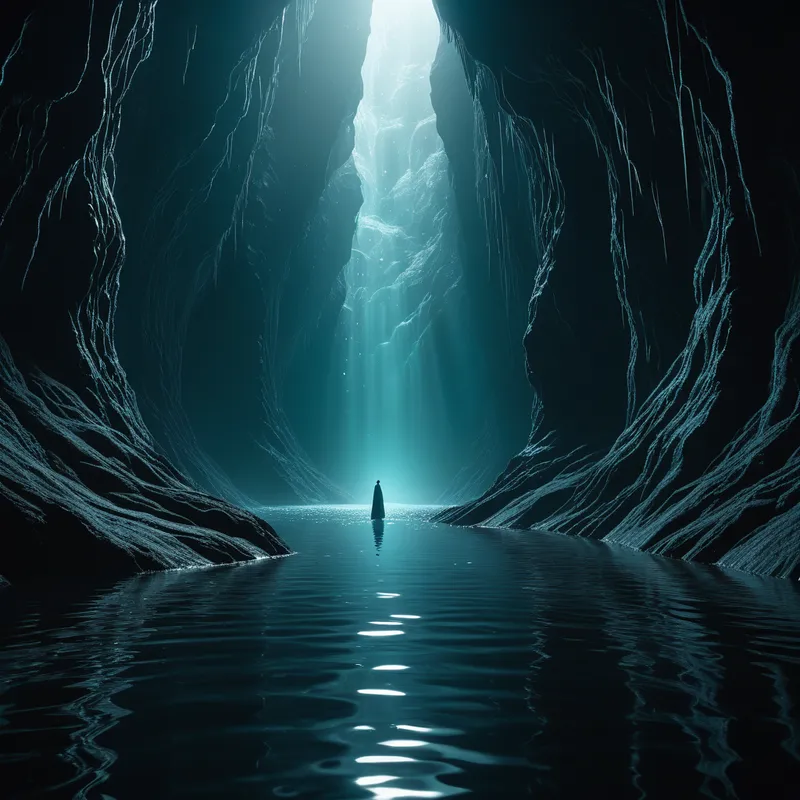
Beneath the roots of the world, where the sun is a forgotten rumor, there flows a river of silence. This is not the Cocytus, whose waters are made of tears, nor the Phlegethon, which burns with eternal fire. This is the Lethe, whose current is cool, deep, and mercifully opaque.
The newly arrived dead, shades thin as moth-wing, shuffle in a silent procession across the grey plains of Erebus. They are shepherded by the solemn boatman, Charon, whose fee is a coin placed upon their tongue in life. But his journey only brings them to the gates. The final passage is their own.
Guided—or judged—they come before the three enthroned ones: Minos, Rhadamanthus, and Aeacus. Their eyes see not the flesh, but the tapestry of the life just lived, every thread of action and intention. From their silent consultation, a path is indicated. For most, the path leads onward, through the groves of Elysium or the fields of Asphodel. But all paths, for those destined to drink of the earth again, converge upon one final shore.
Here, the air is thick with the scent of poppies and damp stone. The river Lethe does not roar; it whispers. Its waters are not clear, but hold the color of twilight, swallowing all light and reflection. The shades are drawn to its bank, not by thirst, but by a deep, cellular pull. It is the call of the undone, the promise of a clean slate.
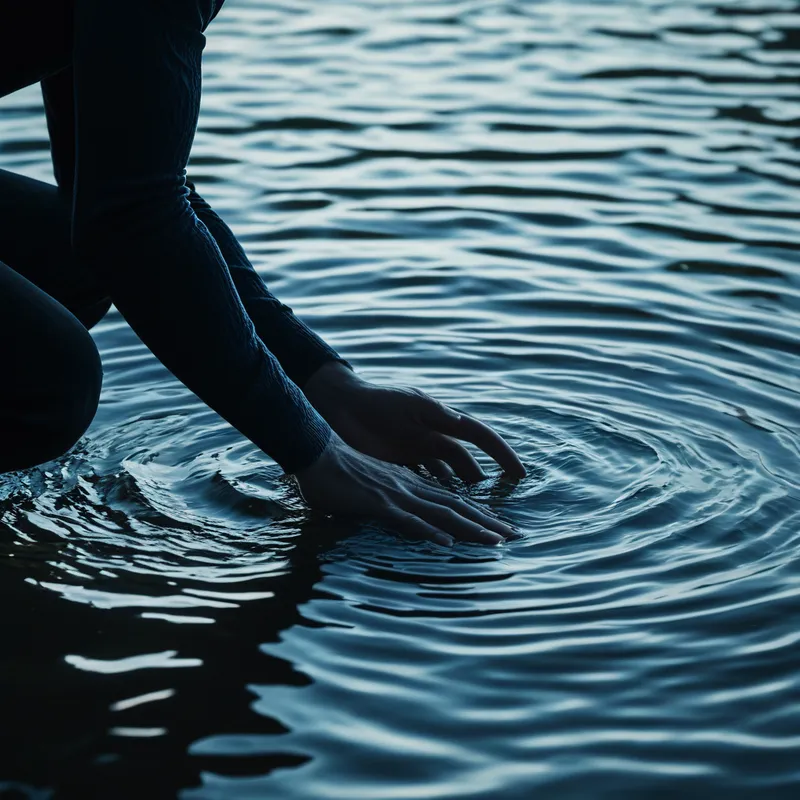
A shade kneels. It reaches a hand that trembles, not with fear, but with the fading echo of emotion. As its fingers break the surface, a shock of cold stillness travels up its arm. It cups the water and brings it to lips that no longer need to drink. The act is not one of consumption, but of erasure.
As the waters pass through the essence of the soul, the vivid pain of a lost love softens into a nameless ache, then into nothing. The fierce joy of a childhood victory unravels like smoke. The face of a mother, the sound of one’s own name, the weight of a long-carried guilt—all dissolve, sip by sip, into the river’s embrace. The shade straightens. Its eyes, once windows to a completed story, are now calm pools of vacant readiness. It turns and moves toward the Moirai, who hold the spindle, the measure, and the shears, ready to be woven into a new life, a new thread, blissfully unaware of the pattern that came before.
Cultural Origins & Context
The myth of the Lethe is a cornerstone of the Greek eschatological imagination, primarily preserved in epic poetry like Homer’s Odyssey and given its most detailed cartography in works like Plato’s Republic and Virgil’s Aeneid. It was not a mere folktale, but a functional component of a sophisticated cosmology that addressed the soul’s journey. This myth was perpetuated by poets, philosophers, and later, by mystery cults like the Orphics and Eleusinians, who promised initiates a favorable path through the afterlife, perhaps even knowledge to avoid the Lethe’s draught.
Its societal function was profound. It provided a narrative resolution to the terror of death and the injustice of life. Why do we not remember past lives? The river Lethe answered. It framed reincarnation not as a burden of endless memory, but as a cyclical process of cleansing and renewal. It also served as a moral compass: the judgment before the drink implied that one’s actions determined the timing and necessity of that forgetfulness, weaving ethics into the very fabric of the soul’s destiny.
Symbolic Architecture
The Lethe is the ultimate symbol of psychic release. It represents the necessary dissolution of the conscious ego—the accumulated “I” of a lifetime—to make way for new becoming.
To drink from Lethe is to consent to the universe’s greatest mercy: the gift of a true ending.
The river is not a punishment, but a profound neutral force. Psychologically, it symbolizes the deep unconscious processes that allow us to move on from trauma, to shed outworn identities, and to fall asleep each night, releasing the day’s burdens. It is the water that washes the slate of the psyche. The act of drinking is one of active, if compelled, participation in one’s own transformation. The soul is not drowned in Lethe; it is purified by it. The river also symbolizes the shadow side of memory itself—not just remembrance, but all that must be forgotten for sanity, growth, and new life to emerge.

The Dreamer’s Resonance
When the Lethe flows into modern dreams, it rarely appears as a classical river. It manifests as the process of erasure and renewal. You may dream of deleting files on a computer only to see the words bleed away; of watching old home movies that dissolve into static; of taking a shower where the water washes away not dirt, but memories, leaving you feeling strangely empty and light.
These dreams signal a somatic and psychological process of necessary release. The psyche is engaging in a deep-cleaning, urging the dreamer to let go of a past identity, a grudge, a narrative of self that has become a prison. The anxiety in such dreams is the ego’s resistance to its own dissolution. The peace that can follow—the vacant calm of the shade after drinking—points to the relief found on the other side of surrender. It is the unconscious preparing the dreamer for a rebirth, a new chapter that requires the old script to be forgotten.

Alchemical Translation
In the alchemical journey of individuation—the process of becoming one’s whole, integrated Self—the Lethe represents the crucial stage of solutio, or dissolution. This is not destruction, but the breaking down of rigid, outmoded structures of the personality so that a new, more authentic synthesis can occur.
The soul’s alchemy requires a Lethe between each transformation. We must forget who we were to become who we are.
For the modern individual, this translates to the courageous work of shadow integration and ego-relativization. To “drink from Lethe” is to consciously engage in practices that dissolve our attachment to a fixed identity: therapy that unravels old stories, meditation that creates space from compulsive thought, or life transitions that force us to shed old skins. It is the terrifying yet liberating realization that much of what we call “I” is a story that can be, and sometimes must be, released back into the waters of the unconscious. The goal is not amnesia, but freedom. The soul that has consented to its own dissolution does not arrive at rebirth empty, but cleared—ready to be imprinted not by the past, but by the potential of the present, moving toward a wholeness that remembers its essence, but not its old chains.
Associated Symbols
Explore related symbols from the CaleaDream lexicon:
- Bath
- Subconscious
- Dishwasher
- Soap
- Spilled Milk
- Squirting Water
- Larimar Gem
- Roots in Water
- Sponge
- Locket of Memories
- Cleaner’s Mop
- Victorian Mourning Jewelry
- Bubbling Inkwell
- Chalkboard Dreams
- Feng Shui Fountain
- Salad Spinner
- Cascading Water Room
- Confessional Booth
- Meandering River by Shrine
- Gateway to Memories
- Hazy Fog
- Ephemeral Nature
- Mountain Stream
- Marshland Mist
- Life-Giving Waters
- Wet Dampness
- Mesospheric Silence
- Vagueness
- Filtration
- Default
- Alkahest
- Cascading
- Gradient
- Residue
- Lymphatic
- Discharge
- Pumice
- Blurring
- Theta
- Obscurity